Image: Wikimedia Commons
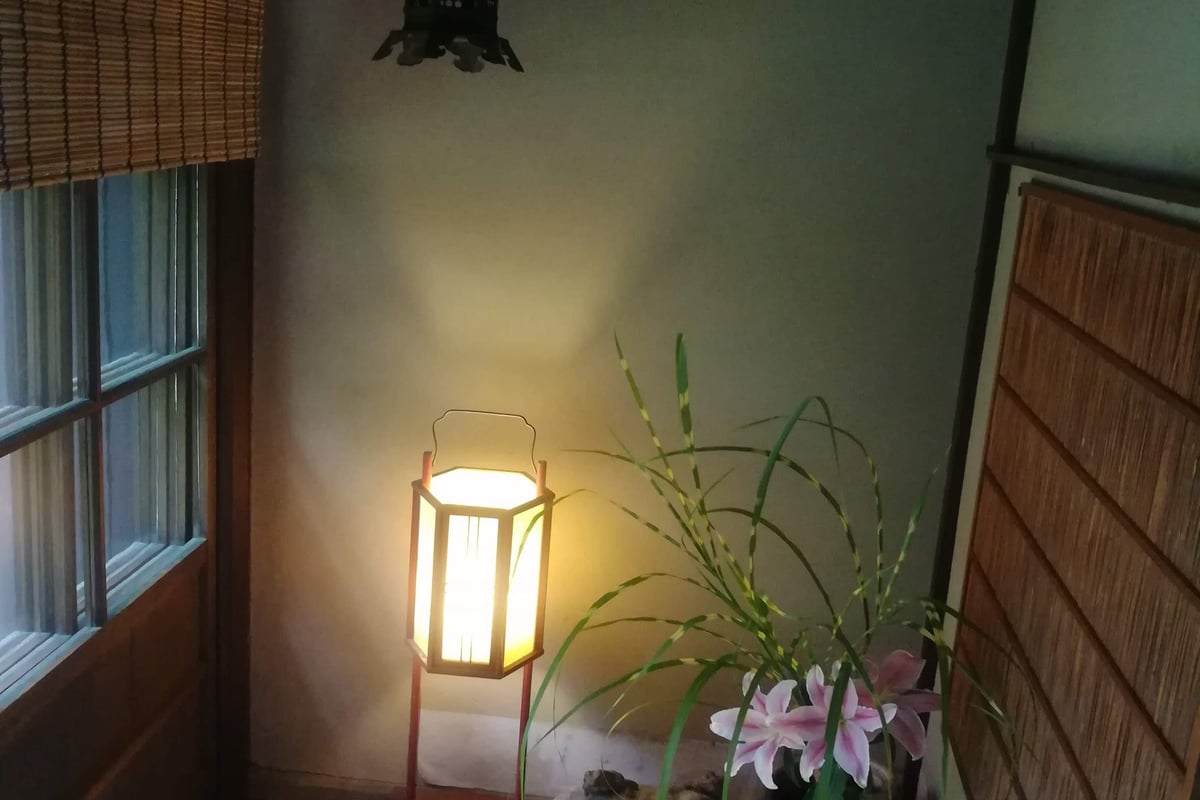
Edo sudare are traditional woven blinds made in Tokyo's Taito and Minato wards by weaving natural materials such as bamboo and reed together with thread. Blinds have a long history in Japan, appearing in the Manyoshu, the country's oldest anthology of poetry compiled in the 7th–8th centuries, and during the Heian period they were used in imperial courts, aristocratic residences, and shrines and temples as room dividers and sunshades. As the town of Edo developed, sudare spread into everyday commoners' life, and books from the Genroku era record the existence of specialist blind craftsmen known as misu-shi. In contrast to the lavish kyo-sudare of Kyoto, Edo sudare emphasize practicality and simple design as everyday household items, retaining the natural texture of materials such as bamboo, reed, bush clover, and cattail. Bamboo strips that have been finely split or thinly shaved are woven using a variety of techniques, including single-strand weave, double-strand weave, twist weave, and tortoiseshell weave, creating a breathable interior space that carries a pleasant breeze. Edo sudare was designated a Traditional Craft by the Tokyo Metropolitan Government in 1983.
Origin
Blinds have a long history in Japan, appearing in the Manyoshu, the country's oldest anthology of poetry compiled in the 7th–8th centuries. During the Heian period they were used in imperial courts, aristocratic residences, and shrines and temples as room dividers and sunshades, serving as prestigious furnishings known as misu (ceremonial blinds used in courts/shrines). This blind-making technique, rooted in court culture, is believed to have later spread to the town of Edo.
History
During the Edo period, as the town developed, sudare spread widely into the lives of ordinary people and came to be frequently depicted in ukiyo-e prints. Books from the Genroku era record the existence of specialist blind craftsmen called misu-shi (misu craftsman), suggesting that by this time Edo had established its own sudare industry. From the Meiji era onward, the craft continued to be passed down mainly around Taito Ward and Minato Ward, and in 1983 it was designated a Traditional Craft by the Tokyo Metropolitan Government.
Features
In contrast to the lavish kyo-sudare of Kyoto, Edo sudare emphasize practicality and simple design as everyday household items, retaining the natural texture of materials such as bamboo, reed, bush clover, cattail, cudweed, and Iyo bamboo. Bamboo is finely split or thinly shaved according to the grain to make bamboo strips (takehigo), which are then woven using techniques suited to their purpose, such as single-strand weave, double-strand weave, twist weave, braided weave, accordion weave, and tortoiseshell weave. The result is highly breathable, creating a space that carries a pleasant breeze along with the scent of natural materials.
Techniques
Making bamboo strips
The preparatory technique of finely splitting or thinly shaving bamboo according to its grain to produce bamboo strips (takehigo) of uniform thickness.
Weaving
Weaving the blind using a variety of techniques suited to purpose and design, including single-strand weave, double-strand weave, twist weave, braided weave, accordion weave, and tortoiseshell weave.
Materials Used
Production Process
- 1
Splitting bamboo and selecting materials
Materials such as bamboo and reed are selected according to their intended use, then finely split or thinly shaved according to their grain.
- 2
Weaving
The materials are woven together with thread using techniques suited to the purpose, such as single-strand weave, double-strand weave, twist weave, or tortoiseshell weave.
- 3
Edge finishing
The edges of the woven blind are finished with cloth or similar material, giving it both durability and beauty.
| Main Production Areas |
|
|---|
Artisans & Workshops
田中製簾所 (Tanaka Seirensho)
A long-established shop in Taito Ward founded in the early Meiji era, passing down the traditional techniques of Edo sudare through five generations. The shop hand-crafts misu (ceremonial blinds) and sitting-room blinds from bamboo and reed, and welcomes workshop tours and hands-on making experiences.
Official site →How to Buy
- 田中製簾所
- A long-established shop for Edo sudare where customers can purchase sitting-room blinds, partition blinds, and rolling mats for making ehomaki sushi rolls, all made from bamboo and reed. It carries a wide range of traditional products that showcase the texture of natural materials.Where to buy →PR
Hands-on Experiences
田中製簾所
東京都台東区千束1-18-6
Workshop tours and hands-on making experiences are available. The basic fee is around 3,000 yen or more (45 minutes or longer); making a coaster costs around 1,500 yen, and making a placemat costs around 3,500 yen.
View details →FAQ
Q. What is the difference between Edo sudare and Kyo sudare?
A. While Kyoto's Kyo sudare are known for their lavish designs, Edo sudare emphasize practicality and simple design as everyday household items, retaining the natural texture of materials such as bamboo and reed.
Q. What kinds of weaving techniques are used for Edo sudare?
A. Several weaving techniques are used, including single-strand weave, double-strand weave, twist weave, braided weave, accordion weave, and tortoiseshell weave, chosen according to the purpose and design.