Image: Wikimedia Commons
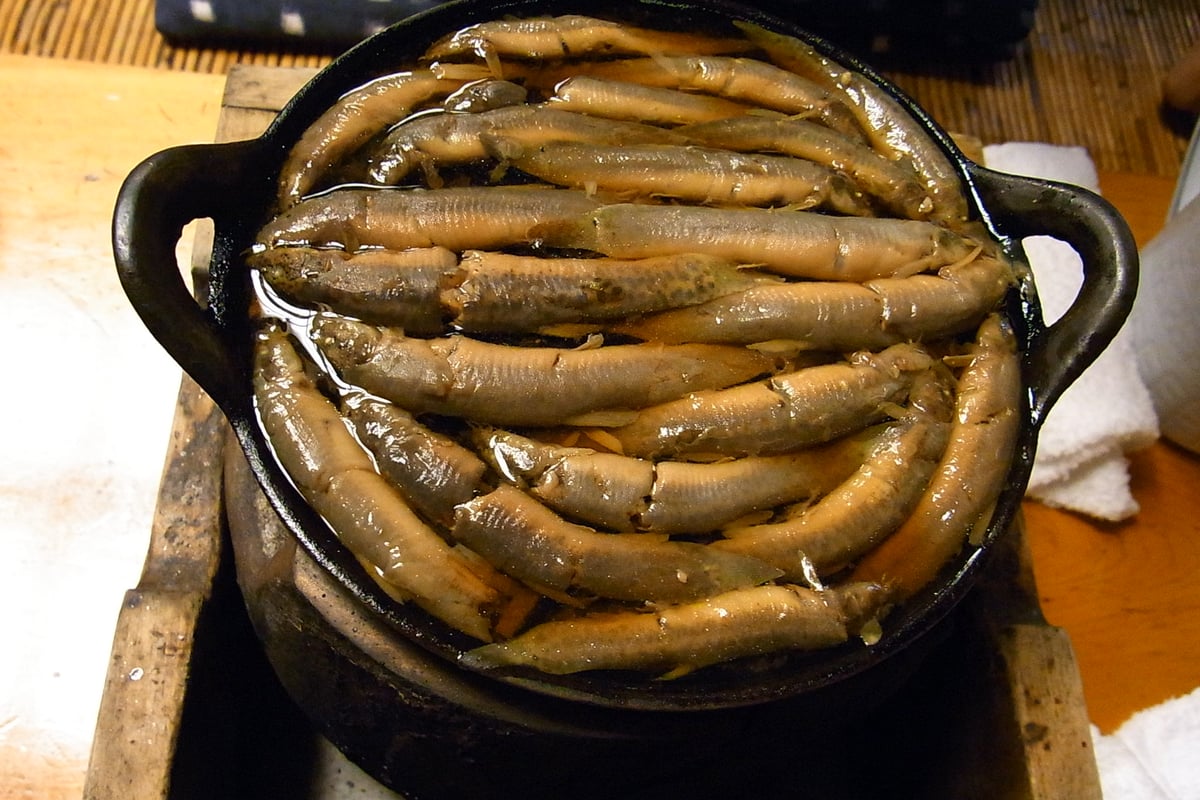
Dojo nabe is a hotpot dish made with dojo (loach, a small eel-like freshwater fish) that has been cherished in Tokyo's shitamachi (downtown) districts since the Edo period. Cheap and highly nutritious, dojo became a popular source of stamina for ordinary Edo people who worked up a sweat doing physical labor, and this gave rise to numerous specialty restaurants, including Komagata Dozeu in Asakusa. The two representative styles are 'marunabe,' in which the whole dojo is simmered without being cut open, and 'yanagawa nabe,' in which it is cut open and simmered with burdock root, then finished with beaten egg; both are typically topped generously with green onion and Japanese pepper (sansho) before eating. The spelling 'dozeu' is said to have been devised by an Edo-period shop owner, who used three characters — an auspicious odd number — in place of the correct but four-character spelling 'dodjiyau,' for good luck. Although the number of specialty restaurants has declined today, long-established shops founded in the Edo period still keep their doors open in Asakusa, and the dish remains cherished as a taste of Edo's common people.
Origin
Dojo nabe is said to have originated at dojo restaurants that were common in the shitamachi districts of the Edo period, such as Komagata Dozeu, founded in Asakusa Komagata in 1801. Cheap and highly nutritious, dojo was prized as a valuable source of protein for Edo commoners engaged in physical labor, and the culture of simmering and eating dojo in a pot spread widely.
History
When the shop burned down in the great Edo fire of 1806, the owner is said to have avoided the four-character spelling 'dodjiyau' for good luck, having a sign made with the three-character spelling 'dozeu' instead — an auspicious odd number of characters — and this spelling is said to be the origin, later spreading to other shops throughout Edo. Dojo restaurants remained a beloved taste of shitamachi commoners through the Meiji era and beyond, but their numbers gradually declined after the war, and today only a handful of long-established shops remain, mainly in Asakusa, carrying on the taste of Edo.
Features
There are two main preparations for dojo nabe. One is 'marunabe,' in which whole, uncut dojo are simmered in a sweet-savory warishita (soy-based simmering sauce). The other is 'yanagawa nabe,' in which the dojo are cut open and simmered together with shaved burdock root, then finished by pouring in beaten egg. Marunabe is traditionally topped generously with green onion and Japanese pepper, and part of its appeal is that it is simmered until even the bones are soft, making it easy to eat whole. The wooden tubs and portable stoves used since the Edo period are also part of the presentation that conveys the shitamachi atmosphere.
Main Ingredients
Food Culture
Cherished as a stamina food for Edo commoners engaged in physical labor, it took root in shitamachi as a taste of the common people that was cheap and easy to eat. The custom of topping it generously with green onion and Japanese pepper also reflects the tastes of Edo's townspeople.
How It Differs from Home Cooking
There are few opportunities to cook dojo at home, and the preparation is labor-intensive, so both marunabe and yanagawa nabe are typically enjoyed at specialty restaurants. Such restaurants carry on the technique of simmering the dish for a long time until even the bones become soft.
Famous Shops
駒形どぜう 浅草本店
東京都台東区駒形1-7-12
A long-established shop founded in 1801. Dozeu nabe costs around 1,850 yen and yanagawa nabe around 1,980 yen, and both can be enjoyed while seated on tatami in a setting reminiscent of the Edo period.
View details →FAQ
Q. Why is 'dozeu' spelled with three characters?
A. It should properly be spelled with four characters, 'dodjiyau,' but it is said that when a shop was struck by fire in the Edo period, the owner, seeking good luck, had a sign made using the auspicious odd-numbered three-character spelling 'dozeu' instead, and this spelling spread throughout Edo.