Image: Wikimedia Commons
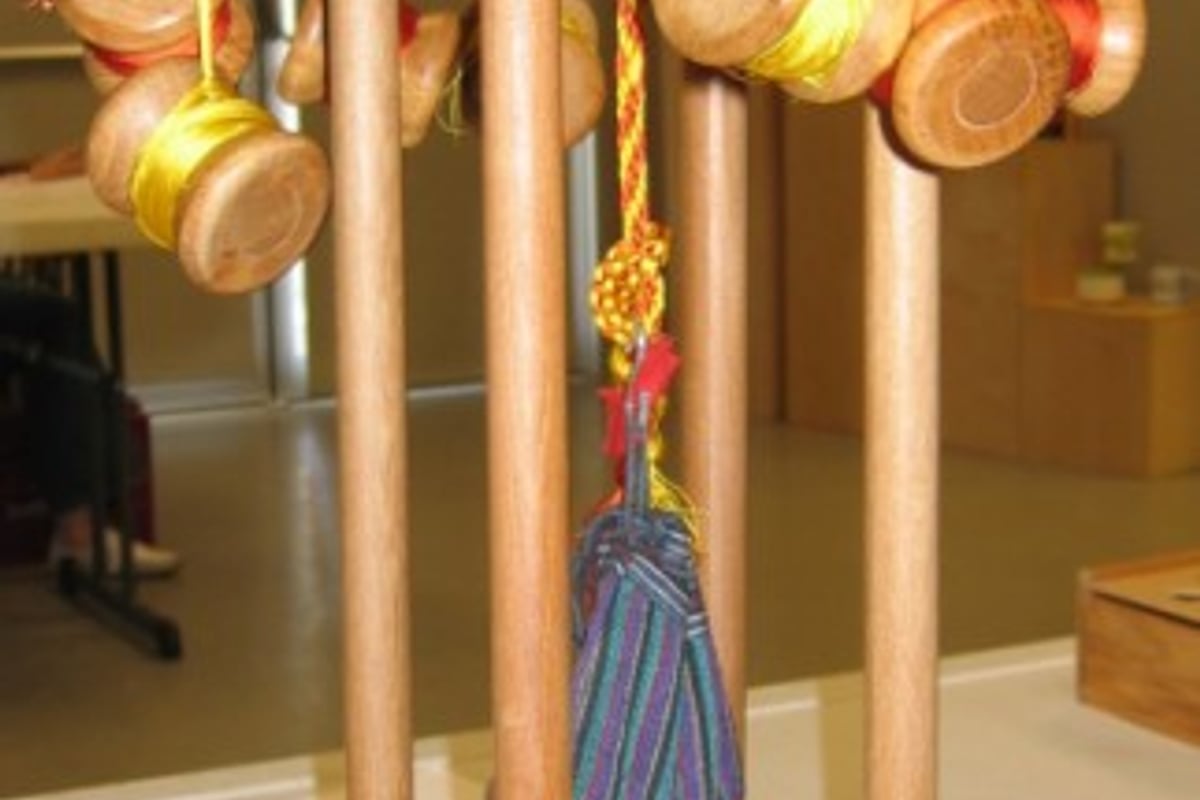
Tokyo Kumihimo is a braided cord craft made mainly from silk thread in Tokyo's Taito, Suginami, and Kita wards, produced using dedicated braiding stands such as the maru-dai (round stand), kaku-dai (square stand), aya-take-dai (twill-bamboo stand), and taka-dai (high stand). Its origins trace back to the cords used for sutra scrolls and priestly robes that arrived with the transmission of Buddhism, as well as sashes accompanying the ceremonial robes of court nobles. Under samurai society, braiding methods combining practicality and beauty developed for the lacing cords of armor and helmets and for sword hilt wrappings. In contrast to the flamboyant Kyo Kumihimo shaped by court noble culture, Tokyo Kumihimo reflects the influence of samurai society and Edo townsfolk culture, characterized by understated, muted colors and sturdy braid patterns. From the late Edo period into the Meiji era, it came into wide use among ordinary people for obi cords (waist-sash cords) and haori cords, and long-established braiding houses such as Domyo, founded in 1652, still carry on the technique today. In addition to obi cords, contemporary products such as neckties and accessories are now also made to suit modern lifestyles.
Origin
The techniques of Tokyo Kumihimo are believed to have reached Japan by way of China and the Korean Peninsula, with their origins thought to lie in cords used for sutra scrolls and priestly robes accompanying the transmission of Buddhism, and as decorative cords attached to the ceremonial robes of court nobles. As samurai society rose to prominence, braided cords came into practical use as part of military equipment—lacing cords for armor and helmets and hilt wrappings for swords—and sturdy braiding methods able to withstand combat were refined, forming the foundation of today's Tokyo Kumihimo techniques.
History
During the Edo period, the sankin-kotai system of alternate attendance brought daimyo lords and samurai from across the country to Edo, raising demand for braided cords and spurring the growth of Edo's cord-braiding industry as a production center for hilt wrappings and cords for the samurai class. From the 17th century onward, the craft also spread as an everyday item among commoners, expanding into uses such as obi cords and netsuke cords. Braiding houses such as Domyo, founded in 1652, have passed the technique down through generations, and it was designated a Traditional Craft Designated by the Tokyo Metropolitan Government in 1982.
Features
In contrast to the flamboyant kumihimo of Kyoto, shaped by court noble culture, Tokyo Kumihimo reflects the influence of samurai society and townsfolk culture, characterized by understated, calm colors. Artisans use different braiding stands—the maru-dai, kaku-dai, aya-take-dai, and taka-dai—according to purpose, and the appeal lies in the texture of intersecting threads, braided by hand feel so that the threads are neither too tight nor too loose. A variety of dyeing expressions are used, including solid dyeing, gradation dyeing, and section dyeing.
Techniques
Braiding technique using braiding stands
Threads are braided using dedicated stands suited to the purpose—the maru-dai, kaku-dai, aya-take-dai, and taka-dai. The maru-dai is suited to tubular cords, the kaku-dai to flat cords, and the taka-dai to wide, patterned cords, with the tightness of the braid adjusted by hand feel in each case.
Thread dyeing
A variety of dyeing techniques—including solid dyeing, gradation dyeing that shifts color gradually, and section dyeing that dyes multiple colors in bands—give the finished cord rich color expression.
Materials Used
Production Process
- 1
Thread dyeing
Raw silk and silk thread are dyed to suit the intended use, including solid dyeing as well as gradation and section dyeing to create patterns.
- 2
Thread reeling and twisting
The dyed threads are arranged into the required number of strands and given a twist to prepare them for braiding.
- 3
Braiding
Threads are set on a braiding stand suited to the purpose—the maru-dai, kaku-dai, aya-take-dai, or taka-dai—and braided by crossing the threads while maintaining even hand tension.
- 4
Finishing
The tassels of the finished cord are arranged and finishing touches such as tassel-binding are applied to complete the piece.
| Main Production Areas |
|
|---|
Artisans & Workshops
道明
A long-established braiding house founded in 1652 with its shop in Ikenohata, Ueno. It began as a thread merchant dealing in sword hilt wrappings and cords, and since the Meiji era has focused on obi cords and haori cords, with every step from dyeing to braiding done entirely by hand. It also engages in research activities, including studies of kumihimo held at the Shosoin Repository.
Official site →How to Buy
- 道明 上野本店
- A cord-braiding house founded in 1652. Alongside traditional kimono accessories such as obi cords and haori cords, it also offers contemporary Western-style items such as neckties and accessories. All pieces are exquisite works hand-dyed and hand-braided by artisans.Where to buy →PR
Hands-on Experiences
道明 上野本店 くみひも教室
東京都台東区上野2-11-1
Try your hand at cord braiding in a class with over 50 years of history. Experience courses start from around 6,000 yen; open Monday to Saturday 10:30-18:30, and Sunday and public holidays 10:30-17:00.
View details →FAQ
Q. What is the difference between Tokyo Kumihimo and Kyo Kumihimo?
A. Kyo Kumihimo, shaped by court noble culture, is known for its flamboyant colors, while Tokyo Kumihimo, influenced by samurai society and townsfolk culture, is characterized by understated, calm colors and sturdy braid patterns.
Q. What tools are used to make kumihimo?
A. Dedicated braiding stands suited to the purpose—the maru-dai, kaku-dai, aya-take-dai, and taka-dai—are used. Each stand produces cords of different shape, width, and pattern, and artisans adjust the tightness of the braid by hand feel as they work.