Image: Wikimedia Commons
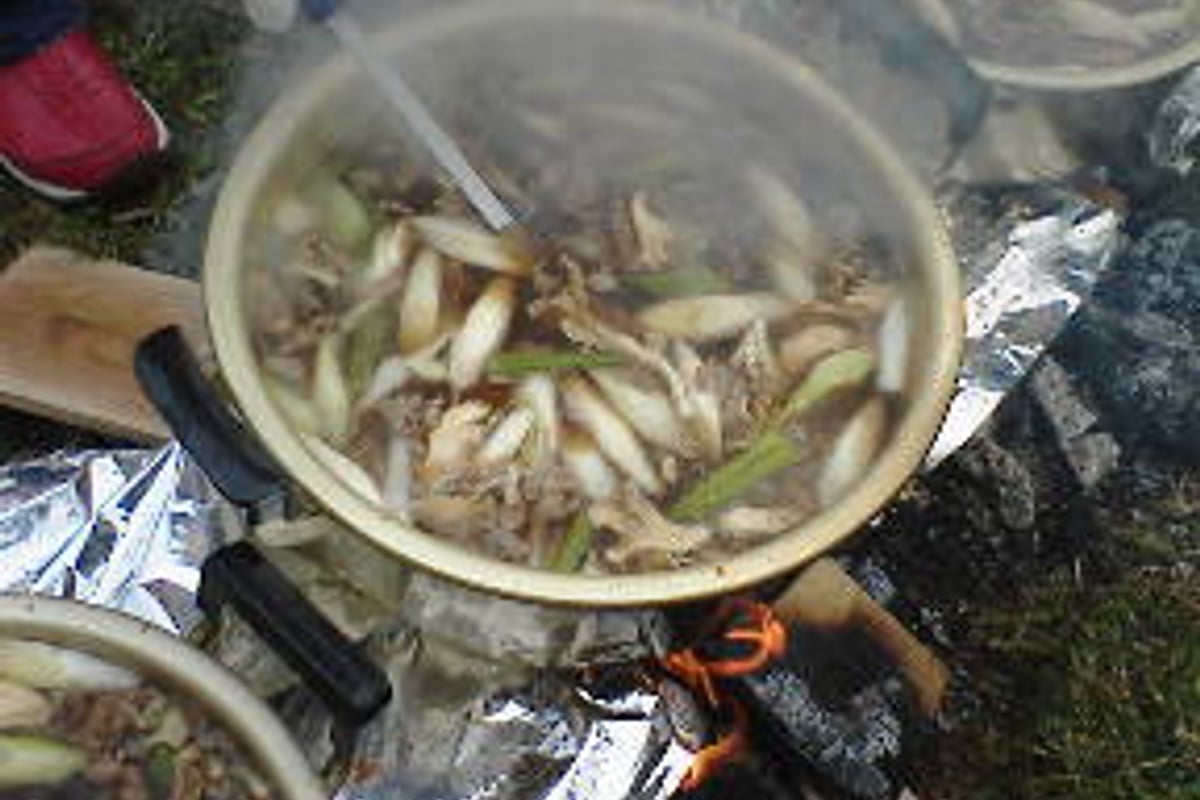
Imoni is a hot pot dish centered on taro grown in Yamagata Prefecture, and every autumn, groups of friends and family gather on riverbanks with pots and firewood for 'Imoni-kai' (communal Imoni-cooking gatherings), a beloved seasonal tradition across the prefecture. Its origins are said to trace back to the Edo-period river trade on the Mogami River, when boatmen around Nakayama Town — an area known for taro production — simmered dried cod from their cargo together with local taro. Seasonings and ingredients vary widely by region: in the inland Murayama region, a sweet-savory beef-and-soy-sauce style is standard, while the Shonai region uses pork and miso, adding mushrooms and deep-fried tofu for a hearty broth. The Mogami region adds wild mountain vegetables and mushrooms, and the Oitama region adds cotton tofu with a hidden touch of miso — each region offering its own distinctive take on the same dish. Every September, the 'Japan's Best Imoni-kai Festival' is held on the banks of the Mamigasaki River in Yamagata City, where about 30,000 servings are prepared in a giant pot 6 meters in diameter.
Origin
Imoni is said to date back to the mid-1600s, in the Edo period. Near Nagasaki in Nakayama Town, the terminus of river trade on the Mogami River, boatmen waiting for consignees to arrive had a custom of gathering on the riverbank around a pot for a feast. Since the nearby Koshio settlement was a noted taro-producing area, they are said to have simmered the taro they obtained together with dried cod from their cargo — the origin of the dish. A pine tree called 'Nabekake Matsu' ('pot-hanging pine'), said to date from that era, still stands in Nakayama Town today.
History
The dish originally used dried cod and taro, and it is said that beef came into use starting in the early Showa era. Since then, Imoni-kai — gathering with friends on riverbanks with pots and ingredients during the autumn taro harvest — has taken root across the prefecture, passed down across generations as an annual event on par with New Year's and year-end parties. As the birthplace of the dish, Nakayama Town also holds a large-scale Imoni-kai event every autumn.
Features
The Murayama region features a sweetish beef-and-soy-sauce seasoning, while the Shonai region uses pork and miso in a hearty broth with deep-fried tofu and mushrooms added. The Mogami region uses wild mountain vegetables and mushrooms, and the Oitama region uses cotton tofu with a hidden touch of miso — even though it's the same taro hot pot, ingredients and seasoning differ greatly by region, and comparing the different styles is part of the fun.
Main Ingredients
Food Culture
Every autumn, Imoni-kai — where friends and family gather on riverbanks with pots and firewood to cook and enjoy the dish together — has become an established annual event for residents, on par with New Year's and year-end parties. Every September, the 'Japan's Best Imoni-kai Festival' is held on the banks of the Mamigasaki River in Yamagata City, using a giant pot 6 meters in diameter and weighing 3 tons, with heavy machinery used to cook taro, beef, konnyaku, green onion, and more. About 30,000 servings are handed out on the day.
How It Differs from Home Cooking
The type of meat (beef or pork), seasoning (soy sauce or miso), and added ingredients differ across the Murayama, Shonai, Mogami, and Oitama regions, so even under the same name 'Imoni,' the flavor can vary greatly by household and region.
Famous Shops
山形いも煮ヤ
山形県山形市香澄町1-8-8 山形第1ビル2F
A local-cuisine restaurant in front of Yamagata Station where diners can compare the Imoni styles of five regions across the prefecture, including Murayama and Shonai. A small pot of Imoni starts at around 1,980 yen.
View details →FAQ
Q. Why do some regions use beef in Imoni while others use pork?
A. In inland areas such as the Murayama region, a sweet-savory beef-and-soy-sauce style is standard, while in the Shonai region, a miso-based style is said to have taken hold because pork pairs well with miso. The exact origin is uncertain, and several theories exist.