Image: Wikimedia Commons
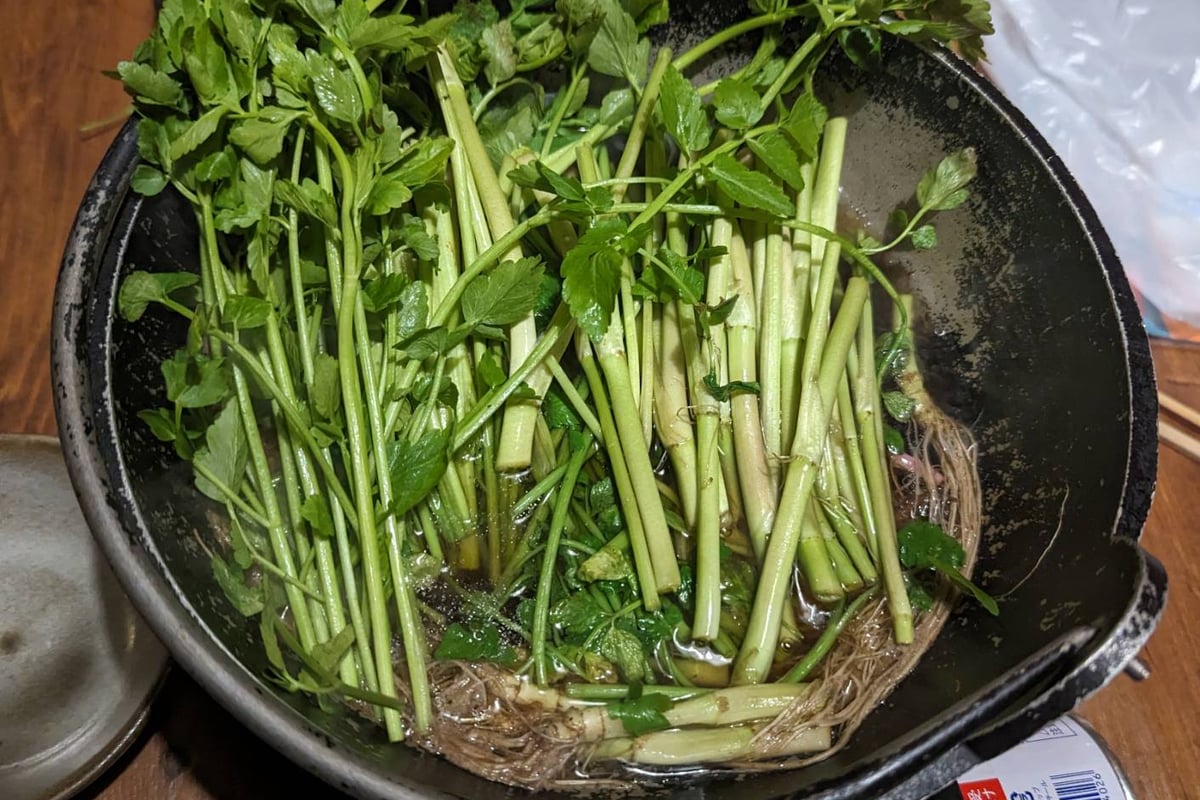
Seri nabe is a hot pot dish that uses Miyagi-grown seri (Japanese parsley) whole — root, stem, and leaf alike. The roots of seri are packed with intense umami, and their crisp, fragrant texture is the dish's defining charm. Miyagi Prefecture is one of Japan's leading seri-producing regions, with Natori City — which accounts for about 80% of the prefecture's production — known as the main growing area. In Natori City, seri has long been cultivated in the Kamiyoden and Shimoyoden districts, where groundwater from the Natori River wells up; records from the Genna era (1620s) mention the cultivation of wild seri, and it is said that seri cultivation became widespread during the Anei era (1770s). Date Masamune is also said to have composed a linked-verse poem referencing seri roots as 'nezeri' (root parsley) at a gathering in Tensho 18 (1590), suggesting that the custom of eating even the roots dates back a long way. In recent years, it has gained recognition alongside gyutan (grilled beef tongue) and zunda mochi as a signature dish of Sendai and Miyagi, and it is now served at many restaurants, particularly during the winter months.
Origin
In Natori City, the main producing area of 'Sendai seri' used in seri nabe, seri has long been cultivated in the limited districts of Kamiyoden and Shimoyoden, where groundwater from the Natori River wells up. Documents from the Genna era (1620s) show evidence of cultivating wild seri, and it is said that seri cultivation became widespread during the Anei era (1770s). Records also state that Date Masamune composed a linked-verse poem referencing seri roots as 'nezeri' (root parsley) at a gathering in Tensho 18 (1590), suggesting a long-standing culture of valuing the root portion.
History
Natori City accounts for about 80% of Miyagi Prefecture's seri production, and its seri has long been shipped nationwide under the 'Sendai Seri' brand. Traditionally, it was common to eat only the leaves and stems of seri, but because the root also has strong umami, 'seri nabe' — which uses the whole plant, roots included — was proposed as a new specialty centered around Natori City, and it spread as it gained recognition at local hot pot festivals and other events. In recent years, Sendai seri's brand value as a growing region has risen further, as it was registered under the Geographical Indication (GI) protection system.
Features
The defining feature is that the root, stem, and leaf are all eaten, each offering a different texture and flavor. The root, in particular, is fibrous with a crisp bite and strong umami, and simmering it in a hot pot together with chicken or pork and dashi broth produces a wonderfully fragrant dish. The season runs from autumn through winter, and in recent years it has been increasingly added to restaurant menus and grown in popularity as a signature dish of Sendai and Miyagi, alongside gyutan (grilled beef tongue) and zunda mochi.
Main Ingredients
Famous Shops
漁亭 浜や かわまちてらす閖上店
宮城県名取市閖上中央一丁目6番地
A seafood restaurant popular for its seri nabe and seri tempura, which let diners enjoy even the roots. The kaiseki course including seri nabe starts at 5,000 yen (tax included) with 2 hours of all-you-can-drink. Available seasonally from around October through April.
View details →FAQ
Q. Can you really eat the roots in seri nabe?
A. Yes. Seri grown in Natori City has soft roots that are carefully washed, allowing the root, stem, and leaf to all be eaten. The root in particular is packed with intense umami, and its crisp texture has become especially popular in recent years.