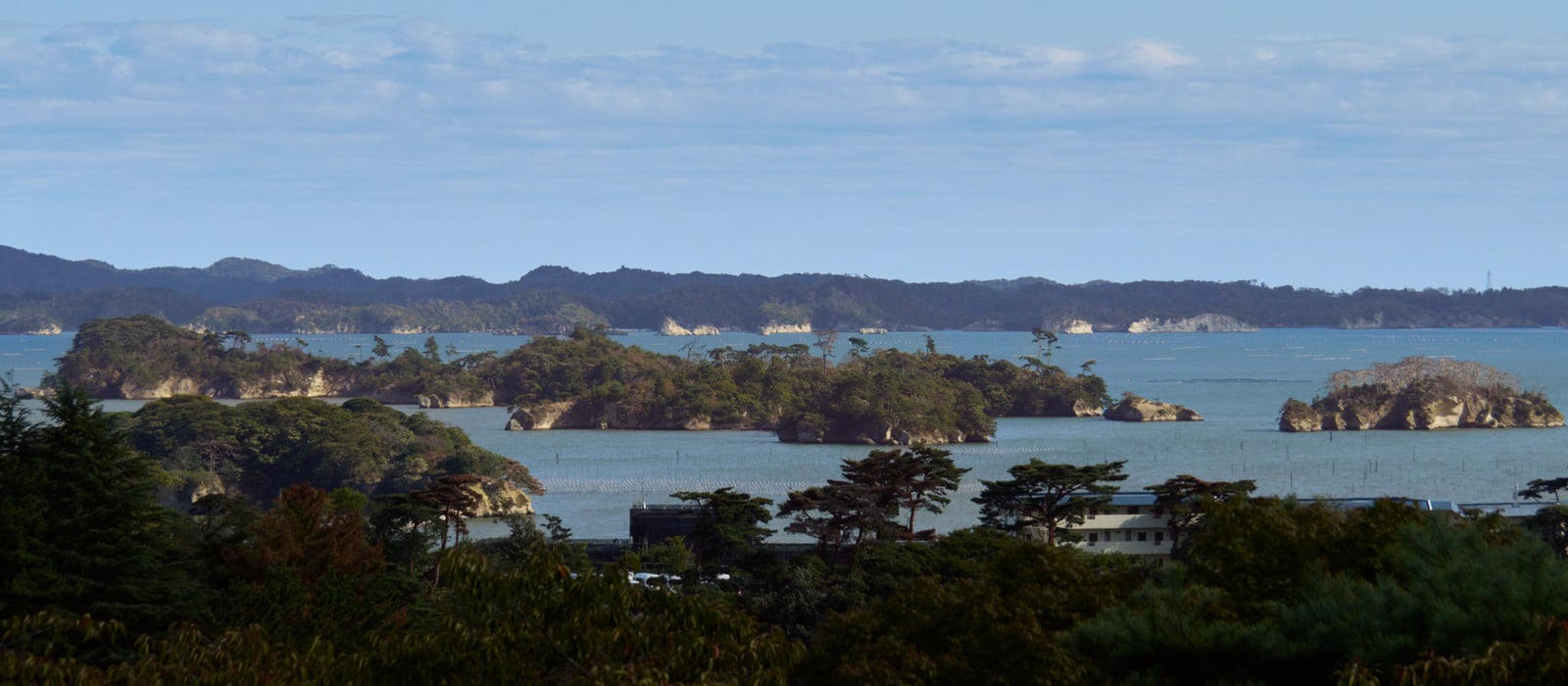
 Image: Wikimedia Commons
Miyagi Prefecture
Home to Sendai, the largest city in the Tohoku region, Miyagi Prefecture combines the castle-town history built by Date Masamune with the bounty of the Sanriku sea, epitomized by Matsushima, one of Japan's Three Scenic Views. Four Traditional Crafts designated by the Minister of Economy, Trade and Industry — Miyagi Dento Kokeshi, Ogatsu Suzuri inkstones, Sendai Tansu chests, and Naruko-nuri lacquerware — are joined by handcrafts such as Tsutsumi ware pottery and Sendai-hira silk that were nurtured as the official crafts of the Sendai Domain, and these traditions live on today. Its food culture is equally rich, shaped by the differing climates and industries of the inland and coastal areas: Sendai specialties like grilled beef tongue, zunda mochi, and sasa kamaboko fish cakes; regional dishes from the south of the prefecture such as harako meshi and seri nabe hot pot; and Kesennuma's shark fin cuisine. The story of recovery from the 2011 Great East Japan Earthquake is also passed down today through the region's industries, Ogatsu Suzuri chief among them.
Miyagi's Traditional Crafts
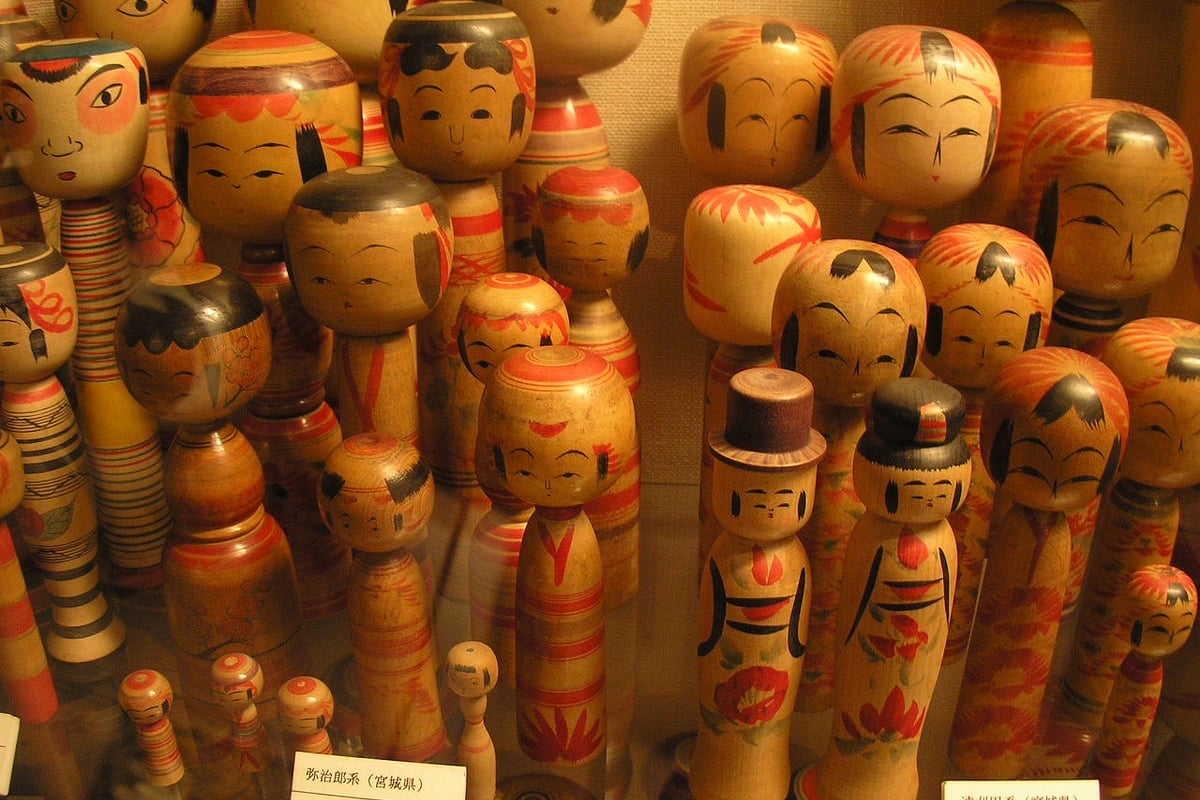
Miyagi Dento Kokeshi
Miyagi Dento Kokeshi
Miyagi Dento Kokeshi is a collective name for four lineages of kokeshi (doll) that developed within Miyagi Prefecture - the Naruko, Togatta, Yajiro, and Sakunami styles - all part of the wooden kokeshi tradition that began in the hot spring towns of the Tohoku region as souvenirs and toys for children in the late Edo period. On June 22, 1981, it was designated a Traditional Craft by the Minister of Economy, Trade and Industry (METI). Togatta kokeshi are believed to have already been made during the Bunsei era (1818-1830), making Togatta a leading candidate for the birthplace of kokeshi, though in recent years a theory tracing the origin to Sakunami Onsen in Sendai City has also drawn attention. The Naruko style is fitted tightly at the neck so that turning the head produces a squeaking sound; the Togatta style features a large head painted with a red hair ornament; the Yajiro style is known for its beret-like turned-line pattern on the head; and the Sakunami style is decorated with a crab-chrysanthemum (kani-giku) motif. The way each lineage differs completely in shape and painted design is one of the great appeals of Miyagi Dento Kokeshi. Even today, craftsmen at each hot spring town turn each doll by hand, keeping alive its simple, warm expression.

Naruko Shikki
Naruko Shikki
Naruko Shikki is lacquerware made in the Naruko Onsen hot spring area of Osaki City, Miyagi Prefecture, said to have been founded around the Kan'ei era (1624-1644) in the early Edo period. Its foundation was laid when Date Toshichika, the lord of the Iwadeyama domain, sent lacquer and maki-e craftsmen to Kyoto to study, and it developed as a souvenir for visitors taking the hot spring cure. It was designated a Traditional Craft by the Governor of Miyagi Prefecture on December 1, 1982, and a Traditional Craft designated by the Minister of Economy, Trade and Industry (METI) on May 20, 1991. Its greatest features are two lacquering techniques: Kijiro-nuri (木地呂塗), which brings out the beautiful wood grain beneath a translucent amber-colored lacquer, and Ryumon-nuri (竜文塗), which uses an ink-marbling technique to create fantastical patterns. Wood such as zelkova and Japanese horse chestnut is turned on a lathe, and the piece is finished through a painstaking process from undercoating to final lacquering, so the grain and coloring grow richer with use. Many pieces are everyday items such as soup bowls, tiered boxes, and trays, making Naruko Shikki a practical lacquerware rooted in the daily life of a hot spring town also known as the home of Naruko kokeshi.
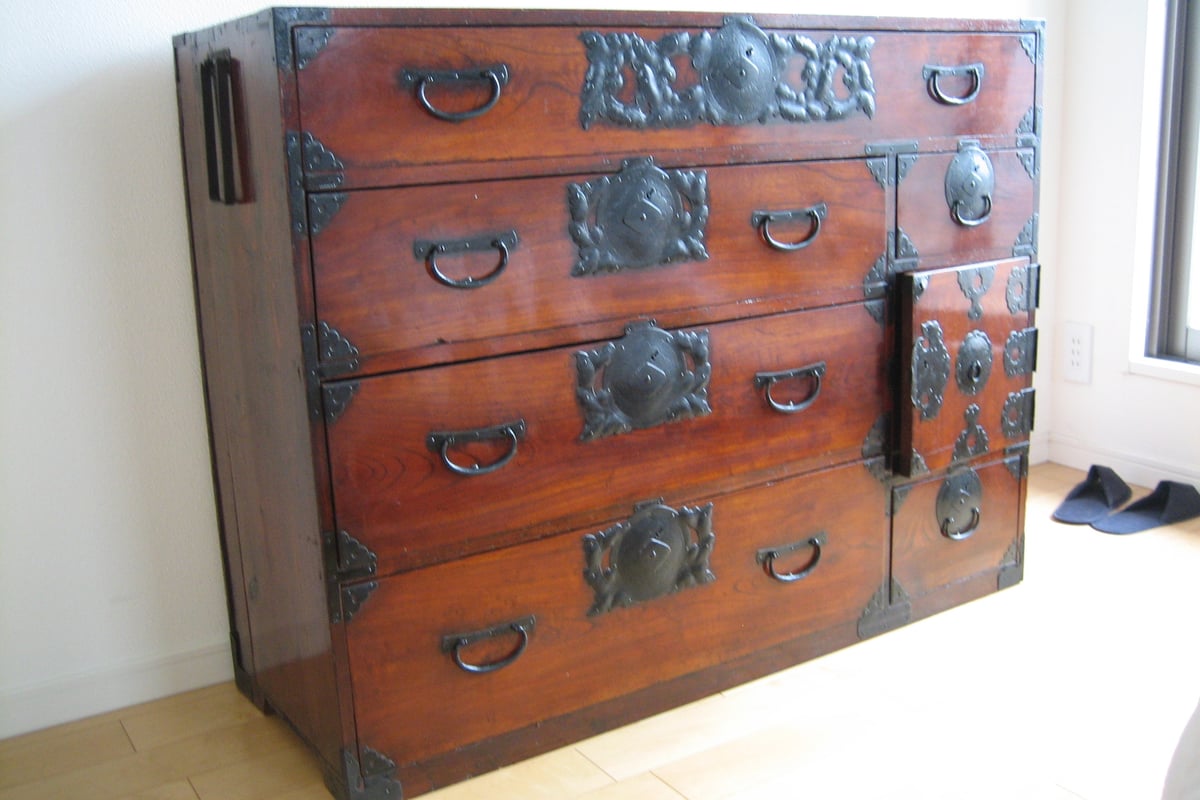
Sendai Tansu
Sendai Tansu
Sendai Tansu is a joinery-made chest of drawers produced mainly in Sendai City, a local industry born in the castle town of the Sendai Domain in the late Edo period. Originally made as a 'yaro-tansu,' a chest for storing swords and money, it was also actively exported to Europe and the United States from the Meiji through Taisho eras. Its greatest feature is a design in which solid wood such as zelkova or chestnut is finished with 'Sendai Kijiro-nuri,' a translucent crimson lacquer that beautifully shows off the wood grain, combined with imposing metal fittings hammered from iron plates about one millimeter thick into motifs favored by the samurai class, such as dragons, peonies, and Chinese lions (karajishi). The three processes of joinery, lacquering, and metalworking are each handled by specialized craftsmen through division of labor, a tradition still carried on today by craftsmen of the Sendai Tansu Cooperative. Sendai Tansu is also a relatively recent addition to the list of designated crafts: on June 18, 2015, it became the fourth Traditional Craft designated by the Minister of Economy, Trade and Industry (METI) in the prefecture, after Miyagi Dento Kokeshi, Ogatsu Suzuri, and Naruko Shikki, and the first new designation in the prefecture in 24 years.
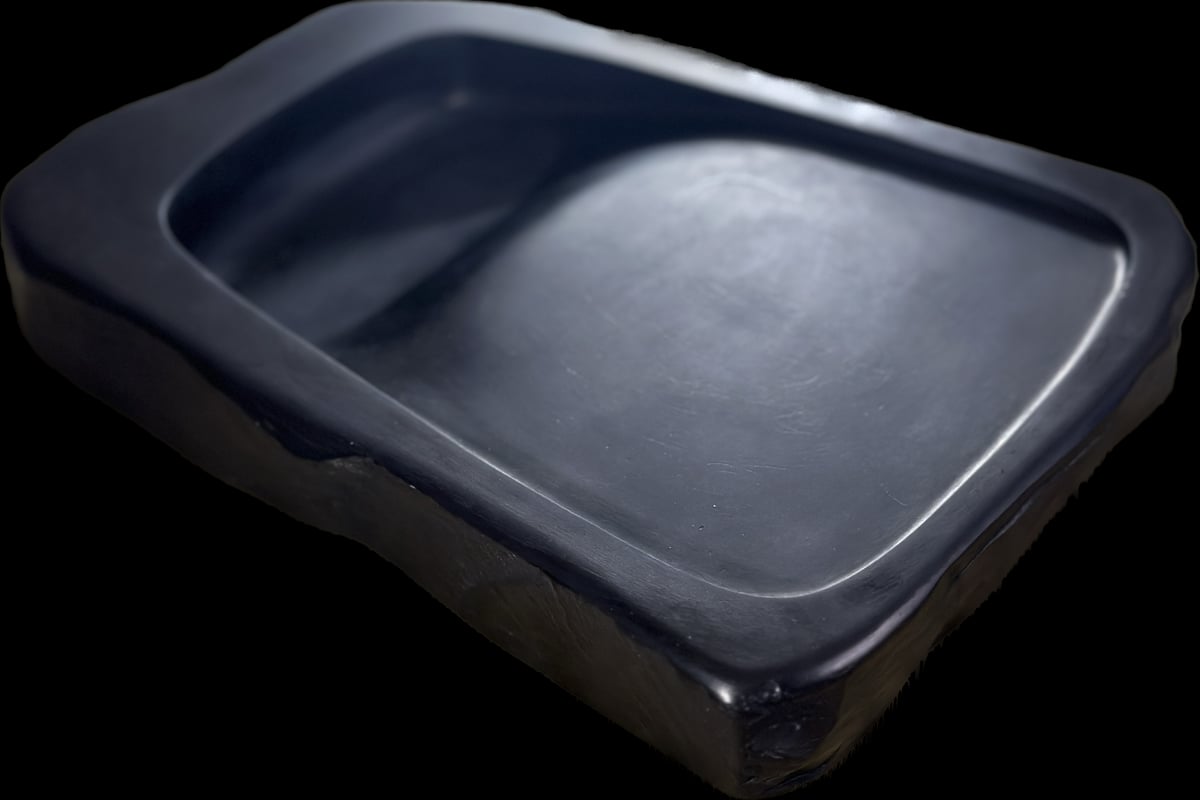
Ogatsu Suzuri
Ogatsu Suzuri
Ogatsu Suzuri are inkstones (suzuri) made in the Ogatsu district of Ishinomaki City, Miyagi Prefecture. Their raw material, gensho-seki (Ogatsu stone), is a black hard clay slate quarried from strata roughly 230 to 500 million years old. Its grain is uniform and fine, and it resists compression and bending while absorbing very little water, so it changes little over time - qualities that make it among the finest inkstone stones available. Ogatsu is said to have already been producing inkstone material around 1396, in the Muromachi era, and by the Edo period the stone is said to have been presented to Date Masamune, giving the craft a history of over 600 years. It was designated a Traditional Craft by the Minister of Economy, Trade and Industry (METI) on May 22, 1985, and at its peak, Ogatsu Suzuri accounted for more than 90% of all inkstones produced in Japan. The Great East Japan Earthquake (2011) caused severe tsunami damage throughout Ogatsu, destroying craftsmen's homes, workshops, and quarries. Even so, craftsmen resumed production using inkstones and tools found amid the rubble, and today they continue rebuilding the industry while also developing new products such as tableware in addition to inkstones.
Shiroishi Washi
Shiroishi Washi
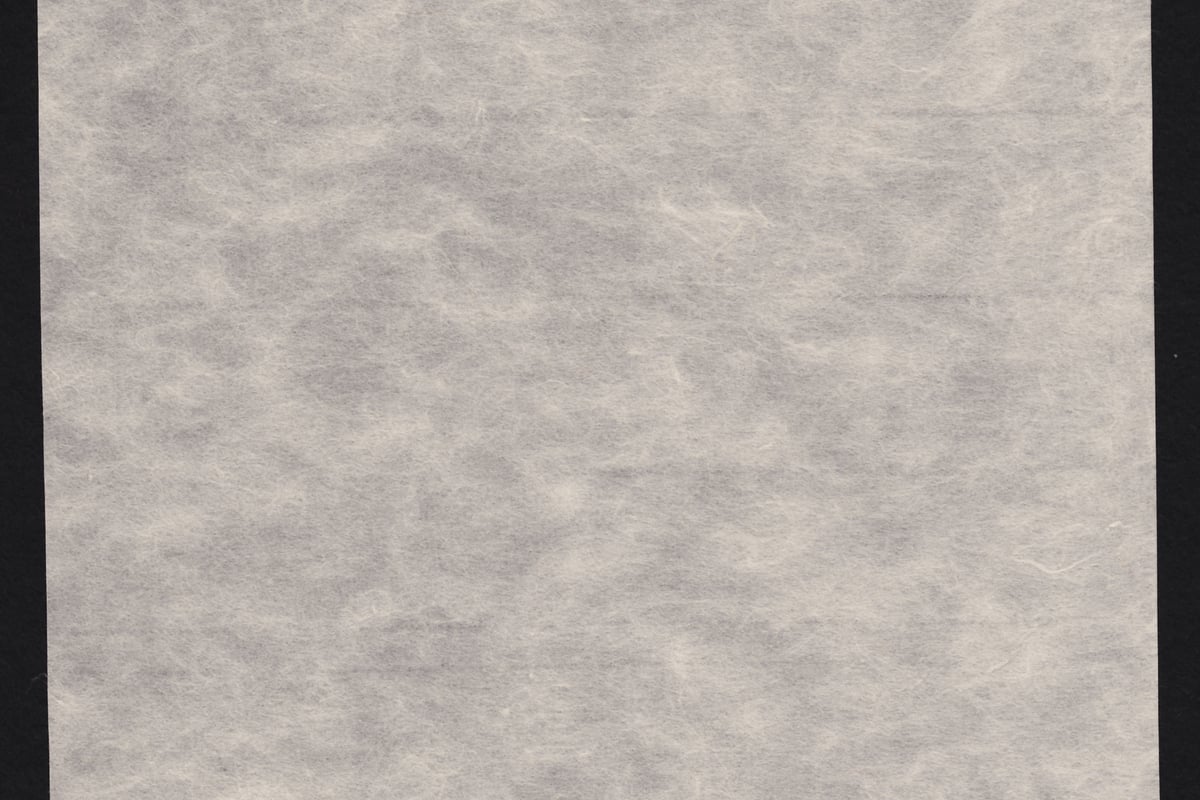
Shiroishi Washi is handmade Japanese paper passed down in Shiroishi City, Miyagi Prefecture, which developed in the Edo period through the industrial promotion of the Date family, lords of the Sendai Domain. As the official paper of the Sendai Domain, it was used for goods presented to the shogunate and the imperial court, and it is said that about 60 varieties of paper were made, from formal hosho paper to thick paper and tissue paper. Known for its strong yet soft, plump texture, paper from the Tohoku region has been praised as 'fukuyoka ni, kiyoku, uruwashiku' (plump, pure, and beautiful) since as far back as the time of Sei Shonagon and Murasaki Shikibu. Making use of this strength, it also developed into a material called 'kamiko,' made by rubbing the paper soft, and was used for items such as winter clothing and bags. From the Meiji era, production nearly died out as Western paper spread, but in 1940 Endo Tadao revived the traditional technique at the Oshu Shiroishi Folk Craft Research Institute, and on December 1, 1982, it was designated a Traditional Craft by Miyagi Prefecture. Today, the hand-papermaking technique is carried on alongside new forms of expression, such as kamiko made using a rubbing-dye technique.
Tsutsumi ware
Tsutsumi-yaki
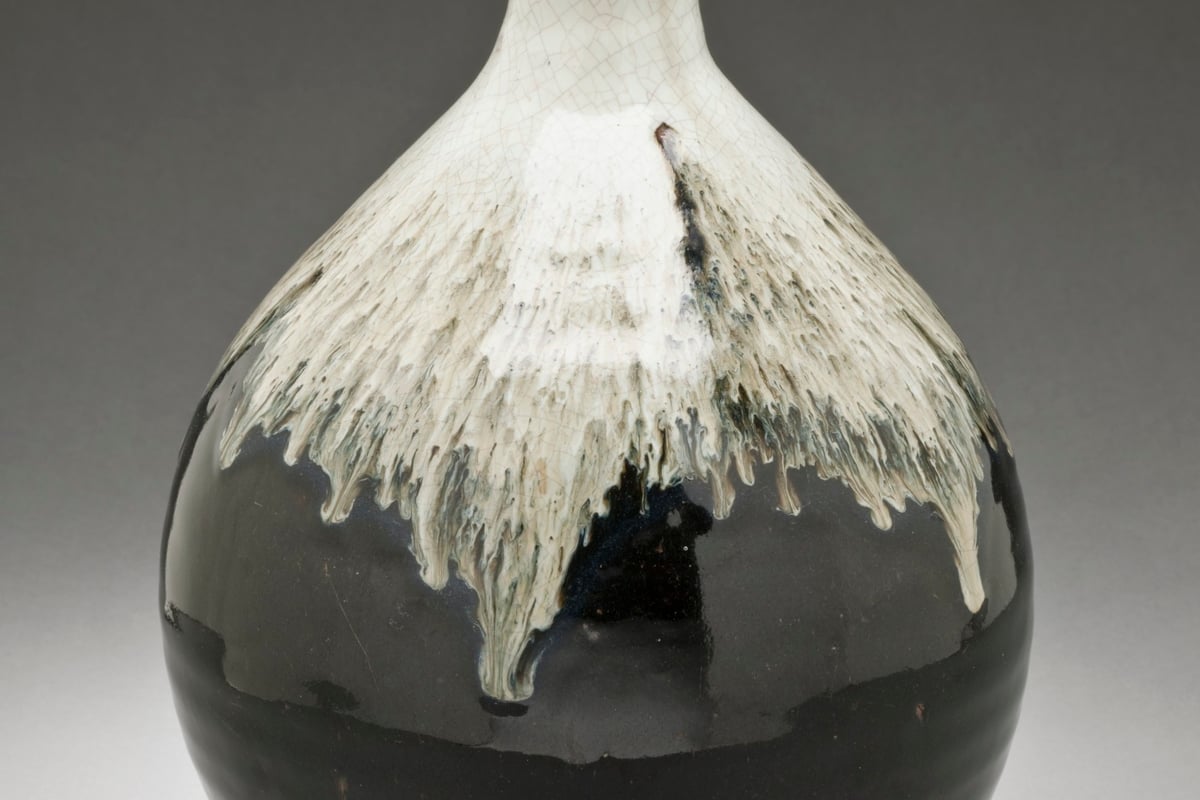
Tsutsumi ware is pottery produced in the former Tsutsumi-machi area of Sendai City (around present-day Tsutsumi-machi, Aoba Ward, Sendai), said to have begun in the Genroku era of the Edo period (1688-1704) when Date Tsunamura, the fourth lord of the Sendai Domain, invited potters from Kyoto to build a kiln there. It started as an official kiln producing tea utensils for the domain lord, later coming to mass-produce everyday vessels for common use, such as jars, urns, and spouted bowls. During the Edo period it was also known as a production center for unglazed clay dolls called 'Tsutsumi ningyo,' and together with Kyoto's Fushimi dolls it was celebrated in the phrase 'Fushimi in the west, Tsutsumi in the east.' Its defining feature is the bold application of black and white 'Namako-yu glaze,' made from local red clay combined with rock from around Sagi-ga-mori and ash from rice husks, producing a rustic, powerful texture. In the early Showa era it was also highly praised by Yanagi Sōetsu of the Mingei (folk craft) movement as a leading folk kiln of the Tohoku region. At its peak nearly thirty kilns operated, but today only 'Tsutsumi-yaki Kanbagama' continues to preserve the tradition. It is a Traditional Craft designated by the Governor of Miyagi Prefecture.
Kirigome ware
Kirigome-yaki
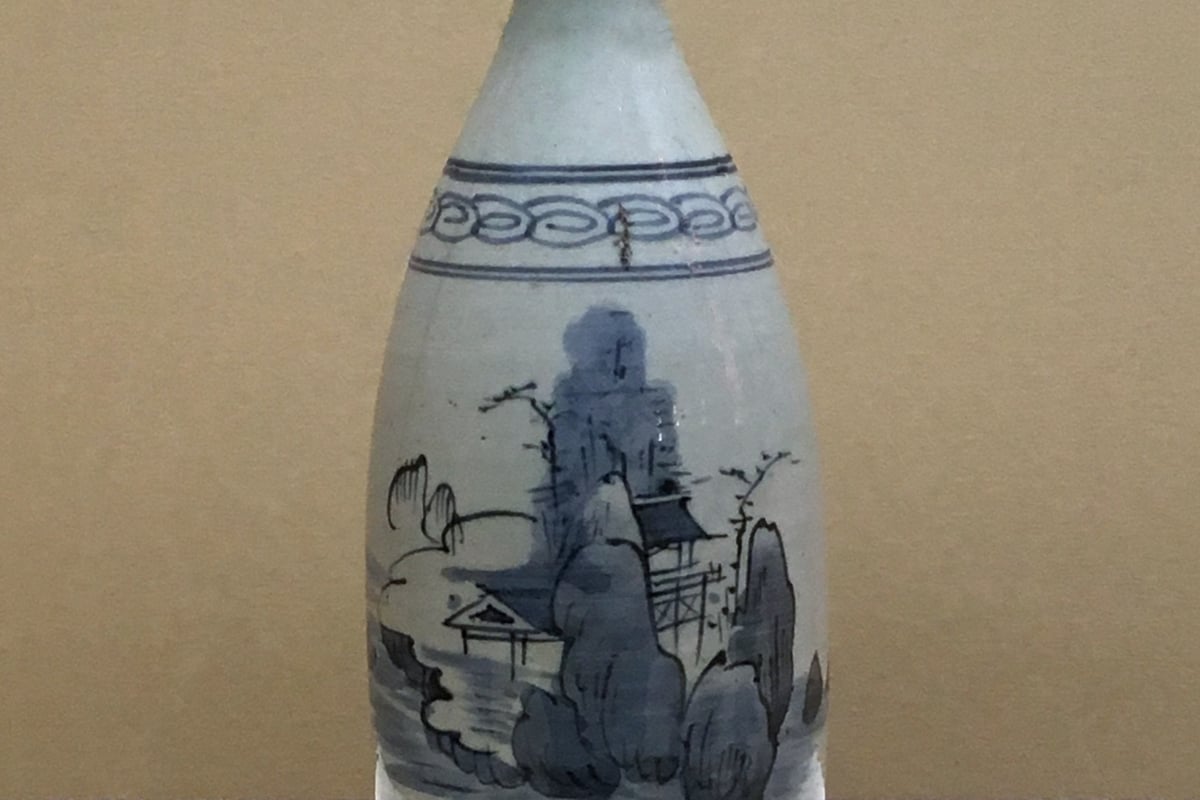
Kirigome ware is pottery and porcelain produced in the Kirigome district of Kami Town (formerly Miyazaki Town), Kami District, Miyagi Prefecture, made from the late Edo period until the early Meiji era. While it served as an official kiln of the Sendai Domain producing fine blue-and-white porcelain, it is also said to have produced large quantities of everyday wares for common use. Blue-and-white ware, with floral and plant motifs painted in indigo cobalt pigment on a white ground, formed the core of production; although the ground is not as pure white as Arita ware, its rustic, warm texture is its charm. Solid historical records are scarce and the details of its founding remain shrouded in mystery, but surviving blue-and-white pieces bear the date of 1835 (Tenpo 6), and it is said to have reached its peak during the Koka and Ansei eras of the late Edo period (around 1844-1860). The kilns closed once in the early Meiji 10s, and an attempted revival in the Taisho era did not take hold, but a full-scale revival was achieved in 1990 (Heisei 2) as part of a town revitalization effort. Today, 'Miura Toubou' is the sole kiln carrying on the tradition, and the Kami Town Furusato Togeikan (Kirigome Ware Memorial Museum) introduces its history and works. It was designated a Traditional Craft designated by the Governor of Miyagi Prefecture in 1984 (Showa 59).
Tamamushi-nuri lacquerware
Tamamushi-nuri
Tamamushi-nuri is a relatively new lacquer art born in Sendai. It was devised and patented in 1932 (Showa 7) by lacquer artist Koiwa Shun at the 'National Craft Guidance Institute,' established in Sendai to promote industry and develop export craft products in the Tohoku region. A wooden or dry-lacquer base is first coated with a lacquer undercoat, then covered entirely with silver powder, over which a special semi-transparent 'tamamushi lacquer' tinted with color is applied in many layers and carefully polished to completion. The name comes from its lustrous shine, which subtly changes color depending on the viewing angle and how light falls on it, resembling the wings of the jewel beetle (tamamushi). Since Tohoku Kogei Seisakusho, founded in 1933 with Saura Motojirō as its first president, obtained the rights to practice the patent in 1939, it has continued production as a craft representative of Sendai. A wide range of products are made, from vases and trays to accessories and Western tableware, and it was designated a Traditional Craft designated by the Governor of Miyagi Prefecture in 1985 (Showa 60). Because its history as a traditional craft is relatively short, another appeal is that many of its designs suit contemporary lifestyles.
Sendai-hira
Sendai-hira
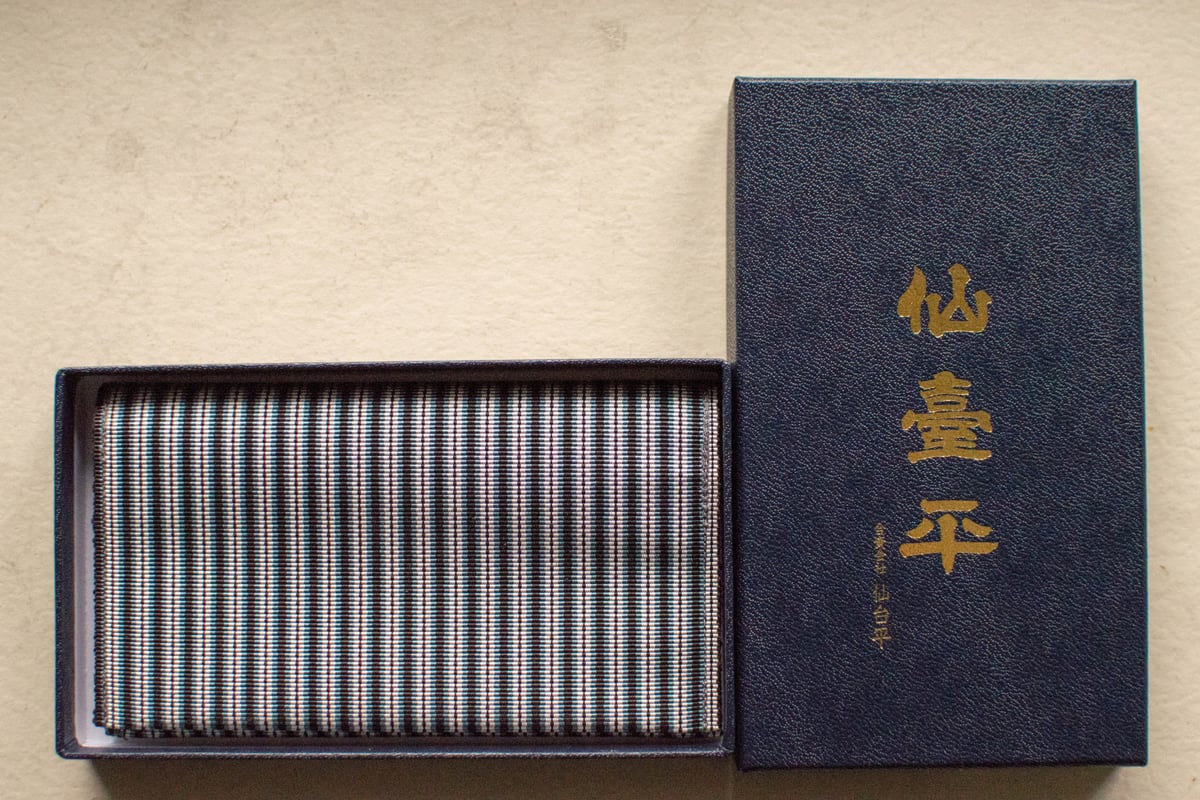
Sendai-hira silk is a woven silk fabric for men's hakama produced in Sendai City. According to tradition, its origins date to the Joukyo and Genroku eras of the mid-Edo period (roughly the 1680s to 1704), when Date Tsunamura, the fourth lord of the Sendai Domain, retained official weavers to produce hakama fabric and Noh costumes. The fabric is woven by twisting raw silk for the warp threads and forcefully beating in weft threads of near-raw silk while dampening them with water, producing cloth that is supple yet firm, resists wrinkling, and has a distinctive sheen and rustling sound as it moves. From the Edo period through the Meiji and Taisho eras, Sendai-hira was renowned as the finest of all hakama fabrics, reaching an annual production of as much as 30,000 tan (bolts) at its peak. As demand declined, the number of weaving houses gradually dwindled, and today Sendaihira Co., Ltd. is the sole workshop preserving the tradition. Its finest grade, known as seigo Sendai-hira, was designated an Important Intangible Cultural Property by the national government in 2002, and its head, Koda Yoshio, has been recognized as a Living National Treasure. In 1985 (Showa 60), it was also designated a Traditional Craft by the Governor of Miyagi Prefecture.
Nakaniida Uchihamono
Nakaniida Uchihamono
Nakaniida Uchihamono forged blades are hand-forged cutlery rooted in the blacksmithing tradition of Kami Town (formerly Nakaniida Town), Kamigun, Miyagi Prefecture. According to tradition, their origins trace back to the Kanbun era of the Edo period (roughly 1661 to 1673), when Funano Gorobei, a bladesmith of the Sendai Domain, began making sickles. For more than 300 years since, a forging method known as the kuu-uchi method, using the same hand-forging technique as swordsmithing, has been passed down for beating and combining iron and steel. The distinctively shaped sickles, designed to be used with the blade facing upward, are valued for reducing friction with soil so the edge resists chipping and can be easily re-sharpened. Beyond sickles, various other forged blades are also made, including nakiri kitchen knives and peeling knives. At its peak, eleven blacksmith workshops operated side by side, but due to a shortage of successors, today only Ishikawa Michio, the fourth-generation head of Ishikawa Hamono Seisakusho, continues to preserve the technique as its sole craftsman. It was designated a Traditional Craft by the Governor of Miyagi Prefecture in 1982 (Showa 57).
Miyagi's Local Food
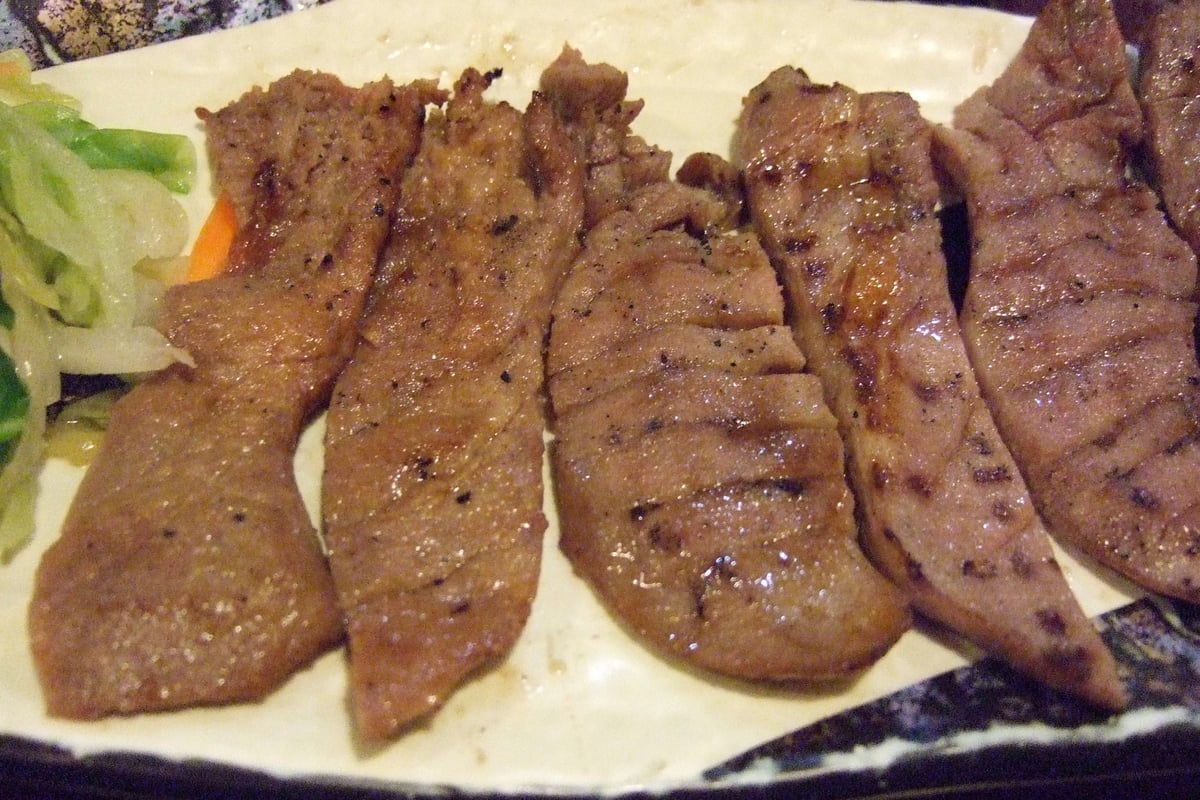
Gyutan Yaki (Grilled Beef Tongue)
Gyutan Yaki (Grilled Beef Tongue)
Gyutan yaki is a signature local dish of Miyagi Prefecture, centered on Sendai City, in which thickly sliced beef tongue is salted and grilled over charcoal. It is said to have originated in 1948 (Showa 23), when Sano Keishiro, a chef from Yamagata Prefecture who had trained in Tokyo, took note of beef tongue — then treated mainly as an ingredient for Western cuisine — and reworked it into a salt-grilled dish suited to Japanese tastes. Gyutan yaki was born when he opened the specialty restaurant 'Taisuke' in Sendai in 1950, and amid the post-war food shortages, a set-meal style took shape pairing the grilled tongue with barley rice in place of white rice and a tail soup made from beef tails, which were little used at the time. Today, dozens of specialty restaurants cluster around Sendai Station and the Kokubuncho district, and the 'gyutan set meal' — served with barley rice, tail soup, nanban miso, and light pickles — has become a standard Sendai specialty known nationwide.
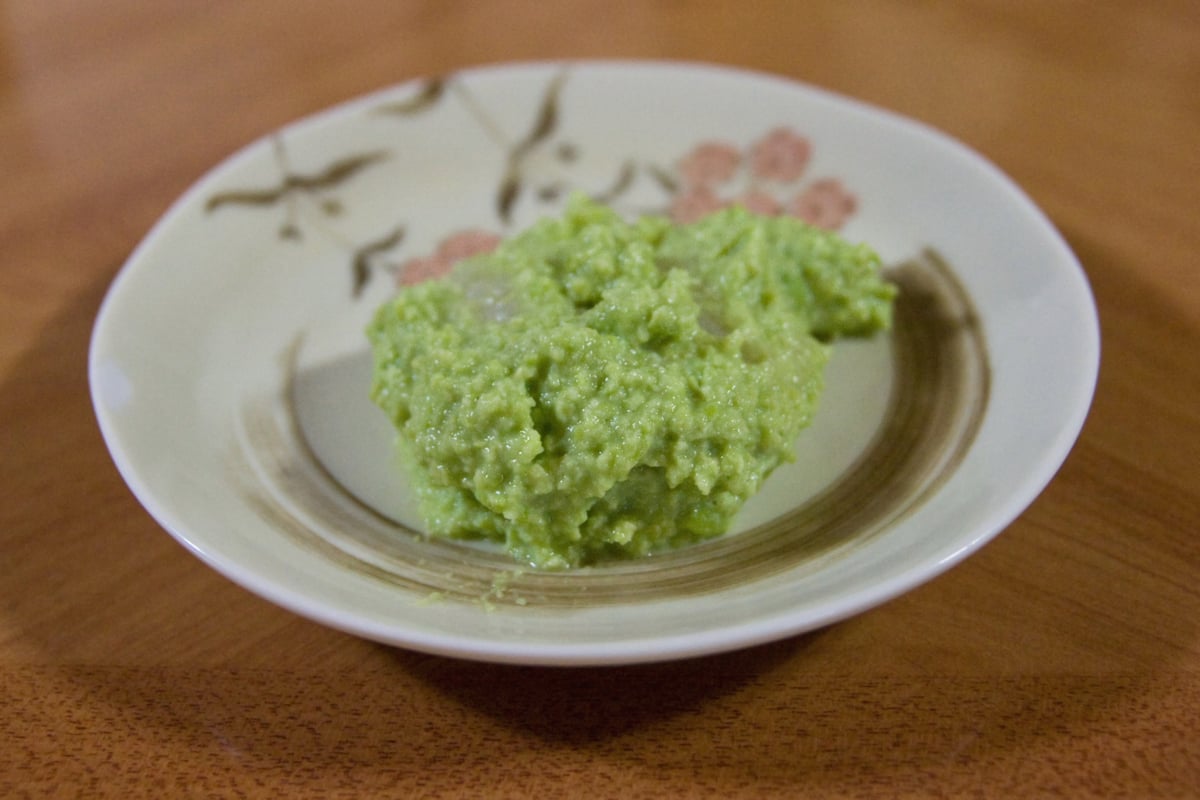
Zunda Mochi
Zunda Mochi
Zunda mochi is a signature local sweet of the Sendai region of Miyagi Prefecture, made by coating mochi with a vivid green paste called 'zunda,' produced by mashing boiled edamame (green soybeans). It is said that zunda had already become established as a coating for dishes by the late Edo period, and it was traditionally made as a whole-family effort during farm work or celebrations, with family members shelling the edamame and mashing them in a mortar. There are several theories about the origin of the name: one holds that it comes from a corruption of 'zuda,' a word describing the act of pounding beans, while another well-known but unverified story attributes it to an episode in which Date Masamune, founder of the Sendai Domain, is said to have had his soldiers crush edamame using the hilt of a sword (jin-tachi) in camp. However, there is no solid historical evidence directly linking Masamune to the dish, and this is generally regarded as a legend that spread in later eras. Today, zunda is used not only in mochi but also in a wide range of products such as shakes and Western-style confections, and it remains a beloved staple souvenir from Sendai.
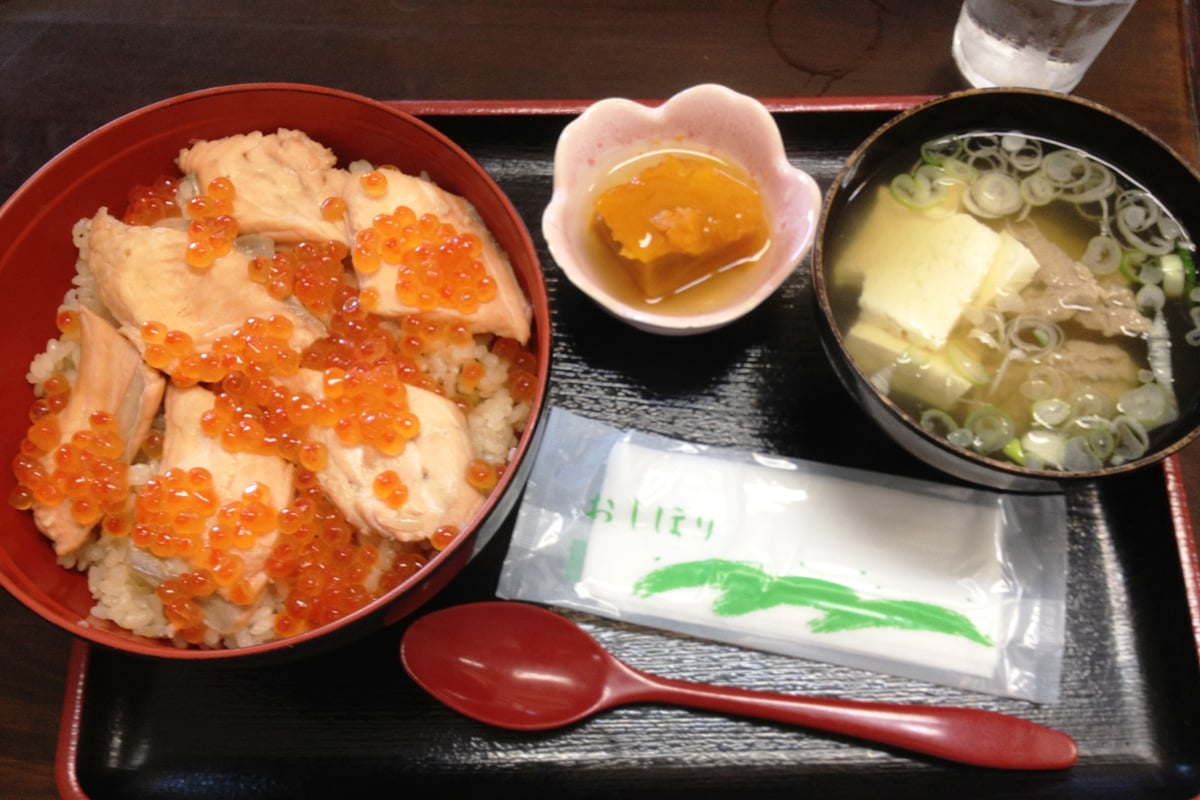
Harako Meshi (Salmon and Roe Rice)
Harako Meshi
Harako meshi is an autumn local dish originating in the Arahama district of Watari Town, Miyagi Prefecture, in which rice is cooked in a broth made by simmering salmon meat, and then topped with flaked salmon and glossy salmon roe (harako) dipped in the same broth. It is said to have originated when, during an era when beach seine salmon fishing thrived near the mouth of the Abukuma River, fishermen would prepare it as a meal for themselves after a large catch. An episode is recorded that during the Edo period, when Date Masamune, who ruled Watari, visited to inspect flood-control works on the Abukuma River, local fishermen presented him with harako meshi, which he greatly enjoyed. It is also said that after returning to his castle, he spoke of its delicious taste to those around him, which became the catalyst for it to become known as a specialty of Watari. 'Harako' refers to the roe inside a salmon's belly, that is, its 'belly child' (hara-ko). As a seasonal delicacy available only from around September to November, when salmon migrate upstream, it is served at restaurants throughout the prefecture, centered on Watari Town.
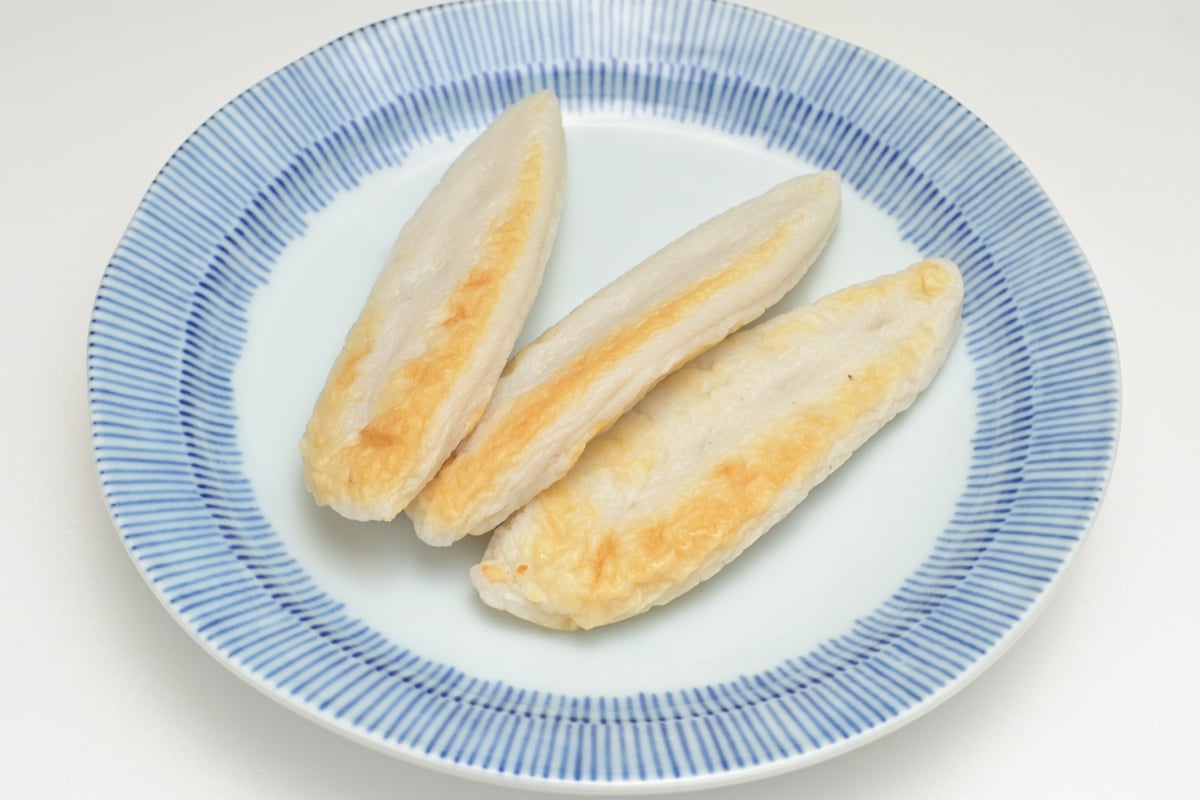
Sasa Kamaboko (Bamboo-Leaf Fish Cake)
Sasa Kamaboko
Sasa kamaboko is a fish cake shaped like a bamboo-grass leaf and grilled, made from pureed white fish — a local specialty representing Sendai. It is said to have originated in the mid-Meiji 30s (around 1900), when a series of large flatfish catches occurred along the coast from Yuriage to Mount Kinka; because transportation and storage capacity were insufficient at the time, grilled fish cakes were made to keep the surplus flatfish from going to waste. Because of its shape, it was originally called 'palm-shaped kamaboko' or 'tongue-shaped kamaboko' (berokamaboko), but it came to be called 'sasa kamaboko' because its shape resembled the bamboo-grass leaves depicted in the 'bamboo and sparrow' family crest of Date Masamune, the founder of the Sendai Domain. This name is said to have become standardized in the Showa era. While flatfish, a high-grade fish, was originally the main ingredient, as catches declined, white fish such as walleye pollock has become the main ingredient today. Low in fat and calories while rich in high-quality protein, it is a classic Sendai souvenir, with more than 40 producers said to exist within Miyagi Prefecture.
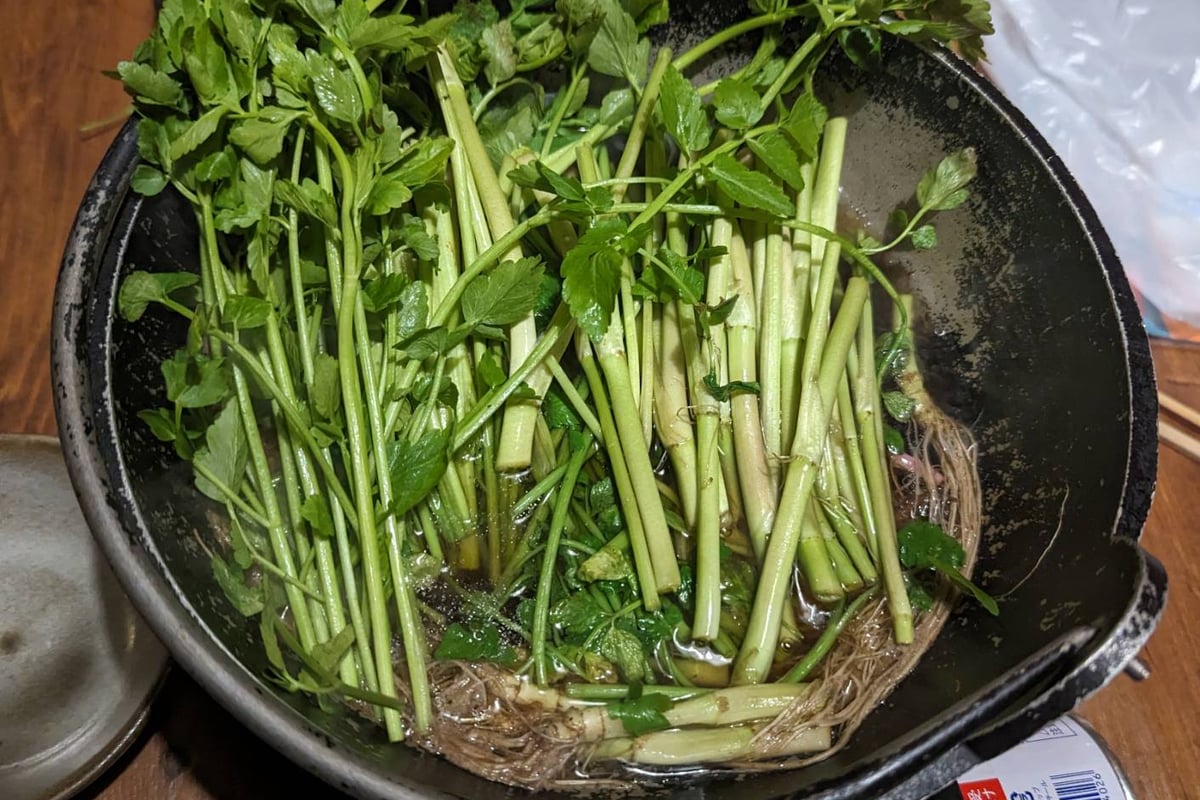
Seri Nabe (Japanese Parsley Hot Pot)
Seri Nabe
Seri nabe is a hot pot dish that uses Miyagi-grown seri (Japanese parsley) whole — root, stem, and leaf alike. The roots of seri are packed with intense umami, and their crisp, fragrant texture is the dish's defining charm. Miyagi Prefecture is one of Japan's leading seri-producing regions, with Natori City — which accounts for about 80% of the prefecture's production — known as the main growing area. In Natori City, seri has long been cultivated in the Kamiyoden and Shimoyoden districts, where groundwater from the Natori River wells up; records from the Genna era (1620s) mention the cultivation of wild seri, and it is said that seri cultivation became widespread during the Anei era (1770s). Date Masamune is also said to have composed a linked-verse poem referencing seri roots as 'nezeri' (root parsley) at a gathering in Tensho 18 (1590), suggesting that the custom of eating even the roots dates back a long way. In recent years, it has gained recognition alongside gyutan (grilled beef tongue) and zunda mochi as a signature dish of Sendai and Miyagi, and it is now served at many restaurants, particularly during the winter months.
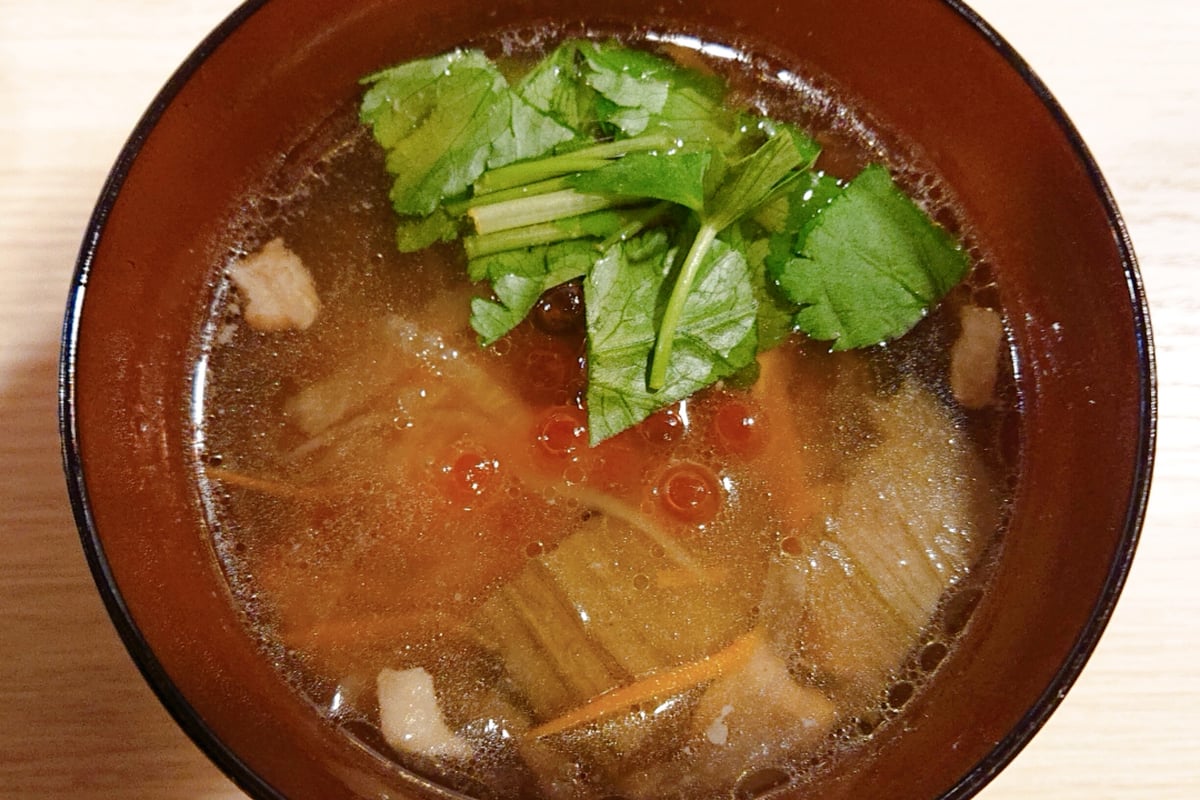
Sendai Zoni (New Year's Soup)
Sendai Zoni
Sendai zoni is a New Year's soup from Sendai City, Miyagi Prefecture, topped with a whole grilled and dried goby fish (yaki-haze) so large it overhangs the bowl, and simmered in the fragrant broth this fish provides. It is said that in the late Edo period, when goby were caught in abundance in Matsushima Bay, the custom arose of grilling them over charcoal, sun-drying them, and stringing them together on straw to sell for the New Year — and using this dried fish as the base for a soup that became a fixture of Sendai households. Besides the grilled goby, the ingredients include harako (salmon roe) taken from salmon that migrate up the Abukuma River, Sendai-seri (Japanese parsley grown around Sendai), 'ohikina' — julienned daikon, carrot, and burdock root that is boiled and then frozen outdoors — as well as zuiki (taro stem) and frozen tofu. The result is a colorful, lavish bowl fit for a festive occasion. Around central Sendai, eating this zoni during the first three days of the New Year remains a common custom to this day. It is worth noting that records show the zoni Date Masamune himself ate was a different style altogether, made with a broth of dried abalone, dried sea cucumber, and herring — meaning the grilled-goby zoni is best understood as a local dish that took root and spread among ordinary people rather than a dish of Date Masamune's own table. In recent years, poor catches of goby and salmon roe have made the ingredients harder to obtain and pushed up prices, leading some to call it a 'luxury zoni.'
Okuzukake (Thickened Vegetable Soup with Noodles)
Okuzukake
Okuzukake is a Buddhist vegetarian dish traditionally made around the spring and autumn equinoxes, Obon, and memorial services in Sendai City and the southern Miyagi (Sennan) region. Burdock root, carrot, taro, dried shiitake mushrooms, fried tofu, tofu, and mamefu (bean-flour gluten dumplings) are simmered together with other vegetables and dried ingredients in a broth, Shiroishi umen noodles — a specialty of the Shiroishi area — are added, and the whole dish is finished with a thickened consistency. The name comes from the fact that the broth was once thickened with kuzuko, starch extracted from the roots of wild kudzu vines growing in the mountains and fields; today potato starch is commonly used instead. It is also said to have been modeled on the Zen Buddhist fucha-ryori dish 'unpen,' and traditionally contains no meat or fish, though many households add katsuo dashi or chicken as their own variation. When relatives gather for the equinoxes or Obon, it has developed as a dish offered before the family Buddhist altar alongside zunda mochi and ohagi, and served to entertain guests. Handed down across generations as a taste of 'mother's cooking,' it remains part of everyday life on tables across southern Miyagi today.
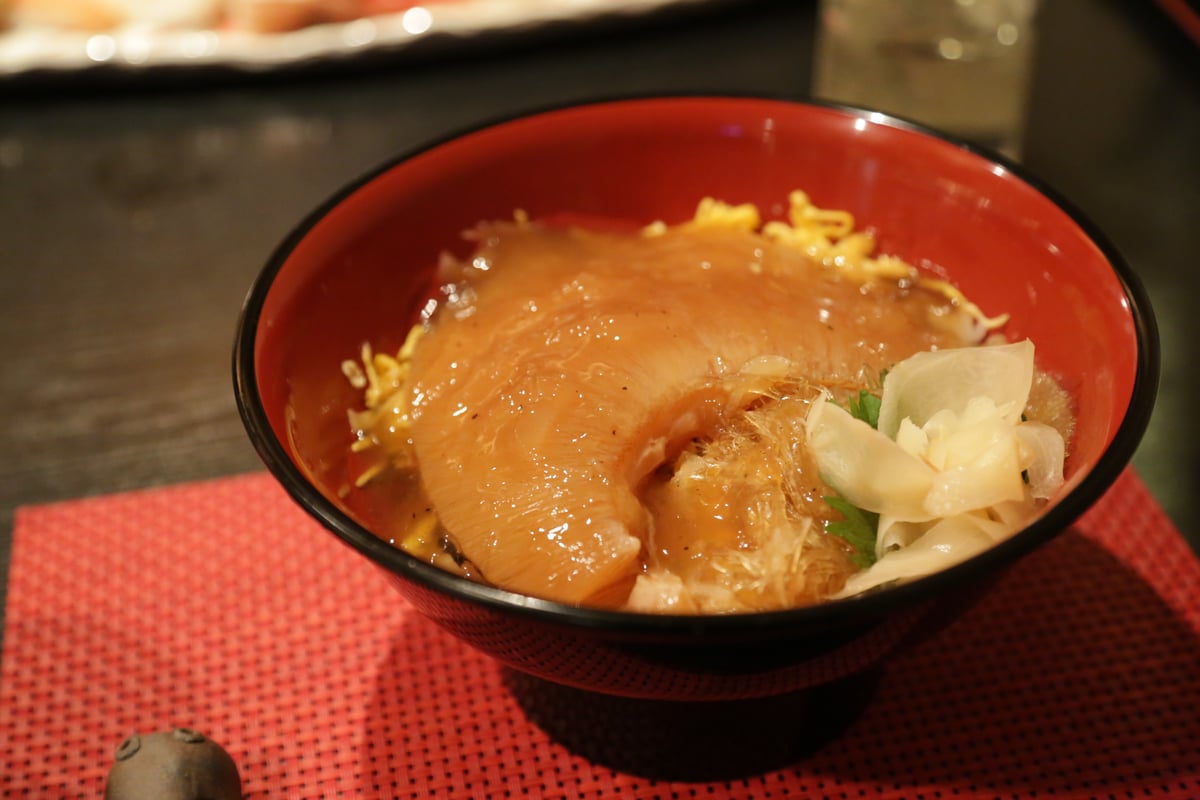
Kesennuma Shark Fin Cuisine
Kesennuma Shark Fin Cuisine
Kesennuma boasts Japan's largest shark landings, thanks to the rich fishing grounds off the Sanriku coast, with roughly 90% of the sharks landed nationwide gathering at Kesennuma Port — earning it recognition as 'Japan's top shark fin producing town.' The origins of shark fin processing trace back to the late Edo period, when a fur merchant in the city is said to have noticed that shark fins could be sold profitably in Yokohama and begun manufacturing and selling them. During the Meiji era, a processing industry developed that used shark meat as a raw material for fish-paste products such as chikuwa and kamaboko, and the fins themselves were initially treated as a byproduct known simply as 'samehire.' It was not until the latter half of the Showa 50s (late 1970s to early 1980s) that Kesennuma's shark fin gained recognition as a nationally known brand, spurred by the spread of mail-order sales. The blue shark is the main species used, with the dorsal, pectoral, tail, and pelvic fins all processed without waste, and the sight of fins being sun-dried has become a familiar winter scene in Kesennuma. Beyond braised whole fins, the dish is also enjoyed in local specialties such as shark fin rice bowls and shark fin sushi.
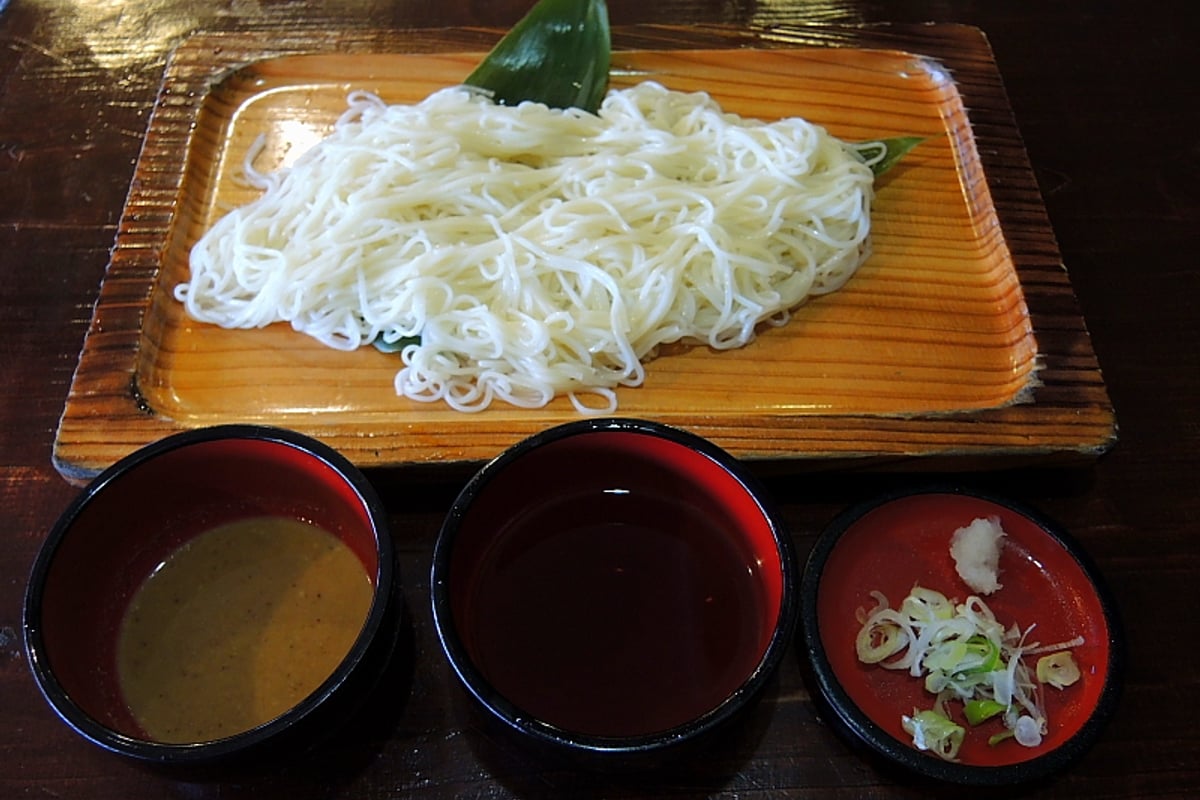
Shiroishi Umen (Oil-Free Noodles)
Shiroishi Umen
Shiroishi umen (oil-free noodles) is a type of thin wheat noodle that has been made around Shiroishi City, Miyagi Prefecture, since the early Edo period, roughly 400 years ago, distinguished by a manufacturing method that uses no oil at all. The most widely told origin story is one of filial devotion: Suzuki Asaemon, who lived in the castle town of Shiroishi, worried about his father, who was suffering from a stomach ailment and could barely eat. Having learned from a traveling monk of a way to make noodles without oil, he prepared them, warmed them, and fed them to his father, and it is said that his father's condition improved. When Katakura Kojuro, the lord of Shiroishi Castle, heard this story, he is said to have named the noodles 'unmen' (umen), meaning 'warm noodles,' in honor of Asaemon's devotion to his father, and to have allowed Asaemon to take the name 'Miemon.' Because no oil is used, the noodles are considered gentle on the stomach and easy to digest, and they are also cut somewhat shorter than ordinary somen, to about 9 cm. Passed down for more than 400 years as a local industry of Shiroishi, and designated as a production area by the National Federation of Dried Noodle Cooperative Associations, it is a dried noodle representative of Miyagi Prefecture.
Ganzuki (Steamed Cake)
Ganzuki
Ganzuki is a local confection of Miyagi Prefecture made by mixing wheat flour with baking soda (or baking powder), brown sugar, and water, pouring the batter into a mold, and steaming it — a fluffy yet substantial steamed cake. There are several theories about the origin of its name: one holds that the color and appearance of the steamed batter resembles the meat of a wild goose (gan), while another holds that the round shape and the sesame seeds scattered on the surface evoke the image of the moon and a goose. In the Sendai Domain, rice cultivation was encouraged, and because farmers had to hand over much of their harvested rice as tax, wheat cultivation and a flour-based food culture spread among them — this is thought to be the background behind the development of local confections made with wheat flour, such as ganzuki. 'Kuro ganzuki,' made with brown sugar, is the representative version, but there are many regional and household variations, including 'shiro ganzuki,' made with white sugar, and versions with added miso, soy sauce, walnuts, or sesame. While enjoyed as an everyday snack, it also has a side as a ceremonial food made for memorial services and celebrations.
Model Course
A half-day course of traditional crafts and local gourmet food in Sendai City
Visit a Sendai Tansu workshop to see the craftsmanship behind its zelkova wood and heavy metal fittings, then admire the luster of Tamamushi-nuri lacquerware. For lunch, fill up on a Sendai specialty — grilled beef tongue set meal — and finish with sweet zunda mochi, a classic course that stays entirely within central Sendai.
A course exploring the kokeshi and lacquerware villages of Naruko Onsen, Osaki City
In Naruko Onsen, known as the stage for the National Kokeshi Doll Festival, watch a Miyagi Dento Kokeshi craftsman turn a lathe, then experience Naruko-nuri lacquerware vessels that bring out the wood grain with techniques such as Kijiro-nuri — a course touring one of Tohoku's leading centers for woodworking and lacquer art.
A course of inkstones and shark fin cuisine along the Sanriku coast, tracing the story of recovery
Visit the Ogatsu Suzuri workshop in the Ogatsu district of Ishinomaki City, which resumed production after the Great East Japan Earthquake, to learn the history of Japan's leading inkstone-producing area and its path to recovery, then move on to Kesennuma City to savor its distinctive shark fin cuisine — Kesennuma accounts for about 90% of Japan's domestic shark fin production.
A handcraft course of washi paper and umen noodles in Shiroishi City, southern Miyagi
In Shiroishi City, experience the papermaking behind Shiroishi Washi, once the official paper of the Sendai Domain's Date family, then have lunch on Shiroishi Umen, noodles made without using oil. A course for walking a castle town where humble handcraft techniques and food culture live on side by side.
A coastal course savoring the autumn and winter flavors of Watari and Natori
In autumn, savor harako meshi, the Watari Town specialty of rice cooked in salmon broth and topped with salmon roe; in winter, warm up with seri nabe, a hot pot made with seri (Japanese parsley) grown root and all in areas such as Natori City — a course tracing the seasonal flavors of the southern coastal area of the prefecture.
A course touring the forged-blade and pottery villages of Kami Town
In the former Nakaniida area, visit a forge that carries on Nakaniida Uchihamono, made using the same forging techniques as Japanese swords, then compare it with the underglaze blue-and-white and polychrome porcelain of Kirigome ware, which developed as an official kiln of the Sendai Domain — a course touring the handcrafts of Kami Town.
Events
Sendai Tanabata Festival
Every year, August 6–8 (a fireworks display is held as a pre-festival event on August 5) / Central Sendai City (shopping streets such as Ichibancho and Chuo-dori, around Sendai Station)
National Kokeshi Doll Festival
Every year, early September (typically three days) / Naruko Onsen, Osaki City