Image: Wikimedia Commons
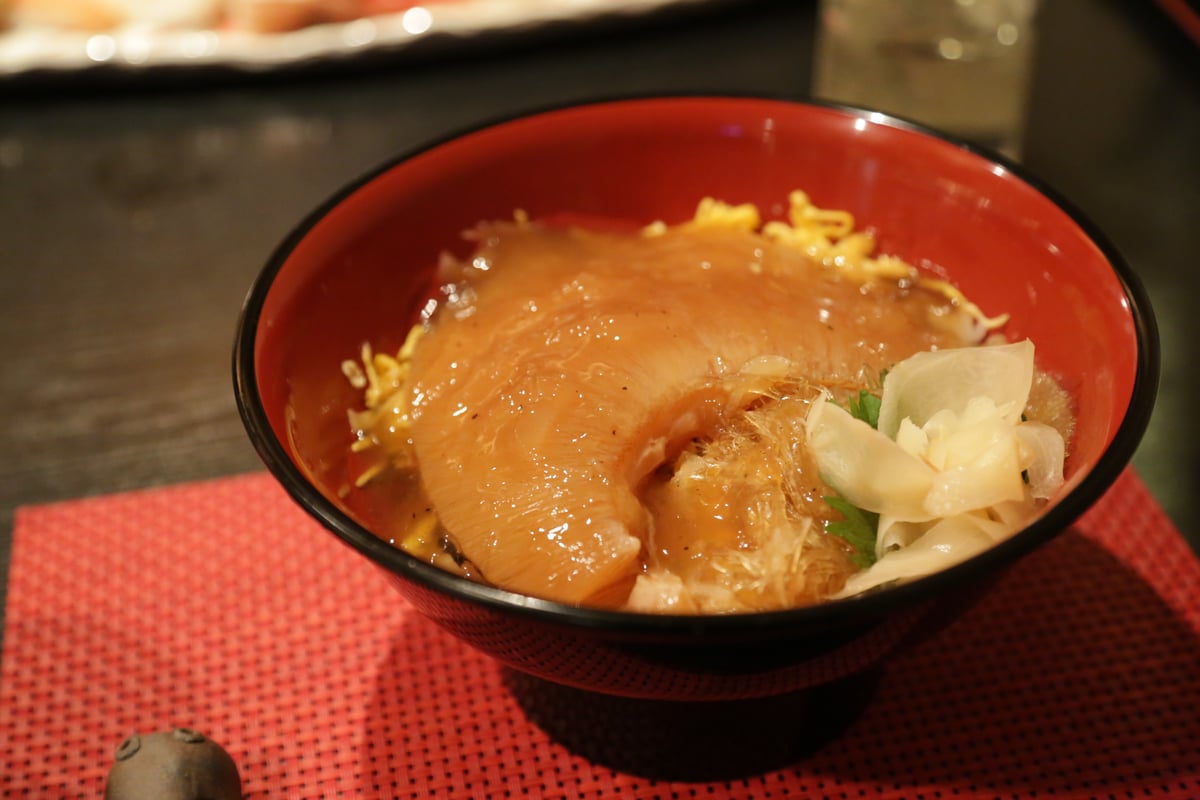
Kesennuma boasts Japan's largest shark landings, thanks to the rich fishing grounds off the Sanriku coast, with roughly 90% of the sharks landed nationwide gathering at Kesennuma Port — earning it recognition as 'Japan's top shark fin producing town.' The origins of shark fin processing trace back to the late Edo period, when a fur merchant in the city is said to have noticed that shark fins could be sold profitably in Yokohama and begun manufacturing and selling them. During the Meiji era, a processing industry developed that used shark meat as a raw material for fish-paste products such as chikuwa and kamaboko, and the fins themselves were initially treated as a byproduct known simply as 'samehire.' It was not until the latter half of the Showa 50s (late 1970s to early 1980s) that Kesennuma's shark fin gained recognition as a nationally known brand, spurred by the spread of mail-order sales. The blue shark is the main species used, with the dorsal, pectoral, tail, and pelvic fins all processed without waste, and the sight of fins being sun-dried has become a familiar winter scene in Kesennuma. Beyond braised whole fins, the dish is also enjoyed in local specialties such as shark fin rice bowls and shark fin sushi.
Origin
The waters off Kesennuma are counted among the world's three great fishing grounds, where the Oyashio and Kuroshio currents meet, and sharks have long been landed there in large numbers. Shark fin processing is said to have originated in the late Edo period, when the owner of a fur shop in the city, noticing that shark fins fetched high prices in Yokohama, began manufacturing and selling them. This combination of a rich fishing ground and local business acumen became the starting point that propelled Kesennuma into becoming a major shark fin producing area.
History
From the late Meiji through the Taisho era, a fish-processing industry developed that put to use the large quantities of spiny dogfish caught incidentally in bottom-set gillnets, using the shark meat as a raw material for fish-paste products such as chikuwa and kamaboko. At the time, the fins were treated as a byproduct called 'samehire,' and it was only after mail-order sales spread from the latter half of the Showa 50s (late 1970s to early 1980s) onward that Kesennuma's shark fin became widely known as a nationwide brand.
Features
Kesennuma mainly lands blue sharks, processing the dorsal, pectoral, tail, and pelvic fins without waste. Depending on the processing method, the fins are classified into types such as harabire (raw fin), suumuki (skin-removed), haishi, and sanshi, and the sight of fins being sun-dried is a familiar winter scene in Kesennuma. Beyond braised whole fins, the dish is served in a variety of forms, including shark fin rice bowls and shark fin sushi.
Main Ingredients
Food Culture
Shark fishing and fin processing in Kesennuma form a pillar supporting the region's fish-processing industry: braised whole fin is prized as a gift item and luxury ingredient, while shark fin rice bowls and shark fin sushi are enjoyed by tourists as local specialties. The sight of fins being sun-dried is cherished locally as a scene symbolic of winter in Kesennuma.
How It Differs from Home Cooking
Preparing shark fin requires labor-intensive steps such as prolonged drying and rehydration, so it is rarely cooked from scratch at home; instead, people commonly rely on braised fin from specialty restaurants or pre-processed shark fin products.
Famous Shops
寿し処大政
宮城県気仙沼市東八幡前142-3
A sushi restaurant serving Kesennuma's famous shark fin sushi. Open 11:30 AM-2:00 PM and 5:00-9:00 PM.
ふかひれの石渡商店
宮城県気仙沼市松崎柳沢228-107
A processing and retail shop specializing in shark fin from Kesennuma. Braised whole shark fin is available starting at around 1,451 yen (tax included) for 150g.
View details →FAQ
Q. When did Kesennuma's shark fin become nationally famous?
A. Shark fin processing itself dates back to the late Edo period, but it was initially treated as a byproduct called 'samehire' from fish-paste processing. It became widely known as a nationwide brand only after mail-order sales spread from the latter half of the Showa 50s (late 1970s to early 1980s) onward.
Q. How much of Japan's shark catch does Kesennuma account for?
A. Roughly 90% of the sharks landed in Japan are said to gather at Kesennuma Port, earning it recognition as 'Japan's top shark fin producing town.' Being blessed with the rich fishing grounds off Sanriku is a major reason for this.