Image: Wikimedia Commons
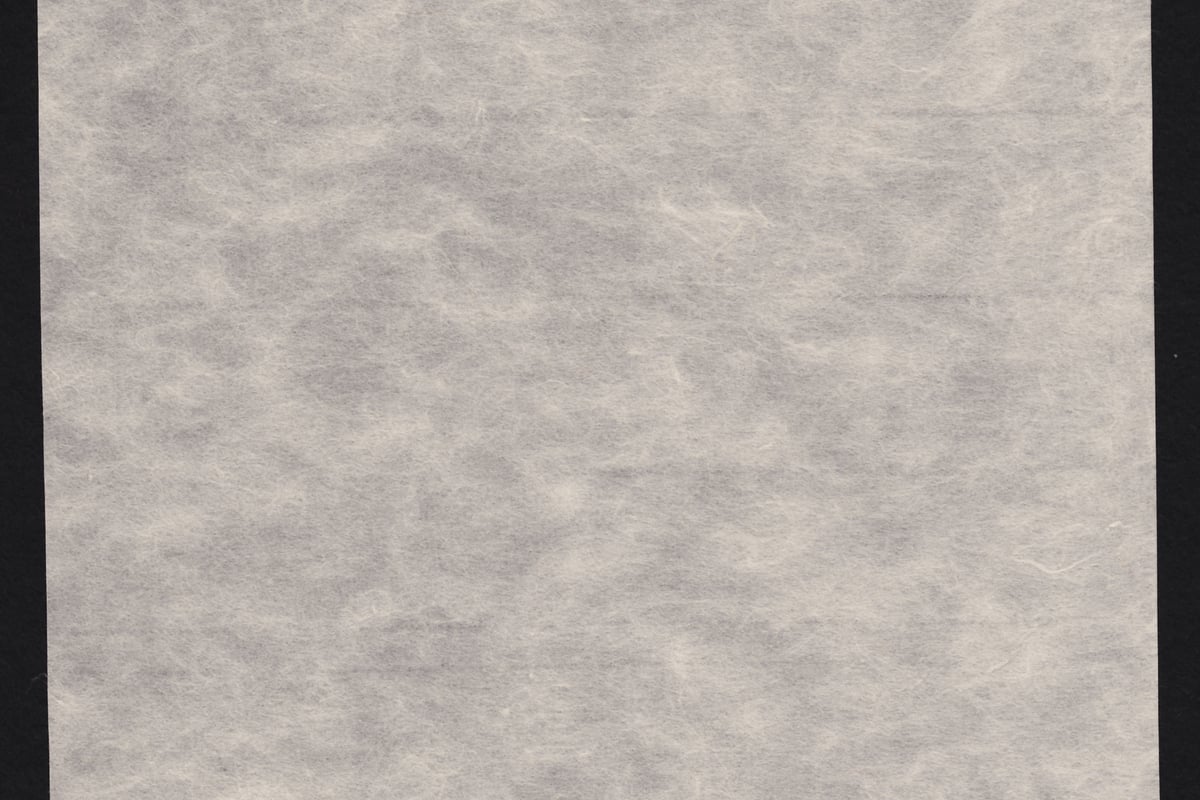
Shiroishi Washi is handmade Japanese paper passed down in Shiroishi City, Miyagi Prefecture, which developed in the Edo period through the industrial promotion of the Date family, lords of the Sendai Domain. As the official paper of the Sendai Domain, it was used for goods presented to the shogunate and the imperial court, and it is said that about 60 varieties of paper were made, from formal hosho paper to thick paper and tissue paper. Known for its strong yet soft, plump texture, paper from the Tohoku region has been praised as 'fukuyoka ni, kiyoku, uruwashiku' (plump, pure, and beautiful) since as far back as the time of Sei Shonagon and Murasaki Shikibu. Making use of this strength, it also developed into a material called 'kamiko,' made by rubbing the paper soft, and was used for items such as winter clothing and bags. From the Meiji era, production nearly died out as Western paper spread, but in 1940 Endo Tadao revived the traditional technique at the Oshu Shiroishi Folk Craft Research Institute, and on December 1, 1982, it was designated a Traditional Craft by Miyagi Prefecture. Today, the hand-papermaking technique is carried on alongside new forms of expression, such as kamiko made using a rubbing-dye technique.
Origin
Paper from the Tohoku region was already known from the mid-Heian period, and was praised as 'fukuyoka ni, kiyoku, uruwashiku' (plump, pure, and beautiful) even in the writings of Sei Shonagon and Murasaki Shikibu. In the Edo period, Shiroishi Washi expanded production through the industrial promotion of Date Masamune, lord of the Sendai Domain, and as the official paper of the Sendai Domain it was used for goods presented to the shogunate and the imperial court. About 60 varieties of paper were made, from hosho to thick paper and tissue paper, and it flourished as a specialty product representing the region.
History
From the Meiji era, as Western paper spread, Shiroishi Washi gradually declined, nearly disappearing by the early Showa era. To revive this tradition, the 'Oshu Shiroishi Folk Craft Research Institute' was established in 1940, and Endo Tadao brought the hand-papermaking technique back to life. On December 1, 1982, it was designated a Traditional Craft by Miyagi Prefecture, and after Endo's death, his wife Mashiko continued to protect the papermaking tradition. Today, workshops making kamiko with rubbing-dye techniques continue to convey the appeal of this strong, resilient paper.
Features
The greatest feature of Shiroishi Washi is the strength and plump texture created by using kozo (paper mulberry) with long fibers. Making use of this durability, the paper is softened by rubbing into a material called 'kamiko,' which has been used for clothing and small items such as winter wear and bags. It is also well suited to dyeing, and combined with techniques such as rubbing-dye and paper-cloth weaving, it produces colorful and tasteful kamiko works.
Techniques
Kamiko (paper cloth)
A paper-based cloth made by rubbing sturdy Shiroishi Washi until it becomes soft and supple. Used for items such as winter clothing and bags, it is known as a processing technique that makes the most of Shiroishi Washi's characteristic strength.
Takuhonzome (rubbing-dye technique)
A dyeing technique that applies the rubbing method used to take ink or pigment impressions from carved patterns, adding colorful designs to kamiko. It is carried on at workshops such as Sato Kamiko Kobo.
Materials Used
Production Process
- 1
Steaming the kozo
Harvested kozo branches are steamed to make the bark easier to strip.
- 2
Bark stripping
The outer bark is stripped from the steamed kozo, and the white inner bark is taken out.
- 3
Beating the paper stock
The fibers of the boiled kozo are beaten and loosened to prepare paper stock suited for papermaking.
- 4
Papermaking
A papermaking screen is used to scoop up the fibers evenly and shape them into sheets of paper.
- 5
Drying
The formed sheets are pressed onto boards or a drying machine to dry, finishing them as washi.
| Main Production Areas |
|
|---|
Artisans & Workshops
佐藤紙子工房(佐藤忠太郎紙子工房)
A workshop in Shiroishi City that continues to make kamiko using the rubbing-dye technique. The previous head, Sato Chutaro, revived the rubbing-dye and paper-cloth weaving techniques that flourished in the Edo period, and today the second-generation head, Sato Fumiko, carries on the craft alone. Small items such as business card holders are available from around 5,000 yen.
Official site →How to Buy
- 東北スタンダードマーケット(佐藤紙子工房の商品)
- Bags and other items made from Sato Kamiko Kobo's rubbing-dyed kamiko can be purchased online. The 'Shiroishi Rubbing-Dye Kamiko Striped Bag' costs 5,280 yen.Where to buy →PR
Hands-on Experiences
壽丸屋敷
宮城県白石市中町48-5
An exhibition facility using the former residence of the Watanabe family, wealthy merchants of the Meiji era. It features displays tracing the history of Shiroishi Washi as well as works such as kamiko and washi lanterns; admission is free.
View details →FAQ
Q. When was Shiroishi Washi designated a Traditional Craft of Miyagi Prefecture?
A. It was designated a Traditional Craft by the Governor of Miyagi Prefecture on December 1, 1982. It is a prefecture-designated craft, not a nationally designated one.
Q. What is kamiko?
A. It is a paper-based cloth or clothing made by rubbing sturdy Shiroishi Washi until it becomes soft and supple. Used for items such as winter clothing and bags, it is a traditional technique that makes the most of Shiroishi Washi's durability.