Image: Wikimedia Commons
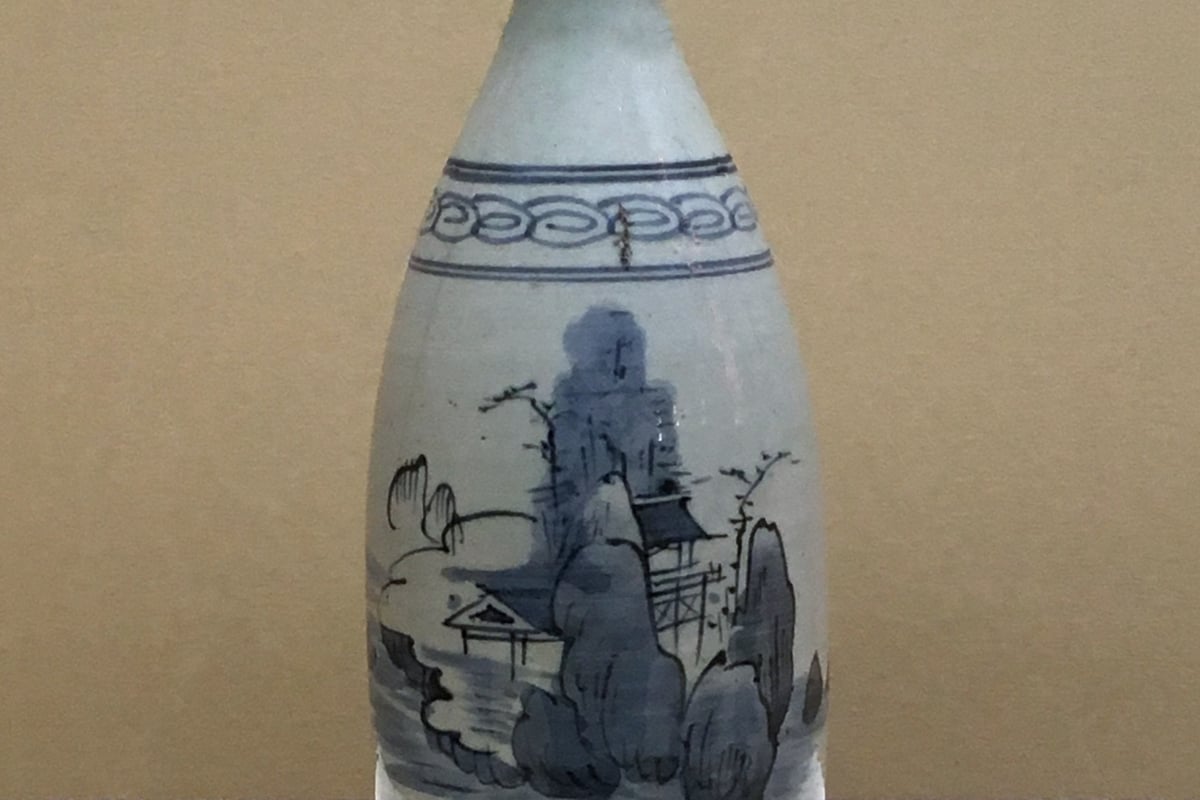
Kirigome ware is pottery and porcelain produced in the Kirigome district of Kami Town (formerly Miyazaki Town), Kami District, Miyagi Prefecture, made from the late Edo period until the early Meiji era. While it served as an official kiln of the Sendai Domain producing fine blue-and-white porcelain, it is also said to have produced large quantities of everyday wares for common use. Blue-and-white ware, with floral and plant motifs painted in indigo cobalt pigment on a white ground, formed the core of production; although the ground is not as pure white as Arita ware, its rustic, warm texture is its charm. Solid historical records are scarce and the details of its founding remain shrouded in mystery, but surviving blue-and-white pieces bear the date of 1835 (Tenpo 6), and it is said to have reached its peak during the Koka and Ansei eras of the late Edo period (around 1844-1860). The kilns closed once in the early Meiji 10s, and an attempted revival in the Taisho era did not take hold, but a full-scale revival was achieved in 1990 (Heisei 2) as part of a town revitalization effort. Today, 'Miura Toubou' is the sole kiln carrying on the tradition, and the Kami Town Furusato Togeikan (Kirigome Ware Memorial Museum) introduces its history and works. It was designated a Traditional Craft designated by the Governor of Miyagi Prefecture in 1984 (Showa 59).
Origin
Reliable documentation on the founding of Kirigome ware is scarce, and the details remain shrouded in mystery to this day. It is said to have begun being fired as an official kiln of the Sendai Domain around the middle to late Edo period, centered on the Kirigome district of Kami Town, producing both fine blue-and-white porcelain and everyday wares for common use. Some surviving blue-and-white pieces bear the date of 1835 (Tenpo 6), suggesting that a certain production system was already in place by the late Edo period.
History
Kirigome ware is said to have reached its peak during the Koka and Ansei eras of the late Edo period (around 1844-1860), but the kiln fires went out in the early Meiji 10s (after 1877). In 1920 (Taisho 9), local business figures attempted a revival, but it did not take hold, and the ware was long regarded as a 'phantom pottery.' The turning point came in 1990 (Heisei 2), when the town of Miyazaki, as it was then called, launched a full-scale revival as a town revitalization project. Since then, the technique of blue-and-white painting has been passed down by local potters, continuing to the present day.
Features
The core of Kirigome ware is blue-and-white porcelain, with floral and geometric patterns painted in indigo cobalt pigment on a white ground. Rather than the pure white ground of Arita ware, it has a somewhat grayish, rustic ground, and its simple decoration evokes a sense of wabi-sabi. In its early period white porcelain was produced, and later works using a lapis-blue glaze were also made, and this stylistic change over time is considered one of the characteristics of Kirigome ware.
Materials Used
| Main Production Areas |
|
|---|
Artisans & Workshops
三浦陶房
The sole kiln continuing production in the district since the revival of Kirigome ware. It makes tea bowls, sake cups, plates, and more using the potter's wheel and hand-forming, finished with slip and blue-and-white painting.
Official site →How to Buy
- Hometown tax (furusato nozei) return gift
- Sets of sake cups from Miura Toubou are offered as hometown tax return gifts, obtainable from donations of around 27,000 yen.Where to buy →PR
Hands-on Experiences
加美町ふるさと陶芸館(切込焼記念館)
宮城県加美郡加美町宮崎字切込3
A museum introducing the history and works of Kirigome ware. Miura Toubou, the sole remaining kiln, is located nearby.
View details →