Image: Wikimedia Commons
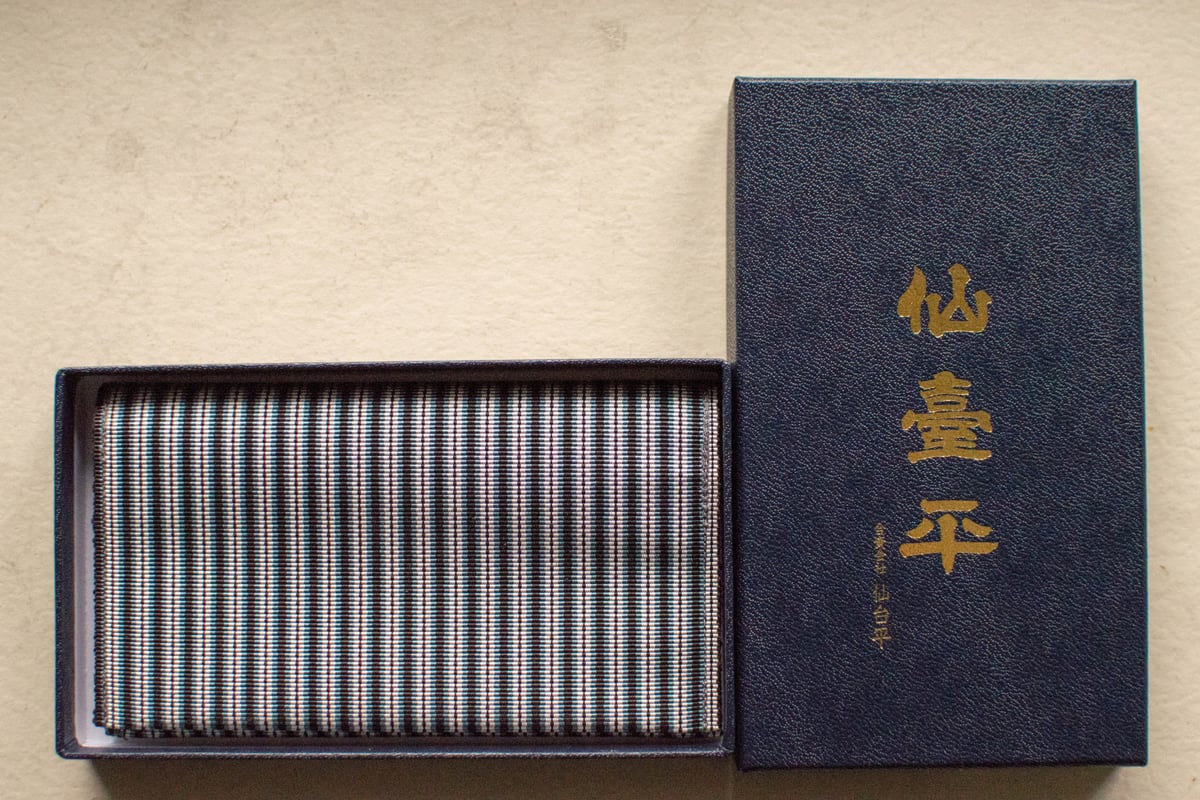
Sendai-hira silk is a woven silk fabric for men's hakama produced in Sendai City. According to tradition, its origins date to the Joukyo and Genroku eras of the mid-Edo period (roughly the 1680s to 1704), when Date Tsunamura, the fourth lord of the Sendai Domain, retained official weavers to produce hakama fabric and Noh costumes. The fabric is woven by twisting raw silk for the warp threads and forcefully beating in weft threads of near-raw silk while dampening them with water, producing cloth that is supple yet firm, resists wrinkling, and has a distinctive sheen and rustling sound as it moves. From the Edo period through the Meiji and Taisho eras, Sendai-hira was renowned as the finest of all hakama fabrics, reaching an annual production of as much as 30,000 tan (bolts) at its peak. As demand declined, the number of weaving houses gradually dwindled, and today Sendaihira Co., Ltd. is the sole workshop preserving the tradition. Its finest grade, known as seigo Sendai-hira, was designated an Important Intangible Cultural Property by the national government in 2002, and its head, Koda Yoshio, has been recognized as a Living National Treasure. In 1985 (Showa 60), it was also designated a Traditional Craft by the Governor of Miyagi Prefecture.
Origin
The origins of Sendai-hira date back to the Joukyo and Genroku eras of the mid-Edo period (roughly the 1680s to 1704). According to tradition, Date Tsunamura, the fourth lord of the Sendai Domain, retained official weavers from Kyoto and elsewhere to weave hakama fabric, Noh costumes, and kamishimo fabric for the domain. As a fine textile used for the formal dress of the samurai class, its techniques were refined under the domain's patronage, and it eventually grew into a prized fabric sought after in Edo and the Kamigata region as well.
History
From the late Edo period through the Meiji and Taisho eras, Sendai-hira gained nationwide renown as the finest of all hakama fabrics, with annual production reaching as much as 30,000 tan at its peak. During the war years many weaving houses closed, but Koda Eisuke continued to preserve the technique, and in 1956 (Showa 31) it was designated an Important Intangible Cultural Property, with Koda recognized as a Living National Treasure. His son, Koda Yoshio, inherited the designation in 2002, and today Sendaihira Co., Ltd. remains the sole workshop carrying on the tradition. In 1985 it was also designated a Traditional Craft by the Governor of Miyagi Prefecture.
Features
The defining feature of Sendai-hira lies in its distinctive weaving method: twisted raw silk is used for the warp, while weft threads of near-raw silk are dampened with water and forcefully beaten into place. This technique produces a fabric that is supple lengthwise and firm crosswise, resistant to wrinkling, and highly durable. Many designs feature understated gray stripes, and the rustling sound the fabric makes with every movement is also part of its charm. Among its varieties, seigo Sendai-hira, a plain weave made from fine twisted yarn, is regarded as the finest grade.
Materials Used
| Main Production Areas |
|
|---|
Artisans & Workshops
合資会社仙台平
The sole weaving house currently producing Sendai-hira. Its head, Koda Yoshio, has been recognized by the national government as a holder of an Important Intangible Cultural Property (a Living National Treasure) for his skill in seigo Sendai-hira.
Official site →How to Buy
- Sendai-hira Official Online Shop
- Bolts of fabric and small accessories can be purchased through the official online shop operated directly by Sendaihira Co., Ltd. Prices vary by item, so check the official website for details.Where to buy →PR