Image: Wikimedia Commons
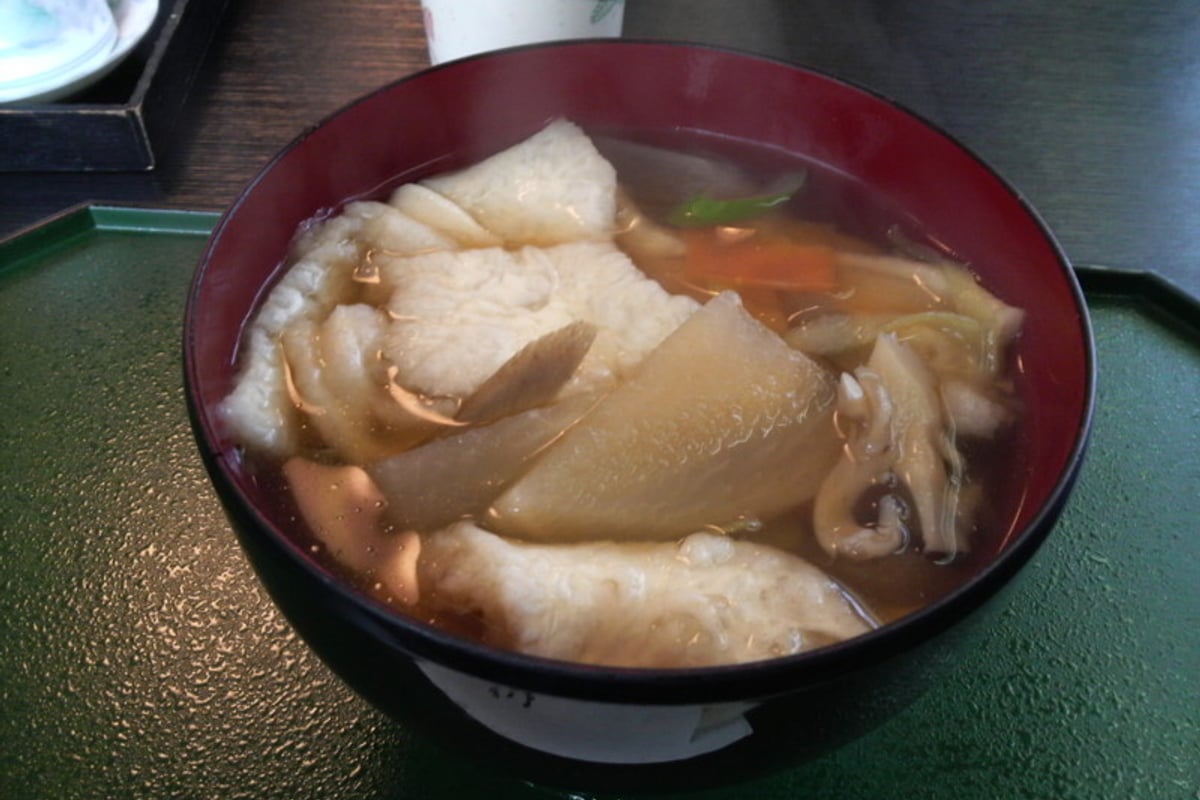
Senbei-jiru is a local dish handed down mainly in Hachinohe City, Aomori Prefecture, and passed on across the area from southern Aomori Prefecture to northern Iwate Prefecture. A broth is made from chicken, fish, mushrooms, and vegetables, into which pieces of Nanbu senbei called "otsuyu senbei" — rice crackers baked specially for use in soups — are broken and simmered. The crackers take on a soft, chewy texture without falling apart, gradually soaking up the broth's flavor. In this region, where cold-weather crop damage often made rice cultivation difficult, wheat-based Nanbu senbei developed as a staple and preservable food to replace rice, and senbei-jiru grew out of that tradition. Its national recognition rose sharply after the "Hachinohe Senbei-jiru Institute," formed in 2003, began its activities and the dish won an award at the B-1 Grand Prix, and in fiscal 2022 it was also certified as one of the Agency for Cultural Affairs' "100-Year Foods."
Origin
Around the Bunka-Bunsei era (1804–1830) in the late Edo period, a flour-based food culture involving udon and soba noodles spread through the domain of the Hachinohe Nanbu clan, and as the domain encouraged the cultivation of wheat and buckwheat, Nanbu senbei were born. In this region, where cold-weather damage often made rice harvests unstable, wheat-flour crackers were valued as a staple and preservable food in place of rice, and using them in soup is said to be the origin of senbei-jiru.
History
Within Hachinohe City, the dish has long been enjoyed as a home-cooked meal, but its recognition rose rapidly after the citizens' group "Hachinohe Senbei-jiru Institute" was formed in 2003 and worked to promote a unified name and way of eating it. It became a nationally known specialty after winning the Gold Grand Prix at the 7th B-1 Grand Prix in 2012, and in fiscal 2022 it was also certified as one of the Agency for Cultural Affairs' "100-Year Foods," earning official recognition as part of the region's food culture.
Features
Its defining feature is simmering "otsuyu senbei" — crackers baked specifically for use in soup — broken into a broth made from chicken, seafood, mushrooms, and vegetables. The crackers' recipe and thickness are designed so they resist dissolving even when simmered, becoming soft and silky on the outside while retaining a faint bite at the center. Seasoning varies by shop and household, from soy sauce to miso, and the combination of ingredients also varies widely, making it a dish where each maker's individuality easily shows through.
Main Ingredients
Food Culture
The dish was born from the culture surrounding Nanbu senbei, which was long valued in place of rice in this cold-damage-prone region, and it has been reappraised as a beloved local flavor through the activities of the Hachinohe Senbei-jiru Institute, leading to its certification as one of the Agency for Cultural Affairs' "100-Year Foods" in fiscal 2022.
Famous Shops
松膳
青森県八戸市一番町1-1-19 らら実ハイツ2号館1F
A shop certified as an "Omotenashi Gold Meister" by the Hachinohe Senbei-jiru Institute. A 3-minute walk from JR Hachinohe Station. Senbei-jiru costs around 880 yen, and the izakaya is known for stocking over 100 varieties of Japanese sake.
サバの駅
青森県八戸市大字六日町
A restaurant specializing in Hachinohe Maeoki mackerel dishes. The most popular item is the Ginsaba Torozuke Don (marinated fatty mackerel rice bowl), and the "Hachinohe Saba Dashi Senbei-jiru," made with broth from the branded mackerel, can also be enjoyed at an affordable price of around 270 yen.
View details →FAQ
Q. Is the cracker used in senbei-jiru the same as ordinary Nanbu senbei?
A. The one used for soup is called "otsuyu senbei," a special product with adjusted thickness and ingredient ratios so it resists falling apart even after absorbing broth. It is made differently from the Nanbu senbei eaten plain as a snack.