 Image: Wikimedia Commons
Aomori Prefecture
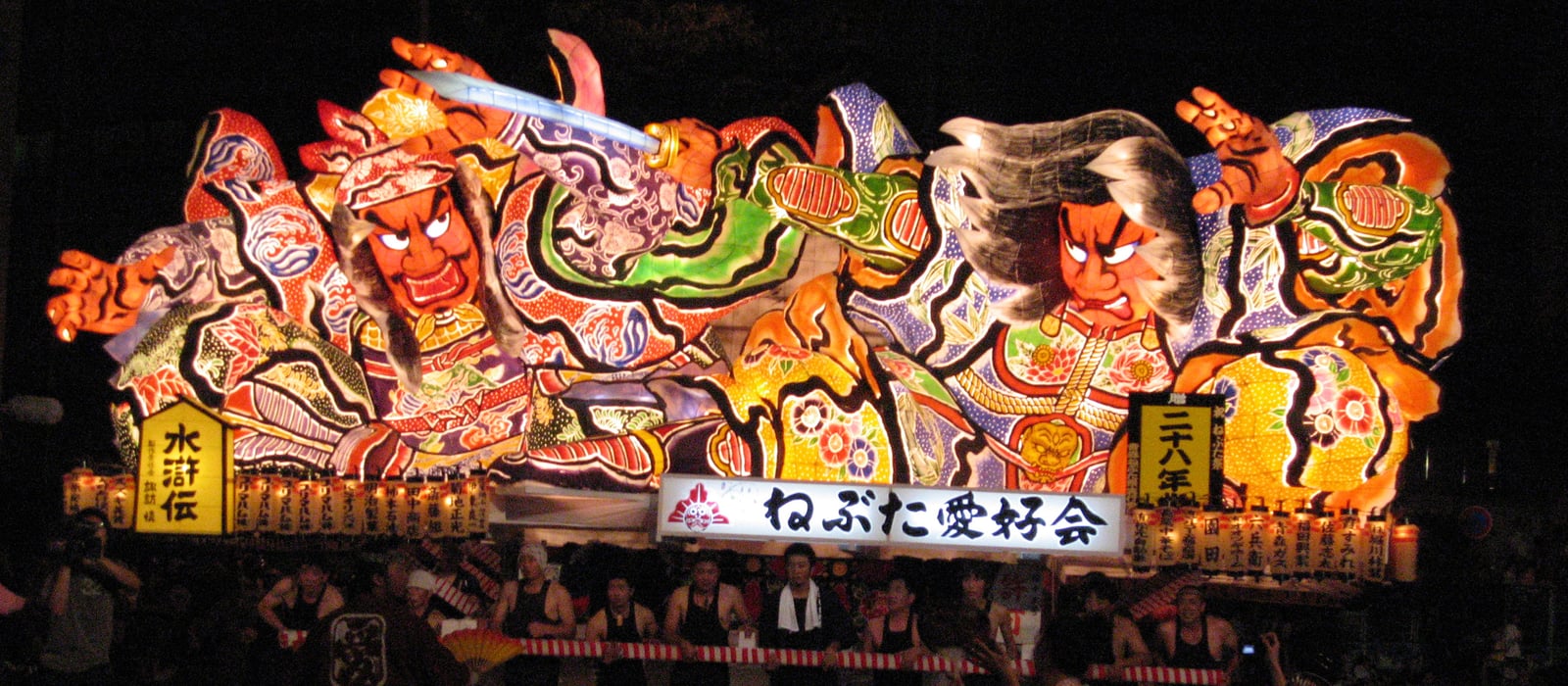
Located at the northern tip of Honshu, Aomori Prefecture encompasses two distinct cultural spheres, Tsugaru and Nanbu. Its crafts are rich and varied, reflecting the contrast between the two regions: Tsugaru lacquerware, born from industrial promotion policies of the Hirosaki domain in the Edo period, and the sashiko needlework traditions of Tsugaru kogin-zashi and Nanbu hishizashi, developed from the wisdom of enduring the cold. Its cuisine is equally broad, ranging from soups that make use of the bounty of Mutsu Bay and the Pacific Ocean, such as cod, scallops, sea urchin, and abalone, to a distinctive wheat-based food culture built around Nanbu senbei crackers, and local dishes born from postwar food stall culture. The prefecture's three great summer festivals — the Aomori Nebuta Festival, the Hirosaki Neputa Festival, and the Hachinohe Sansha Taisai — color the season across the region.
Aomori's Traditional Crafts

Akebi-tsuru Zaiku
Akebi-tsuru Zaiku
Akebi-tsuru Zaiku is a Tsugaru basketry craft that traces its origin to the late Edo period, when charcoal baskets and hand baskets woven from the vines of the akebi plant growing wild in the surrounding mountains were made as souvenirs for visitors to Dake Onsen hot spring at the foot of Mount Iwaki. Using akebi vine gathered around the Hakkoda mountains and Lake Towada and around Mount Iwaki, as well as the bark of the yamabudou (a wild grape), every process from selecting the vine to shade-drying, soaking in water, and weaving is done by hand by the artisans. It is characterized by sturdy, skillfully woven texture and a natural sheen, and part of its appeal is that it develops more luster and fits the hand better the more it is used. From the Meiji era onward it was exhibited at exhibitions in Japan and abroad and gained wider recognition, and in March 1996 it was designated an Aomori Prefecture Traditional Craft. Today, hand baskets, baskets, and trays that make the most of the natural texture of materials gathered from the mountains and fields continue to be made mainly in Hirosaki City.
Nanbu Hishizashi
Nanbu Hishizashi
Nanbu Hishizashi is a sashiko stitching technique handed down mainly in Hachinohe City in Aomori Prefecture's Nanbu region, and, alongside Kogin-zashi from the Tsugaru region, is one of Aomori Prefecture's representative sashiko traditions. It is said to have begun during the Edo period, when farming women who were forbidden from wearing cotton stitched cotton thread into hemp cloth to strengthen it and guard against the cold, and it is believed to have been developed in the Nanbu region around Hachinohe roughly 200 years ago. While Kogin-zashi counts the vertical threads of the weave in odd numbers, Hishizashi is distinguished by counting even numbers as the stitching progresses, weaving elongated diamond-shaped geometric patterns known as "ume no hana" (plum blossom) and "kiji no ashi" (pheasant's foot). Today, in addition to traditional items such as aprons and table runners, the technique is applied to modern products like neckties and tapestries, with skills passed down through workshops and classes in Hachinohe City. It is also notable that Tsugaru and Nanbu, though both within Aomori Prefecture, developed distinct sashiko traditions of their own.
Nanbu Sakiori
Nanbu Sakiori
Nanbu Sakiori is a hand-weaving technique passed down mainly in Towada City, Aomori Prefecture, in which worn-out cotton cloth is torn into narrow strips to use as weft thread, woven together with hemp or cotton warp thread to create a reborn fabric. In the Edo period, cotton cloth was extremely precious in the cold Nanbu region, so worn-out cloth that could no longer be worn was torn into thread and rewoven into kimono fabric, kotatsu covers, and other items as a way to use every last scrap. After the Cannabis Control Act was enacted in 1948 (Showa 23), hemp cultivation for warp thread became impossible, and the technique nearly died out. In 1975 (Showa 50), Eiko Kanno, a native of Towada City, founded the Nanbu Sakiori Preservation Society and opened workshops, reviving the craft by rediscovering and spreading its techniques. This method of transforming worn-out cloth into new fabric without waste is now drawing renewed attention as a sustainable craft.
Shitakawara-yaki Tsuchi-ningyo
Shitakawara-yaki Tsuchi-ningyo
Shitakawara-yaki Tsuchi-ningyo is a rustic clay doll that has been fired in the Shitakawara district of Hirosaki City. It is said to have originated in the Bunka era (1804-1814), when the ninth lord of the Tsugaru domain, Tsugaru Yasuchika, concerned that the Tsugaru region had few toys for children, had potters of the domain kiln in Shitakawara, including Takaya Kinzo and Ota Kumejiro, make them. Clay made by blending red clay with sand is shaped in plaster molds, fired at about 800 degrees, and then colored entirely by hand, so no two dolls have quite the same expression. Among the most representative pieces is the dove-shaped whistle, which produces a gentle "ho" sound, and hundreds of varieties of clay dolls have been made over the years, including zodiac figures. Since the Meiji era it has continued to be cherished as a folk toy of Hirosaki and has also been designated an Aomori Prefecture Traditional Craft. Today, the handful of kilns still remaining in Hirosaki City carry on techniques passed down for more than two hundred years.
Tsugaru Forged Blades (Tsugaru Uchihamono)
Tsugaru Uchihamono
Tsugaru Uchihamono are forged blades that trace their roots to the sword- and farm-tool smiths who once lined the streets of Hirosaki Castle Town during the domain era. So many blacksmiths gathered in early-Edo-period Hirosaki that a district was named 'Kajimachi' (Blacksmith Town), and their skills in forging swords and cannons were passed down over the generations into the making of everyday tools such as sickles, hoes, and kitchen knives. Blades forged using the traditional 'hizukuri' (fire-forging) and 'dorotsuchi' (mud-coating) tempering techniques combine excellent sharpness with durability. Because Aomori Prefecture is a major apple-growing region, the shears and saws used for pruning and fruit thinning have also become an important Tsugaru Uchihamono product, and the craft has developed hand in hand with apple cultivation around Hirosaki. It was designated an Aomori Prefecture Traditional Craft in March 1996, and blacksmiths today continue to carry out the entire process, from fire-forging to finishing, by hand.
Tsugaru Kogin-zashi
Tsugaru Kogin-zashi
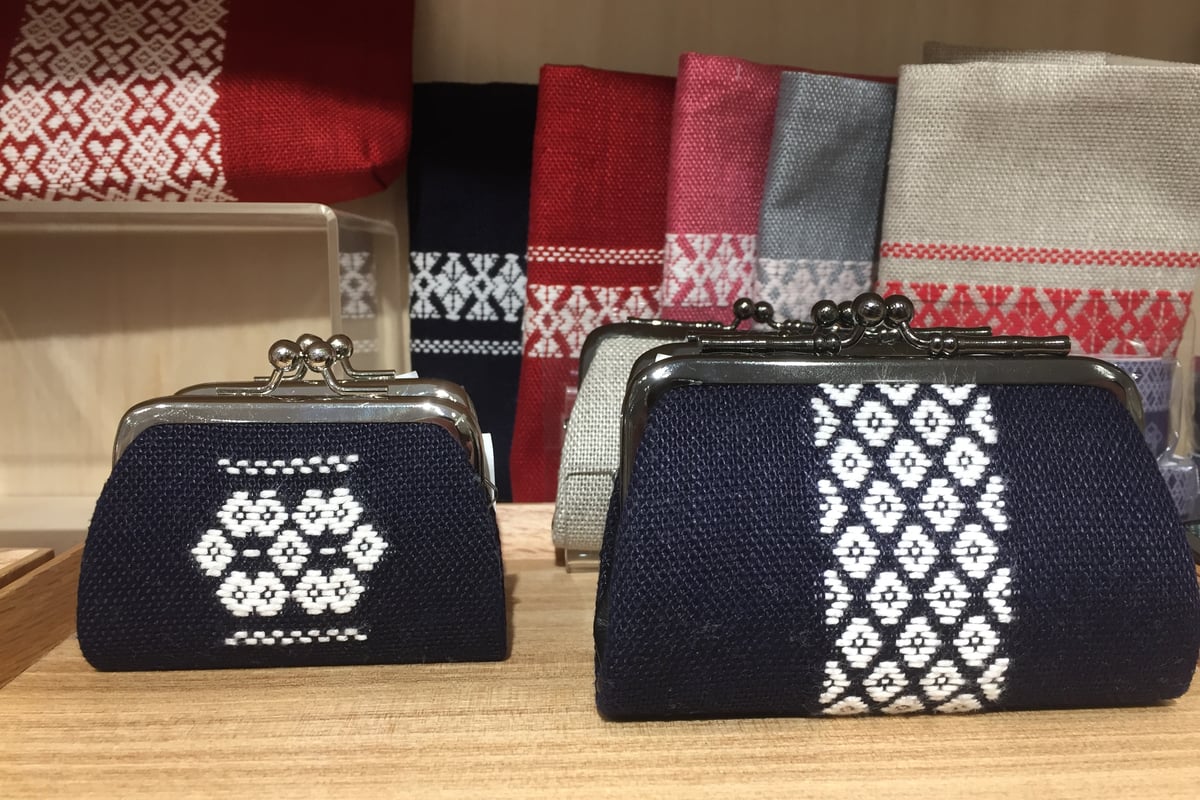
Tsugaru Kogin-zashi is a sashiko stitching technique passed down in the Tsugaru region, centered on Hirosaki City, Aomori Prefecture. During the Edo period, farmers in the Tsugaru domain were restricted to hemp clothing and forbidden from wearing cotton, so women in the harsh Tsugaru winters devised a way to strengthen and insulate their hemp work clothes by stitching the fabric densely with cotton thread. Its defining feature is the way geometric patterns are built up by counting the vertical threads of the weave in odd numbers - one, three, five - and it is divided into three regional styles: "Higashi Kogin" (East Kogin), known for large-scale patterns; "Nishi Kogin" (West Kogin), which divides patterns with horizontal stripes; and "Mishima Kogin" (Three-Stripe Kogin), marked by three thick horizontal stripes. After cotton became widely available from the Meiji era onward, the craft declined for a time, but its formal beauty was reappraised during the Mingei (folk craft) movement of the early Showa era, and the technique continues to be passed down today, centered on Hirosaki. As one of Aomori Prefecture's representative sashiko traditions, it is often compared with Nanbu Hishizashi, which is characterized by diamond-shaped patterns.
Tsugaru Kokeshi Dolls (Tsugaru-kei Kokeshi)
Tsugaru-kei Kokeshi
Tsugaru-kei Kokeshi is one of the eleven traditional lineages of kokeshi dolls found across the six Tohoku prefectures, produced mainly around Nuruyu Onsen in Kuroishi City, Aomori Prefecture, with production also spreading to Owani Town. It is said to have begun in the early Taisho era, when kijishi (wood-turning craftsman) Mori Hidetaro started making kokeshi for hot-spring visitors at Nuruyu Onsen, laying the foundation for the lineage together with Hasegawa Tatsuo of Owani Town. Because it took shape later than other lineages, it developed a freer style unbound by the traditional apprentice system, and is characterized by distinctive design elements not found in other production areas: the 'tsukuritsuke' technique of carving the head and body from a single piece of wood, a body shape that flares broadly at the hem, and motifs influenced by the peony crest of the Tsugaru domain, Ainu patterns, and Nebuta festival paintings. The Tsugaru Kokeshi Museum opened in Kuroishi City in 1988, and its skills and charm continue to be passed on today through production demonstrations and painting workshops led by Tsugaru-kei kokeshi craftsmen.
Tsugaru Vidro
Tsugaru Vidro
Tsugaru Vidro is a handmade glass craft produced by Hokuyo Glass in Aomori City, Aomori Prefecture. Hokuyo Glass was founded in 1949 (Showa 24) as a factory making glass fishing floats, and became a top domestic producer using the chubuki (free-blown, mold-free) technique it developed for making sturdy floats. However, as the spread of plastic floats reduced demand, the craftsmen applied their skills to making tableware and vases instead, and 'Tsugaru Vidro' was born in 1977 (Showa 52). When sand from Tsugaru's Shichiri-Nagahama beach was added as a raw material, it produced a rich green color, launching full-scale production of colored glass; today the company blends more than 100 varieties of colored glass in-house. In March 1996 (Heisei 8), it was designated a Traditional Craft by Aomori Prefecture, and it remains loved at home and abroad as a glass craft reflecting Aomori's nature.
Tsugaru-nuri
Tsugaru-nuri
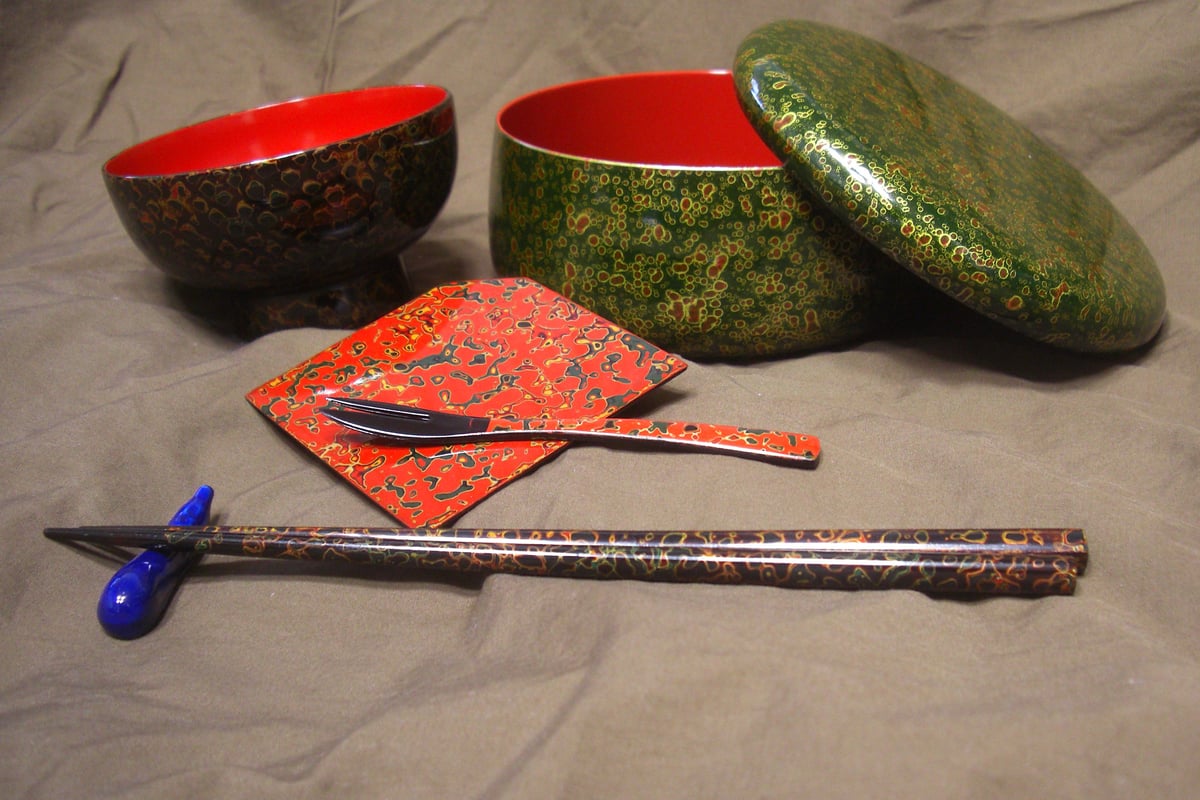
Tsugaru-nuri is lacquerware produced mainly in Hirosaki City, Aomori Prefecture, and the only Traditional Craft designated by the Minister of Economy, Trade and Industry from Aomori Prefecture. Its origins trace to the mid-Edo period, when Tsugaru Nobumasa, the fourth lord of the Hirosaki domain, invited the lacquer craftsman Ikeda Genbei from Wakasa Province to help develop local industry. Genbei's son Gentaro later studied the seigaiha-nuri technique in Edo and went on to create original lacquerware in Tsugaru. Over the roughly 300 years since, four representative techniques - Karanuri (唐塗), Nanako-nuri (七々子塗), Monsha-nuri (紋紗塗), and Nishiki-nuri (錦塗) - were established, each involving repeated layers of lacquer built up and then polished down, a process that can take around 50 steps and many months to complete. Because of this painstaking process, Tsugaru-nuri is also known by the nickname "baka-nuri" ("foolish lacquering"). The name Tsugaru-nuri became widely known after the craft was exhibited at the 1873 Vienna World's Fair. In 1975 it was designated a Traditional Craft by the Minister of Economy, Trade and Industry, and today many craftspeople in and around Hirosaki continue to carry on the tradition.
Yawata-uma
Yawata-uma
Yawata-uma is a wooden folk toy horse handed down in the Nanbu region centered on Hachinohe City in Aomori Prefecture, and it is counted, together with Miharu-goma from Fukushima Prefecture and Kinoshita-goma from Miyagi Prefecture, as one of the "Three Great Horses of Japan" (Nihon San-Koma). The region was once home to the celebrated Nanbu horse breed, and the toy is said to have originated when wooden horses were sold as souvenirs to worshippers gathering for the grand festival of Kushihiki Hachiman-gu Shrine in the Yawata district of Hachinohe City; the name "Yawata-uma" comes from the place name Yawata. The rustic wooden horse set on a pedestal, decorated with vivid red and blue patterns, is said to reflect the finely dressed horses that once paraded in rural wedding processions. From the Meiji era onward, its role expanded from a children's toy to a keepsake for celebratory occasions, and today it is cherished as a gift for weddings, new homes, and births. In March 1996 it was designated an Aomori Prefecture Traditional Craft, and the skills required to finish it entirely by hand - from cutting the wood and painting to attaching the mane - continue to be passed down.
Aomori's Local Food
Aomori Ginger Miso Oden
Aomori Ginger Miso Oden
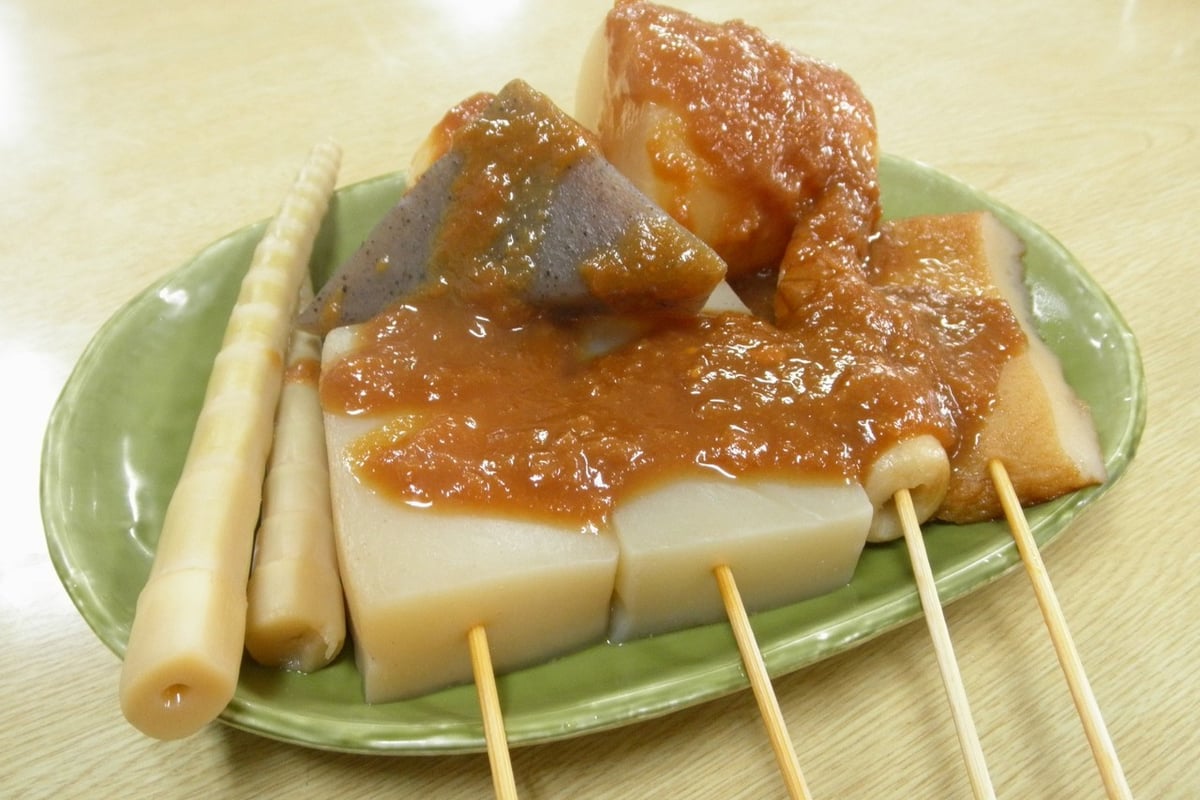
Aomori Ginger Miso Oden is a local variation of oden cherished throughout Aomori City and the greater Tsugaru region of Aomori Prefecture. It is said to have originated in the late 1940s at food stalls that lined the area from Aomori Station to Furukawa, when a stall owner began adding grated ginger to the miso sauce to warm passengers boarding the Seikan ferry. The dish is characterized by simmering Tsugaru miso (red miso) with sake, mirin, and dashi, then finishing it with plenty of grated ginger. Ingredients unique to Aomori are used, including daikon radish and eggs as well as the thin, large "Okakuten" fried fish cake, "Botan-yaki Chikuwa" (fish cake tube with a peony-petal-like grilled pattern), and whelks (tsubugai) that are a specialty of Mutsu Bay. Today, "oden" in Aomori City and the Tsugaru region is so closely associated with this ginger miso sauce that the two are virtually synonymous, and the Aomori Oden Association continues efforts to spread this local food culture nationwide, including publishing an "Oden Map" introducing member shops, establishing a standard recipe, and developing canned oden products. While cherished as a winter staple, many shops serve it year-round, making it one of the local dishes visitors to Aomori should try.
Hirosaki Apple Pie
Hirosaki Apple Pie
Hirosaki Apple Pie is a local sweet enjoyed in Hirosaki City, Aomori Prefecture, which boasts the highest apple production in Japan. Around 2009, as inquiries about apple sweets to the city's tourist information center increased, staff conducted their own survey of confectionery shops in the city and found more than 40 shops offering apple pie. This led to the 2010 publication of the "Hirosaki Apple Pie Guide Map," marking the beginning of "Hirosaki, the City of Apple Pie." A wide variety of businesses — Japanese and Western confectioners, bakeries, Nanbu senbei shops, cafes, and hotels — each compete with their own original recipes, and the apple varieties used as well as preparation methods, such as baking whole apples, coarsely chopping, slicing, or making a paste, vary distinctively from shop to shop. With each new edition, the guide map has featured more shops, now growing to over 50. Many tourists enjoy sampling pies from shop to shop, making it one of the local foods not to be missed when visiting Hirosaki.
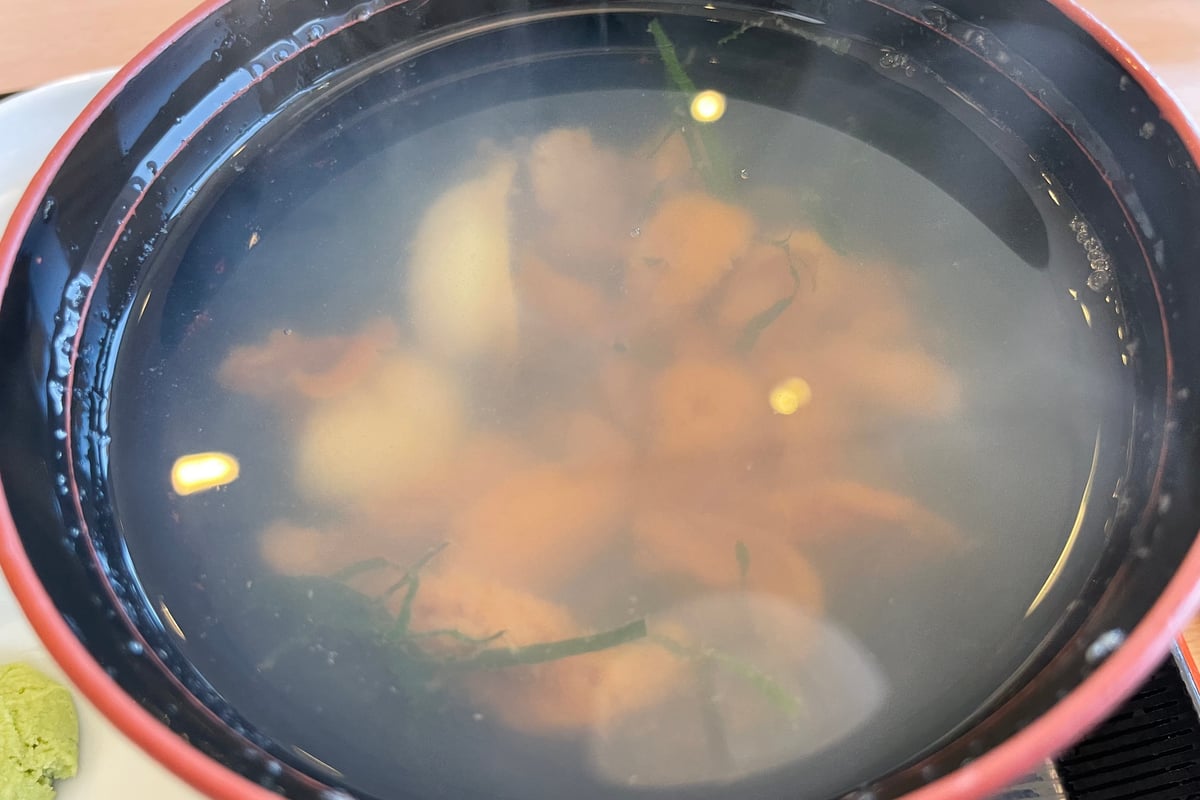
Ichigo-ni (Sea Urchin and Abalone Soup)
Ichigo-ni
Ichigo-ni is a local dish handed down along the Pacific coast of Aomori Prefecture, including Hachinohe City and Hashikami Town in Sannohe District, made by briefly simmering sea urchin and abalone in a lightly salted broth. It is said to have its roots in a "fishermen's meal," in which fishermen boldly simmered freshly caught sea urchin and abalone on the beach. The dish is said to be named "ichigo-ni" ("wild strawberry simmer") because the sight of golden sea urchin sinking into the milky, cloudy abalone broth resembled wild strawberries hazy in the morning mist. In the Taisho era, the proprietor of a long-established local ryokan and restaurant began arranging it beautifully in bowls to serve to guests, and it spread as a feast dish served to entertain visitors. In 1980, the local food company Ajino Kakunoya became the first in Japan to successfully can ichigo-ni, and it has since become established as an Aomori souvenir known nationwide.
Isshozuke (fermented chili and rice koji condiment)
Isshozuke
Isshozuke is a fermented all-purpose condiment that has long been made in the Tsugaru region. It is distinguished by its use of "Shimizumori Nanba," a heirloom chili pepper variety said to have been brought back from Kyoto by Tamenobu Tsugaru, the first lord of the Tsugaru domain. The name comes from the practice of pickling green chili peppers, rice koji, and soy sauce together in equal measures of one sho (about 1.8 liters) each. Shimizumori Nanba is low in capsaicin, giving it a mild heat and pronounced sweetness; the condiment is prepared during the coldest part of winter and, when aged for two to three years, mellows and deepens in flavor. As an all-purpose seasoning that pairs with meat, fish, vegetables, tofu, and rice alike, it has been used in a wide range of dishes, from a garnish for grilled and stir-fried dishes to a base for hot pot sauces. In 2020, Shimizumori Nanba was registered under the Geographical Indication (GI) protection system, and in 2022, isshozuke made with Shimizumori Nanba became the first food from Aomori Prefecture to be certified as one of the Agency for Cultural Affairs' "100-Year Foods," drawing renewed attention as part of the region's food culture.
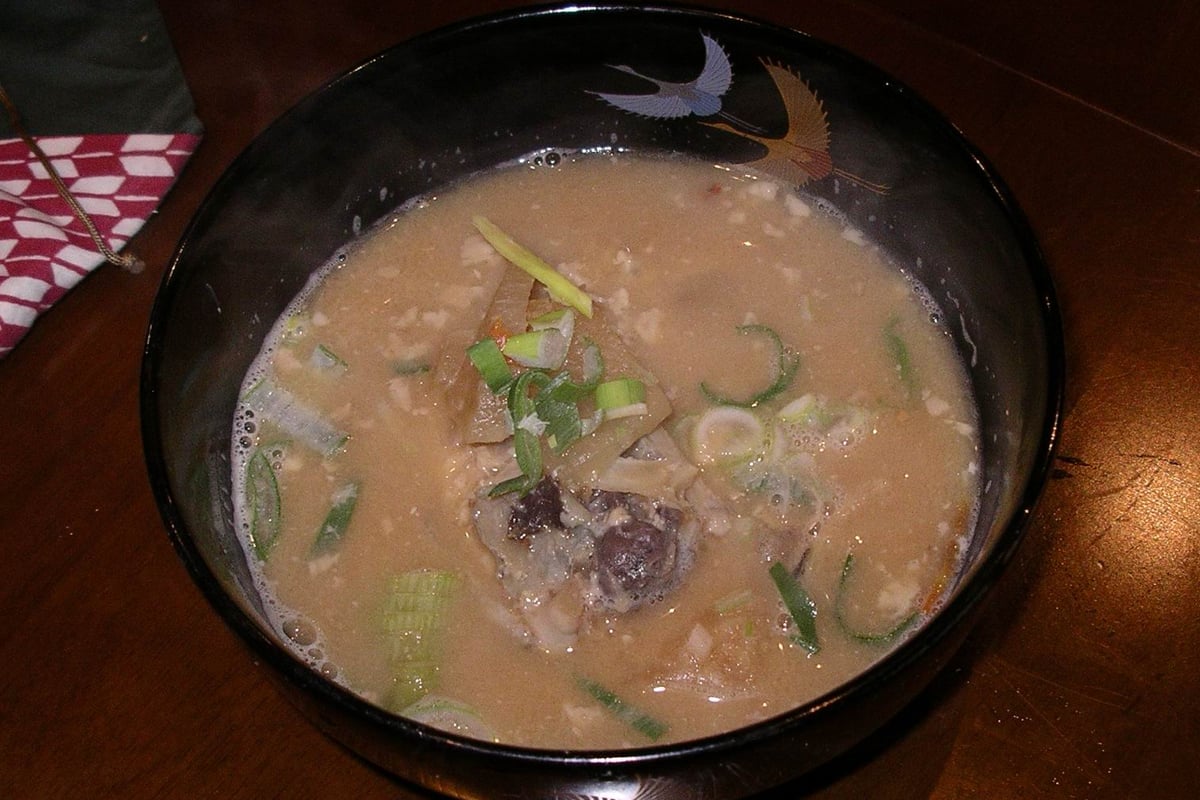
Jappa-jiru (Cod Offcuts Miso Soup)
Jappa-jiru
Jappa-jiru is a winter local dish handed down in the Tsugaru region of Aomori Prefecture. "Jappa" is a Tsugaru dialect word meaning fish scraps, and the dish slowly simmers the head, bones, skin, and innards of cod together with vegetables such as daikon radish, carrot, and green onion in a miso-based broth. In the Tsugaru region, there is a custom of buying a whole cod, head and tail intact, as the "year-taking fish" to greet the New Year; the flesh is used for sashimi or hot pot, while the scraps that would normally be discarded are used to the last bit in jappa-jiru — a dish embodying the wisdom of a snow country that wastes nothing. As a home-cooked dish that warms the body from the core through the harsh cold of winter, it has long been rooted in the dining tables of the Tsugaru region.
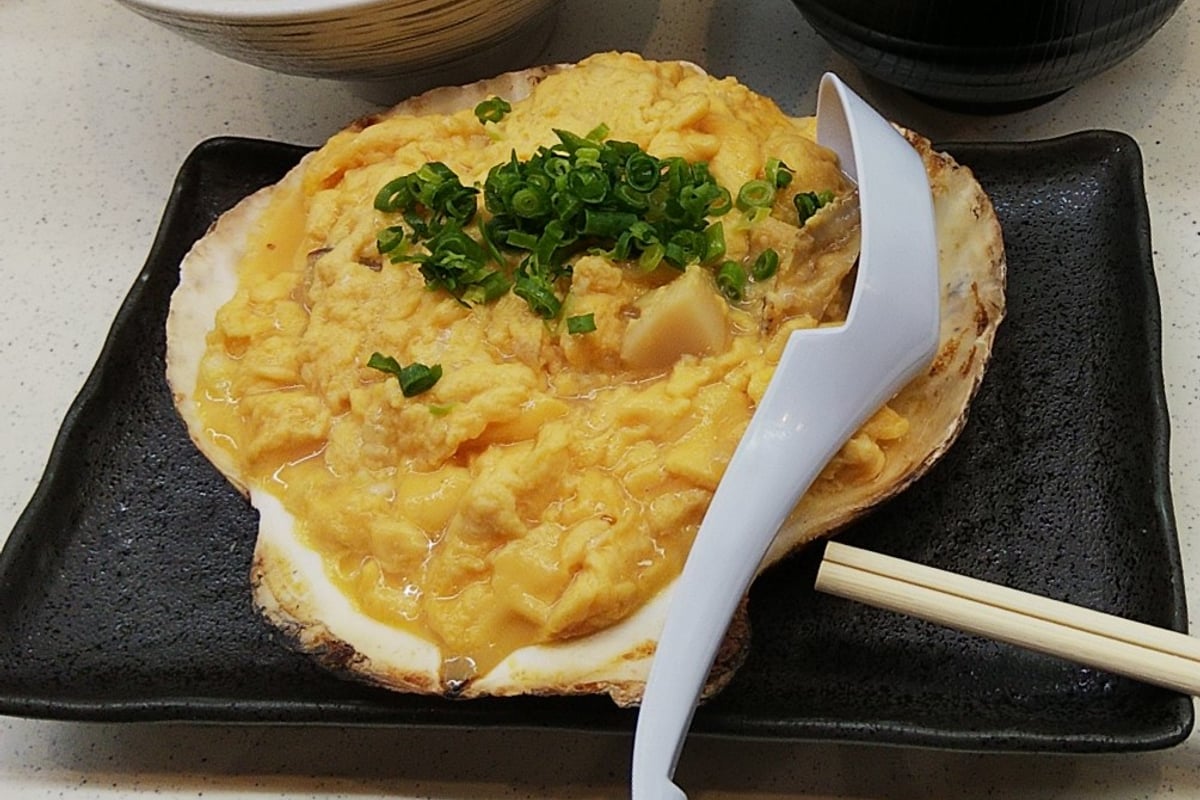
Kayaki-miso (Scallop Shell Miso Hot Pot)
Kayaki-miso
Kayaki-miso is a local dish handed down in the Tsugaru and Shimokita regions of Aomori Prefecture, in which a large scallop shell is used in place of a pot to simmer scallops, fish fillets, and vegetables in dashi and miso, finished by pouring in beaten egg. Around Tsugaru Bay, long known as a scallop-producing area, it is said that as early as the Edo period people were already using shells as pots to grill sardines or mackerel with homemade miso, in a simple fisherman's dish. Later, once eggs became available, it evolved closer to its present form, finished with beaten egg; however, because eggs were a precious commodity at the time, kayaki-miso was also a special nourishing food that only the ill or pregnant women were allowed to eat. Osamu Dazai, a novelist born in Tsugaru, wrote in his novel "Tsugaru" of his longing for the egg-topped kayaki-miso he ate as a child when he caught a cold, and the dish is also known for being deeply tied to the memories of the people of Tsugaru.
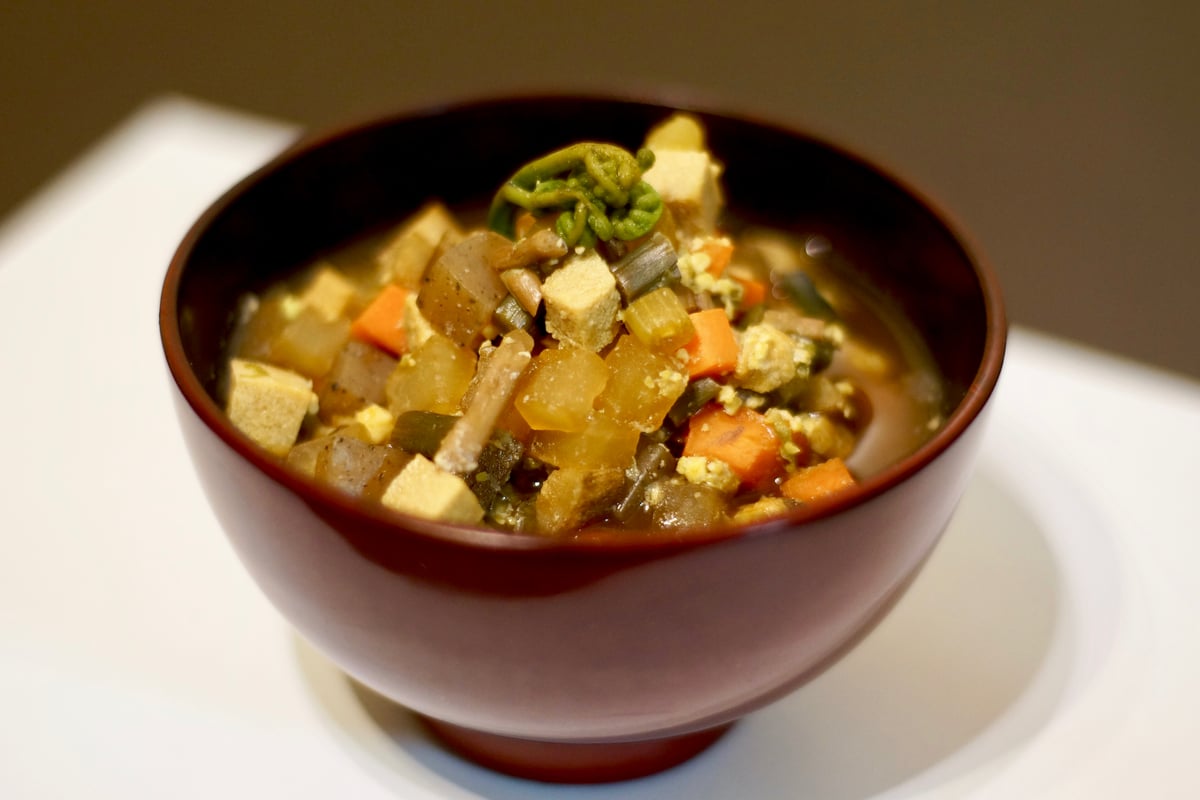
Keno-jiru (Tsugaru Root Vegetable Soup)
Keno-jiru
Keno-jiru is a hearty vegetable soup eaten mainly in the Tsugaru region, known as a traditional dish for Koshogatsu (the 'Little New Year,' January 15). Root vegetables such as daikon radish, carrot, and burdock, wild mountain vegetables like bracken and flowering fern, and dried ingredients such as fried tofu and frozen tofu are all chopped even finer than a small dice and simmered slowly in kelp dashi, then seasoned with miso or soy sauce. One theory holds that the name comes from 'ke,' a Tsugaru dialect word for rice porridge, though several other origin theories have also been passed down. It is also said to have originated as a dish women prepared in bulk before returning to their parents' homes at Koshogatsu, leaving behind a large potful for the men who remained—cooked in a big pot to last several days, with the flavor deepening day by day, a food culture that continues to be enjoyed today.
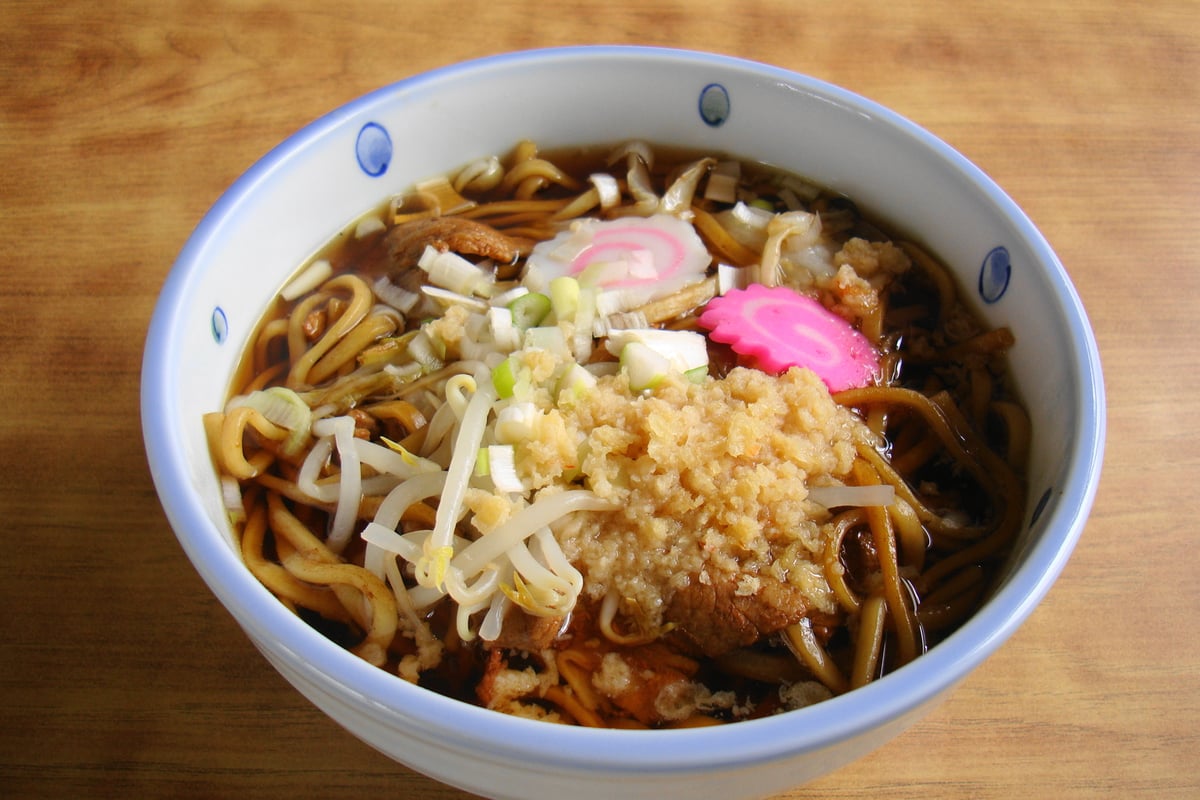
Kuroishi Tsuyu Yakisoba (Yakisoba in Soba Broth)
Kuroishi Tsuyu Yakisoba
Kuroishi tsuyu yakisoba is a local dish born in Kuroishi City, Aomori Prefecture, characterized by pouring soba broth over Kuroishi yakisoba, which uses thick, flat 'taihei' noodles. It is said to have originated in the late 1950s to early 1960s, when a diner in Kuroishi City called 'Mimasu' invented 'tsuyu soba'—yakisoba topped with broth—so that it could be eaten warm even on cold days. Mimasu later closed, but local restaurant owners who missed its flavor turned it into a menu item called 'Kuroishi tsuyu yakisoba,' which drew attention. Today it is served at multiple shops in Kuroishi City, each with its own noodle thickness and broth flavor, and it is cherished as a local dish representative of Kuroishi.
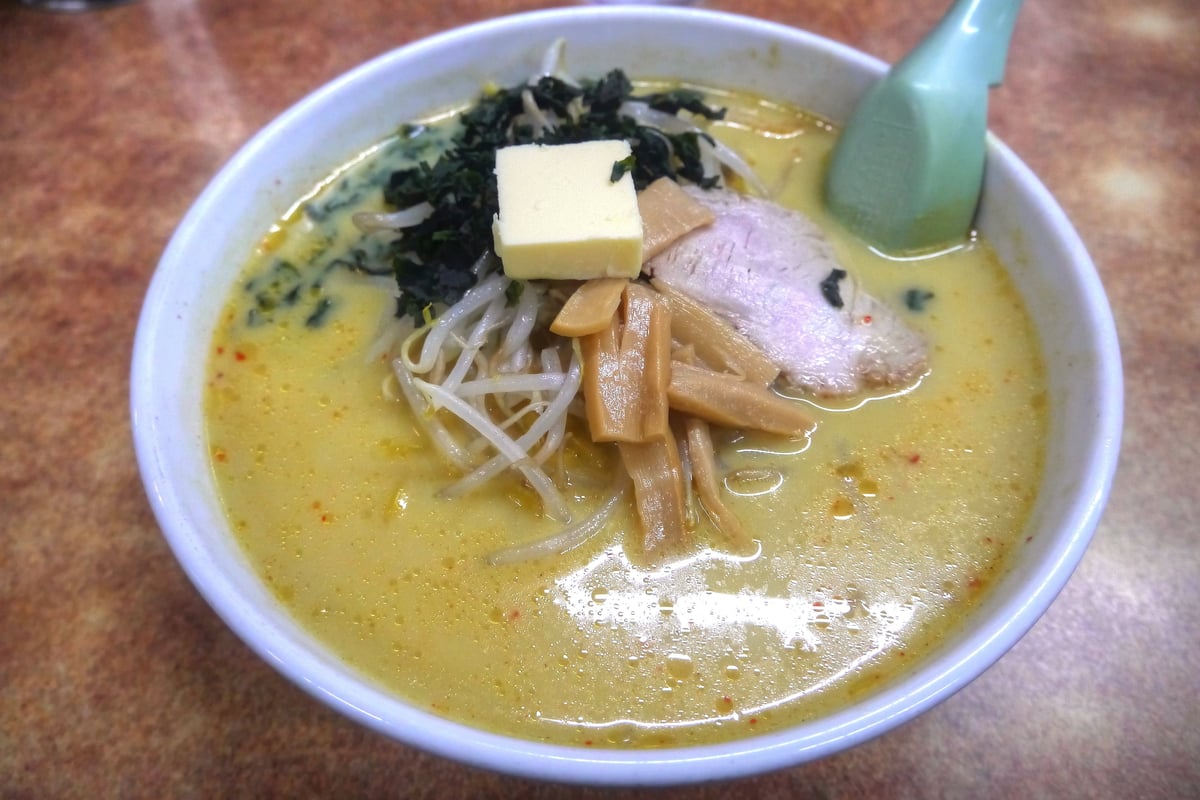
Miso Curry Milk Ramen
Miso Curry Milk Ramen
Miso curry milk ramen is a local ramen born in Aomori City, a rich bowl made by adding curry and milk to a miso ramen base. It is sometimes mistakenly believed to have originated in Hachinohe City, but its true birthplace is Aomori City. It is said to have started in 1968, when Kiyoshi Sato, who had trained at the Sapporo Ramen Yokocho alley, opened a shop in Aomori City; the shop initially served miso-, salt-, and soy-sauce-based ramen. In the late 1970s, a trend spread among junior high and high school students of adding various seasonings to their ramen, and out of that came the discovery that 'miso ramen tastes great with curry and milk added,' which became so popular it was made an official menu item. In 2008, the 'Aomori Miso Curry Milk Ramen Promotion Association' was established, and the dish became known nationwide as a soul food beloved by local residents.
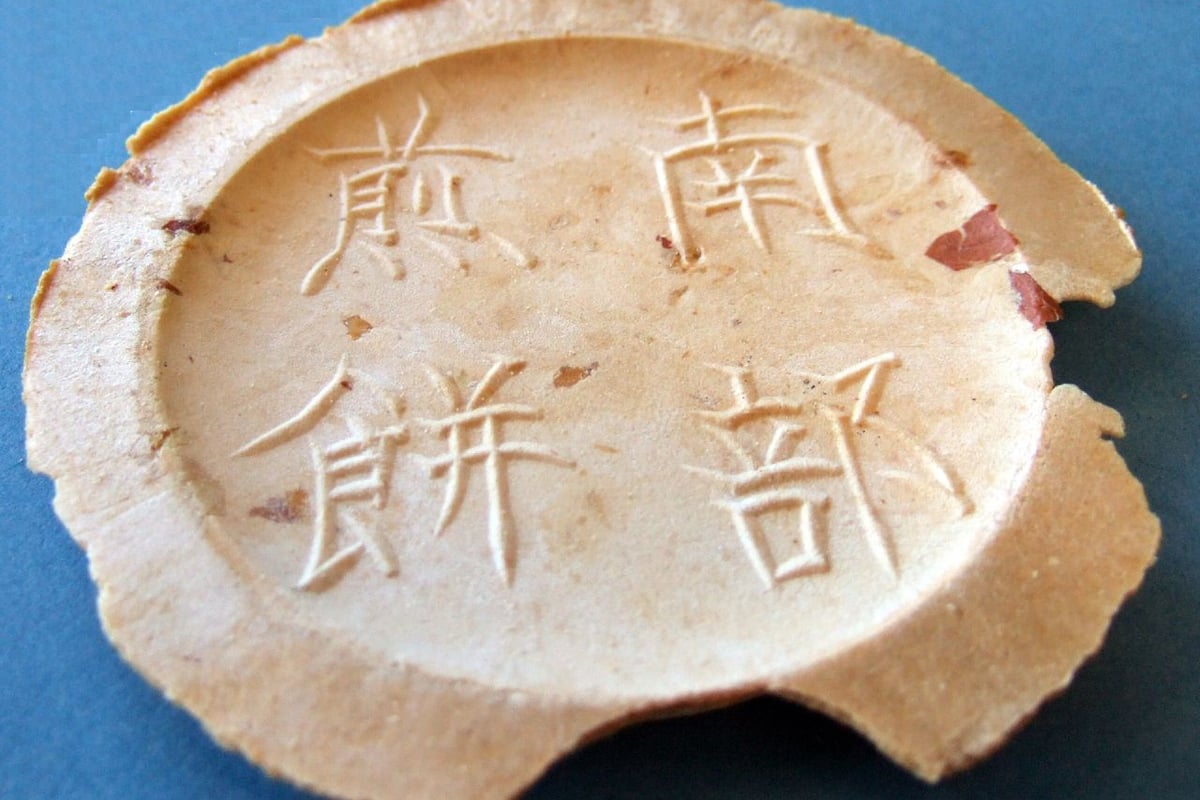
Nanbu Senbei (wheat flour cracker)
Nanbu Senbei
Nanbu senbei is a wheat-flour cracker that has long been made in the former Nanbu domain, spanning the southeastern part of Aomori Prefecture and the northern part of Iwate Prefecture. Dough made from wheat flour, salt, and water is sandwiched between round iron molds engraved with patterns such as cranes and turtles or pine, bamboo, and plum, then baked crisp on both sides. There are various theories about its origin, but the best-known legend holds that during the Nanboku-cho period, when Emperor Chokei of the Southern Court visited the Nanbu region, his retainer Akamatsu Sukezaemon used his iron helmet in place of a pot to bake buckwheat flour and sesame and presented it to the emperor. In the Nanbu region, where cold-weather crop damage was frequent and rice harvests were unstable, senbei made from long-lasting wheat and buckwheat flour became a valued preserved food and staple, and by the Meiji era it is said there were as many as 140 manufacturers just around Hachinohe, showing how deeply it took root in daily life. There is a wide variety, including "mame senbei" bean crackers kneaded with sesame or peanuts, and it is also an indispensable main ingredient in the local dish "senbei-jiru" (senbei hot pot), in which it is simmered in soup.
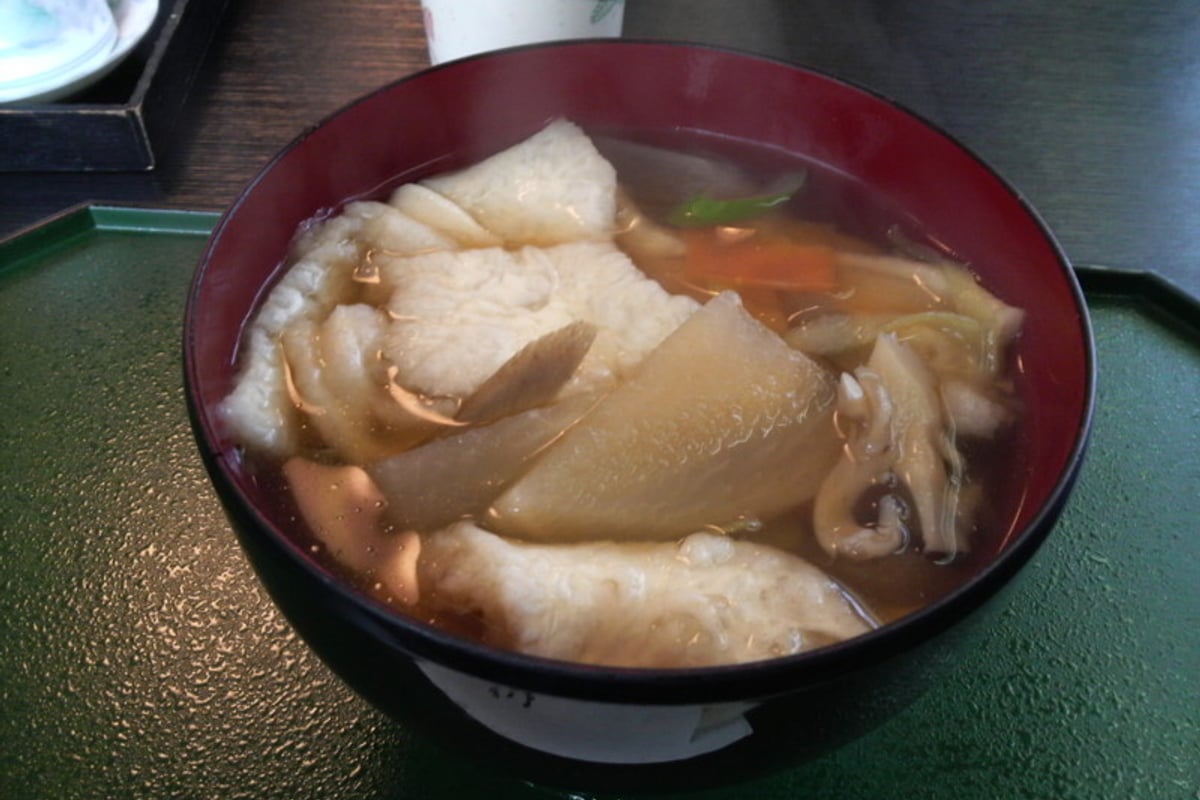
Senbei-jiru (Nanbu Cracker Hot Pot)
Senbei-jiru
Senbei-jiru is a local dish handed down mainly in Hachinohe City, Aomori Prefecture, and passed on across the area from southern Aomori Prefecture to northern Iwate Prefecture. A broth is made from chicken, fish, mushrooms, and vegetables, into which pieces of Nanbu senbei called "otsuyu senbei" — rice crackers baked specially for use in soups — are broken and simmered. The crackers take on a soft, chewy texture without falling apart, gradually soaking up the broth's flavor. In this region, where cold-weather crop damage often made rice cultivation difficult, wheat-based Nanbu senbei developed as a staple and preservable food to replace rice, and senbei-jiru grew out of that tradition. Its national recognition rose sharply after the "Hachinohe Senbei-jiru Institute," formed in 2003, began its activities and the dish won an award at the B-1 Grand Prix, and in fiscal 2022 it was also certified as one of the Agency for Cultural Affairs' "100-Year Foods."
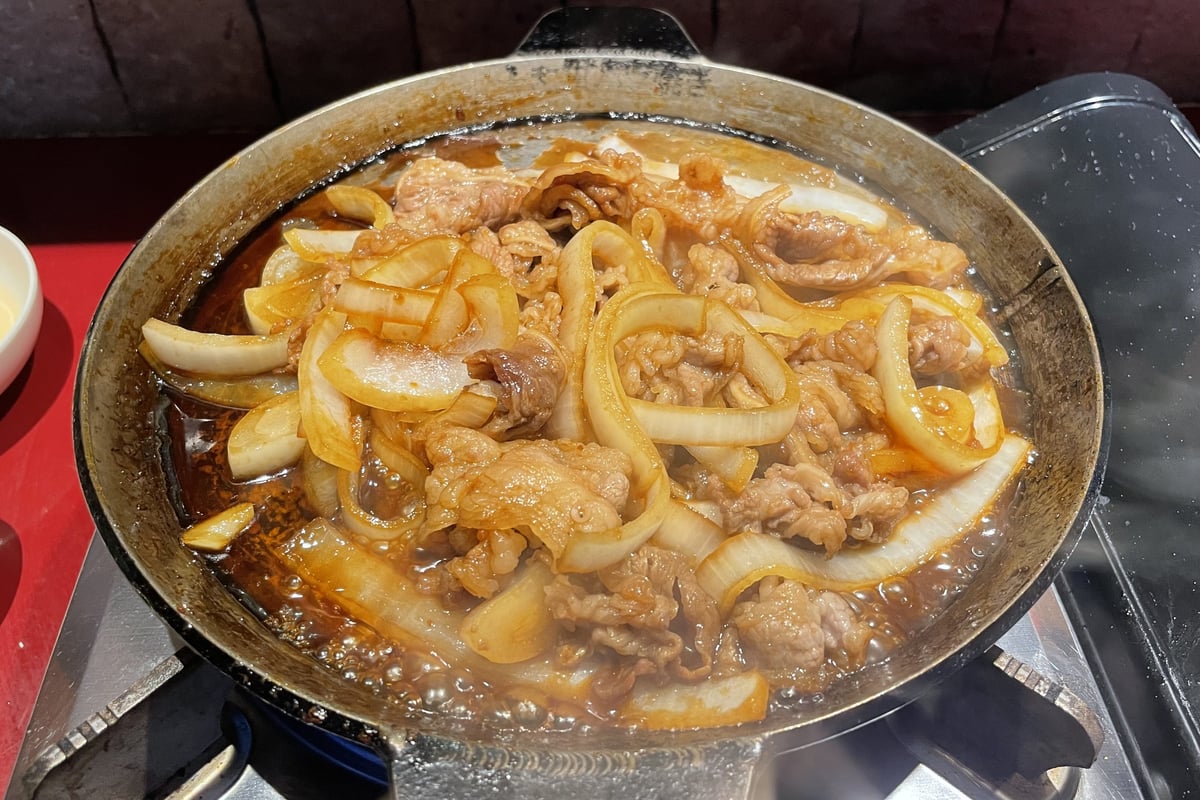
Towada Barayaki (Grilled Beef Short Plate)
Towada Barayaki
Towada barayaki is a soul food of Towada City residents, made by grilling beef short plate together with a large amount of onion on a griddle with a sweet-and-savory soy-sauce-based sauce. It is said to have originated in the 1950s at food stalls that lined the area in front of a U.S. military base in neighboring Misawa City. At the time, cattle raised by U.S. military personnel for food were used for their lean meat as steak, and the fatty short plate and offal left over were sold off cheaply; people with roots in the Korean Peninsula are said to have cooked this using plenty of onion, drawing on bulgogi as a reference, and this is considered the origin of the dish. An advertisement in a local newspaper in 1958 mentions 'beef barayaki,' and it later spread to Towada City, where it exploded in popularity. Today it is served at more than 40 shops in the city, each offering its own distinctive sauce.
Model Course
A one-day course exploring Tsugaru crafts and flavors in Hirosaki
Visit kilns and workshops in Hirosaki City to try the togidashi polishing technique of Tsugaru lacquerware and see kogin-zashi needlework up close, then enjoy local dishes such as kenojiru soup and kayaki-miso at a local restaurant in the city. Finish with a walk sampling Hirosaki apple pie from shop to shop — a course that lets you experience Tsugaru's craft culture and food culture in a single day.
A course savoring sashiko needlework and seafood in Hachinohe and the Nanbu region
Take part in a Nanbu hishizashi workshop in Hachinohe City, then savor ichigo-ni made with freshly caught sea urchin and abalone from Mutsu Minato, along with senbei-jiru made using Nanbu senbei crackers. A course exploring the handcraft and seafood distinctive to the Nanbu region, quite different from Tsugaru.
A course comparing local specialty dishes in Towada and Kuroishi
Savor Towada barayaki, the soul food of Towada City, then head to Kuroishi City to compare Kuroishi tsuyu yakisoba, known for its thick, flat noodles. Return to Aomori City and finish with miso curry milk ramen — a course exploring local dishes born after the war.
Events
Aomori Nebuta Festival
August 2–7 every year / Central Aomori City
Hirosaki Neputa Festival
August 1–7 every year / Streets of Hirosaki City (Dotemachi course and Ekimae course)
Hachinohe Sansha Taisai (Grand Festival of the Three Shrines)
July 31–August 4 every year / Central Hachinohe City (Ogami Shrine, Shinra Shrine, and Shinmei-gu)