Image: Wikimedia Commons
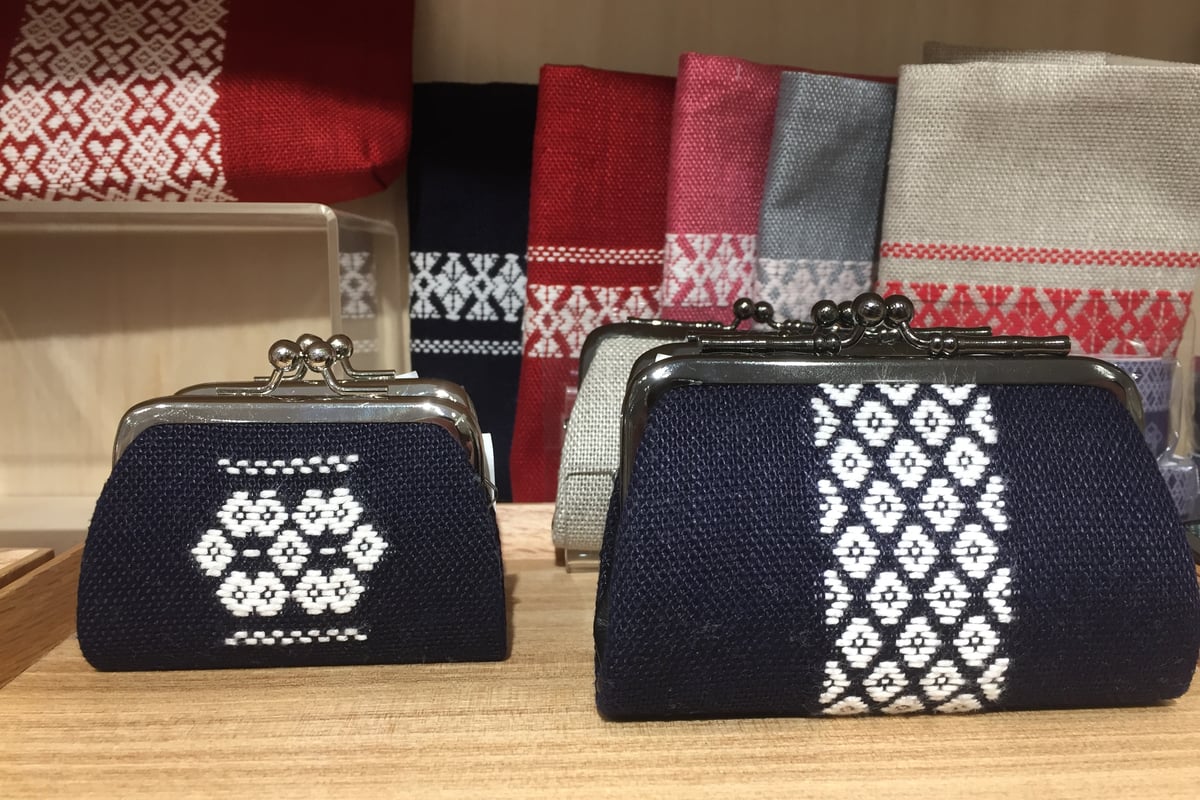
Tsugaru Kogin-zashi is a sashiko stitching technique passed down in the Tsugaru region, centered on Hirosaki City, Aomori Prefecture. During the Edo period, farmers in the Tsugaru domain were restricted to hemp clothing and forbidden from wearing cotton, so women in the harsh Tsugaru winters devised a way to strengthen and insulate their hemp work clothes by stitching the fabric densely with cotton thread. Its defining feature is the way geometric patterns are built up by counting the vertical threads of the weave in odd numbers - one, three, five - and it is divided into three regional styles: "Higashi Kogin" (East Kogin), known for large-scale patterns; "Nishi Kogin" (West Kogin), which divides patterns with horizontal stripes; and "Mishima Kogin" (Three-Stripe Kogin), marked by three thick horizontal stripes. After cotton became widely available from the Meiji era onward, the craft declined for a time, but its formal beauty was reappraised during the Mingei (folk craft) movement of the early Showa era, and the technique continues to be passed down today, centered on Hirosaki. As one of Aomori Prefecture's representative sashiko traditions, it is often compared with Nanbu Hishizashi, which is characterized by diamond-shaped patterns.
Origin
Tsugaru Kogin-zashi originated in the Edo period in the Tsugaru region, where farmers' clothing was restricted to hemp and cotton was not permitted. To endure the harsh cold, women devised ways to insulate and reinforce their hemp work clothes by densely stitching the fabric with cotton thread. This stitching is said to have gradually been refined into geometric patterns, developing into "kogin-zashi," a technique combining practicality with beauty.
History
Once restrictions on wearing cotton were lifted in the Meiji era, kogin-zashi went into decline for a time. However, in the early Showa era its formal beauty was reappraised through the Mingei (folk craft) movement led by figures such as Yanagi Muneyoshi, and as pieces were collected and studied the technique was passed on. Today, organizations such as the Hirosaki Kogin Institute in Hirosaki City lead ongoing efforts to create products based on traditional patterns and train the next generation of practitioners.
Features
Its defining feature is the distinctive technique of stitching cotton thread onto indigo-dyed hemp cloth while counting the vertical threads of the weave in odd numbers - one, three, five. Depending on where it was made, it is classified into three styles: "Higashi Kogin," with bold, large-scale patterns; "Nishi Kogin," which divides its patterns with horizontal stripes; and "Mishima Kogin," marked by three thick horizontal stripes - and comparing the differing designs of each region is part of its appeal.
Techniques
Higashi Kogin (東こぎん)
A style produced in the area from eastern Hirosaki City through Kuroishi City and Hirakawa City. Small motifs are combined and arranged in regular patterns, designed to appear as larger patterns when viewed from a distance.
Nishi Kogin (西こぎん)
A style produced across the Naka-Tsugaru District in western Hirosaki City. Its distinguishing feature is several horizontal stripes in black and white thread across the shoulder area, with the pattern changing at each stripe.
Mishima Kogin (三縞こぎん)
A style produced around Goshogawara City and Tsugaru City. Three thick horizontal stripes are placed across the chest and back, a device that lets the stitcher continue working without worrying about the pattern going out of alignment.
Materials Used
| Main Production Areas |
|
|---|
Artisans & Workshops
弘前こぎん研究所
A center that has continued researching and producing kogin-zashi since 1942. While preserving traditional patterns and hand-stitching techniques, it creates products suited to modern life, such as business card cases and book covers.
Official site →How to Buy
- 弘前こぎん研究所 オンラインSHOP
- The official online store where you can purchase products featuring traditional patterns, including business card cases (2,970 yen), seal cases (2,750-3,850 yen), and pouches (4,400 yen).Where to buy →PR
- cotogoto
- Products from the Hirosaki Kogin Institute are also sold through "cotogoto," a select shop with nationwide reach, available via mail order.Where to buy →PR
Hands-on Experiences
弘前こぎん研究所
青森県弘前市在府町61
A coaster-making experience using the "cat's paw" pattern. Takes 90-120 minutes and costs around 3,000 yen (includes materials and a kogin needle; minimum 5 participants; reservation required).
View details →