Image: Wikimedia Commons
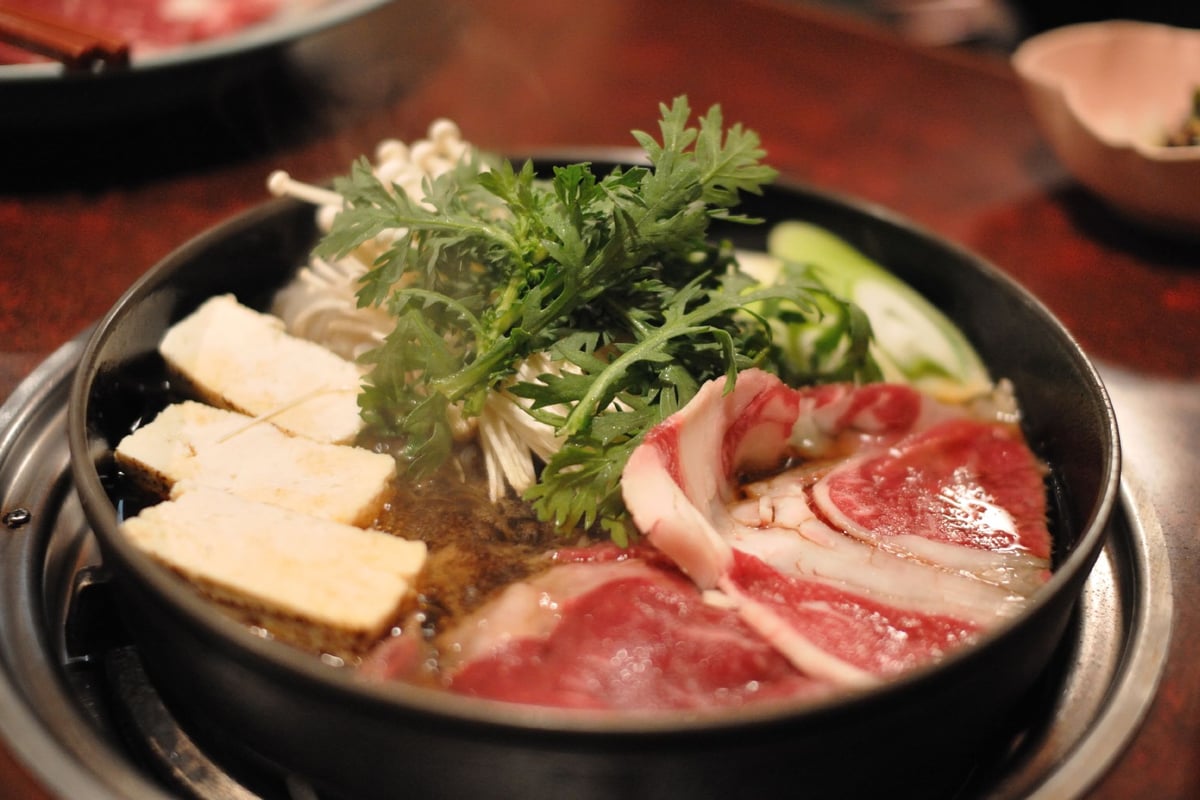
Gunma Prefecture's sukiyaki is a local dish nurtured in a rare place where all of its core ingredients — beef, negi (leek), konjac, and shiitake mushrooms — can be sourced entirely within the prefecture, earning it the nickname “100% self-sufficient sukiyaki.” The blessings of Gunma's fields and pastures come together in a single pot: the branded Joshu beef, sweet, melt-in-the-mouth Shimonita negi, konjac (Gunma is Japan's top producer), plus napa cabbage, shungiku (garland chrysanthemum), and fresh shiitake mushrooms. In 2014, Gunma Prefecture declared itself a “Sukiyaki Supporting Prefecture” and has promoted the appeal of its farm and livestock products through the “Gunma Sukiyaki Action” campaign. On November 29, “Gunma Sukiyaki Day,” sukiyaki even appears on school lunch menus across the prefecture, keeping the food culture alive community-wide. Beyond the classic Kanto-style method of simmering everything in warishita sauce, the dish's depth also shows in variations such as the Kansai-style approach of searing the meat first, or arrangements using Joshu shamo (a local chicken breed), with each restaurant offering its own distinct take.
Origin
Gunma Prefecture is a livestock-farming region blessed with abundant water from the Tone River system and encircled by the Jomo Sanzan (the three great mountains of former Kozuke Province), and flavorful beef has been raised here since ancient times. As beef-eating culture spread in the early Meiji era, beef production began in the prefecture, and in 1976 beef graded “jo” (superior) or higher was branded as “Joshu beef.” The area also developed as a production center for ingredients essential to sukiyaki, such as Shimonita negi and konjac potato, and sukiyaki made by combining local livestock and farm products became rooted in everyday life.
History
In September 2014, the Gunma prefectural government declared itself a “Sukiyaki Supporting Prefecture” and launched the “Gunma Sukiyaki Action” campaign to promote the prefecture's farm and livestock products nationwide through sukiyaki. November 29 was designated “Gunma Sukiyaki Day,” playing on a pun for “good meat day,” and schools across the prefecture serve sukiyaki as part of nutrition education and community exchange. In 2018, an event that simultaneously cooked sukiyaki for 745 people was certified as a Guinness World Record.
Features
The defining feature is that all of the dish's key ingredients — Joshu beef, Shimonita negi, shirataki noodles made from konjac potato (Gunma is Japan's No. 1 producer), and top-ranked napa cabbage, shungiku, and fresh shiitake mushrooms — can be sourced entirely within the prefecture, giving it a “100% self-sufficiency rate.” While simmering everything in warishita sauce is the norm in the Kanto region, some noted restaurants in the prefecture also serve it Kansai-style, searing the meat first, and diverse variations exist, including ones using Joshu shamo chicken or Italian-inspired arrangements.
Main Ingredients
Food Culture
On November 29, “Gunma Sukiyaki Day,” sukiyaki even appears on school lunch menus across the prefecture, and the dish remains rooted in the food culture of families and communities gathering around the pot. It also serves as an occasion to pass on gratitude and pride for local farm and livestock products to the next generation.
How It Differs from Home Cooking
At home, sukiyaki is often prepared easily with store-bought warishita sauce, whereas specialty restaurants use carefully selected local ingredients such as Joshu beef and Shimonita negi, and may sear the meat first in the Kansai style, with each restaurant offering its own cooking method and sauce.
Famous Shops
下仁田すき焼 くりはら
群馬県甘楽郡下仁田町下仁田202
Formerly a beloved local institution known as “Columbia,” this restaurant was renamed and reopened in July 2026. Its pork sukiyaki set using Shimonita negi and konjac, priced from around ¥1,500, and its Joshu beef sukiyaki set at around ¥3,300, are both popular.
View details →牛や清
群馬県前橋市岩神町4-9-15
A noted restaurant in Maebashi City where diners can enjoy Joshu beef sukiyaki. Reasonably priced from around ¥1,260, it offers an authentic taste paired with locally grown vegetables.
FAQ
Q. Why is Gunma Prefecture said to have a “100% self-sufficiency rate” for sukiyaki?
A. Because all of the key ingredients used in sukiyaki — beef, negi, konjac, and shiitake mushrooms — can be sourced entirely within Gunma Prefecture, the prefecture and related organizations promote it as “100% self-sufficient sukiyaki.”