Image: Wikimedia Commons
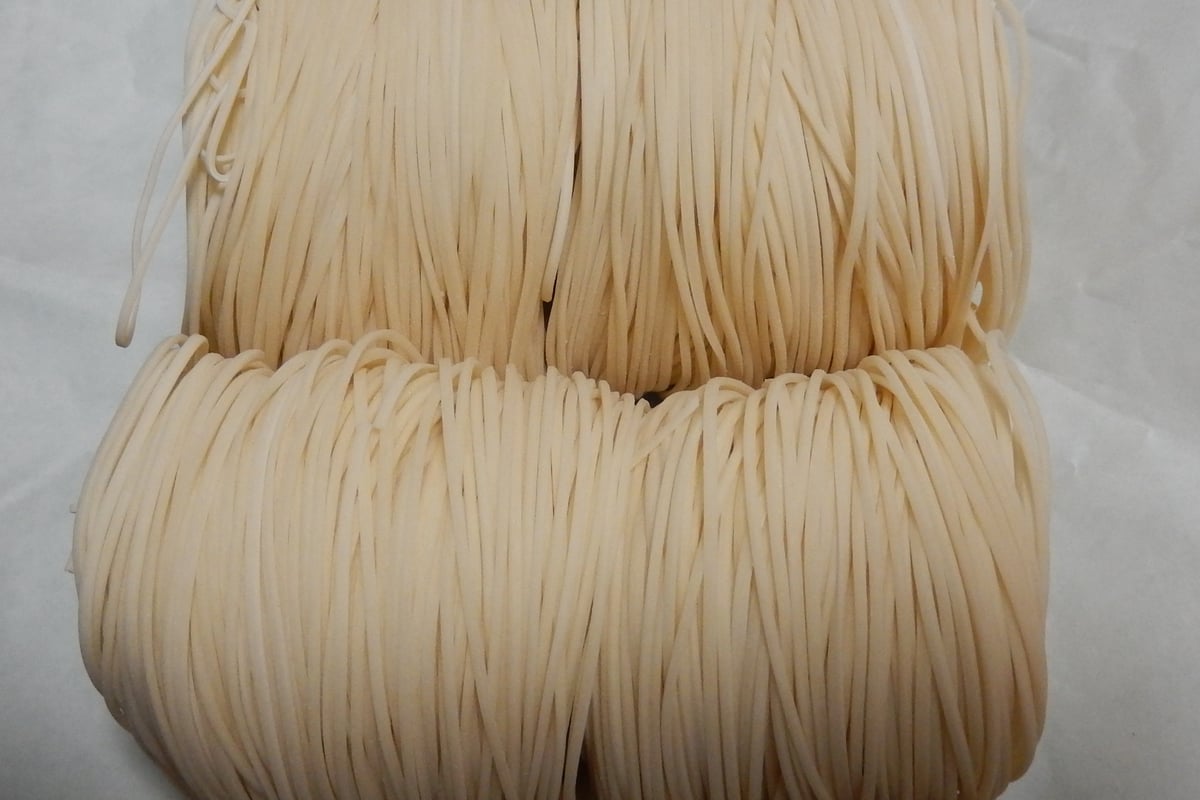
Daimon somen is a hand-pulled somen noodle that has been made in the Daimon district of Tonami City, Toyama Prefecture, since the late Edo period. It is said to have begun in 1848, when a medicine peddler from what was then Daimon Village learned the technique for producing somen for the Kaga domain and brought it back home, after which it spread through the village as a winter side occupation for farming families. At its peak in the early Showa era, more than 60 households produced it, and although the number of producers has now dwindled to just a handful, the traditional method is still carefully preserved. Its most distinctive feature is a unique finishing technique called ‘Shimada-maki,’ in which the thinly stretched noodle strands are wound up into a round bun shape, giving it an appearance unlike somen from any other production area — which is why it is also known as ‘marumage somen’ (topknot-bun somen). Because the noodles are stretched by hand while being twisted, their fibers take on a twisted structure, giving the noodles a firm bite and smooth texture, and they resist becoming soggy even after boiling and soaking in water. It is a seasonal handcrafted delicacy made only during the farming off-season, from around October to March, when temperatures drop and the air becomes dry.
Origin
The origin of daimon somen is said to date back to 1848. A medicine peddler from what was then Daimon Village (now the Daimon district of Tonami City) is said to have learned the technique for producing somen for the Kaga domain while traveling for business and brought it back to his hometown, spreading it locally. It took root in Daimon, blessed with underground water from the Shogawa River and high-quality wheat, as a side occupation that could be done during the winter farming off-season.
History
The technique spread through the village as a winter side occupation for farming families, and at its peak in the early Showa era, more than 60 households were making somen. The number of producers has declined greatly since then, shrinking to around nine as of 2025, but the traditional hand-pulling method is still carried on by producers including the Suenaga family in the Daimon district of Tonami City, and it continues to be made as a winter specialty.
Features
During the farming off-season from around October to March, when temperatures drop and the air becomes dry, high-quality wheat flour is kneaded with water from the Shogawa River and stretched little by little into thin, long strands while being twisted, then left to rest overnight. The strands are hung on poles called ‘hasa’ to be stretched further, dried in the cold wind, and finally gathered into a round bun shape in a finishing technique called ‘Shimada-maki.’ This method produces a firm bite, and the noodles resist becoming soggy even after time has passed since boiling.
Main Ingredients
Food Culture
Having developed as a winter side occupation for farming families, it is positioned as a seasonal specialty made only during the farming off-season, and it remains a living link between the region's food culture and its agriculture today.
How It Differs from Home Cooking
Unlike ordinary dried somen, it is distributed wound into a round bun shape that must be unwound before boiling, and because the noodles are stretched with a twisting motion, they differ from mass-produced somen for home use in having a firmer bite and greater resistance to becoming soggy.
Famous Shops
めん食堂 川なべ
富山県砺波市三郎丸331-1
A restaurant serving dishes made with daimon somen. Its winter-only dish featuring daimon somen costs around 1,200 yen.
View details →| 柿里商店の大門素麺 | Hand-pulled somen from Kakizato Shoten, which has been making somen in the Daimon district since the Edo period. Available by mail order at around 810 yen for a single pack (350g, serves 3) and around 1,950 yen for a two-pack gift box.Where to buy →PR |
|---|---|
| 大門素麺(JAとなみ野) | Hand-pulled somen, a specialty of the Daimon district, available at the local JA's direct-sales outlets and elsewhere. Its distinctive round bun shape also makes it a popular souvenir.Where to buy →PR |
FAQ
Q. What is the ‘Shimada-maki’ technique?
A. It is a finishing technique unique to daimon somen in which the thin, long, hand-pulled noodle strands are wound up into a round shape without being cut. Because of this shape, it is also known as ‘marumage somen,’ and its appearance differs greatly from somen produced elsewhere.