Image: Wikimedia Commons
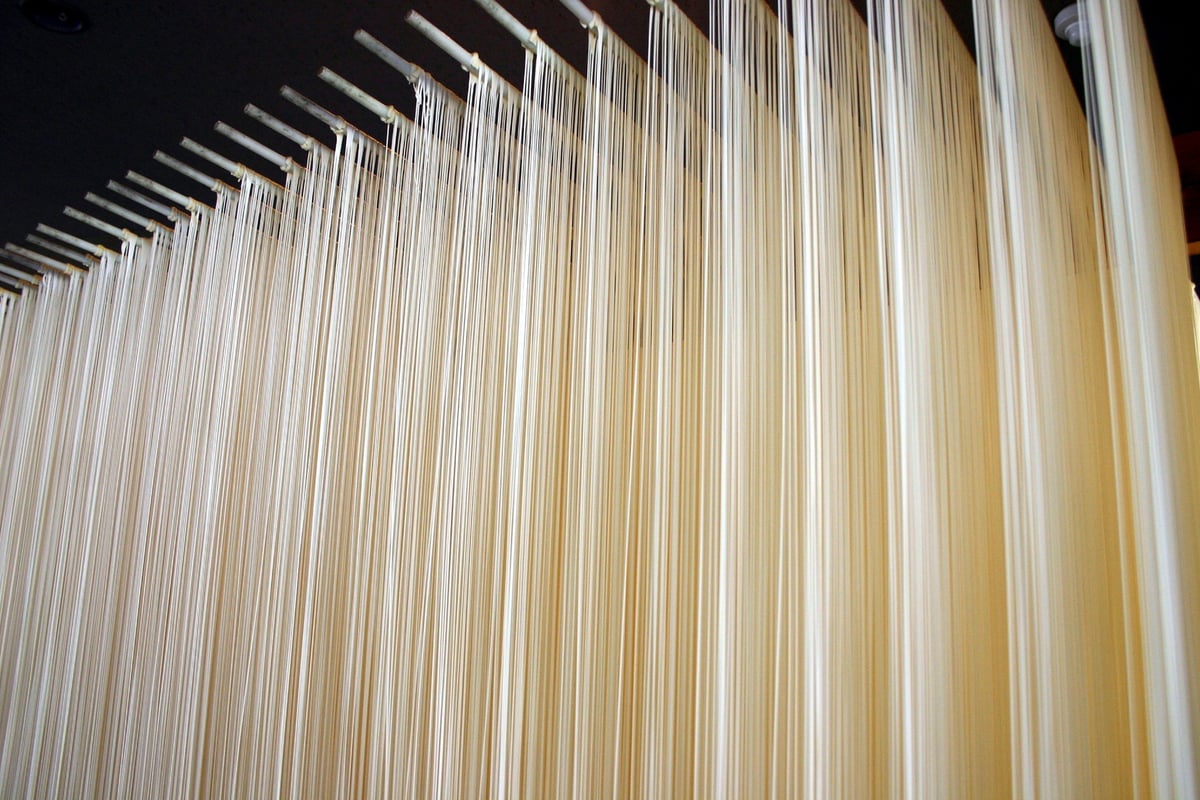
Miwa somen is hand-pulled somen noodles that have been made since ancient times in the Miwa area of Sakurai City, Nara Prefecture, and the region is known as the birthplace of Japan's hand-pulled somen tradition. According to legend, more than 1,200 years ago the second son of the chief priest of Omiwa Shrine discovered that the clear water flowing from Mt. Miwa and the local soil were ideally suited to growing wheat, and began making somen from the flour. At Omiwa Shrine, a ritual called Bokujosai is still held every February to divine that year's somen market, showing how deeply faith in the deity of Mt. Miwa has been tied to somen-making. The noodles, stretched into extremely fine strands, are known for their firm bite and smooth texture, and are enjoyed year-round: chilled in summer and as hot nyumen in winter.
Origin
According to legend, more than 1,200 years ago, Kokushu, the second son of the chief priest of Omiwa Shrine, discovered that the clear stream flowing from Mt. Miwa and the land of Miwa were ideally suited to growing wheat, and began making somen from the flour. Another tale holds that he received a divine revelation and cultivated wheat to save people suffering from famine and disease.
History
From the Nara period through the Heian period, a twisted, rope-like noodle called sakubei, considered the prototype of somen, is said to have been eaten. The relationship between Omiwa Shrine and somen producers remains close today, and every year on February 5th, a Shinto ritual called Bokujosai is held before the shrine deity to divine that year's somen market, showing how the production method and culture have been passed down in close connection with faith. It is also said to have spread across Japan carried by pilgrims traveling to Ise Shrine.
Features
The extremely fine, hand-pulled noodles are known for their firm bite and smooth texture, and although they are a dried noodle, they resist becoming soft or mushy when boiled. Another appeal of Miwa somen is that it can be enjoyed year-round: as chilled somen cooled in cold water during summer, and as nyumen served in hot broth during winter.
Main Ingredients
Food Culture
Faith in Omiwa Shrine, which enshrines the deity of Mt. Miwa, is deeply tied to somen-making, and Shinto rituals such as the annual Bokujosai, which divines the year's market, continue to this day. As the birthplace of somen, the Miwa area has made noodle production one of its core local industries.
Famous Shops
池利三輪素麺茶屋 千寿亭
奈良県桜井市芝293
A restaurant run directly by Ikeri, a long-established maker founded in 1850. Nyumen starts at around 1,150 yen.
View details →| Miwa Somen: Ikeri's Wooden-Box Gift Set | A gift-boxed set of hand-pulled somen made using the traditional method passed down by Ikeri, a long-established maker founded in 1850.Where to buy →PR |
|---|
FAQ
Q. How is Miwa somen different from ordinary somen?
A. Miwa somen is stretched into extremely fine strands by skilled artisans using a hand-pulling method, giving it a firm bite and smooth texture. It is regarded as the birthplace of Japan's hand-pulled somen tradition, with a history of more than 1,200 years.