 Image: Wikimedia Commons
Nara Prefecture
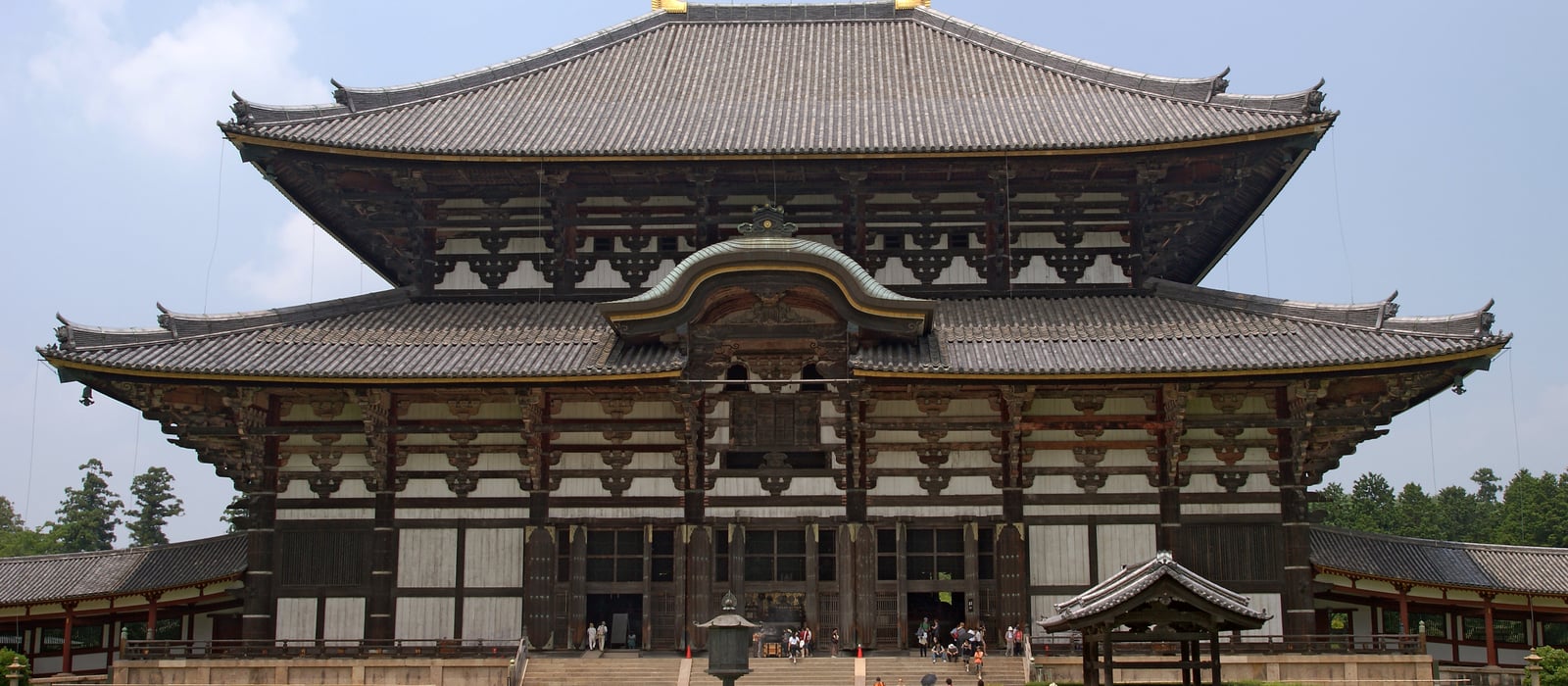
A region that flourished as the center of Japanese politics and culture ever since the capital was moved to Heijo-kyo in 710. Alongside the construction of temples and shrines such as Todai-ji, Kofuku-ji, and Kasuga Taisha, a craft culture of lacquerware, woodworking, papermaking, brush-making, and inkstick-making developed, leaving behind numerous crafts — including Takayama tea whisks, Nara writing brushes, and Nara inksticks — that still account for the majority of domestic production today. It is also rich in local dishes rooted in the preserved-food culture unique to a landlocked basin, such as Kakinoha-zushi, Miwa somen noodles, and Nara-zuke pickles. Visitors can enjoy strolling through areas where temples, shrines, and artisan quarters form a single fabric, such as Naramachi, the area around Todai-ji and Kasuga Taisha, and the foot of Mount Miwa in Sakurai City.
Nara's Traditional Crafts
Akahada-yaki
Akahada-yaki
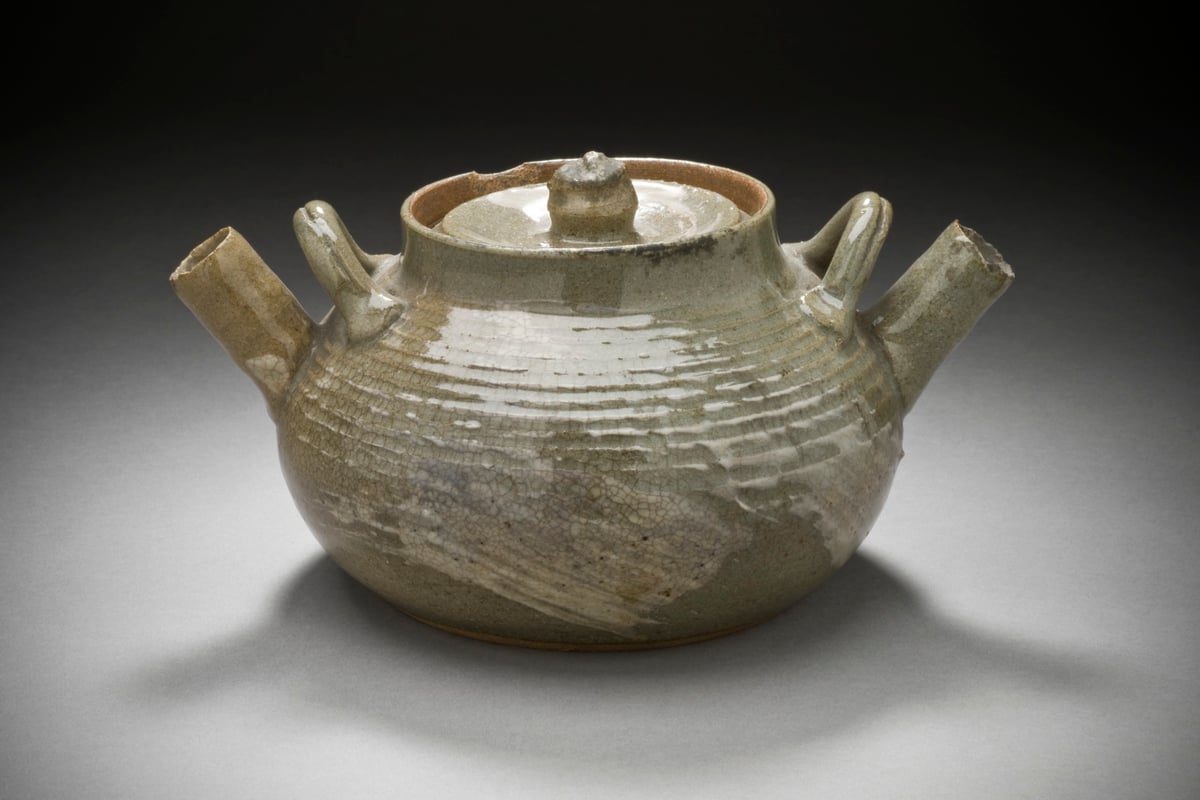
Akahada-yaki is a pottery ware fired in the area stretching from western Nara City to Yamatokoriyama City, known for its soft, milky-white-tinged glaze and for 'Nara-e,' a decorative style depicting figures reminiscent of Gosho dolls. Tradition holds that during the Momoyama period, Toyotomi Hidenaga—lord of Yamatokoriyama Castle and younger brother of Toyotomi Hideyoshi—invited potters from Tokoname in Owari Province to open a kiln on Mt. Gojo (also called Mt. Akahada), though no reliable historical records or artifacts confirm this account. In the late Edo period, it became an official kiln under the patronage of the Yanagisawa family, lords of Koriyama Domain, and came to be counted among the 'Enshu Nanagama' (Seven Kilns favored by tea master Kobori Enshu). In the closing years of the Edo period, the master potter Okuda Mokuhaku revived Akahada-yaki through his exceptional skill, producing a wide range of works including Nara-e pieces, and is honored as the craft's great restorer. Today, several kilns spanning Yamatokoriyama City and Nara City each carry on the tradition with their own interpretations of glaze and decoration.

Nara Fude (Nara Writing Brushes)
Nara Fude
Nara Fude are calligraphy and cosmetic brushes made mainly in Nara City, designated a Traditional Craft by the Minister of Economy, Trade and Industry. Tradition holds that during the Nara period, Kukai (Kobo Daishi), who traveled to Tang China as an envoy to Tang China (kentoshi), mastered brush-making techniques there and, upon returning to Japan, transmitted them to Sakanai Kiyokawa of Imai in Yamato Province. For more than 1,200 years since, the technique has been passed down as Japan's birthplace of brush-making. Its defining feature is a technique called 'nerimaze-ho' (kneading and blending method), in which more than a dozen types of animal hair—including squirrel, weasel, raccoon dog, sheep, and horse—are carefully proportioned and blended according to hair quality to complete a single brush. This process is considered the most difficult step, and it is said to take many years for a craftsperson to master. In 1977, Nara Fude was designated a Traditional Craft by the Minister of International Trade and Industry, earning high acclaim not only for calligraphy brushes but also in the field of cosmetic brushes.
Nara Ittobori
Nara Ittobori
Nara Ittobori is a style of wood-carved doll made from woods such as cypress, katsura, and camphor, boldly carved with a chisel and finished in vivid colors using gold leaf and mineral pigments. It is said to originate from the painted dolls used to decorate the flower hats and shimadai stands of the dengaku-hoshi performers at the Kasuga Wakamiya On-Matsuri, a festival that began in 1136 in the late Heian period and has continued without interruption ever since, carrying its distinctive forms down through the generations. Unlike ordinary rounded carving, it is characterized by simple, powerful forms that make use of flat planes and ridgelines—a style said to reflect the mindset of dolls offered to the gods, expressing the essence of a subject without relying on superficial detail. In the Meiji era, the craft came to be called 'Ittobori Nara Ningyo' and later 'Nara Ittobori'; the name is said to have been given by Mizutani-gawa Tadaoki, the first chief priest of Kasuga Taisha, reflecting the way the dolls appear carved with a single decisive stroke, imbued with spirit. Today, a wide range of works—from hina dolls and Boys' Day dolls to zodiac figurines—continue to be made in Nara.
Nara Kumihimo
Nara Kumihimo
Kumihimo is a traditional technique of braiding multiple strands of silk thread together into cords, said to have been introduced from the continent along with Buddhism during the Asuka and Nara periods. Ancient braided cords survive among the treasures of the Shosoin and those handed down at Horyu-ji, and Nara remains essential to the history of kumihimo — one traditional braiding technique still practiced today is even called 'Nara-gumi,' named for the braiding pattern seen on an item associated with Emperor Shomu that is preserved in the Shosoin. In the Nara period, kumihimo cords were used for Buddhist implements such as sutra scrolls and priests' robes; over time they came to be used for armor cords and tea-ceremony implements, and from the late Edo period onward, widely as obijime (sash cords) for women's kimono. Today, at the Nishinokyo workshop 'Nara Kumihimo Homi' in Nara City, the tradition of kumihimo braiding using traditional stands such as the kakudai (square stand), marudai (round stand), and takadai (high stand) is carried on through classes and hands-on programs.
Nara Lacquerware
Nara Shikki
Nara lacquerware traces its roots to the lacquer craftsmanship of the Nara period seen in the treasures of the Shosoin and the ancient sacred objects of Kasuga Taisha, and Nara is sometimes called 'the birthplace of Japanese lacquerware.' Lacquer techniques introduced from the continent along with Buddhism in the Asuka period flourished during the Tempyo culture of the Nara period, and the Shosoin came to house numerous fine works, including the celebrated Five-Stringed Biwa with Mother-of-Pearl Inlay on Rosewood. From the Meiji era onward, Nara produced artisans who undertook the repair and reproduction of Shosoin treasures and the ancient sacred objects of shrines and temples, and through this work the technique of raden — mother-of-pearl inlay using lustrous shells such as yakogai (turban shell) — has been passed down. In raden work, layers of lacquer are applied to a wooden base, and shells cut into the shape of a design are inlaid and then polished to reveal a brilliance reminiscent of the Tempyo era. Lacquer artists including Kitamura Shosai, a Living National Treasure for raden, have carried on the art of Nara lacquerware to this day through both the conservation of cultural properties and original creation.
Nara Sumi (Nara Ink Sticks)
Nara Sumi
Nara Sumi is calligraphy ink produced mainly in Nara City, and Nara is said to be Japan's largest ink-producing region, accounting for roughly 90% of domestic production. It is said to have originated in the early Muromachi period, when ink-making using yuen (soot collected from burning oil) began at Kofuku-ji temple's Nitai-bo hall. This ink came to be called 'Nanto yuen' after Nara's old alternative name, and became widely known as synonymous with fine-quality ink. Around 40 ink makers are said to have operated in Nara City during the Edo period, and although the number has fallen to fewer than 10 today, the traditional method — collecting soot, blending it with animal glue (nikawa), kneading, molding, drying, polishing with shells, and coloring — is still carried out entirely by hand at every stage. In November 2018 (Heisei 30), it was designated a Traditional Craft by the Minister of Economy, Trade and Industry, and it remains highly regarded among calligraphers and enthusiasts.
Nara Uchiwa
Nara Uchiwa
Nara uchiwa is a traditional craft of Nara City said to be among the oldest types of uchiwa (flat fan) in Japan. Its origin is traced to the 'Negi Uchiwa,' made by a Shinto priest serving at Kasuga Taisha, founded in the Nara period. In the early Edo period, a monk of Kofuku-ji added his own refinements to a fan style introduced from China, perfecting a distinctive design featuring openwork carving (sukashibori) of motifs associated with Nara, such as deer and wisteria. Its defining feature is the openwork carving technique itself: 60 to 90 ribs — more than three times the number found in an ordinary uchiwa — are split from thin strips of medake bamboo and covered with washi paper, with the pattern areas then cut out with a carving knife. The unusually high number of ribs lets the fan flex gently, producing a soft breeze. All 13 steps, from dyeing the paper to bamboo-rib processing, sketching, openwork carving, and paper-mounting, are done entirely by hand within a single workshop without any division of labor — a feature not found in uchiwa from other production areas. Today, Japan's only specialty shop for Nara uchiwa, located in Nara City, has preserved this technique for more than 170 years.
Nara-zarashi (Nara Bleached Hemp Cloth)
Nara-zarashi
Nara-zarashi is a high-grade hemp cloth produced mainly around Nara. A reference to bleaching appears in the 1549 (Tenbun 18) entry of the 'Tamon-in Nikki,' a record from the late Muromachi period, and in 1611 (Keicho 16) Tokugawa Ieyasu ordered that bleached hemp cloth could only be sold if it carried the red 'Nanto-aratame' stamp at its edge, after which it circulated nationwide as a product favored by the shogunate. During the Kyoho era (1716-1735) it gained such renown that people said 'the finest hemp comes from Nanto,' with annual production said to have reached 300,000 to 400,000 rolls (hiki). Thread hand-spun from ramie is woven on a loom and then bleached to a pure white finish, with every step done entirely by hand, and the cloth has long been used for prestigious items such as Buddhist priests' vestments, samurai ceremonial dress (kamishimo), and tea ceremony cloths. Since the Meiji era, production has shrunk considerably as demand has changed, but long-established weaving houses founded in the Edo period still pass on the technique by hand today.
Takayama Chasen (Takayama Bamboo Tea Whisks)
Takayama Chasen
Takayama Chasen is a bamboo tea whisk for tea ceremony use made in Takayama-cho, Ikoma City, Nara Prefecture, and is a Traditional Craft designated by the Minister of Economy, Trade and Industry. It is said to have originated in the Muromachi period, when Takayama Minbu-no-jo Nyudo Soze, son of the lord of Takayama Castle, devised it at the request of Murata Juko, regarded as the founder of the tea ceremony. The technique has been passed down for over 500 years within a single family line at a time, and today Takayama-cho, Ikoma City, is said to produce the majority of tea whisks distributed in Japan, making it one of the few remaining chasen-producing areas in the country. The main material is hachiku (henon bamboo), along with kurochiku (black bamboo) and susudake (smoke-cured bamboo); every step, from splitting the bamboo to thinly shaving the tines and weaving them together with thread, is done entirely by hand. Shapes and the number of tines vary by school and use, with more than 100 varieties said to exist, making it a tool prized among tea utensils for combining delicate beauty with practicality.
Uda-gami (Uda Paper)
Uda-gami
Uda-gami is a handmade Japanese paper produced in the Yoshino region in southern Nara Prefecture. Made from kozo (paper mulberry) with white clay from crushed pumice mixed in, it becomes a paper that combines strength and suppleness with a distinctive soft texture. It is produced in the Kuzu district of Yoshino-cho, upstream on the Yoshino River, and was originally called 'Kuzu-gami.' In the Edo period, merchants from Uda County in Yamato Province (around present-day Uda City), who had close economic ties to the area, bought up the paper and sold it around the country, and it is said to have gradually become known as 'Uda-gami' after them. Because the mixed-in white clay prevents the paper from shrinking or being damaged by insects and keeps it from curling back when rolled, it is regarded as the finest lining paper for mounting hanging scrolls and folding screens, and is also used in the restoration of National Treasures and Important Cultural Properties. This technique is designated a nationally Selected Conservation Technique, 'Production of Uda-gami, hand-made paper for mounting,' and today is carried on by a long-established papermaking workshop in the Kuzu district of Yoshino-cho.
Nara's Local Food
Asuka Nabe (Asuka-Style Milk Hot Pot)
Asuka Nabe
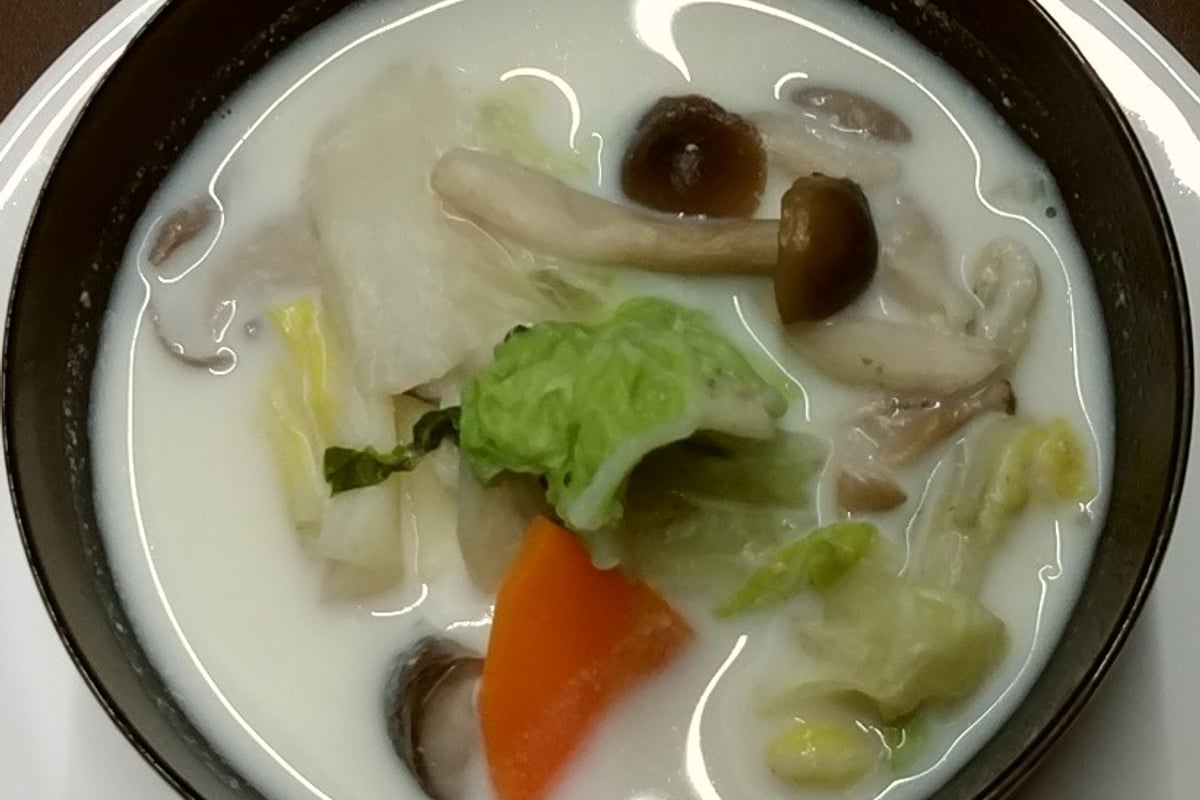
Asuka Nabe is a hot pot dish from Asuka Village in Nara Prefecture, in which chicken and vegetables such as napa cabbage and shungiku (garland chrysanthemum) are simmered in a chicken-bone broth enriched with milk. According to tradition, during the Asuka period an envoy from Tang China introduced dairy products to Japan and presented them to Emperor Kotoku, who was delighted, marking the beginning of milk drinking in Japan. One account holds that monks of the time simmered the meat of chickens they kept in milk and ate it, said to be one origin of Asuka Nabe. Because milk was costly, another account holds that goat's milk was used instead, and several versions of the story survive. The dish is known for its mellow flavor, seasoned with white miso and soy sauce, and it took on its present form as a specialty of Asuka in the early Showa era. Today it is a signature hot pot of Asuka Village, served mainly in winter at local restaurants.
Kakinoha-zushi (Persimmon Leaf Sushi)
Kakinoha-zushi
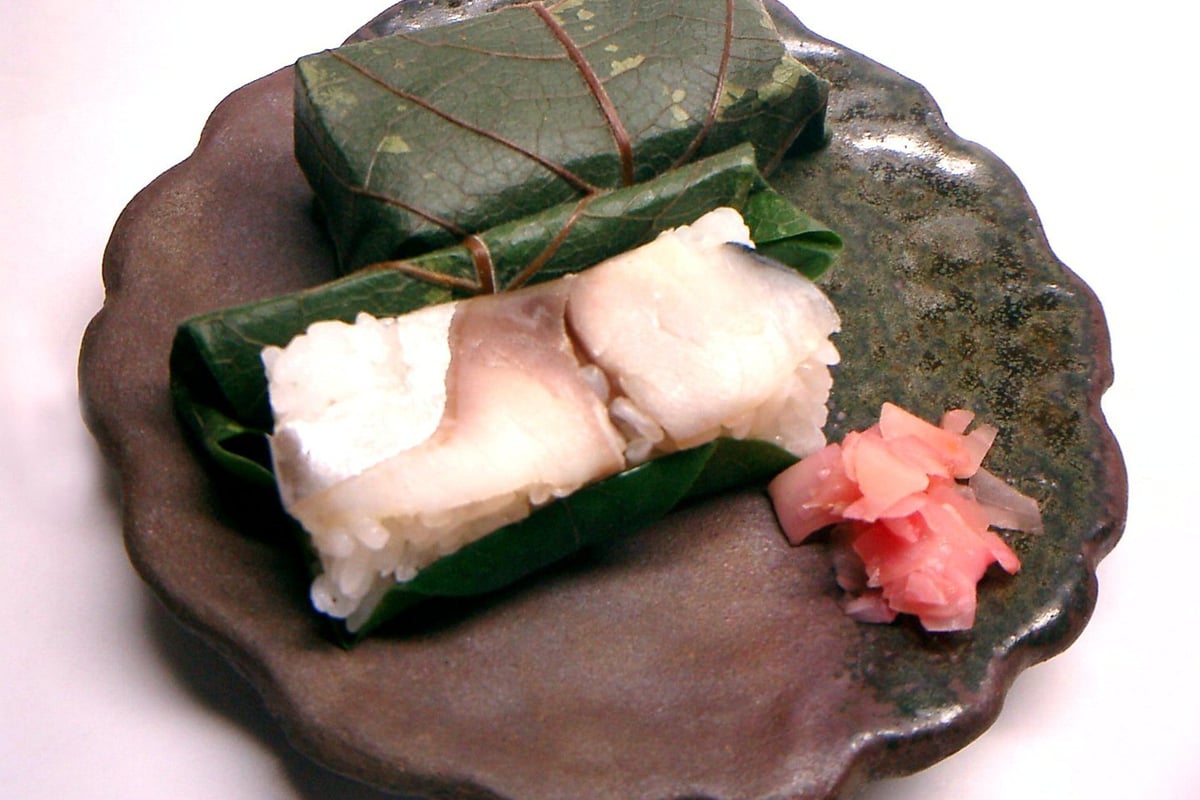
Kakinoha-zushi is a signature local dish of Nara Prefecture in which bite-sized portions of vinegared rice topped with salt-cured slices of mackerel or salmon are individually wrapped in the leaves of the astringent persimmon (shibugaki). It is said to trace back to the mid-Edo period, when summer mackerel from the Kumano-nada sea was salt-cured in Kishu and carried over the mountains to villages along the Yoshino River, where it came to be made in each household as a festive dish for summer festivals. Because fresh seafood was precious in the sea-less Nara Basin, salt-curing was combined with the antibacterial properties of persimmon leaves as a way to improve preservation. Letting the wrapped sushi rest for about a night allows the aroma of the persimmon leaves and the flavor of the fish to blend into the vinegared rice, producing its distinctive taste. Today, makers are found throughout Nara Prefecture, especially in the Yoshino and Gojo areas, and it is known nationwide as one of Nara's representative souvenirs.
Kashiwa Sukiyaki (Nara-Style Chicken Sukiyaki)
Kashiwa no Sukiyaki
Kashiwa Sukiyaki is a local dish of Nara Prefecture, listed among the Ministry of Agriculture, Forestry and Fisheries' 'Our Local Cuisine' collection, made using chicken instead of beef. In the Kansai region, chicken meat for eating is called 'kashiwa,' a name said to derive from the way the bird's brownish feathers resemble the color of oak (kashiwa) leaves. Because the guardian deity of Tenmangu shrines is said to be a bull, chicken sukiyaki rather than beef sukiyaki has traditionally been served at the celebratory autumn festival for Tenjin-san, and the dish has since been made at home to celebrate special occasions and to entertain guests. Today it is often made with 'Yamato Nikudori,' a breed of chicken developed by Nara Prefecture to recreate the flavor of the pre-war 'Yamato Kashiwa,' prized for its rich, savory taste and well-balanced marbling. It is typically eaten dipped in raw or onsen (soft-poached) egg, and finishing the pot with Miwa somen noodles is also a popular way to enjoy it.
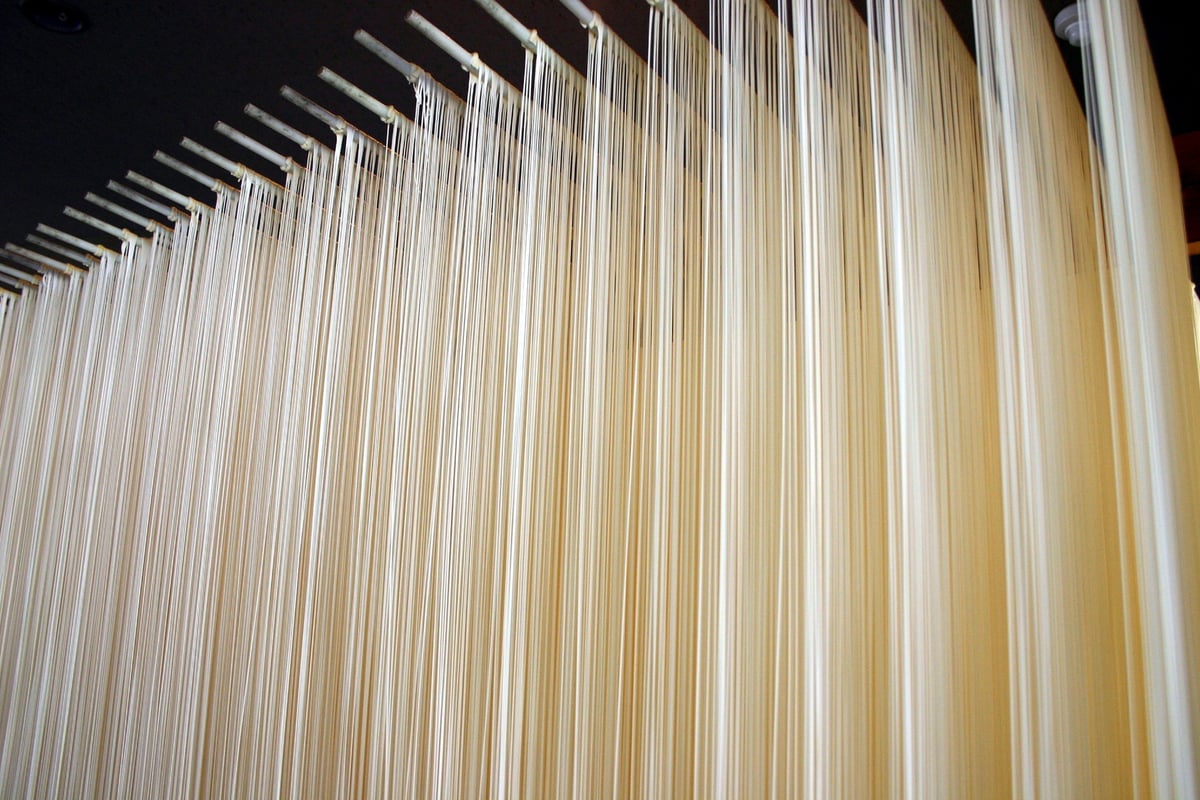
Miwa Somen
Miwa Somen
Miwa somen is hand-pulled somen noodles that have been made since ancient times in the Miwa area of Sakurai City, Nara Prefecture, and the region is known as the birthplace of Japan's hand-pulled somen tradition. According to legend, more than 1,200 years ago the second son of the chief priest of Omiwa Shrine discovered that the clear water flowing from Mt. Miwa and the local soil were ideally suited to growing wheat, and began making somen from the flour. At Omiwa Shrine, a ritual called Bokujosai is still held every February to divine that year's somen market, showing how deeply faith in the deity of Mt. Miwa has been tied to somen-making. The noodles, stretched into extremely fine strands, are known for their firm bite and smooth texture, and are enjoyed year-round: chilled in summer and as hot nyumen in winter.
Nara Noppe
Nara Noppe
Nara noppe is a shojin (Buddhist vegetarian) dish handed down in Nara, made by slowly simmering taro, daikon radish, carrot, and other vegetables in a broth made from kelp and dried shiitake mushrooms. Similar dishes called noppe or noppei-jiru exist throughout Japan, but Nara noppe is distinctive in that it is prepared without meat or fish, and in the way the taro naturally breaks down during cooking to create a thickened texture, without relying on added starch. While many regions use potato starch or similar thickeners, the fact that Nara noppe achieves its thickness purely from the ingredients themselves reflects the careful craftsmanship unique to Nara. Every December, ahead of the Kasuga Wakamiya On-Matsuri festival held at Kasuga Taisha, the Yamato-zamurai attendants who serve in the ritual purify themselves at the Oshukusho-sai ceremony, where this Nara noppe is traditionally served to visitors. It is thus more than an everyday home dish — it has been passed down as a local food closely tied to a religious festival, and has long been made in Nara households as a warming winter dish.
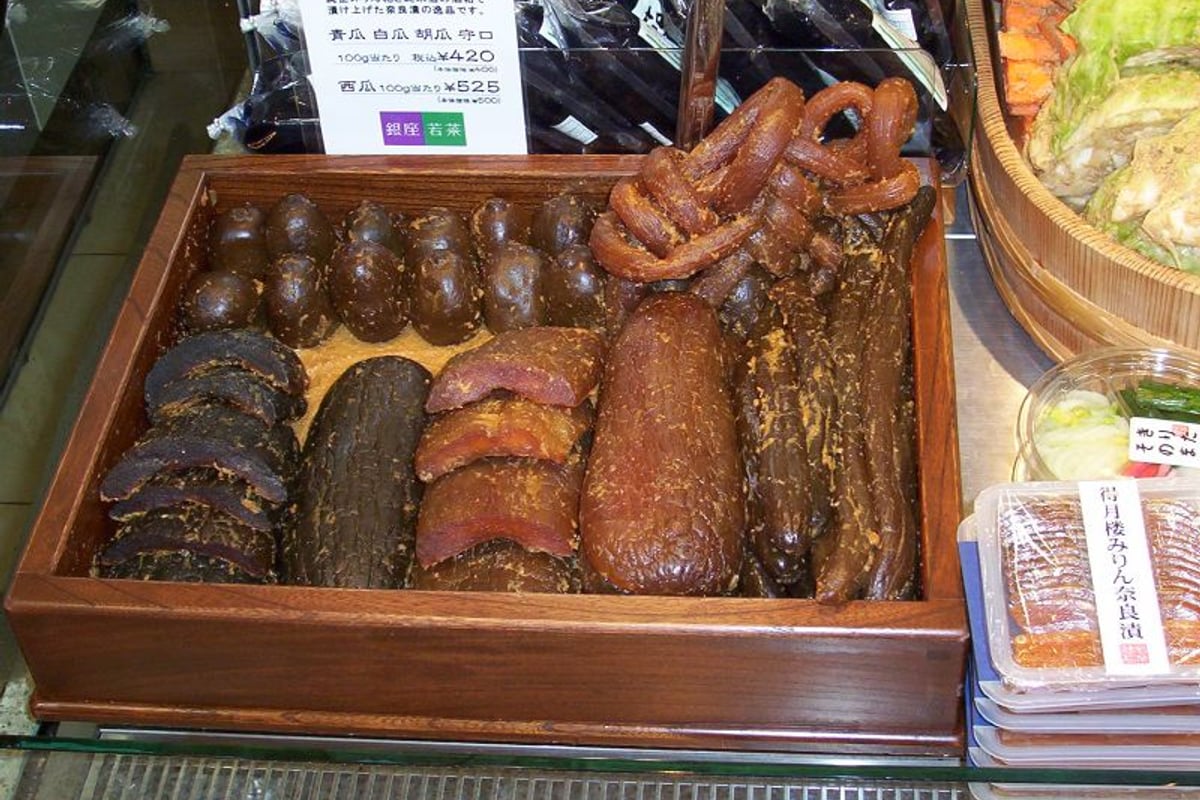
Narazuke
Narazuke
Narazuke is a sake-lees pickle that originated in Nara, made by repeatedly pickling vegetables such as shirouri (a type of white melon) in sake lees. A wooden tablet excavated from the ruins of Prince Nagaya's residence at the Heijo-kyo capital site is said to bear the phrase 'kasuzuke uri, offered as a gift' (進物加須津毛瓜), suggesting the dish may have been eaten as far back as more than 1,300 years ago, giving it a long history. It is said to have originated when vegetables were pickled in the leftover lees from drinking the clear portion of doburoku (unrefined sake) as an alcoholic drink; after refined sake brewing began in the Muromachi period, the current method using sake lees was established. Narazuke became widely sold as a commercial product between the Azuchi-Momoyama and Edo periods, when Itoya Sosen, a physician in Nara, is said to have started pickling shirouri in sake lees and selling it. Being repeatedly re-pickled in fresh sake lees allows the rich aroma of sake and the savory taste of rice to soak into the vegetables, turning them a deep amber color, and it remains a beloved souvenir representative of Nara today.
Oshiro-no-kuchi-mochi
Oshiro-no-kuchi-mochi
Oshiro-no-kuchi-mochi is a bite-sized mochi confection made by wrapping chunky sweet red bean paste (tsubuan) in soft mochi dough (gyuhi) and dusting it with roasted soybean flour (kinako). It has been made for over 400 years by the long-established confectionery Honke Kikuya in Yamatokoriyama City. According to tradition, Honke Kikuya's history began in 1585, when its founder, Kikuya Jihei, accompanied Toyotomi Hidenaga — the younger brother of Toyotomi Hideyoshi — into the castle town of Koriyama and opened a shop there. When Hidenaga wished to entertain his brother Hideyoshi at a tea ceremony, he asked Jihei to create an unusual confection, and this mochi sweet is said to have been born from that request. Hideyoshi reportedly loved it so much that he named it 'Uguisu Mochi' (nightingale mochi). Later, because the shop stood in a prime spot at the entrance to the castle town leading to Koriyama Castle, it came to be affectionately known as 'Oshiro-no-kuchi-mochi' (literally, 'mochi at the castle entrance'). The confection is characterized by its pale greenish kinako, reminiscent of a nightingale's plumage, combined with soft gyuhi and elegantly sweet tsubuan, and it is considered one of the originators of uguisu mochi. It is enjoyed both as a souvenir when visiting Yamatokoriyama and for local celebratory occasions.
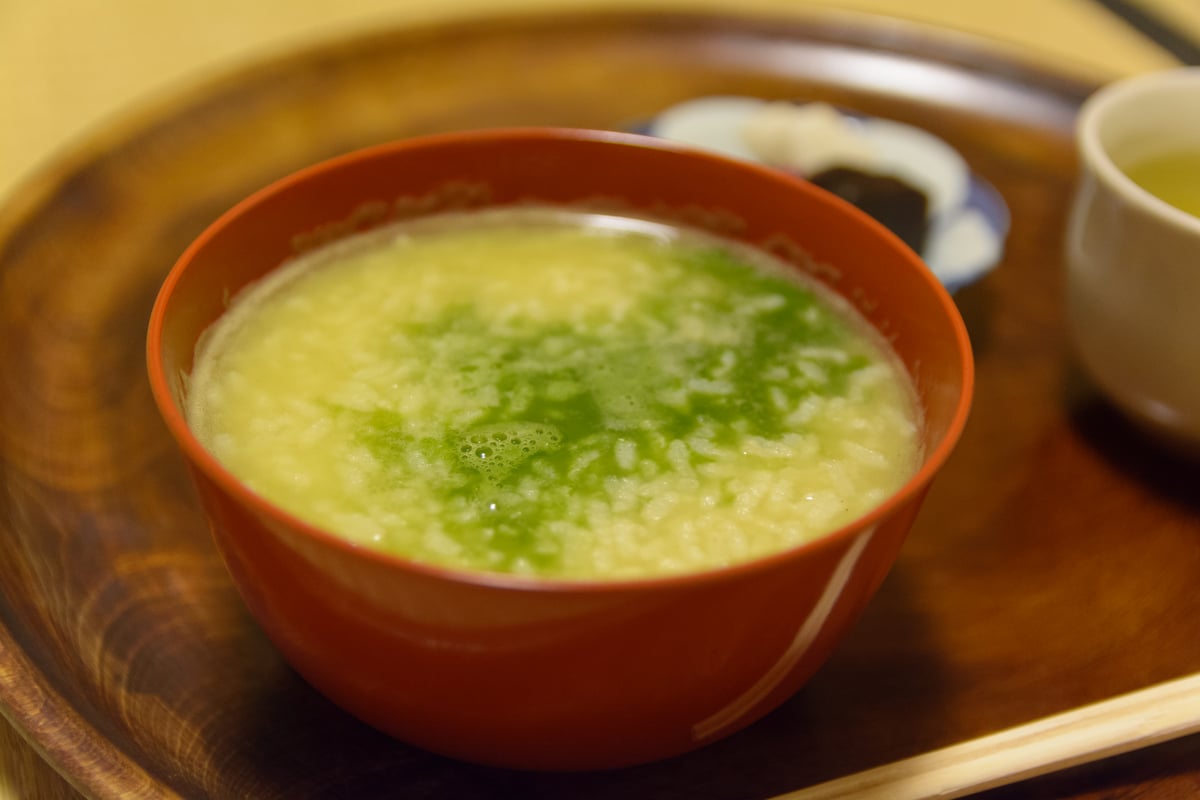
Yamato Chagayu
Yamato Chagayu
Yamato Chagayu is a signature home-style dish of Nara made by cooking rice in tea — typically hojicha (roasted green tea) — brewed into a broth. It is so deeply rooted in daily life that people say 'a Yamato morning begins with chagayu.' Its origins are said to lie in temples such as Todai-ji and Kofuku-ji, where monks are believed to have eaten it between periods of ascetic practice, and it has a deep connection to the Shuni-e ritual at Todai-ji's Nigatsu-do hall, known for the Omizutori water-drawing ceremony. The tea is boiled in a cotton tea bag, and rice is added and cooked quickly over high heat until the grains open up like blossoms — a state called 'hana ga saku' ('the flowers bloom') that is considered ideal. Its light, thin texture, without the thickening seen in chagayu from other regions (often made with potato starch), is one of its defining features. It is also said to have spread as a way for monks and ordinary people to stretch their rice supply, and today this humble yet flavorful dish, deeply rooted in Nara's climate and culture, remains a beloved staple in homes and restaurants alike.
Yamato-gyu
Yamato-gyu
Yamato-gyu is a brand name given exclusively to beef from Japanese Black (kuroge washu) cattle raised at designated producer farms within Nara Prefecture that meet a set of specific grading requirements. It is known for its finely marbled, reddish-brown lean meat and for being rich in oleic acid — an unsaturated fatty acid considered beneficial for health — which gives the fat a smooth, melting quality and a rich flavor. Nara has a long history as a cattle-raising region, documented as a source of fine cattle as far back as the Kamakura-period picture scrolls 'Shungyu Ekotoba' and 'Kokugyu Jusu.' Since the Yamato-gyu Distribution Promotion Council was established in 2003, information on each animal's pedigree, feed, and rearing environment has been recorded and managed individually, making the path from production to distribution fully traceable. Today, 12 designated producer farms raise the cattle, which are then delivered within and outside the prefecture through designated retailers and wholesalers. Beef that clears even stricter standards — including a longer fattening period and higher oleic acid content — is certified as 'Nara Prefecture Premium Select,' marking it as an especially fine grade even among Yamato-gyu.
Yoshino Hon-kuzu
Yoshino Hon-kuzu
Yoshino Hon-kuzu is a traditional ingredient made in the Yoshino region of southern Nara Prefecture, regarded as one of the finest grades of kuzu starch available. It is produced by extracting starch from the roots of kuzu, a climbing vine in the legume family, then refining it through a method called 'Yoshino-zarashi' — repeatedly rinsing the starch in cold well water during the coldest months of the year. The raw kuzu root is a precious material, gathered through the arduous labor of digging into the mountains, and the painstaking process, which takes several months from refining to drying, produces a purity and smooth mouthfeel unmatched by kuzu starch from other regions. Yoshino Hon-kuzu is used not only in wagashi such as kuzuyu (hot kuzu drink), kuzumochi, and kuzukiri, but also widely as a thickening agent in cooking, and its traditional techniques are still preserved today by long-established producers dating back to the Edo period. A representative maker is Kurokawa Honke, headquartered in Uda City, Nara Prefecture, which has maintained the same production method for over 400 years since its founding in 1615 and is known as a long-established house with a history of supplying the Imperial Household Agency.
Model Course
Half-Day Course: Crafts and Food Culture in Naramachi and Todai-ji
Enjoy an inkstick-shaping experience at Kinkoen, then buy Nara-zuke pickles at a long-established shop in front of Todai-ji's Nandai-mon gate, and savor Yamato tea porridge at an eatery in Naramachi. Visit the Nara Prefectural Museum of Traditional Crafts to see displays of Nara lacquerware and Nara Ittobori wood carving, on this course exploring the artisan culture of the ancient capital.
Course: Visiting the Tea Whisk and Akahada-yaki Production Areas of Ikoma and Yamatokoriyama
Watch and try your hand at tea-whisk making in the Takayama district of Ikoma City, then move on to Yamatokoriyama City for a pottery-making experience at an Akahada-yaki kiln. Savor Oshiro-no-kuchi-mochi rice cakes at a long-established shop in the Koriyama castle town, spending a full day exploring the atmosphere of the castle town alongside these craft-producing villages.
Course: Noodles, Hotpot, and Ancient Food Culture in Miwa and Asuka
Worship at Omiwa Shrine and savor the famous Nyumen noodle dish in Miwa, the birthplace of somen noodles, then travel on to Asuka Village to enjoy Asuka-nabe hotpot, which traces its roots to the dairy culture of the Asuka period. Take home Kakinoha-zushi as a souvenir on this course savoring the Yamato road that was once the center of ancient Japan.
Events
Todai-ji Nigatsudo Shuni-e (Omizutori)
Every year, March 1–14 / Todai-ji Nigatsudo (Nara City)
Kasuga Wakamiya On-Matsuri
Every year, December 15–18 (Oshukusho-sai on December 15) / Kasuga Taisha and the Nara Park area (Nara City)