Image: Wikimedia Commons
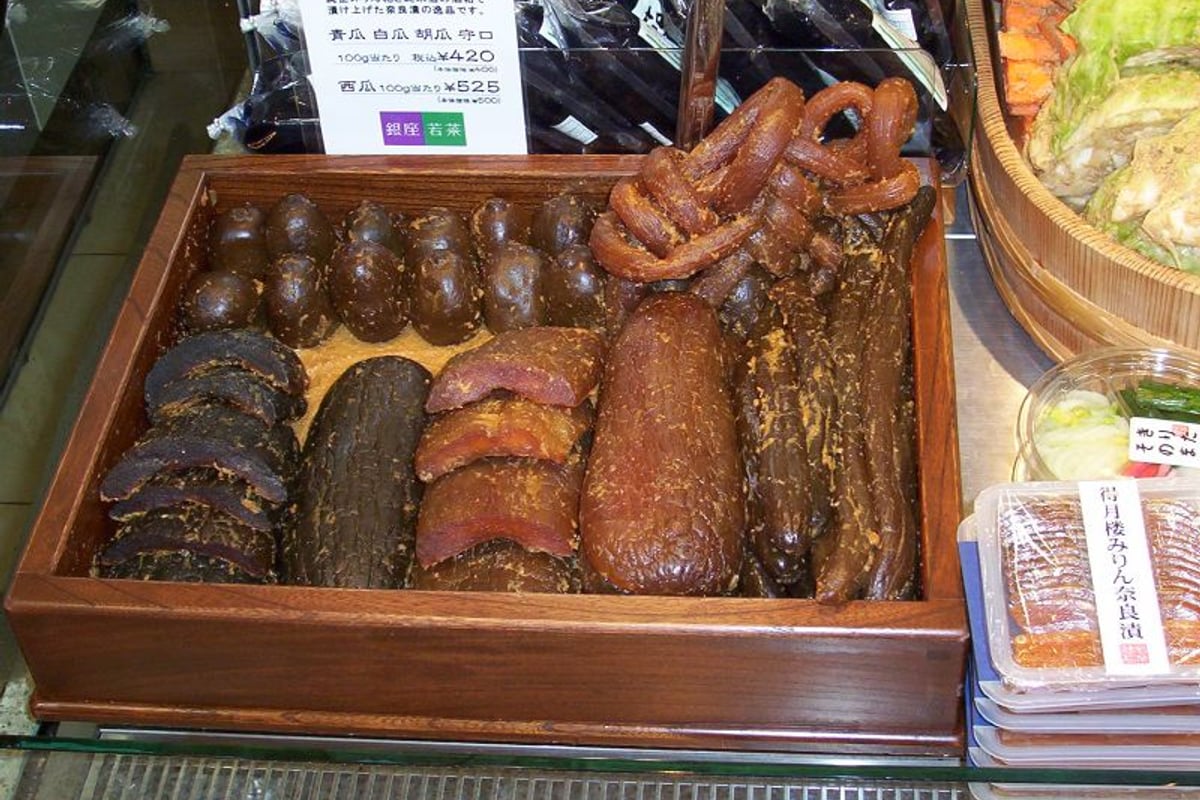
Narazuke is a sake-lees pickle that originated in Nara, made by repeatedly pickling vegetables such as shirouri (a type of white melon) in sake lees. A wooden tablet excavated from the ruins of Prince Nagaya's residence at the Heijo-kyo capital site is said to bear the phrase 'kasuzuke uri, offered as a gift' (進物加須津毛瓜), suggesting the dish may have been eaten as far back as more than 1,300 years ago, giving it a long history. It is said to have originated when vegetables were pickled in the leftover lees from drinking the clear portion of doburoku (unrefined sake) as an alcoholic drink; after refined sake brewing began in the Muromachi period, the current method using sake lees was established. Narazuke became widely sold as a commercial product between the Azuchi-Momoyama and Edo periods, when Itoya Sosen, a physician in Nara, is said to have started pickling shirouri in sake lees and selling it. Being repeatedly re-pickled in fresh sake lees allows the rich aroma of sake and the savory taste of rice to soak into the vegetables, turning them a deep amber color, and it remains a beloved souvenir representative of Nara today.
Origin
A wooden tablet excavated from the ruins of Prince Nagaya's residence (a Nara-period site) in Nijo-oji, Nara City, is said to bear the phrase 'kasuzuke uri, offered as a gift' (進物加須津毛瓜), suggesting that sake-lees-pickled vegetables were already being eaten in the Nara period. It is believed to have originated when vegetables salted and pickled were further preserved in the leftover lees from drinking the clear portion of doburoku (unrefined sake), and because sake lees were precious, it is thought to have originally been eaten by the upper classes.
History
After refined sake brewing began in the Muromachi period, the method of using sake lees became established, giving rise to the form of narazuke known today. Between the Azuchi-Momoyama and Edo periods, Itoya Sosen, a physician in Nara, is said to have pickled shirouri in sake lees and manufactured and sold it as a product, an event credited with spreading the name 'narazuke.'
Features
A variety of vegetables, mainly shirouri, along with eggplant, cucumber, watermelon, and daikon radish, are salted and then re-pickled in sake lees multiple times to finish. With each re-pickling, the rich aroma of sake and the savory taste of rice soak further into the vegetables, giving them their distinctive amber, tortoiseshell-like color.
Main Ingredients
Food Culture
Narazuke developed from the wisdom of making full use of precious sake lees as a preserved food, and after passing from the aristocratic society of the Nara period through commercialization in the Edo period, it is now firmly established as a food culture and souvenir representative of Nara.
Famous Shops
森奈良漬店
奈良県奈良市春日野町23
A long-established shop founded in 1869, located in front of Todai-ji's Nandaimon Gate. Chopped narazuke (135g) starts at around 511 yen.
View details →今西本店
奈良県奈良市上三条町31番地
A long-established shop known for being authorized to call its product 'Junsei Narazuke' (authentic narazuke).