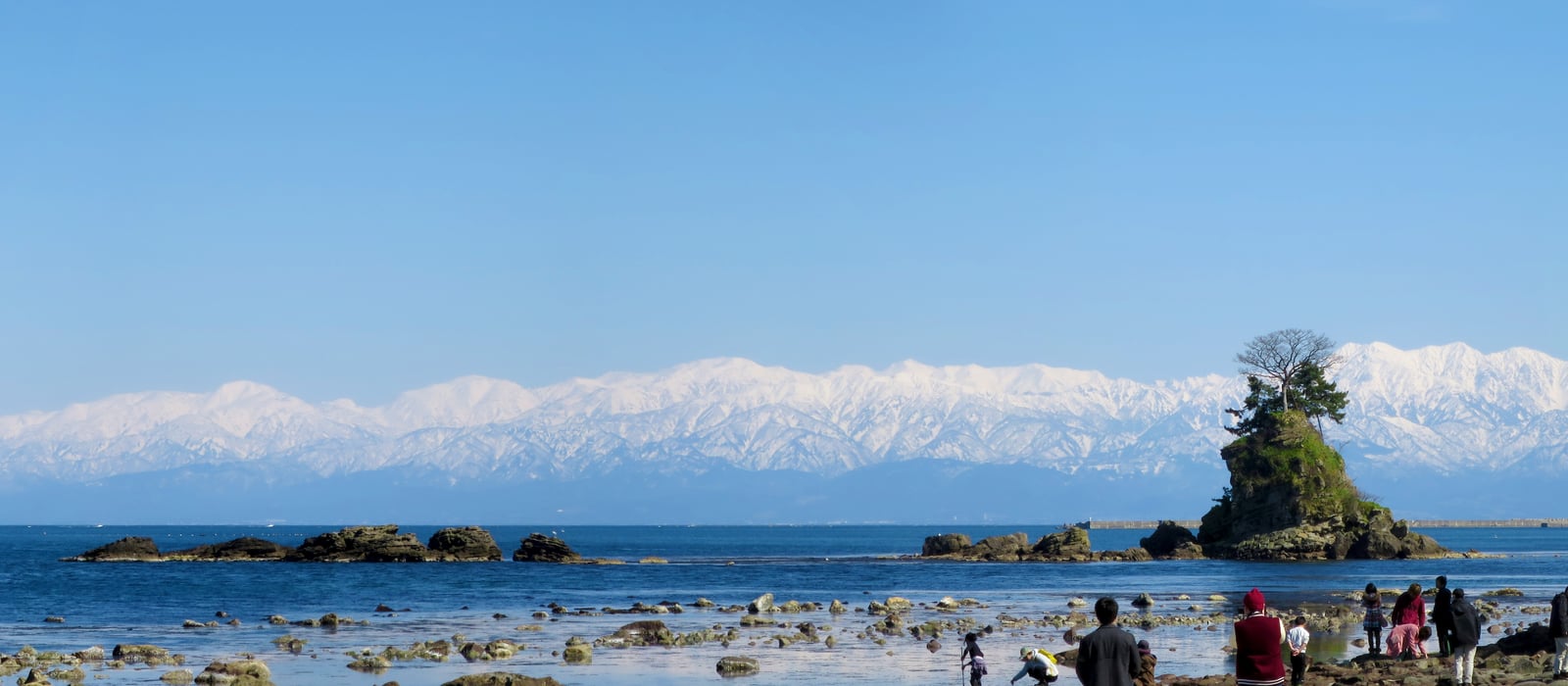
 Image: Wikimedia Commons
Toyama Prefecture
Toyama Prefecture has been shaped by dramatic natural surroundings spanning a 4,000-meter difference in elevation, from the Tateyama mountain range of the Northern Alps down to Toyama Bay. Metalworking and woodworking traditions such as Takaoka Copperware, Takaoka Lacquerware, and Inami Wood Carving, which developed under the protection of the Kaga domain, are still very much alive today, along with the craftsmanship of temple and shrine architecture epitomized by the ranma (transom) carvings of Zuisenji Temple. Toyama Bay is known as 'a natural fish tank,' and the prefecture is rich in local dishes that make use of its seasonal seafood: firefly squid in spring, shiroebi (Toyama's white shrimp) from early summer through autumn, and winter yellowtail. Masu no Sushi, a pressed sushi, is a nationally famous flagship souvenir of Toyama.
Toyama's Traditional Crafts
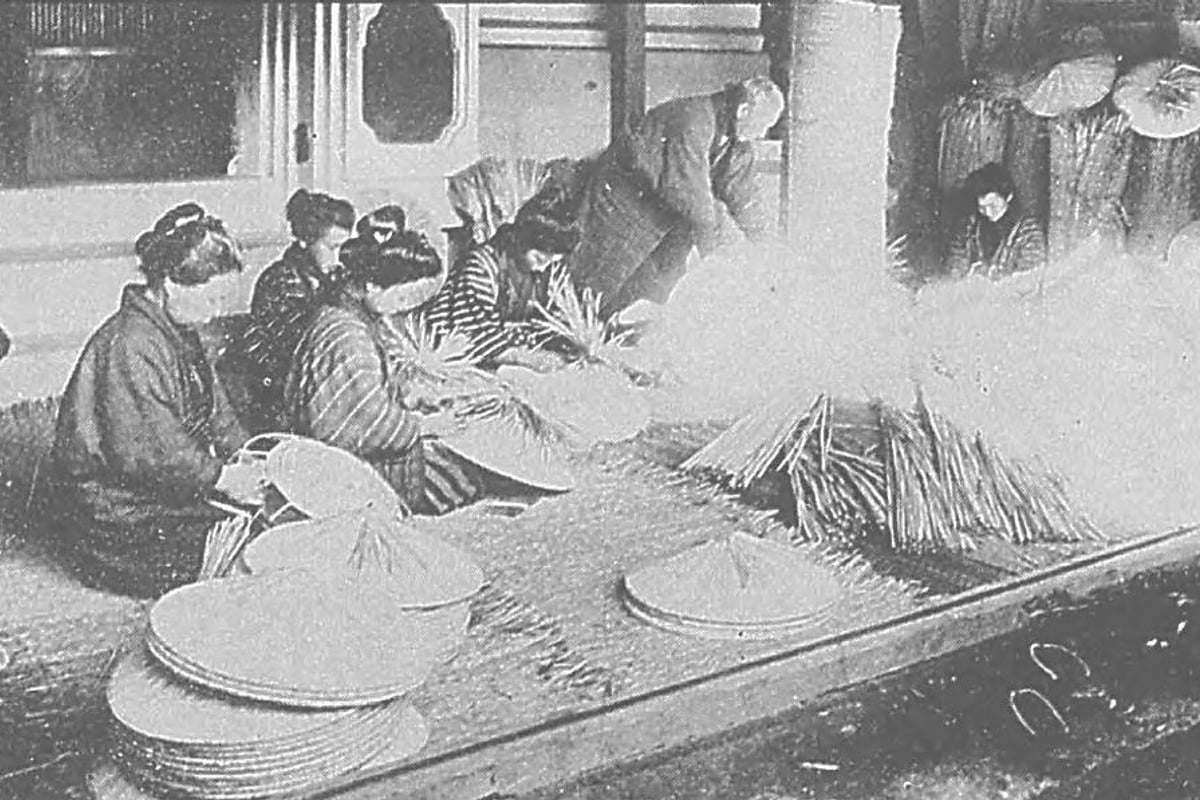
Ecchu Fukuoka no Sugegasa
Ecchu Fukuoka no Sugegasa
Ecchu Fukuoka Sugegasa is a sedge-woven hat made throughout the Fukuoka-machi area of Takaoka City, Toyama Prefecture, with a history of over 400 years as sun and rain protection used in farm work and festivals across Japan. Its origin is said to lie in the flooding of the Oyabe River more than 400 years ago, which turned the coastal area into a marsh where good-quality sedge began to grow wild, leading local villagers to start making hats as a side business. Around 1670, in the mid-Edo period, the craft developed into a full-fledged industry under the protection and encouragement of the Kaga Domain lord Maeda Tsunanori, and in the late Edo period, hat wholesalers emerged in Fukuoka-machi and began selling directly across Japan. At its peak in 1864, as many as 2.1 million sedge hats are said to have been shipped. Its distinctive feature is that men and women divide the labor between 'kasabone-zukuri' (making the conical bamboo frame from bamboo cut into thin strips) and 'kasanui' (sewing sedge grown specifically for the hats onto the frame), with the entire process from cultivation to finishing and shipping completed within the region. It still accounts for about 90% of domestic sedge hat production today. It was designated a nationally designated Important Intangible Folk Cultural Property in 2009 and a METI-designated Traditional Craft in 2017.

Ecchu Seto Ware
Ecchu Seto-yaki
Ecchu Seto ware is pottery fired in the Seto and Kamisue districts of Tateyama, Nakaniikawa District, Toyama Prefecture - an old kiln unique to Toyama, distinct in both production area and lineage from the 'Seto ware' of Aichi Prefecture. This district has been a center of ancient kiln production firing sue ware since the early Heian period, and it is said that potters migrated here from Owari Seto (Aichi) between the Momoyama period and the Bunroku-Keicho era, founding Seto Village, from which the name Ecchu Seto ware derives. The second lord of the Kaga Domain invited potters from Owari to make tea utensils, and the kiln flourished as an official kiln of the Kaga Domain, known as one of the leading old kiln sites in the Hokuriku region with a history older than Kutani ware. In the Meiji and Taisho eras, the spread of the railway network brought competition from cheaper products of other regions, and many kilns switched to producing roof tiles, but in the Showa era, the pottery-making tradition was revived through the efforts of a local preservation society. The craft's hallmark is its bold, varied glazing achieved with a wide range of local clays - red, yellow, blue, and white - and glazes made from plant ash, and today kilns belonging to 'かなくれ会' (Kanakure-kai) continue a tradition of more than 430 years.
Ecchu Washi
Ecchu Washi
Ecchu Washi is the collective name for handmade washi paper produced in three areas: 'Yatsuo Washi' in Yatsuo, Toyama City; 'Gokayama Washi' in Nanto City; and 'Hiruya Washi' in Asahi, Shimoniikawa District. It was designated a METI-designated Traditional Craft in 1984. Its history is ancient: the 'Zushoryoge,' compiled in 774 during the Nara period, records Ecchu (present-day Toyama Prefecture) as a papermaking region, and 'Ecchu-kuni-shi' (Ecchu Province paper) is also mentioned in documents preserved at the Shosoin Repository. Records in the Heian-period 'Engishiki' show that washi from Ecchu was paid as tax. In the Edo period, the second lord of Toyama Domain, Maeda Masatoshi, promoted the Toyama medicine trade, which sharply increased demand for Yatsuo Washi as material for medicine wrappers and kakebacho (customer ledgers used by traveling medicine peddlers). Made from kozo (paper mulberry), mitsumata, and ganpi fibers, all three areas share a durable, warm texture, while Yatsuo Washi is known for its vivid katazome stencil-dyeing technique and Gokayama Washi for combining strength and whiteness through methods such as yukisarashi (snow bleaching). Today it is widely used for everything from everyday items to interior goods and crafts.
Inami Chokoku
Inami Chokoku
Inami Chokoku is a traditional wood-carving craft passed down mainly in the Inami district of Nanto City, Toyama Prefecture. It is said to have begun when Zuisenji Temple, the head temple of Inami Betsuin founded in 1390, suffered repeated fires, and during reconstruction work in the Horeki and An'ei eras (1763-1774), local carpenters learned full-fledged carving techniques from Maekawa Sanshiro, an official carver for Kyoto's Nishi Hongwanji Temple. Initially focused on ranma (transom) panels and canopy carvings decorating temple and shrine architecture, demand expanded from the Meiji era onward to transom carvings for ordinary homes, and the craft developed into a local industry known nationwide as 'Inami ranma.' Its greatest feature is the 'sukashibori' (openwork carving) technique, in which patterns are cut through using only chisels; motifs such as pine, bamboo, and plum, flowers and birds, or dragons and lions are carved in multiple layers from both front and back, producing a three-dimensional, lifelike sense of movement. Designated a METI-designated Traditional Craft in 1975, Inami Chokoku today continues to produce a wide range of items, from temple and shrine carvings to transoms and shishi (lion) heads, and the region is known as a leading production center with a large share of Japan's transom-carving output.
Shogawa Hikimono Kiji
Shogawa Hikimono Kiji
Shogawa Hikimono Kiji is a woodworking craft centered on Shogawa-cho in Tonami City, Toyama Prefecture, in which timber is turned on a lathe to finish trays, bowls, and other wooden ware. It is said to originate in 1866 (Keio 2), when Echigoya Seiji, a wood-turner from Uozu, moved to Kanaya (present-day Shogawa-cho, Tonami City) drawn by the abundant timber gathered through the Shogawa River log-driving trade, and began turning wood on a lathe there. During the Meiji era, timber accumulated at the Aoshima log pond, and the surrounding area developed into a major timber hub lined with sawmills and woodworking shops. A hallmark of the craft is the technique of turning wood along its horizontal grain to bring out the beauty of the woodgrain to the fullest, with pieces gaining more luster and character the longer they are used. Domestic woods such as horse chestnut and zelkova are used, finished with tools the artisans make themselves, such as karakasa planes and thin blades. It was designated a METI-designated Traditional Craft in 1978 (Showa 53), and artisans belonging to 庄川木工挽物会 continue to pass on the techniques today.
Takaoka Butsudan (Buddhist Altars)
Takaoka Butsudan
Takaoka Butsudan are Buddhist altars manufactured in Takaoka City, Toyama Prefecture, a comprehensive craft that applies the metalworking and lacquer techniques nurtured by Takaoka's copperware and lacquerware traditions to altar-making. Records from the Keicho era already show joiners producing lacquered furniture, which is thought to be the origin of altar-making in the area. Altar production had formed into an industry by at least the end of the Edo period, and an altar made around 1846 (Koka 3) is said to be almost identical in style to today's Takaoka Butsudan. The craft is characterized by a division of labor among woodworkers, carvers, lacquerers, maki-e decorators, and metal fitting makers: three-dimensional wood carving is applied to a wooden frame made of ginkgo and Podocarpus macrophyllus (kusamaki), the ground is carefully prepared and lacquer is applied in many layers, and the piece is finished with hand-forged, thick metal fittings colored to a reddish hue through a boiling process. The engraving techniques developed through Takaoka copperware are said to have supported the development of the altars' decorative work, and it was designated a Toyama Prefecture-designated Traditional Craft in 2013 (Heisei 25).
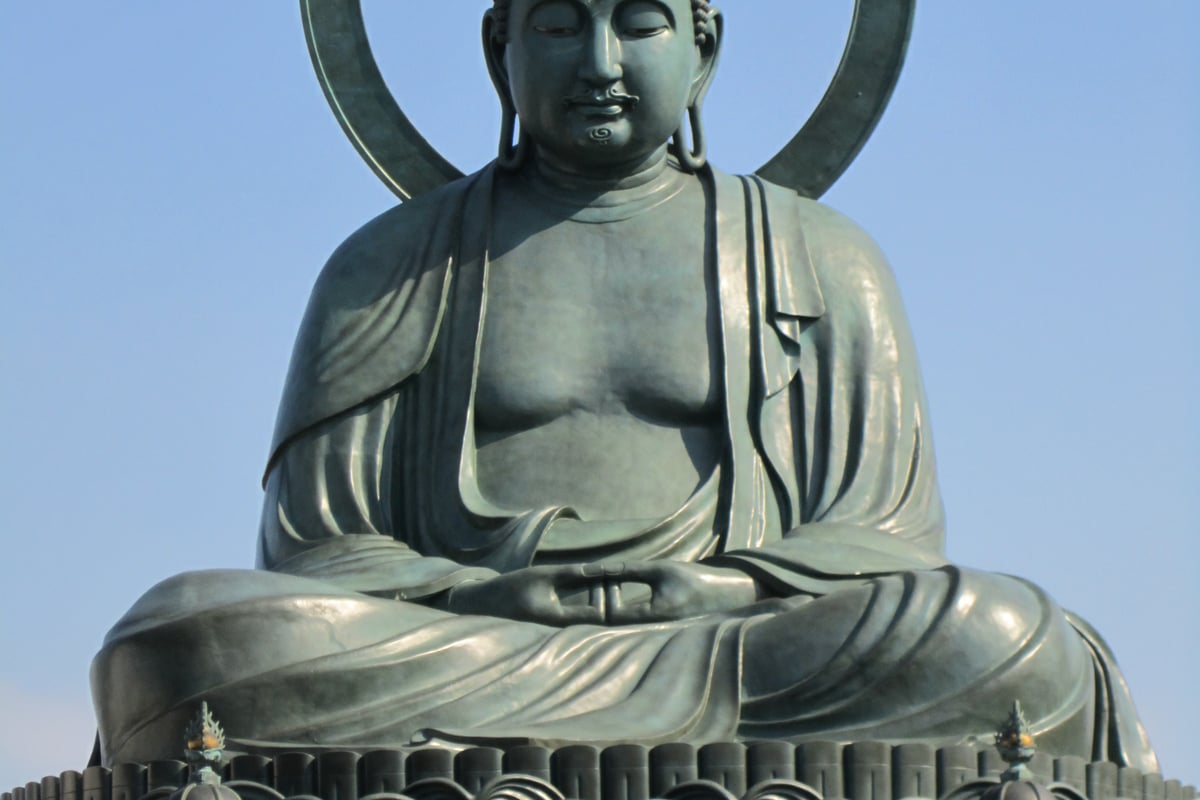
Takaoka-doki
Takaoka-doki
Takaoka-doki is a cast metalware craft produced mainly in Takaoka City, Toyama Prefecture, and is known as Japan's leading production center, accounting for the majority of the country's copperware output. Its origin dates back to 1611, when Maeda Toshinaga, the second lord of the Kaga Domain, invited seven metal casters from the Tonami region and elsewhere to Kanaya-machi in the castle town of Takaoka to promote local industry. Production initially centered on everyday iron items such as pots and farm tools, but expanded into copperware in the late Edo period, developing into Buddhist altar fittings, temple bells, and art objects. After being exhibited at the 1867 Paris World's Fair and receiving high acclaim, output grew dramatically during the Meiji and Taisho eras, spreading Takaoka's reputation at home and abroad. Its greatest strength lies in combining a range of casting techniques—including double-shell molds, baked molds, lost-wax casting, and green-sand molds—with engraving methods such as line engraving and openwork, plus coloring techniques that produce hues such as blackened iron and bronze tones, allowing craftsmen to create everything from small ornaments to temple bells and large outdoor monuments. Designated a METI-designated Traditional Craft in 1975, Takaoka-doki today spans a wide range of products from Buddhist altar fittings to contemporary art and everyday household goods.
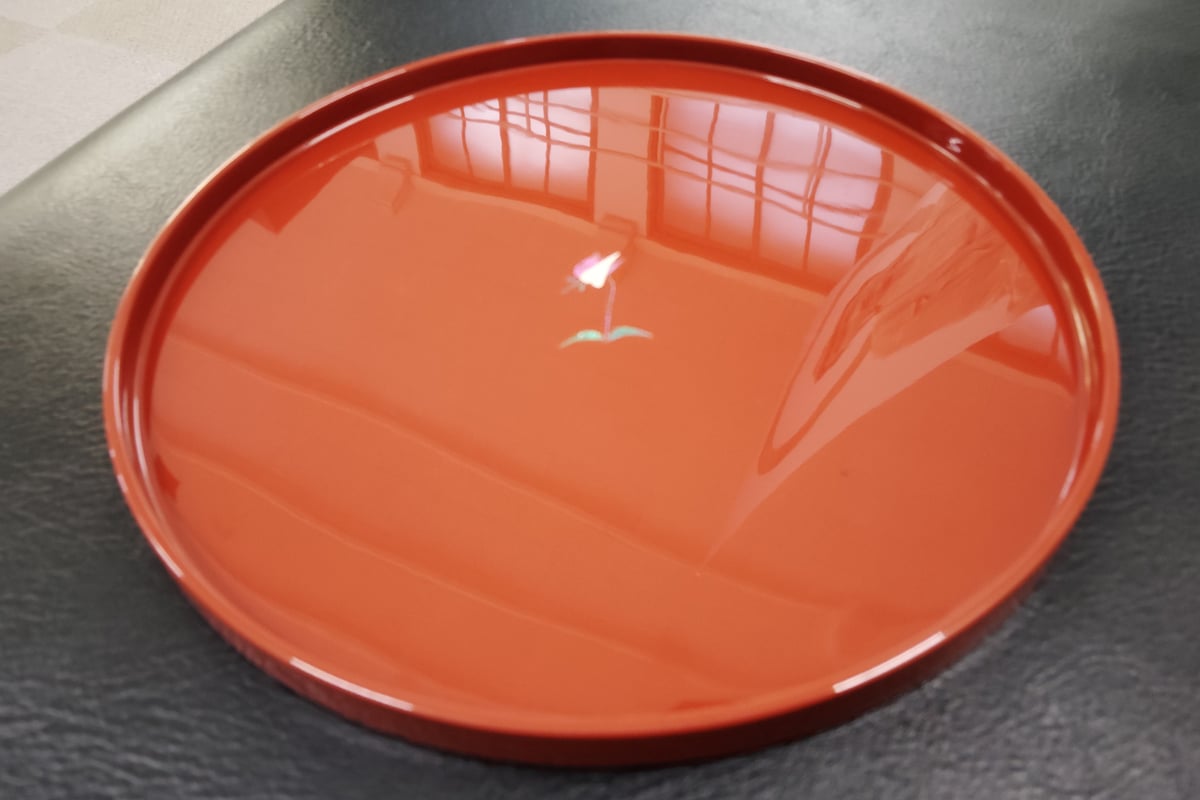
Takaoka-shikki
Takaoka-shikki
Takaoka-shikki is lacquerware produced in Takaoka City, Toyama Prefecture. It is said to have begun in the early Edo period, during the Keicho era, when Maeda Toshinaga, the second lord of the Kaga Domain, had lacquer applied to everyday items such as armor, chests, and trays while building Takaoka Castle. Later, in the Meiwa era, Tsujiya Tanpo established the tsuishu and zonsei techniques modeled on Chinese lacquerware, and 'aogai-nuri' (mother-of-pearl inlay) developed based on the skill of the master craftsman Somada Seisuke, who had been invited from Kyoto by Toyama Domain lord Maeda Masatoshi; in the late Edo period, the first Ishii Yusuke studied Ming-dynasty Chinese lacquerware to create the original 'Yusuke-nuri' technique. Its greatest feature is that this single production area possesses a wider variety of decorative techniques than most others. With the establishment of the Toyama Prefectural Craft School in 1891 helping to advance technical instruction, the craft has been applied to a wide range of items, from everyday goods such as trays, tiered boxes, and tea utensils to art and craft pieces. Designated a METI-designated Traditional Craft in 1975, its traditional techniques continue to be passed down in workshops throughout Takaoka City today.
Toyama Mokuzogan (Wood Inlay)
Toyama Mokuzogan
Toyama Mokuzogan is a woodworking technique that originated in Toyama City, in which natural woods of differing colors and grain are cut out with a scroll saw and inlaid to create pictures and patterns on a single panel. It is said to have begun in 1907 (Meiji 40), when Nakashima Mokudo, a native of Toyama, apprenticed himself to Shirakawa Senseki, a wood-inlay craftsman in Odawara, Kanagawa Prefecture, learned modern inlay techniques using a scroll-saw machine, and brought them back to Toyama. Nakashima Mokudo was designated a Toyama Prefecture Intangible Cultural Property in 1964 (Showa 39) and established a distinctive style rooted in the local character of Toyama. Its defining feature, unlike yosegi-zaiku, which assembles simple shapes such as triangles and squares, is that pieces are cut with a scroll saw to precisely follow a design drawn on a base panel, then inlaid with matching pieces of patterned wood, allowing the craft to express pictorial designs. In addition to traditional products such as framed panels and tables, new types of products, including tea utensils and lighting, have also been developed in recent years. The efforts of its successors have been recognized, and it was designated a Toyama Prefecture Traditional Craft in 2013 (Heisei 25).
Toyama Tsuchi Ningyo
Toyama Tsuchi Ningyo
Toyama Tsuchi Ningyo are unglazed clay dolls that date back to the era of the Toyama Domain and have been made mainly in Toyama City as a local folk toy. Tradition holds that during the Kaei era, Hirose Hidenobu, a potter from Nagoya, presented a clay doll to Maeda Toshiyasu, the tenth lord of the Toyama Domain, marking the craft's beginning; his son Yasujiro is said to have fired and presented a figure of Tenjin riding an ox, an event regarded as the origin of Toyama Tsuchi Ningyo. Clay is shaped in molds, fired unglazed at about 800 degrees, and then colored entirely by hand, one doll at a time, giving the dolls a simple, warm palette that is their hallmark. A wide range of auspicious, regionally distinctive subjects have been made over the years, led by Tenjin, beloved as the god of learning, along with beckoning cats, zodiac figures, and embracing-style hina dolls. In Toyama, where devotion to Tenjin runs deep, the custom of giving a Tenjin figure to a baby boy on his first New Year has tied the dolls closely to family life, and they remain cherished in homes today. Designated a Toyama Prefecture Traditional Craft in 2013, the techniques are still carried on at a workshop within the Toyama City Folklore Village.
Toyama's Local Food
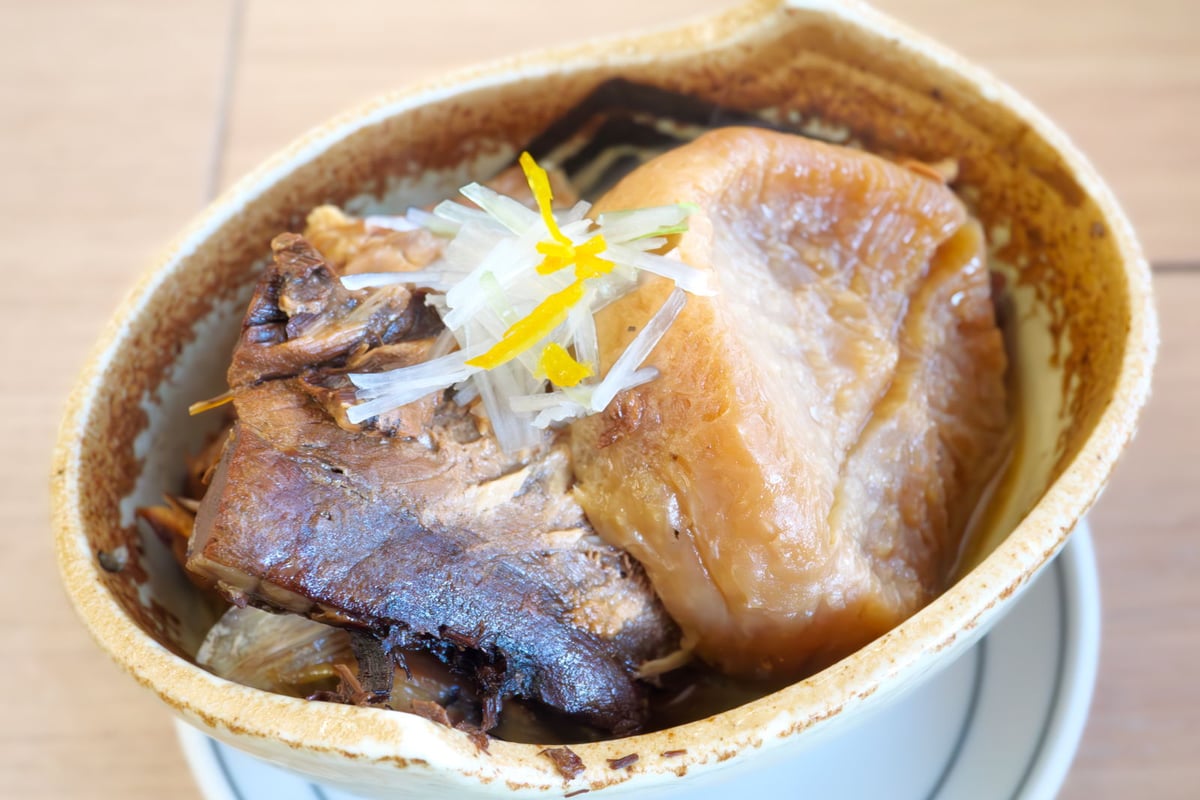
Buri Daikon (Simmered Yellowtail and Daikon)
Buri Daikon
Buri Daikon is a representative winter dish of Toyama Prefecture, made by slowly simmering the trimmings (ara) of fatty winter yellowtail (buri) landed in Toyama Bay together with daikon radish in a sweet-savory broth of soy sauce and sake. Yellowtail is said to be a fish with virtually no part wasted, and this dish grew out of the wisdom of simmering the ara — the head, collar, and other cuts left over after the flesh was used for sashimi or teriyaki — together with daikon to make full use of every bit of flavor. From late autumn into early winter, Toyama Bay is hit by stormy weather with thunder known as 'buri-okoshi,' and the winter yellowtail that reach peak season around this time are considered especially rich and delicious. Yellowtail landed in Himi City in particular is branded as 'Himi Kan-buri' and is highly regarded nationwide. Because yellowtail is a shusse-uo (a fish whose name changes as it grows, seen as auspicious), it is indispensable at celebrations and New Year meals, and buri daikon has long appeared on the table at such occasions. With the daikon soaking up the yellowtail's rich flavor, the dish lets diners enjoy both the well-seasoned, tender daikon and the flaky yellowtail meat, and it remains a beloved, warming winter home-cooked dish in Toyama households today.
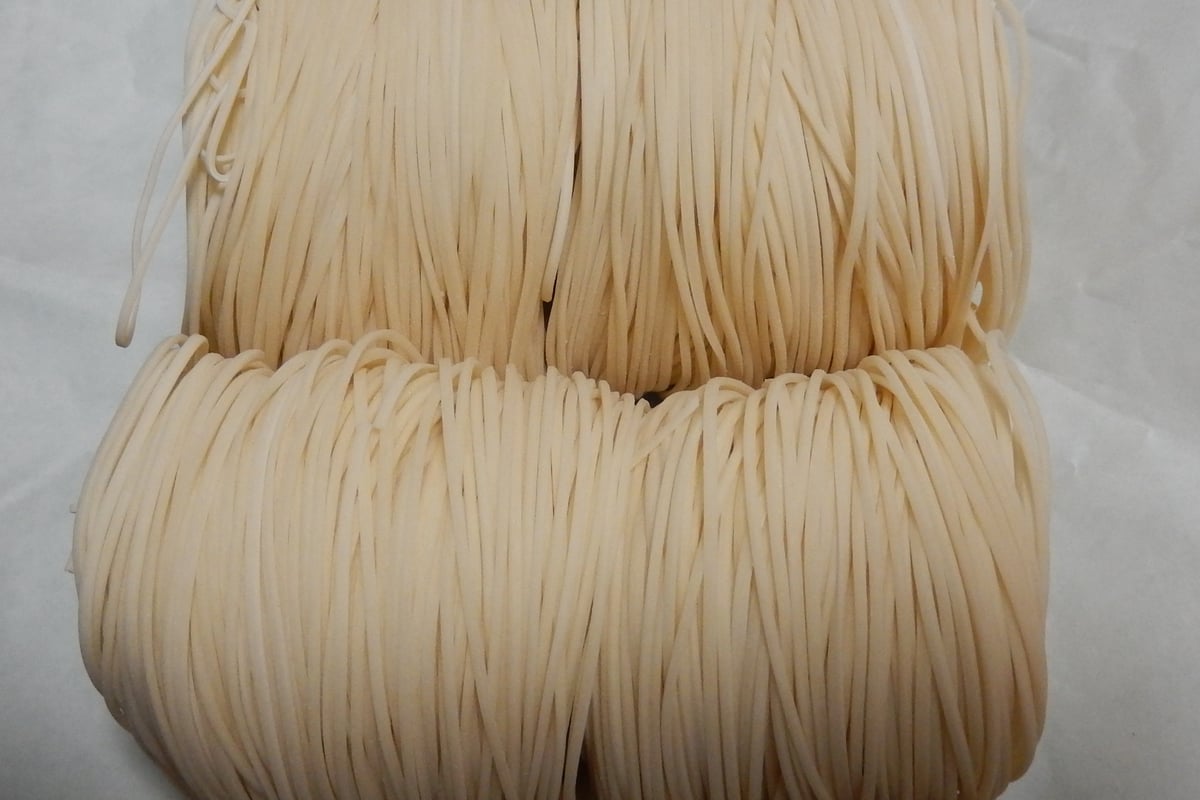
Daimon Somen
Daimon Somen
Daimon somen is a hand-pulled somen noodle that has been made in the Daimon district of Tonami City, Toyama Prefecture, since the late Edo period. It is said to have begun in 1848, when a medicine peddler from what was then Daimon Village learned the technique for producing somen for the Kaga domain and brought it back home, after which it spread through the village as a winter side occupation for farming families. At its peak in the early Showa era, more than 60 households produced it, and although the number of producers has now dwindled to just a handful, the traditional method is still carefully preserved. Its most distinctive feature is a unique finishing technique called ‘Shimada-maki,’ in which the thinly stretched noodle strands are wound up into a round bun shape, giving it an appearance unlike somen from any other production area — which is why it is also known as ‘marumage somen’ (topknot-bun somen). Because the noodles are stretched by hand while being twisted, their fibers take on a twisted structure, giving the noodles a firm bite and smooth texture, and they resist becoming soggy even after boiling and soaking in water. It is a seasonal handcrafted delicacy made only during the farming off-season, from around October to March, when temperatures drop and the air becomes dry.
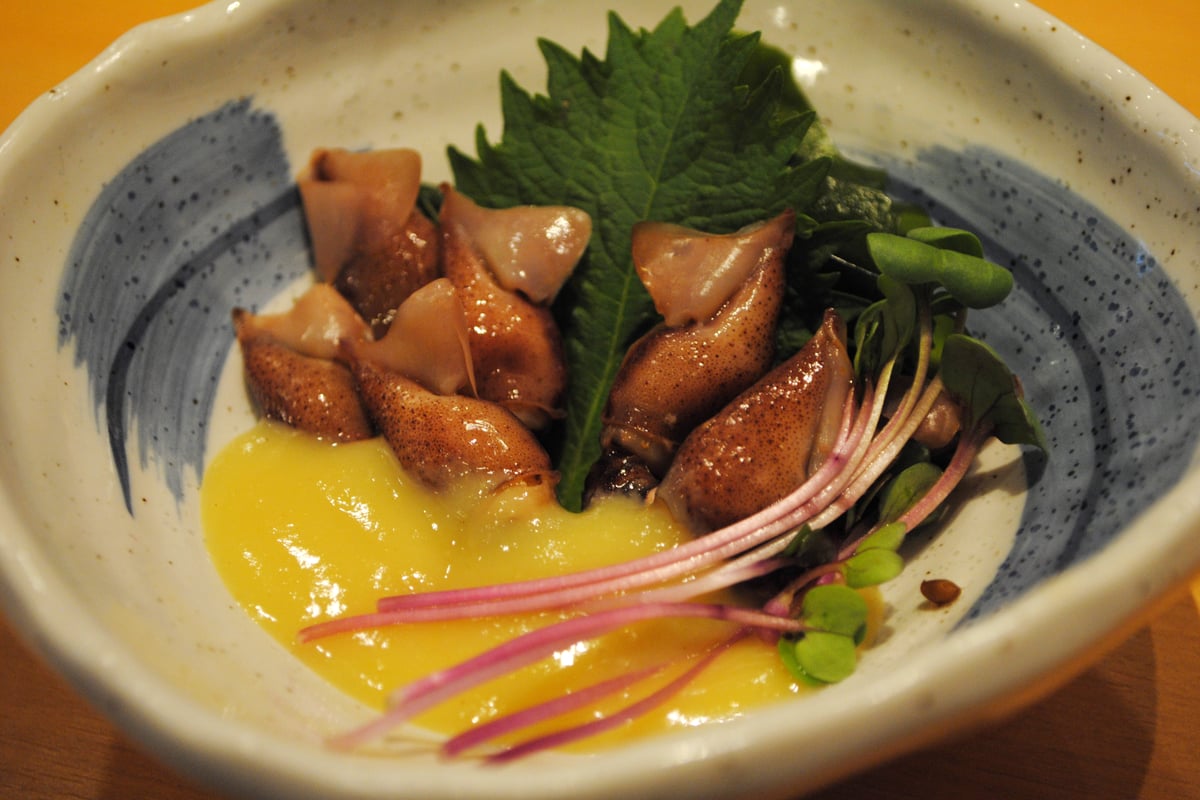
Firefly Squid with Vinegared Miso
Hotaruika no Sumiso-ae
Hotaruika no sumiso-ae is a simple dish made by boiling firefly squid, a signature ingredient of Toyama Bay in spring, and dressing it in vinegared miso or spicy vinegared miso. Firefly squid normally live at depths of over 200 meters, but from around March to May they gather in huge numbers along the shore of Toyama Bay to spawn, creating a mysterious sight as their entire bodies glow pale blue while drifting in schools. The area of Toyama Bay where this phenomenon occurs has been designated a Special Natural Monument of Japan as the ‘Hotaruika Group Migratory Waters,’ and firefly squid have become a symbol of spring in Toyama. Because they are caught with fixed-net fishing, the squid suffer little damage, and the short distance between the fishing grounds and the ports allows them to be shipped while still very fresh — a particular strength of Toyama Bay's firefly squid. The sticky texture and faint bitterness of the boiled squid combine with the mellow tang of the vinegared miso to create a flavor beloved as a springtime staple both at home and in restaurants.
Ika no Kurozukuri (Squid Ink-Cured Delicacy)
Ika no Kurozukuri
Ika no Kurozukuri is a representative fermented food of Toyama Prefecture, made by cutting squid (surume-ika) flesh into thin strips, adding the liver and squid ink, salting it, and letting it slowly mature. It is known for its distinctive flavor, combining the rich aroma and deep umami unique to squid ink with the aged character of a shiokara-style dish, and it has long been prized as an accompaniment to sake for its excellent compatibility with Japanese rice wine. Records from the Edo period note that the lord of the Kaga domain presented it to the shogunate during his sankin kotai processions, suggesting it was already known as a leading specialty of Toyama at the time. Squid ink has long been believed to have preservative properties, and it was also put to use as a way to keep shiokara-style delicacies from spoiling in an age before refrigeration. Its black appearance can surprise first-time tasters, but on the palate it delivers a rich umami and a subtle saltiness, and it is now applied not only as a rice accompaniment or in ochazuke but also as a pasta ingredient, remaining one of Toyama's representative delicacies sold nationwide.
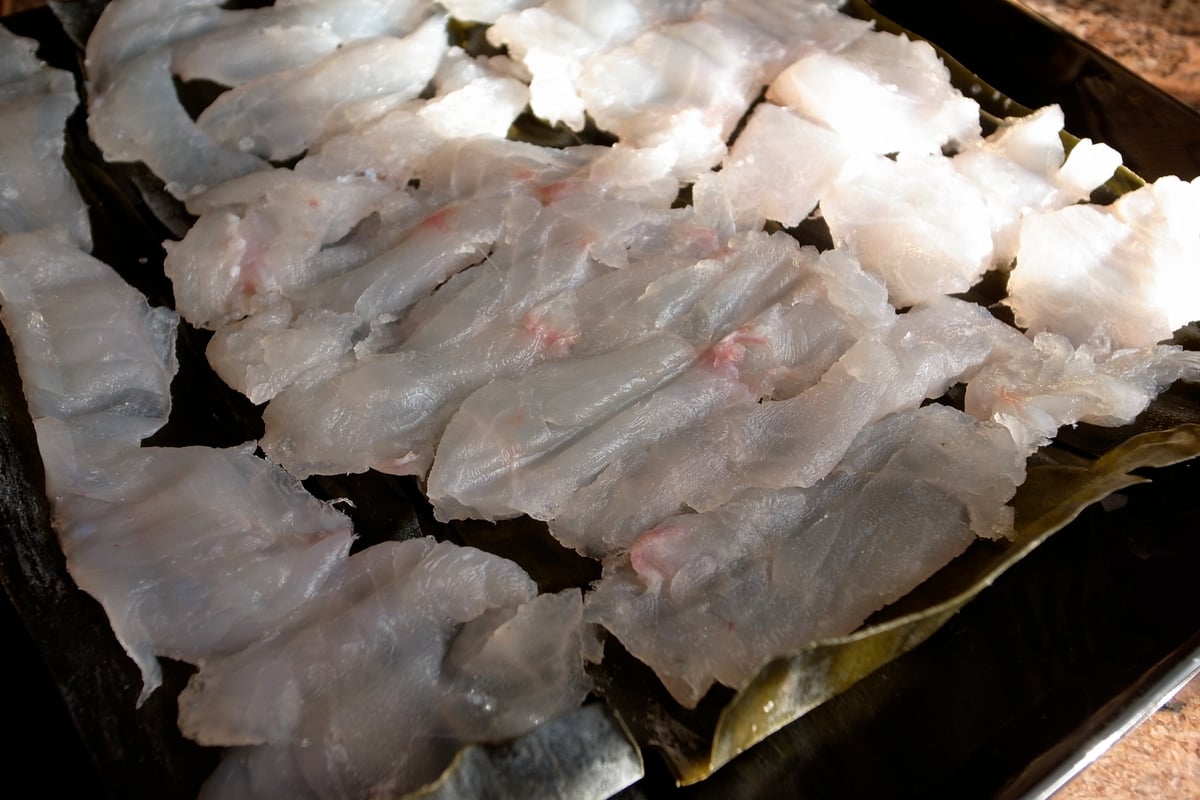
Konbujime (Kelp-Cured Sashimi)
Konbujime
Konbujime is a representative fish preparation and preservation technique from Toyama Prefecture in which sashimi-grade white fish is sandwiched between sheets of kelp (konbu) and left to rest for a set period, allowing the fish to absorb the kelp's umami and undergo a moisture-drawing maturation. It is said to have originated in the Edo period from the combination of kelp brought from Hokkaido via the Kitamae-bune trading ships and fresh fish caught in Toyama Bay, and it spread as a wisdom for preserving raw fish deliciously in an age before refrigeration. As the fish rests between the kelp, excess moisture is drawn out and the flesh firms up, while the glutamic acid in the kelp adds umami, producing a deep flavor quite different from ordinary sashimi. Toyama Prefecture, centered on Takaoka and Fushiki, former Kitamae-bune port towns, is said to rank among the highest in Japan for kelp consumption, and its kelp culture runs so deep that it is sometimes called the 'Kingdom of Kelp.' Konbujime stands as a symbolic dish of this culture, enjoyed widely from home cooking to dishes served at specialty restaurants.
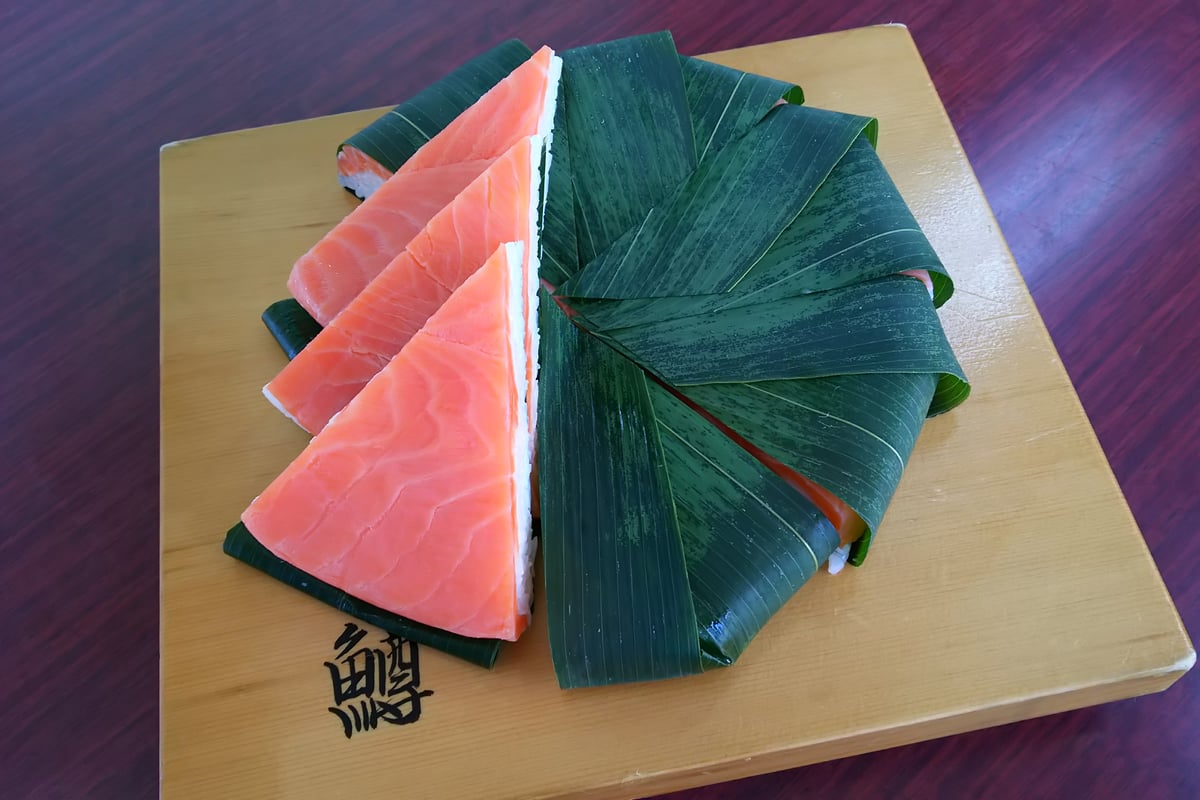
Masu-no-sushi
Masu-no-sushi
Masu-no-sushi is Toyama Prefecture's signature pressed sushi, made by layering vinegared rice and thin slices of sakura masu (cherry salmon) with bamboo-grass leaves, packed into a round bentwood container and pressed firm. It is said to have originated when a retainer of the Toyama domain presented ayu (sweetfish) sushi from the Jinzu River to the lord, and the dish later evolved into its present form using sakura masu caught in the same river. After it began being sold as an ekiben (station bento) at Toyama Station in 1912, its fame spread nationwide with the opening of the Hokuriku Main Line, and today it stands as the quintessential Toyama souvenir. Its flavor balances the refreshing aroma of bamboo grass, the mild richness of the sakura masu, and the tang of vinegared rice, and its long shelf life at room temperature has made it a favorite for station bento, gifts, and outing lunches alike. Many shops, mainly in Toyama City, still compete with their own recipes today, and comparing the differences in vinegar seasoning and fish thickness between shops is a popular pastime.
Shiroebi no Kakiage
Shiroebi no Kakiage
Shiroebi no kakiage is a signature seafood dish of Toyama Prefecture made by coating shiroebi (Toyama's white shrimp), known as ‘the jewel of Toyama Bay,’ in batter and frying it until crisp. Shiroebi are small, translucent, pale pink shrimp about 5–6 centimeters long that normally live in the deep sea at depths of around 200 to 400 meters, but the unusual topography of the seabed in Toyama Bay allows them to gather in schools even in relatively shallow layers, making Toyama the only place in Japan where they are landed in quantities sufficient to support a fishery. The main landing ports are Shinminato and Iwase, and while shiroebi were once mostly dried whole in their shells for making dashi stock, advances in freezing and shelling technology have brought renewed attention to the delicate sweetness and silky texture of the flesh, making it popular for sashimi and sushi as well. Kakiage is a classic preparation that is also easy to make at home, and its crisp batter paired with a subtle sweetness has made it beloved by many.
Toyama Black Ramen
Toyama Black Ramen
Toyama Black is a local ramen originating in Toyama City, distinguished by its jet-black broth made with a generous amount of dark soy sauce. It is said to have begun in 1947, when Takahashi Seikan, founder of the food stall Taiki, devised a strongly seasoned Chinese noodle soup to help manual laborers rebuilding the city after the Toyama air raids replenish the salt lost through sweat. The classic style pairs thick, straight noodles with a black, dark-soy-sauce-based broth, generous slices of chashu pork, black pepper, and plenty of chopped scallions, and it has long been enjoyed as an ‘okazu ramen’ — a ramen eaten alongside a bowl of white rice as a main dish. Its saltiness is noticeably stronger than ramen from other regions, often surprising first-time diners, but it remains a firmly established lunchtime staple among locals. Today, in addition to the originating shop Taiki, several other shops in the city serve their own variations, and comparing them is a popular pastime among fans.
Toyama Zoni (Toyama-Style New Year Mochi Soup)
Toyama Zoni
Toyama-style zoni is a distinctively local New Year dish featuring square mochi and kobu-maki kamaboko (kelp-rolled fish cake) in a soy-flavored clear broth made from kelp dashi. There is regional variation within the prefecture: in the Shimoniikawa area in the east, a hearty zoni is made with seafood such as fukuragi (young yellowtail) and filefish added, while in the Tonami area in the west, the tradition is to keep the ingredients simple, using items such as long green onion and kelp. What both areas have in common is that the mochi is not grilled but simmered gently in kelp dashi until soft before being placed in the bowl, and that kobu-maki kamaboko — a fish cake made without a wooden board that is one of Toyama's signature processed fish products — is added for color. The red-and-white 'aka-maki' version is often used, making for a visually festive bowl. The food culture unique to Toyama, where kelp circulated abundantly thanks to Kitamae-bune (Edo-period trading ships) trade, shows through vividly even in this single New Year bowl of zoni.
Usugori (Thin Ice Confection)
Usugori
Usugori is a delicate dry confection, thin as a sheet of ice, created in 1752 (Horeki 2), in the mid-Edo period, by the long-established confectioner Usugori Honpo Goromaruya in Oyabe City, Toyama Prefecture. It is said to express the beauty of the thin ice that forms on water surfaces and rice paddies in early spring, as the deep snows of Hokuriku begin to melt. It is finished by carefully layering fine Awa wasanbon sugar onto an extremely thin cracker-like base made from Toyama's specialty Shintaisho glutinous rice. Named 'usugori' ('thin ice') for the way it melts fleetingly away in the mouth like ice dissolving, it has long been prized as a prestigious confection, said to have been presented to the shogunate and the Imperial court through the Maeda family, lords of the Kaga domain. Since the Meiji era it has been supplied to the Imperial Household Ministry, and it remains favored in the world of tea ceremony today, carried on for more than 270 years as a traditional confection that conveys the beauty of Toyama's four seasons.
Model Course
A course exploring the craftsmanship town of Takaoka
Visit foundry workshops producing Takaoka Copperware, a craft that began when the second lord of the Kaga domain invited casters to the area, and workshops for Takaoka Lacquerware, which likewise developed in Takaoka, then stop at a Takaoka Butsudan (Buddhist altar) shop that draws on both techniques, before enjoying Buri Daikon, made with winter yellowtail landed near Himi Port, for lunch - a course exploring the craftsmanship town of Takaoka.
A course visiting the wood-carving and papermaking villages of Inami, Nanto
Visit the workshop district of Inami Wood Carving, a craft with over 250 years of history that began with the reconstruction of Zuisenji Temple, to see ranma (transom) carving, then stop at a Shogawa Hikimono Kiji lathe-turning workshop, and finish with a papermaking experience in Ecchu Washi, handed down in the Gokayama and Yatsuo areas - a course exploring the woodworking and papermaking crafts of the Nanto area.
A course savoring the bounty of Toyama Bay and Masu no Sushi
Savor spring's firefly squid and shiroebi, the jewel of Toyama Bay, the seafood that makes Toyama Bay 'a natural fish tank,' then pick up Masu no Sushi, a pressed sushi handed down since the Edo period, as a souvenir, and experience Toyama's culture of sake accompaniments with Ika no Kurozukuri, a fermented delicacy made from squid prepared with its liver and ink - a course exploring the seafood bounty of Toyama Bay.
Events
Nanto Toga Soba Festival
Mid-February every year / Kamimomose, Toga, Nanto City (around Toga International Camping Ground)
View details →Takaoka Mikurumayama Festival
Every year on May 1 / Central Takaoka City (Yamachosuji Street)
View details →