Image: Wikimedia Commons
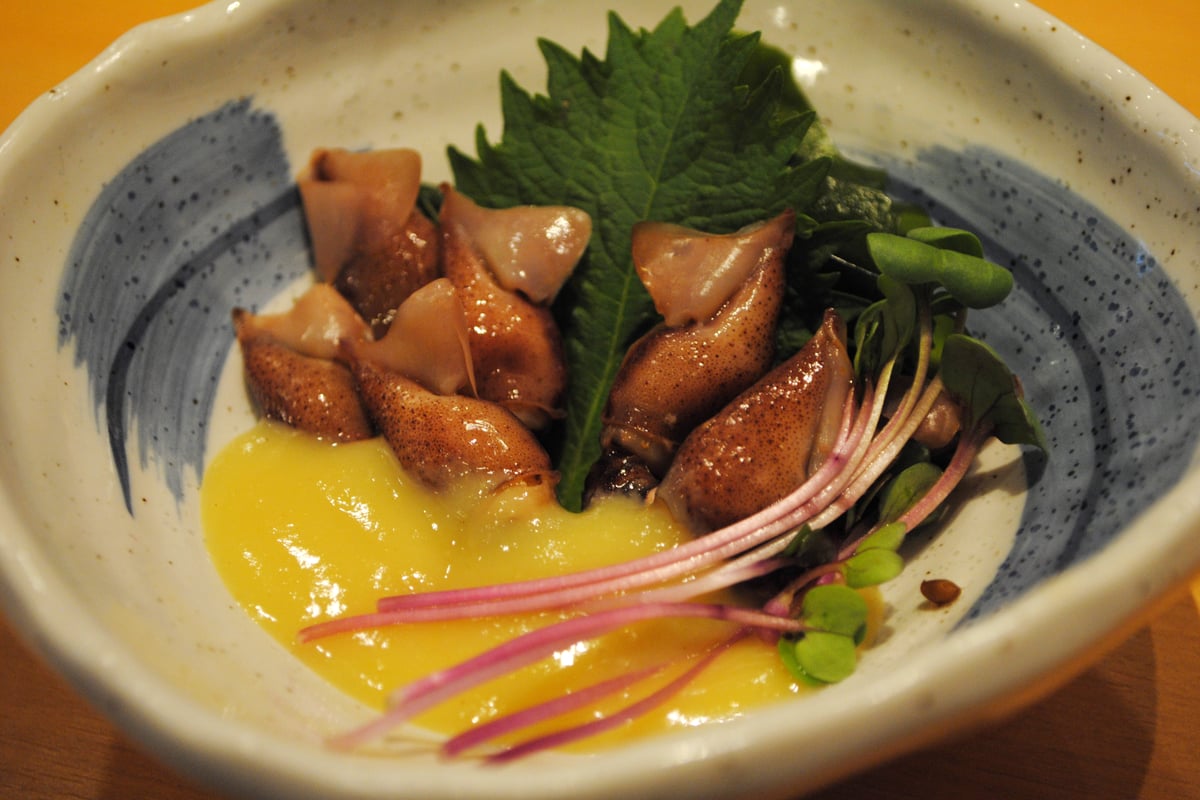
Hotaruika no sumiso-ae is a simple dish made by boiling firefly squid, a signature ingredient of Toyama Bay in spring, and dressing it in vinegared miso or spicy vinegared miso. Firefly squid normally live at depths of over 200 meters, but from around March to May they gather in huge numbers along the shore of Toyama Bay to spawn, creating a mysterious sight as their entire bodies glow pale blue while drifting in schools. The area of Toyama Bay where this phenomenon occurs has been designated a Special Natural Monument of Japan as the ‘Hotaruika Group Migratory Waters,’ and firefly squid have become a symbol of spring in Toyama. Because they are caught with fixed-net fishing, the squid suffer little damage, and the short distance between the fishing grounds and the ports allows them to be shipped while still very fresh — a particular strength of Toyama Bay's firefly squid. The sticky texture and faint bitterness of the boiled squid combine with the mellow tang of the vinegared miso to create a flavor beloved as a springtime staple both at home and in restaurants.
Origin
Firefly squid are squid that live in the deep sea at depths of several hundred meters, and they have the habit of rising close to the coast in spring to spawn. This phenomenon of schools of squid drifting near the shore while glowing has long been known, and Toyama Bay has been fished as a prime fishing ground during this season. Boiling the caught firefly squid and dressing them in vinegared miso has become established as the most common local way of preparing them.
History
Because of the rarity of the sight of firefly squid gathering in large numbers and glowing near the shore, part of Toyama Bay was designated a National Natural Monument in 1922 as the ‘Uozu Hotaruika Group Migratory Waters,’ and later became a Special Natural Monument. The fishing season traditionally opens on March 1 and continues until around June, using a type of fixed-net fishing called mant-net fishing, practiced nowhere else in Japan but Toyama. Sumiso-ae developed alongside this fishery as a local flavor.
Features
The basic preparation is to boil the firefly squid, remove the eyes, the transparent internal shell (gladius), and the beak, then dress them in vinegared miso or spicy vinegared miso. Because firefly squid from Toyama Bay are caught with fixed nets, they suffer little damage and stay very fresh, giving them a plump texture and a faint bitterness. The tang and richness of the vinegared miso bring out their flavor, and the dish is enjoyed both as a drinking snack and as a side dish with rice.
Main Ingredients
Food Culture
Firefly squid, which gather along the coast during spawning season, are cherished as a food that heralds spring, and with the opening of the fishing season they become a seasonal fixture on tables at home and in restaurants alike.
How It Differs from Home Cooking
At home, pre-boiled firefly squid bought at the store are often used, but restaurants near the fishing ports differ in that they boil freshly landed firefly squid on the spot and serve them the same day.
Famous Shops
パノラマレストラン光彩(道の駅 ウェーブパークなめりかわ/ほたるいかミュージアム内)
富山県滑川市中川原410
Enjoy hotaruika dishes, including sumiso-ae, as part of a hotaruika set meal while overlooking Toyama Bay.
View details →| ほたるいかの沖漬け | A souvenir product made by soaking boiled firefly squid in a soy-sauce-based sauce, sold alongside sumiso-ae as a classic Toyama souvenir.Where to buy →PR |
|---|
FAQ
Q. Why do firefly squid glow?
A. Firefly squid are a species of squid with light organs on their arm tips and body that emit light, and this glow is observed near the sea surface in early spring when they gather in schools along the coast of Toyama Bay to spawn.