Image: Wikimedia Commons
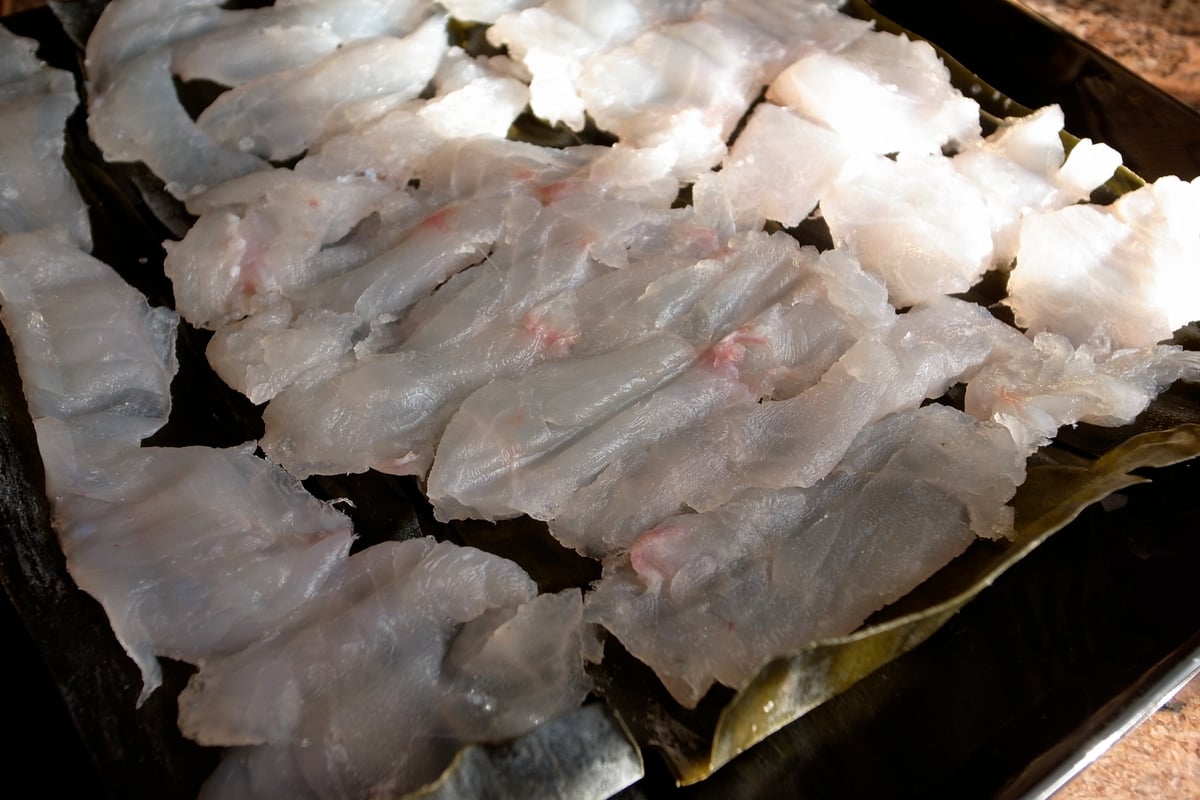
Konbujime is a representative fish preparation and preservation technique from Toyama Prefecture in which sashimi-grade white fish is sandwiched between sheets of kelp (konbu) and left to rest for a set period, allowing the fish to absorb the kelp's umami and undergo a moisture-drawing maturation. It is said to have originated in the Edo period from the combination of kelp brought from Hokkaido via the Kitamae-bune trading ships and fresh fish caught in Toyama Bay, and it spread as a wisdom for preserving raw fish deliciously in an age before refrigeration. As the fish rests between the kelp, excess moisture is drawn out and the flesh firms up, while the glutamic acid in the kelp adds umami, producing a deep flavor quite different from ordinary sashimi. Toyama Prefecture, centered on Takaoka and Fushiki, former Kitamae-bune port towns, is said to rank among the highest in Japan for kelp consumption, and its kelp culture runs so deep that it is sometimes called the 'Kingdom of Kelp.' Konbujime stands as a symbolic dish of this culture, enjoyed widely from home cooking to dishes served at specialty restaurants.
Origin
Konbujime is said to have originated in the Edo period from combining kelp brought by the Kitamae-bune trading ships from Hokkaido with fresh white fish landed in Toyama Bay. In an age before refrigeration, it was devised as a way to preserve fish deliciously by sandwiching it in kelp to draw out excess moisture.
History
Toyama had a string of Kitamae-bune port towns, including Ikuji, Higashi-Iwase, and Fushiki, through which large quantities of Hokkaido kelp were distributed. The ties to Hokkaido run so deep that many residents who settled in Rausu, Hokkaido, are said to have come from Toyama Prefecture, and this history nurtured a 'Kingdom of Kelp' food culture in which Toyama City's kelp spending is said to be more than double the national average.
Features
Thin slices of sashimi-grade white fish are sandwiched between sheets of kelp, wrapped in plastic wrap or cloth, weighted down, and left to mature in the refrigerator for anywhere from a few hours to overnight. The weight draws moisture from the flesh as it matures, producing a pleasant firmness and a slightly sticky texture, along with a deep flavor infused with the kelp's umami.
Main Ingredients
Food Culture
Against the backdrop of a kelp consumption culture rooted in Kitamae-bune trade, konbujime has become an indispensable dish on Toyama's dinner tables. Takaoka City is said to rank among the highest in Japan for kelp spending per household, and locally, restaurants have begun applying konbujime not only to seafood but also to vegetables and meat, spreading a movement to give this traditional technique a modern twist.
How It Differs from Home Cooking
At home, the simple method of sandwiching white fish sashimi between sheets of kelp is most common, while specialty restaurants apply konbujime to a wider range of ingredients, including not just seafood but also vegetables and meat, expanding the dish's variety.
Famous Shops
四十物昆布
富山県黒部市生地中区339-5
A kelp specialty shop in Kurobe City with more than 60 years of history. It carries about 150 kinds of kelp products and also operates branches at Daiwa Toyama and in Takaoka.
View details →クラフタン
富山県高岡市小馬出町6
A restaurant specializing in konbujime dishes, located inside Yamacho Valley in Takaoka City. Guests can enjoy konbujime made not only with seafood but also with vegetables and meat. Lunch starts at around 1,210 yen.
View details →FAQ
Q. Are konbujime and kobumaki the same thing?
A. No, they are different. Konbujime is a technique of sandwiching fish sashimi between sheets of kelp to let it mature, while kobumaki is a processed dish, such as kamaboko, made by wrapping fish paste in kelp. Both grew out of Toyama's kelp culture, but they differ in both preparation method and flavor.