Image: Wikimedia Commons
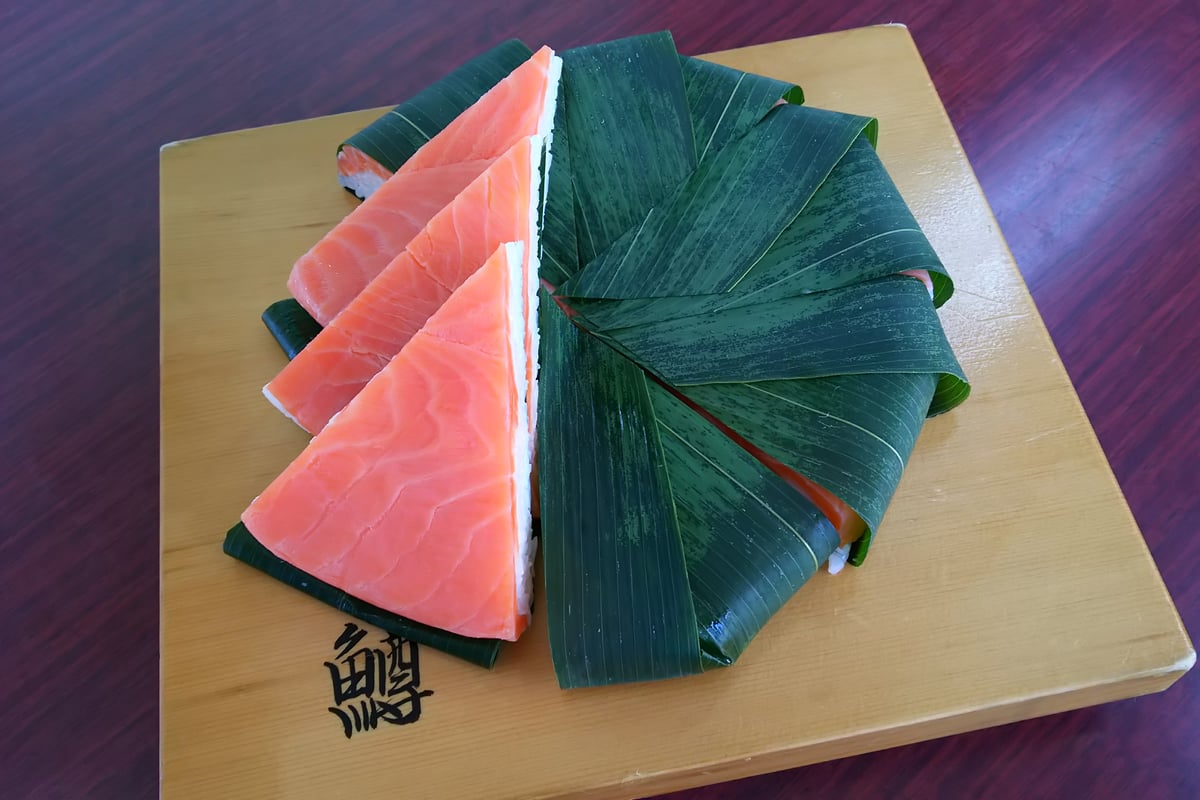
Masu-no-sushi is Toyama Prefecture's signature pressed sushi, made by layering vinegared rice and thin slices of sakura masu (cherry salmon) with bamboo-grass leaves, packed into a round bentwood container and pressed firm. It is said to have originated when a retainer of the Toyama domain presented ayu (sweetfish) sushi from the Jinzu River to the lord, and the dish later evolved into its present form using sakura masu caught in the same river. After it began being sold as an ekiben (station bento) at Toyama Station in 1912, its fame spread nationwide with the opening of the Hokuriku Main Line, and today it stands as the quintessential Toyama souvenir. Its flavor balances the refreshing aroma of bamboo grass, the mild richness of the sakura masu, and the tang of vinegared rice, and its long shelf life at room temperature has made it a favorite for station bento, gifts, and outing lunches alike. Many shops, mainly in Toyama City, still compete with their own recipes today, and comparing the differences in vinegar seasoning and fish thickness between shops is a popular pastime.
Origin
The origin is said to date back to 1717 in the Edo period. Yoshimura Shinpachi, a retainer serving the Toyama domain, made ayu (sweetfish) sushi using ayu caught in the Jinzu River and local rice, and presented it to the third lord, Maeda Toshioki. This ayu sushi is said to have also been presented to and enjoyed by the shogun Tokugawa Yoshimune, which brought fame to the dish as a specialty of Toyama.
History
The recipe later changed to use sakura masu (cherry salmon), which run up the Jinzu River in spring, and the present-day form of masu-no-sushi is thought to have taken shape from the late Edo period into the Meiji era. In 1912, it began being sold as an ekiben (station bento) at Toyama Station, and it became known nationwide with the opening of the Hokuriku Main Line. Since then it has grown into a food culture representative of Toyama as both a station bento and a souvenir, and today roughly a dozen to twenty shops in Toyama City alone produce and sell their own versions of masu-no-sushi.
Features
It is a pressed sushi made by lining a round bentwood container of bent cedar or bamboo with bamboo-grass leaves, layering vinegared rice and thin slices of sakura masu, and pressing it firm from above. It is characterized by the balance of the fragrance of bamboo grass, the richness of the sakura masu, and the tartness of the vinegared rice, and because it keeps well even at room temperature, it has long been valued as a station bento and gift item. The vinegar seasoning and thickness of the fish vary from shop to shop.
Main Ingredients
Food Culture
Born as a gift presented to the lord of the Toyama domain, it has long been used as a dish for celebrations and entertaining guests. Since becoming known nationwide as a station bento, it has also become established as a travel souvenir and a gift brought home to family, and comparing the flavor differences between shops has become a popular way to enjoy it.
How It Differs from Home Cooking
It is sometimes made at home for celebrations, but specialty shops use proper bentwood containers of cedar or bamboo and thicker slices of sakura masu for a more authentic preparation. The blend of the vinegared rice and the degree of maturation of the fish are also refined differently by each shop.
Famous Shops
ますのすし本舗 源 本店(ますのすしミュージアム)
富山県富山市南央町37-6
A long-established shop with a history spanning over 300 years. It has an attached museum where visitors can see the production process, with masu-no-sushi priced from around 3,600 yen.
View details →扇一 ます寿し本舗
富山県富山市小泉町54-11
A popular shop known for its plump sakura masu and mellow, lightly vinegared rice. Open from 8:00 to 16:00, it also enjoys strong support from local customers.
FAQ
Q. Why is it called sushi of ‘masu’ (trout)?
A. The original dish presented to the lord was ayu sushi made with sweetfish from the Jinzu River, but the recipe later changed to use sakura masu, which run up the Jinzu River in spring, and it became established as today's masu-no-sushi.