Image: Wikimedia Commons
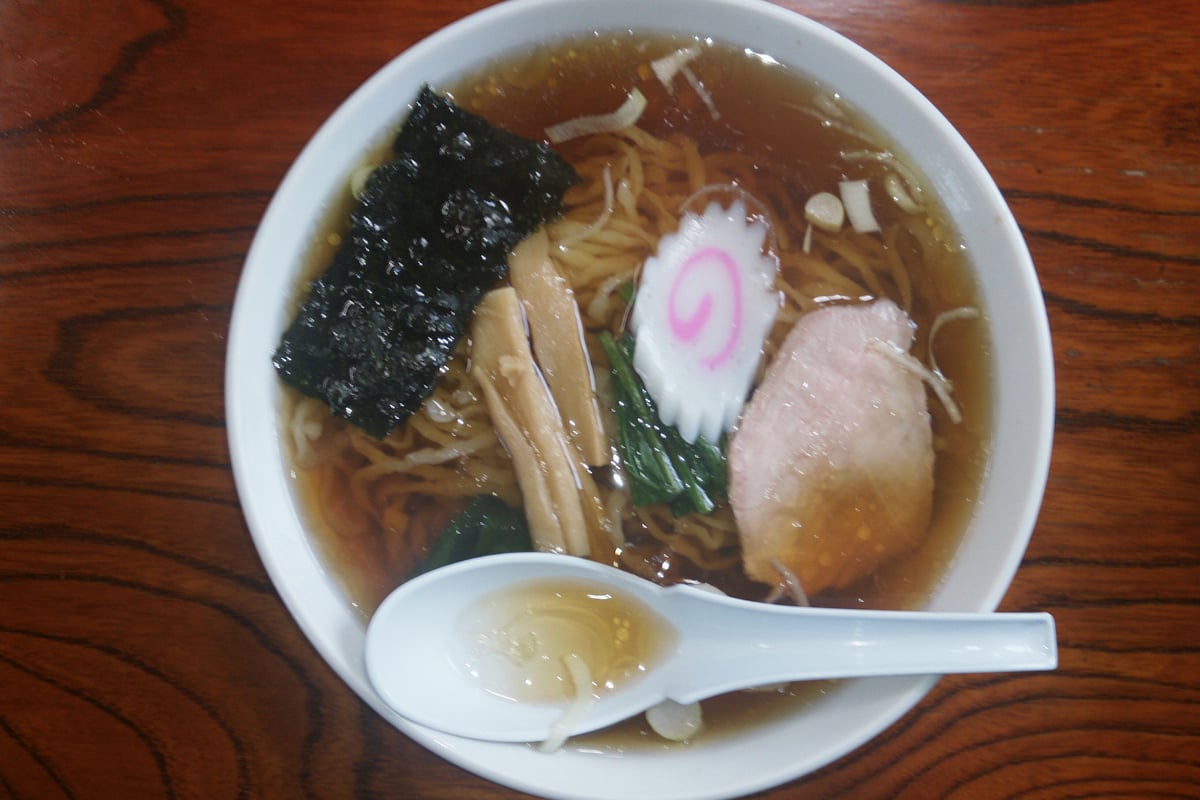
Shirakawa Ramen is a local ramen that developed mainly in Shirakawa City, Fukushima Prefecture. It is characterized by irregular, hand-pulled curly noodles and a clean soy sauce broth based mainly on chicken and pork bone. Many shops carry on the 'aodake-uchi' technique, in which craftsmen stretch the dough using a green bamboo pole, producing noodles with a strong, springy texture and a distinctive bite that pairs well with the carefully simmered, clear broth. Shirakawa, which prospered as a post town on the Oshu Kaido highway, is still home to many family-run food stalls carrying on a lineage of hand-pulled noodles dating back to the Taisho era, each preserving its own method and blend, drawing tourists who enjoy visiting several shops to compare. In recent years, young local craftsmen have carried on the tradition, with some opening apprentice shops in the greater Tokyo area.
Origin
Shirakawa Ramen's roots are said to trace back to 1921 (Taisho 10), when Genmatsu Kibushi — son of Genbei Kibushi, who had opened the sweet-red-bean shop 'Kameya' in 1887 — trained in Yokohama and then opened the hand-pulled ramen shop 'Kamegen.' In Shirakawa, a post town on the Oshu Kaido highway with heavy foot traffic, the careful, hand-pulled preparation of the dough earned a strong reputation from the start, and this is said to have become the prototype for what later became Shirakawa Ramen.
History
In the late 1940s, as the excitement around movie theaters grew, ramen stalls flourished, and it is said that soba noodle craftsmen began applying their soba-making techniques to make noodles, establishing the 'hand-pulled curly noodle' style. From the postwar years to today, many family-run food stalls have remained, each passing down its own techniques and flavors across generations. In recent years, shops identifying as disciples of 'Tora Shokudo' have spread to the greater Tokyo area as well, raising the dish's profile beyond the region.
Features
Its defining feature is 'aodake-uchi' noodles, made by stretching the dough with a green bamboo pole, which produces a strong, springy texture and an irregular curl that helps the noodles hold the broth well. The broth is a clear soy sauce base built mainly on chicken and pork bone, light yet deeply flavorful. Each shop has its own character in noodle thickness and firmness, and toppings such as chashu pork and wonton also reflect each shop's particular approach.
Main Ingredients
Food Culture
With many family-run food stalls in the city, each with its own way of stretching the noodles and blending the broth, locals routinely enjoy the simple pleasure of choosing 'which shop to go to today.' Among tourists, too, visiting several shops to compare has become a popular way to enjoy the dish.
How It Differs from Home Cooking
At home, store-bought Chinese-style noodles are almost always used, but specialty shops preserve the labor-intensive method of stretching the dough with a green bamboo pole, resulting in a marked difference in the noodles' texture and springiness. The broth is also simmered from scratch using chicken and pork bones, giving it a depth of flavor quite different from instant noodles at home.
Famous Shops
とら食堂
福島県白河市双石滝ノ尻1
Founded in 1969. Considered one of the shops representing Shirakawa Ramen, known for its carefully hand-pulled noodles and clear broth.
手打中華 すずき
福島県白河市瀬戸原4-9
The basic 'teuchi chuka' (hand-pulled noodles) costs around 700 yen, and the chashu noodles around 1,100 yen. A popular shop that sometimes closes early once ingredients run out.
FAQ
Q. How is Shirakawa Ramen different from Kitakata Ramen?
A. Shirakawa centers on hand-pulled curly noodles made with the aodake-uchi technique and a light soy sauce broth, while Kitakata mainly uses machine-made thick, flat, high-hydration noodles. Both are leading local ramen styles of Fukushima Prefecture.