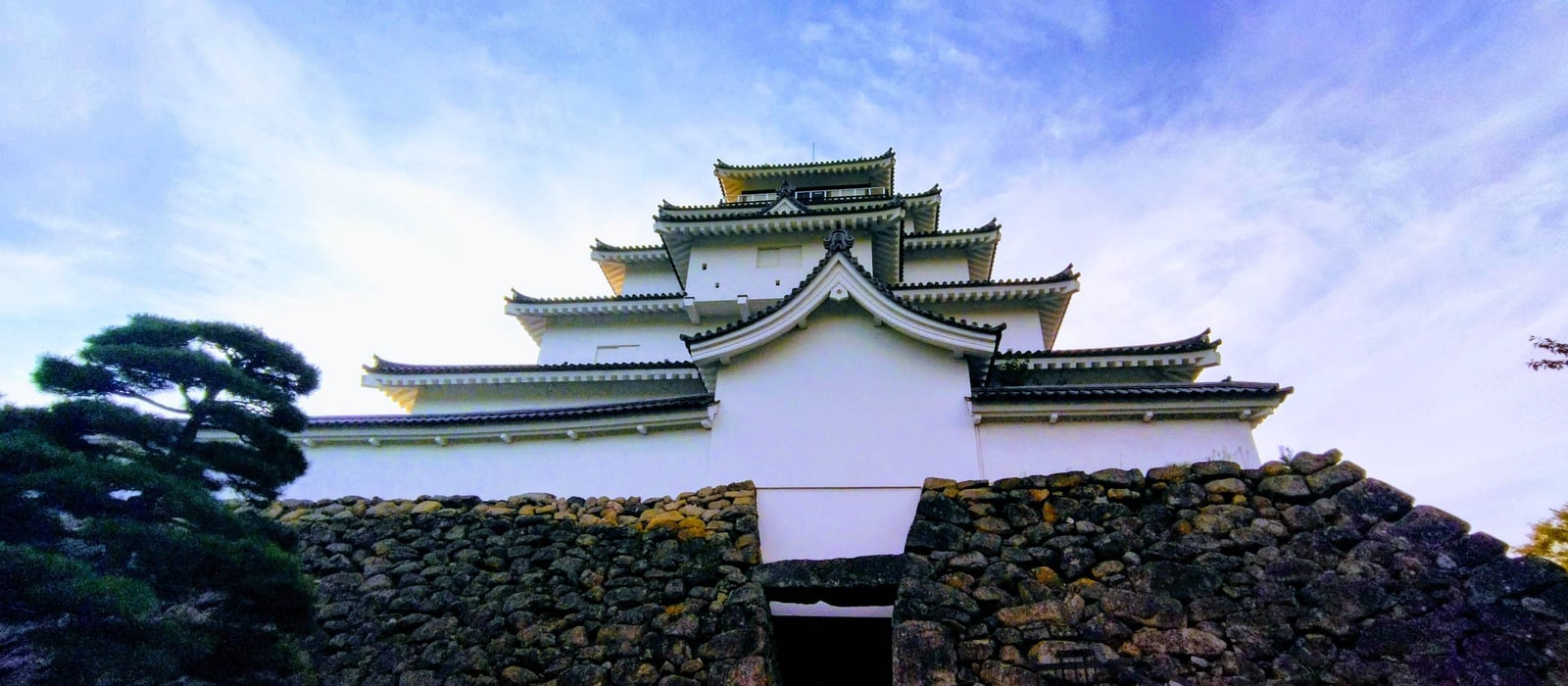
 Image: Wikimedia Commons
Fukushima Prefecture
Overlooking Lake Inawashiro and Mt. Bandai, Fukushima Prefecture is made up of three regions — Aizu, Nakadori, and Hamadori — where handcrafts passed down since the Edo period and local cuisine rooted in the bounty of mountain and sea remain very much alive today. A wide range of traditional handcrafts, including Nationally Designated Traditional Crafts, are carried on here: Aizu-nuri lacquerware and Aizu-Hongo-yaki pottery, which developed around Tsuruga Castle in Aizuwakamatsu; folk toys known throughout Japan such as Akabeko and Miharu-koma; and Obori-Soma-yaki, which continues its revival after the Great East Japan Earthquake. In food, each of the three regions carries its own distinctive flavors — Kozuyu, a festive soup served in Aizu; Kitakata Ramen, counted among Japan's Three Great Ramen; and Enban-gyoza (disc-shaped pan-fried gyoza), which originated in Koriyama.
Fukushima's Traditional Crafts

Aizu Lacquerware
Aizu-nuri
Aizu-nuri is lacquerware handed down mainly in Aizuwakamatsu City, Fukushima Prefecture, and is a Traditional Craft Designated by the Minister of Economy, Trade and Industry. It is said to have taken firm root in 1590 (Tensho 18), when Gamō Ujisato, who became lord of Aizu, encouraged lacquer craftsmanship to promote local industry, giving it a history spanning more than 400 years. A defining feature is that wood-base craftsmen, lacquerers, and maki-e artists each handle their own specialized process in a division of labor, and it is distinctively Aizu that lacquerers themselves are further divided between round pieces (such as bowls) and flat pieces (such as tiered boxes). During domain reforms in the mid-Edo period, new decorative techniques such as keshifun maki-e were introduced, and a wide range of techniques -- including mother-of-pearl inlay, lacquer painting, dry lacquer, and chinkin -- continue to be passed down today. The craft's appeal lies in its lavish decoration using auspicious motifs such as cranes, turtles, and pine-bamboo-plum, combined with the warm luster of hana-nuri (an unpolished final coat), and it is used to make a wide range of products from bowls and tiered boxes to contemporary accessories.
Obori-Soma Ware
Obori-Soma-yaki
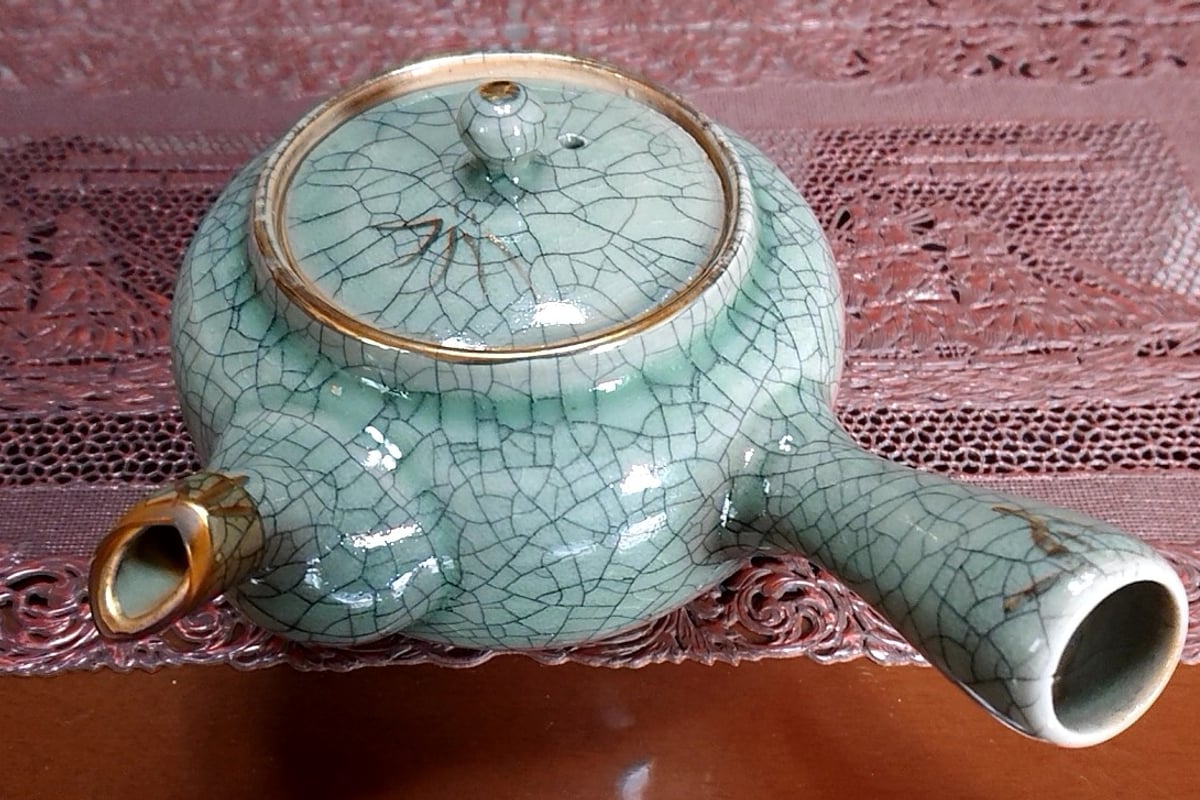
Obori-Soma ware is pottery once fired in the Obori district of Namie Town, Fukushima Prefecture, and is a Nationally Designated Traditional Craft. It is said to have begun in the Genroku era (1688-1704), when Hangai Kyūkan, a retainer of the Soma-Nakamura domain, discovered clay in Obori and had his servant Sama fire everyday wares from it; wheel-forming has been maintained consistently ever since. The ware is known for three features: 'aohibi,' a fine network of crackle running across the entire surface; 'hashiri-goma,' an auspicious design depicting the Soma domain's sacred horse in the brush style of the Kanō school; and 'nijū-yaki,' a double-walled construction that keeps hot liquid from cooling quickly while remaining comfortable to hold. However, following the 2011 Great East Japan Earthquake and the accident at Tokyo Electric Power Company's Fukushima Daiichi Nuclear Power Plant, the entire town of Namie, including the Obori district, became an evacuation zone, and all of the more than 20 kilns that had operated there were forced to evacuate outside the town. Today the kilns have relocated across the prefecture to places such as Nihonmatsu City, Fukushima City, and Koriyama City, and some have also revived operations at Michi-no-Eki Namie within Namie Town, carrying on the traditional craft.
Aizu-Hongo Ware
Aizu-Hongo-yaki
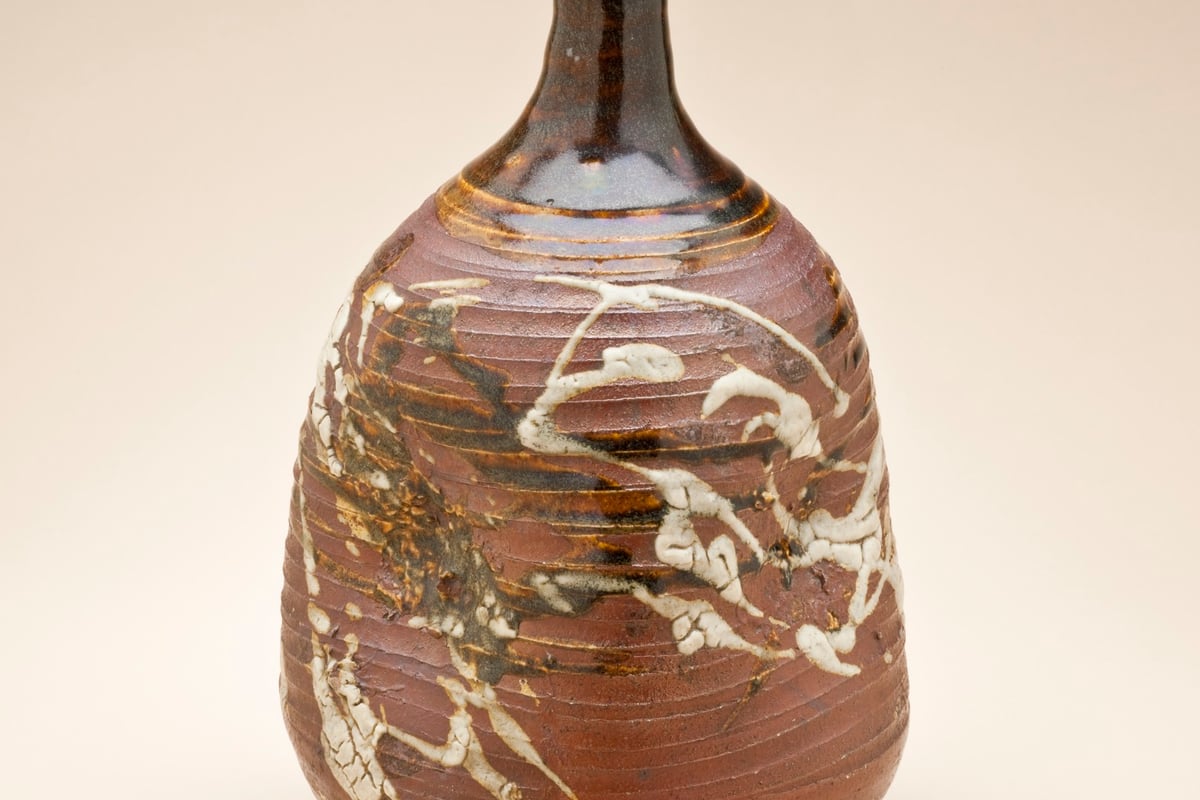
Aizu-Hongo ware is ceramic ware produced in Aizumisato Town, Fukushima Prefecture, and is a Nationally Designated Traditional Craft with roughly 400 years of history as Tohoku's oldest kiln site. Its origins trace back to 1593, when Gamō Ujisato, lord of Aizuwakamatsu Castle, had roof tiles fired for the castle, and in 1645 full-scale pottery production began when Aizu domain lord Hoshina Masayuki invited the potter Mizuno Genzaemon from Seto, in Owari Province. Around 1800, Sato Ihee learned the technique for making porcelain in Arita, in Hizen Province, and brought it back, giving the region the rare distinction, unusual nationwide, of producing both pottery and porcelain in the same production area. Today, a dozen or so distinctive kilns are still scattered across the Hongo district, producing everything from everyday tableware to fine art pieces, including Ryumon-yaki, known for its flowing-glaze technique. Every year on the first Sunday of August, the 'Seto Ichi' pottery market begins before dawn, drawing many visitors from within and outside the prefecture in search of a good find, and has become a summer tradition in Aizu.
Okuaizu Woven Crafts
Okuaizu Amikumi-zaiku
Okuaizu woven crafts are basketry made from natural materials found in the mountainous Okuaizu region, centered on Mishima Town, Onuma District, Fukushima Prefecture -- wild grape vine (yamabudo), hiroro (a type of sedge), and matatabi (silver vine) -- and are a Nationally Designated Traditional Craft. Their history as hand work carried on during the snow-covered season is ancient: artifacts bearing traces of weaving have been found at Mishima Town's Arayashiki archaeological site (late Jōmon period, about 2,500 years ago), and the craft is also said to carry on Jōmon culture into the present. Edo-period regional records also document the making of baskets and sieves using hiroro, matatabi, and wild grape vine. In the 1965-1974 period, the craft's survival was threatened by a decline in successors, but in 1981 (Showa 56) Mishima Town launched the 'Everyday Crafts Movement,' working to pass on the techniques through guidance from craftspeople and exhibitions. Tools with a distinct texture for each material -- hand baskets, confectionery containers, kitchen implements, and more -- continue to be made today.
Okuaizu Showa Karamushi-ori (Karamushi Ramie Weaving)
Okuaizu Showa Karamushi-ori
Okuaizu Showa Karamushi-ori is a traditional textile woven in Showa Village, Onuma District, Fukushima Prefecture, using thread spun from the fibers of karamushi (ramie), and it is a Traditional Craft Designated by the Minister of Economy, Trade and Industry. Karamushi cultivation in Showa Village is said to date back to the Muromachi period, and tradition holds that it was encouraged as an industry under the Aizu domain lord Gamō Ujisato. A document known as the 'Aoso-hatake Shomon' (blue-ramie field deed) dating to 1756 in the Edo period survives today, attesting to nearly 600 years of continuous cultivation. Karamushi is a plant fiber prized for its excellent moisture absorption and quick-drying properties, and it is also known as a raw material for premium textiles such as Ojiya-chijimi and Echigo-jofu. In Showa Village, every step from harvesting to fiber extraction, thread spinning, and weaving is still done by hand today, and since 1994 the village has run the 'Karamushi Weaving Trainee (Orihime/Hikoboshi)' program, inviting young people from outside the village to help pass the techniques on to the next generation. At the Michi-no-Eki Karamushi-ori no Sato Showa roadside station, visitors can learn about the process from cultivation to weaving at the Karamushi Craft Museum and try their hand at weaving.
Tsuchiyu Kokeshi
Tsuchiyu Kokeshi
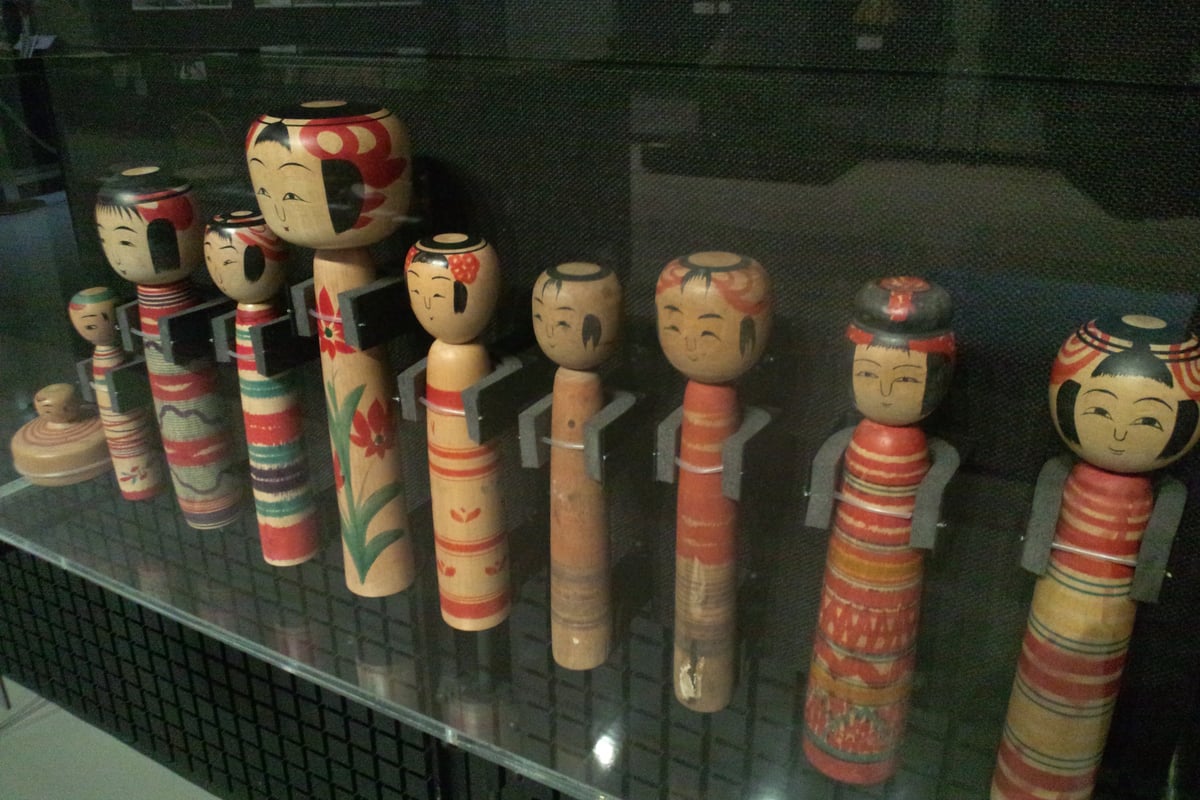
Tsuchiyu Kokeshi are traditional kokeshi dolls nurtured in Tsuchiyu Onsen in Fukushima City, and together with the Naruko and Togatta lineages of Miyagi Prefecture, they are counted among the three major birthplaces of kokeshi in the Tohoku region. They are said to have emerged around 300 years ago from the handiwork of kijishi (woodworking artisans) who made wooden vessels and tools during the Edo period, and since then they have been cherished as souvenirs for hot spring visitors and as children's toys. Compared with dolls from other regions, Tsuchiyu Kokeshi have a distinctively feminine look, with a small head and slender body. The head is painted with a black snake-eye ring pattern, and the face is framed by long bangs and a red hair ornament called 'kase' on either side, with whale-like eyes, a drooping nose, and a small pursed mouth giving them a simple, gentle expression. The head is fitted into the body using a socket-joint construction, and turning the head makes a distinctive squeaking sound - another charming feature unique to Tsuchiyu Kokeshi. Today, craftsmen still keep workshops in Tsuchiyu Onsen, continuing to turn each doll by hand.
Miharu Koma
Miharu Koma
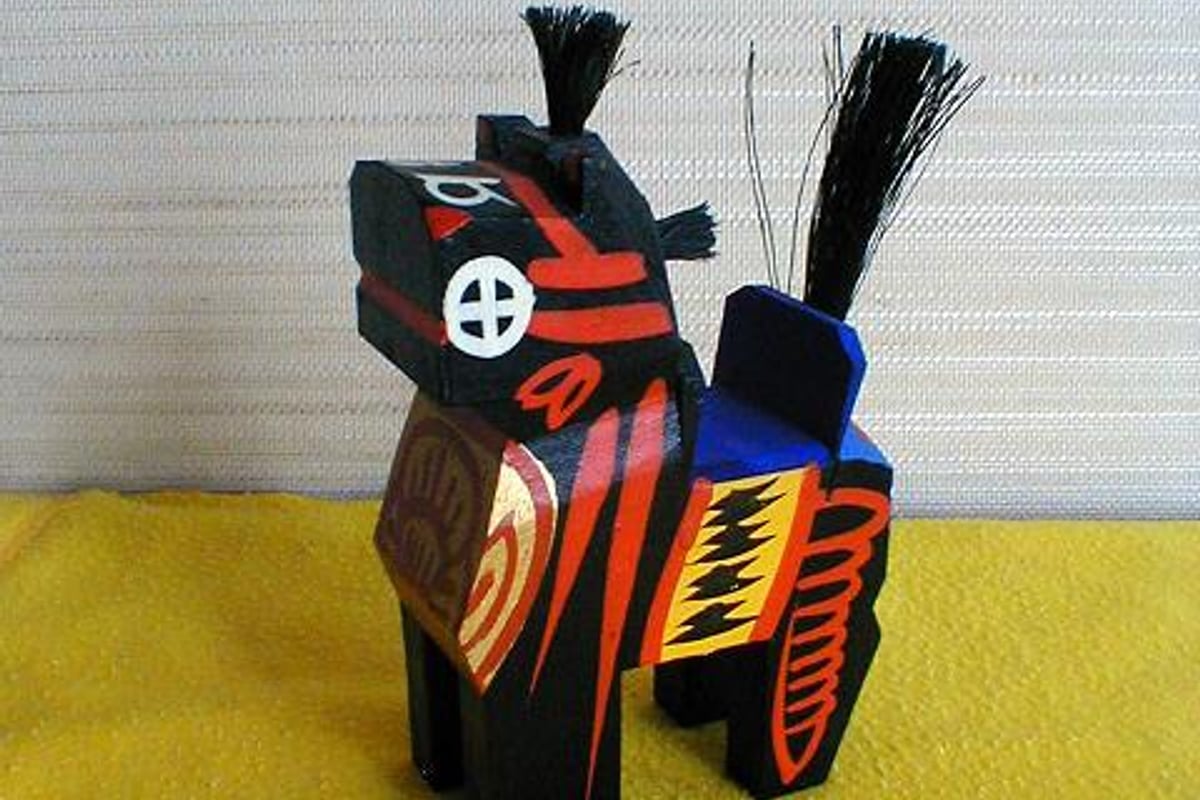
Miharu Koma are carved wooden horse folk toys that originated in what is now Nishida-Takashiba, Koriyama City, and are counted among the 'Three Great Horses of Japan' alongside Aomori Prefecture's Yawata-uma and Miyagi Prefecture's Kinoshita-goma. According to legend, the toy traces back to the Heian-period general Sakanoue no Tamuramaro, who around the year 791 was struggling during his campaign to subdue the Emishi when a wooden horse appeared out of nowhere and came to his aid; in tribute, a children's toy called kosodate mokuba (子育木馬, 'child-rearing wooden horse') was said to have first been made. In the Edo period, the Miharu domain, known as a horse-breeding region, gave the name 'Miharu Koma' to a fine breed developed from wild horses, and the name spread to the toy as well. The toys come as white horses and black horses, painted in red, black, and gold; the black horse is considered a charm for fertility, safe childbirth, and child-rearing, while the white horse is believed to bring peace in old age and protection against senility. In 1954 it was even chosen as the design for Japan's first New Year's postage stamp, making it a nationally known folk toy.
Akabeko
Akabeko
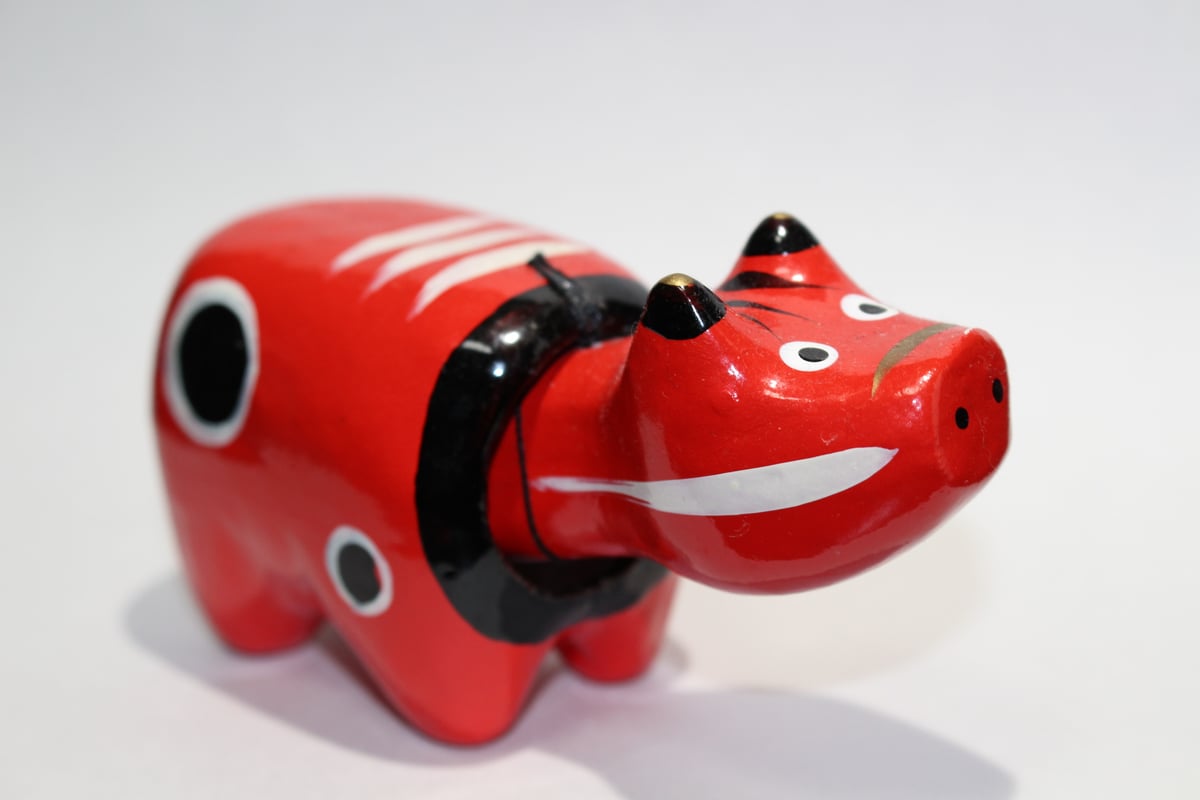
Akabeko is a papier-mâché (hariko) folk toy representing the Aizu region of Fukushima Prefecture, shaped like a red-painted cow. 'Beko' is a Tohoku dialect word for cow, and the toy's origin is said to date back roughly 1,200 years, to a legend of a red-haired ox that, when many other oxen collapsed from exhaustion during the construction of the main hall of Enzō-ji Temple (Fukuman Kokuzōson) in Aizu-Yanaizu, alone carried timber to the very end. The hariko technique itself is said to have been introduced to Aizu during the Tenshō era (1573-1592) by craftsmen invited by Gamō Ujisato, who became lord of Aizu and sought to promote local industry. In 1713, when smallpox spread through the Aizu region, a tale spread that children who owned an Akabeko were spared from the disease, and ever since, Akabeko has been treasured as a lucky charm to ward off evil and disease. The red of its body is said to represent protection from evil, while the spots painted on it represent the marks of smallpox, and its head, which sways gently when touched, still makes it a signature souvenir of Aizu today.
Shirakawa Daruma
Shirakawa Daruma
Shirakawa Daruma are papier-mâché (hariko) daruma dolls made in Shirakawa City, Fukushima Prefecture, known for their distinctive design in which the eyebrows are painted to resemble a crane and the mustache a turtle, with pine and plum branches on either side of the face and bamboo beneath the mouth — earning them the nickname 'Shirakawa Crane-Turtle-Pine-Bamboo-Plum Daruma.' Daruma making in Shirakawa is said to have already been underway in the early Edo period, but it was in 1783, after the Tenmei famine had devastated the region's industries, that Matsudaira Sadanobu, who became lord of the Shirakawa domain, had his court painter Tani Bunchō design a daruma to help revive local industry, giving rise to the form that survives today. Every year on February 11 (National Foundation Day), the 'Shirakawa Daruma Market' is held in central Shirakawa City, drawing roughly 150,000 visitors and standing as a signature winter tradition of Shirakawa.
Aizu Momen (Aizu Cotton Textiles)
Aizu Momen
Aizu Momen is a cotton textile that has been woven in the Aizu region of Fukushima Prefecture for roughly 400 years. It is said to have begun in the Tensho era (1573-1592) of the Azuchi-Momoyama period, when the Aizu domain lord Gamō Ujisato encouraged cotton cultivation alongside his development of the castle town of Wakamatsu, and production expanded in earnest after 1627, when the domain lord Kato Yoshiaki is said to have invited weavers from his former domain of Iyo-Matsuyama to pass on their techniques. As a sturdy cotton textile with simple striped patterns that grows softer with washing, it has been used since the Edo period for everyday clothing and work wear among ordinary people. At its peak in the Taisho era, around 30 weaving workshops lined the area around Aizuwakamatsu, but today only two remain within Aizuwakamatsu City and one in Aizubange Town. Designated as a Prefecturally Designated Traditional Craft of Fukushima Prefecture, the surviving workshops still use old-style looms from the early Showa era to weave fabrics centered on vertical and check stripe patterns.
Fukushima's Local Food
Kozuyu
Kozuyu
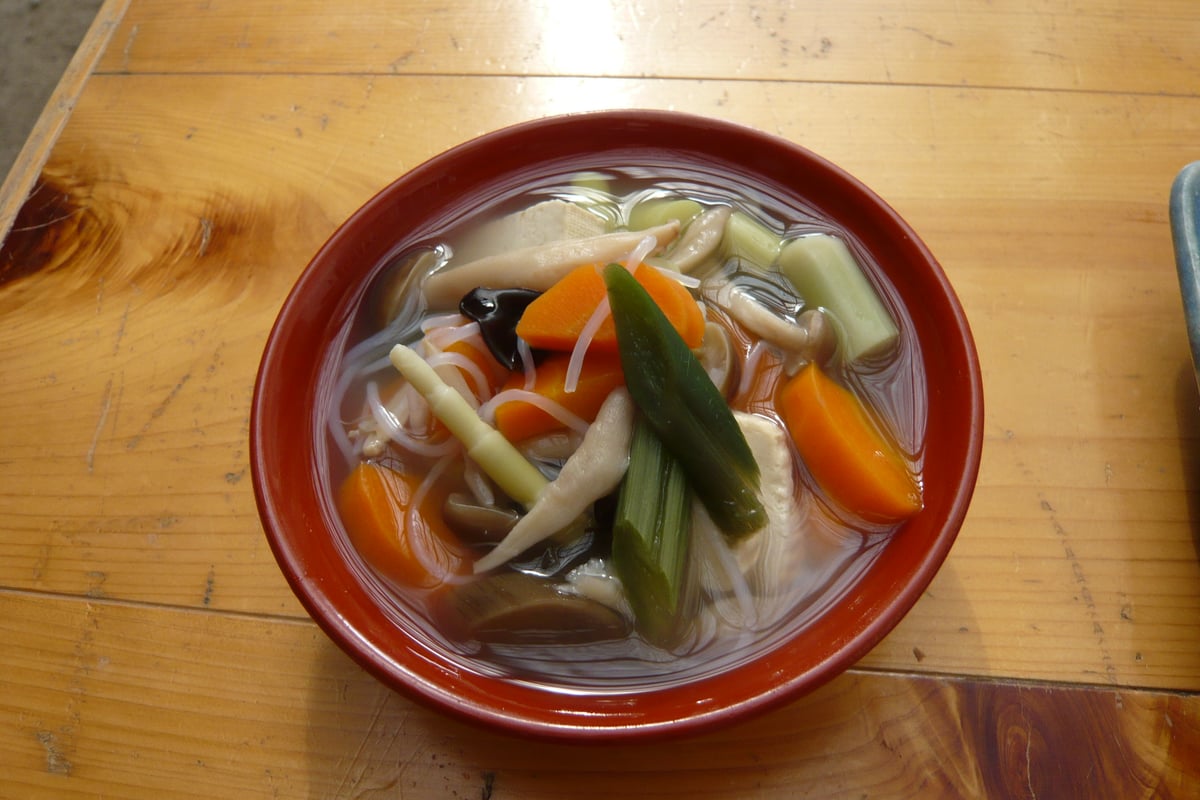
Kozuyu is a soup served at celebratory feasts in the Aizu region, made with an elegant broth from dried scallops (dried adductor muscle) and an odd number of ingredients — taro, carrot, shiitake mushroom, wood ear mushroom, shirataki noodles, and bean-flour fu (wheat gluten) — simmered together and lightly seasoned. It is typically served in shallow Aizu-nuri lacquerware bowls called 'teshiozara,' where the glossy vermilion of the lacquer complements the colors of the soup. As an essential dish for hospitality on celebratory occasions such as New Year, weddings, and memorial services, it has been passed down for generations in Aizu households. Using dried scallops — a precious seafood ingredient — for the broth was itself considered a luxury in landlocked Aizu, and the dish came to be regarded as the ultimate way to entertain guests. A distinctive custom allows guests to have as many refills as they like, making Kozuyu more than just a dish — it embodies the region's culture of hospitality and celebration. Each household has its own subtle variations in the mix and cut of ingredients, handed down as a family recipe.
Kitakata Ramen
Kitakata Ramen
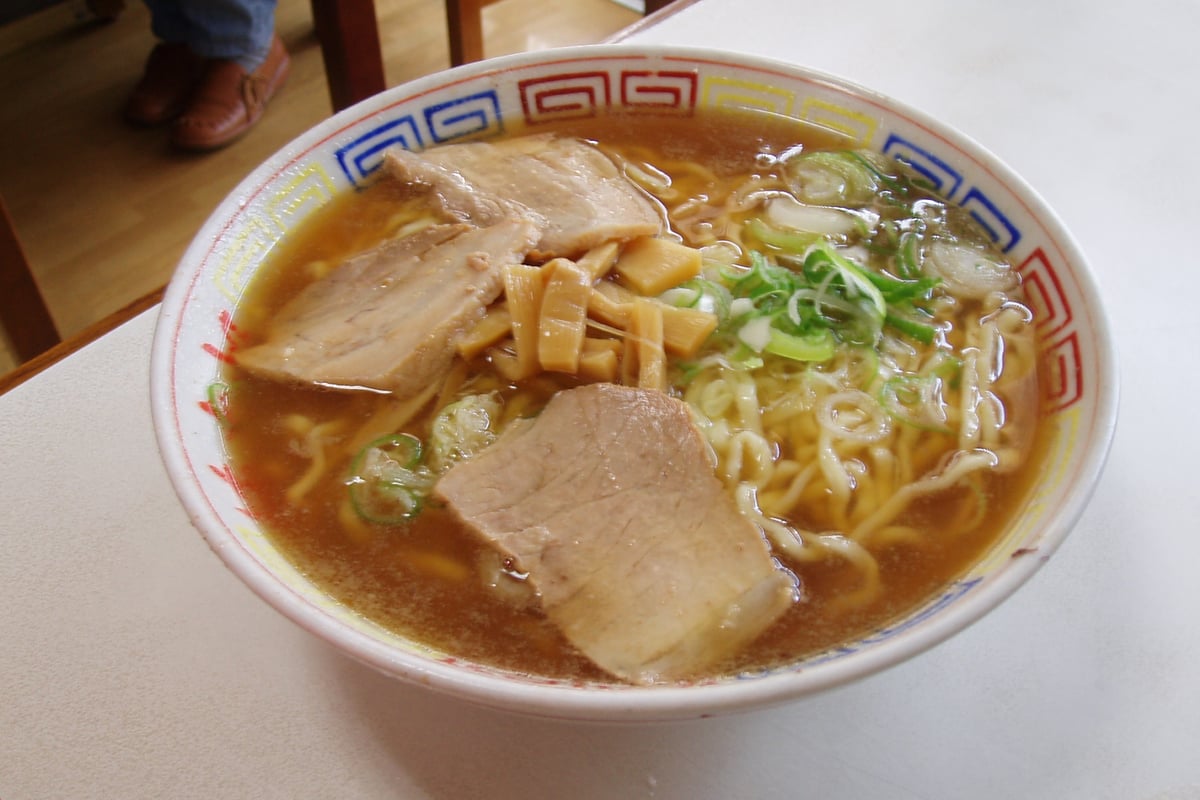
Kitakata Ramen is a local ramen that developed in Kitakata City, Fukushima Prefecture, and is sometimes counted, alongside Sapporo and Hakata, as one of Japan's Three Great Ramen. It is characterized by thick, flat, well-aged, high-hydration noodles with a strong, springy texture that pairs well with a clean pork bone and dried sardine-based soy sauce broth. Kitakata, known as a 'town of storehouses' lined with lacquerware workshops and sake breweries, has one of the highest densities of ramen shops per capita in Japan, and the custom of 'asa-ra' — eating ramen for breakfast — is deeply rooted among residents. It is said to have taken hold as a warming meal for factory workers coming off night shifts or returning from winter seasonal work, and tourists, too, can be seen visiting the city early in the morning just for asa-ra. Since gaining nationwide recognition through a television program in the late 1970s, it has continued to thrive as one of the city's leading tourism draws.
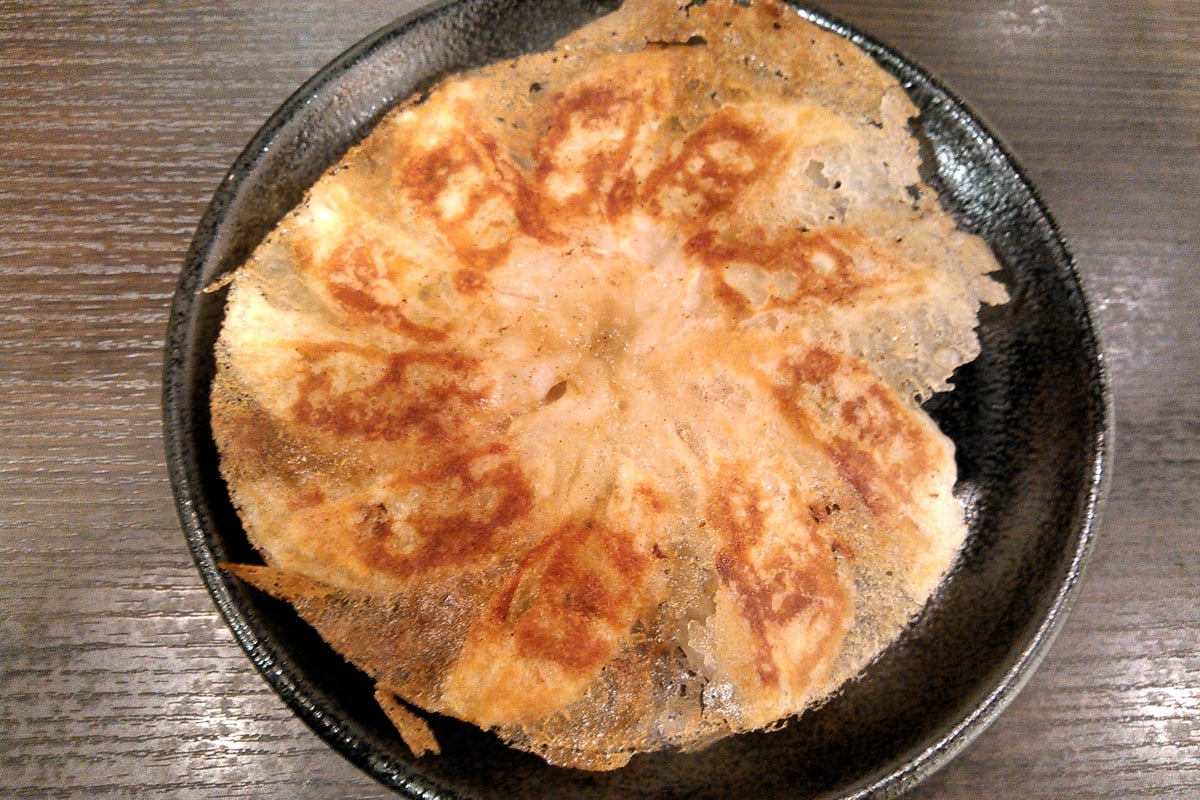
Enban Gyoza
Enban Gyoza
Enban Gyoza is a local specialty dish of Fukushima Prefecture in which 20 to 30 small dumplings are arranged edge to edge across an entire frying pan, then served on a plate in that same disc, or 'enban,' shape. It is said to have originated after the war, when repatriates returning from Manchuria began serving the style of gyoza they had learned there at food stalls and eateries, and it has been passed down ever since in restaurants and specialty shops around Fukushima City, where it originated, as well as in Koriyama City and elsewhere across the prefecture. Many shops take particular care with fillings generously packed with napa cabbage and with hand-stretched wrappers, and sharing a single plate among family or friends has become the established way to eat it. In 2024, it was certified as one of the Agency for Cultural Affairs' '100-Year Foods,' and it remains a beloved local soul food across generations. Alongside ramen and horse sashimi, it is counted as one of Fukushima Prefecture's leading B-grade gourmet dishes.
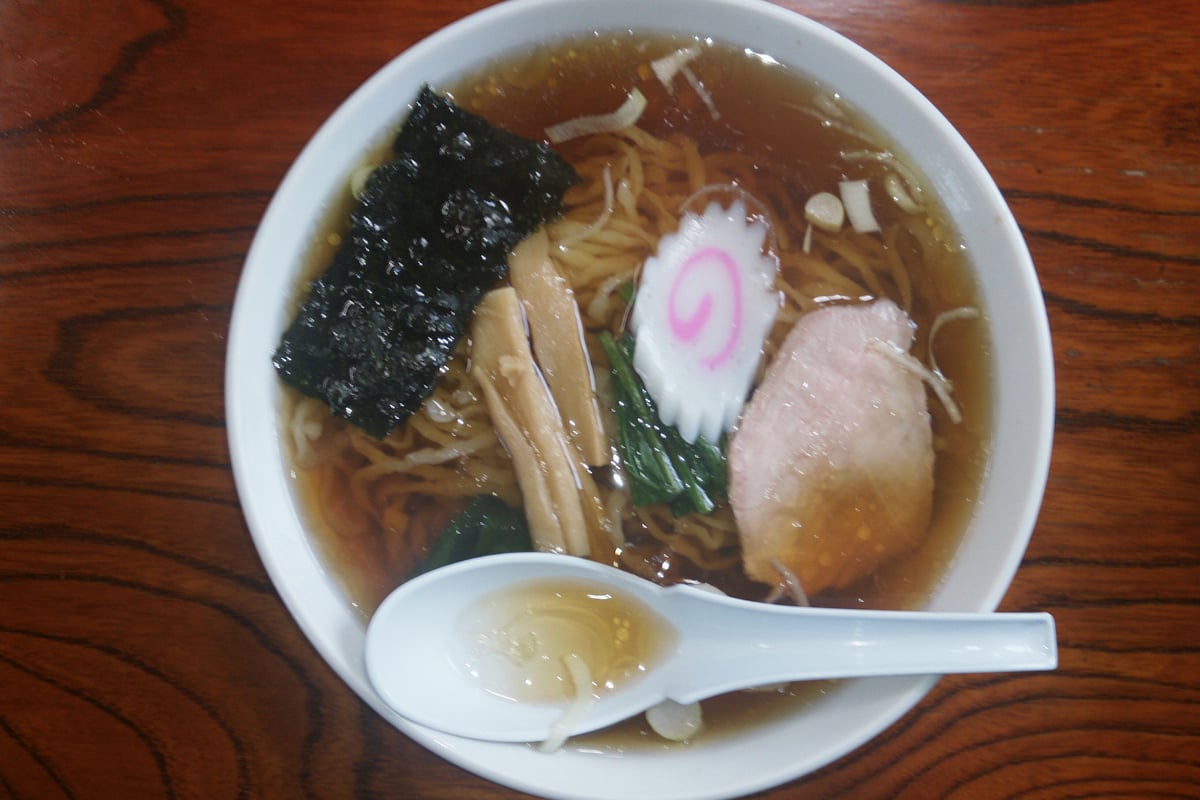
Shirakawa Ramen
Shirakawa Ramen
Shirakawa Ramen is a local ramen that developed mainly in Shirakawa City, Fukushima Prefecture. It is characterized by irregular, hand-pulled curly noodles and a clean soy sauce broth based mainly on chicken and pork bone. Many shops carry on the 'aodake-uchi' technique, in which craftsmen stretch the dough using a green bamboo pole, producing noodles with a strong, springy texture and a distinctive bite that pairs well with the carefully simmered, clear broth. Shirakawa, which prospered as a post town on the Oshu Kaido highway, is still home to many family-run food stalls carrying on a lineage of hand-pulled noodles dating back to the Taisho era, each preserving its own method and blend, drawing tourists who enjoy visiting several shops to compare. In recent years, young local craftsmen have carried on the tradition, with some opening apprentice shops in the greater Tokyo area.
Wappa-meshi (Rice Steamed in a Bentwood Container)
Wappa-meshi (Rice steamed in a bentwood container)
Wappa-meshi is a local dish made by packing dashi-cooked rice into a round 'wappa' container of bent cedar or cypress wood, topping it with ingredients such as seafood or mountain vegetables, and steaming it in a wooden steamer. In Fukushima Prefecture, Aizuwakamatsu City is widely known as its birthplace, while in Iwaki City, on the Pacific coast, a version of Wappa-meshi generously topped with fresh local seafood known as Joban-mono is served to tourists and loved as a local dish for enjoying the bounty of the sea. The wooden container absorbs excess steam, keeping the rice fluffy rather than sticky, and combined with its colorful appearance, it is popular both as a meal for special occasions and as a souvenir. Even within the same name 'Wappa-meshi,' the mountain vegetables and mushrooms that take center stage in Aizu and the sea urchin, surf clams, and local fish that take center stage in Iwaki show a different character in each region — a depth that is part of the richness of Fukushima's Wappa-meshi culture.
Hokki-meshi (Surf clam rice)
Hokki-meshi (Surf clam rice)
Hokki-meshi is a rice dish cooked with large, richly sweet surf clams (hokkigai) landed at Matsukawa-ura (lagoon) in Soma City, Fukushima Prefecture. The waters off Soma and Futaba are mineral-rich fishing grounds where surf clam fishing has flourished since the Meiji era. The dish combines Soma's high-quality rice—the area is also known as a rice-growing region—with locally caught surf clams, and is said to have originally been enjoyed as a quick 'fisherman's meal' eaten aboard boats between hauls by busy fishermen. The rice, fragrant from soaking up the clams' umami, offers the sweetness and crunchy texture of the clams, and is served at eateries and direct-sale market cafeterias around Matsukawa-ura. As a dish that makes the most of the bounty of Matsukawa-ura, Fukushima's only lagoon, it has become a staple menu item for welcoming visitors locally, and quite a few restaurants serve it as a seasonal offering.
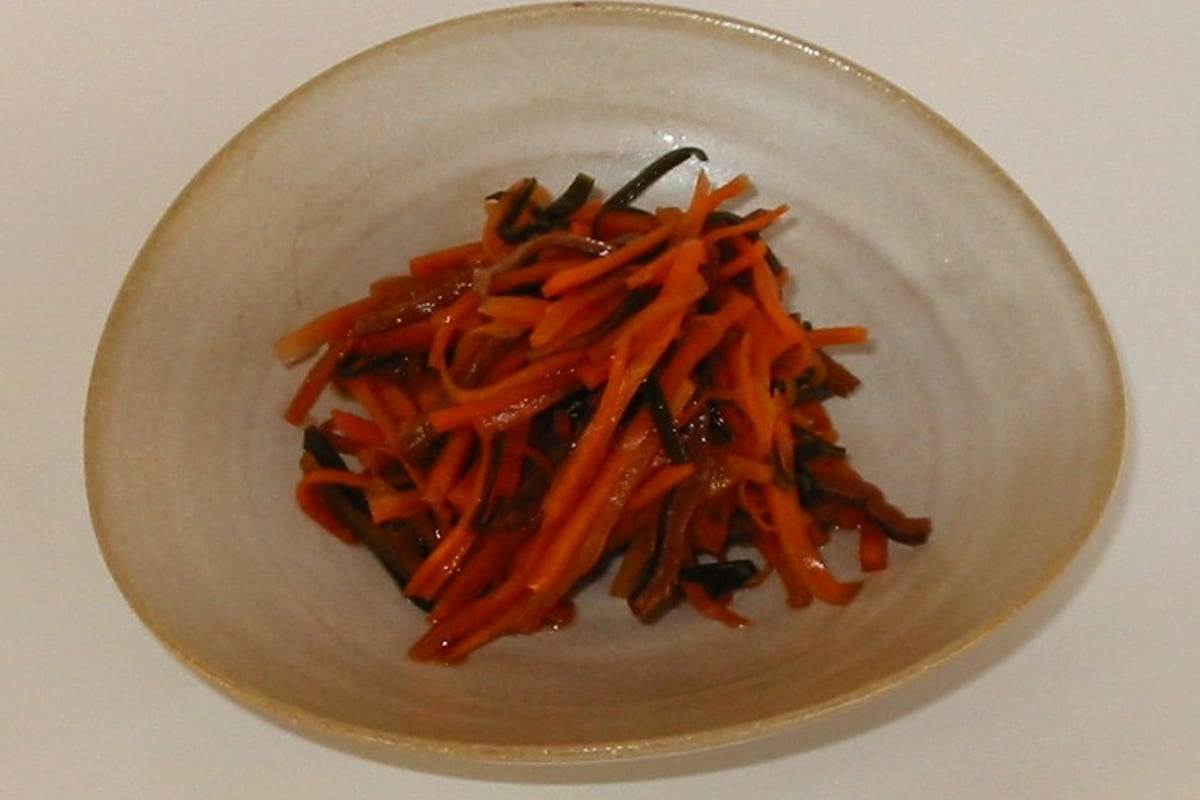
Ika Ninjin (Squid and Carrot Pickle)
Ika Ninjin
Ika Ninjin is a local dish from Fukushima Prefecture made by marinating thin strips of dried squid (surume-ika) and carrot in a sweet-savory sauce of soy sauce, sake, and mirin (or coarse sugar). In Fukushima, where heavy snow makes it hard to harvest vegetables in winter, this long-keeping preserved food has been made since long ago. Because surume can be written with characters meaning 'a long-lived woman,' making it an auspicious food, it has also become an essential New Year's dish, and households throughout the prefecture — not only in the Fukushima City area of the Kenpoku region but also in Aizu — still keep the custom of preparing a large batch at year's end to serve at the New Year's table. It is also being reappraised as a low-carbohydrate, low-fat preserved food, and today it is enjoyed year-round as a side dish and an accompaniment to sake, as well as being a popular souvenir. It is often compared to Hokkaido's matsumae-zuke, but its Fukushima character is said to lie in its simplicity — made with just squid and carrot, without kombu kelp.
Nishin no Sansho-zuke (Herring Pickled with Sansho Leaves)
Nishin no Sansho-zuke (Herring pickled with sansho leaves)
Nishin no Sansho-zuke is a preserved food handed down in the Aizu region, made by pickling dried, filleted herring (mikaki-nishin) together with sansho leaves in a marinade of soy sauce, vinegar, and sake. In landlocked Aizu, where fresh fish was hard to come by, dried mikaki-nishin brought from Hokkaido by ships such as the kitamae-bune became a valued source of protein. The dish reflects the wisdom of using the fragrance of sansho to soften herring's distinctive odor, and it is also a seasonal fixture of Aizu, made in households when the young sansho leaves bud from spring into early summer. The custom of pickling it in a dedicated 'nishin-bachi' bowl made of Aizu-Hongo ware also survives today, carrying on a local food culture in which the vessel and the dish are inseparable. Herring pickled for anywhere from a few days to a few weeks is eaten on its own as an accompaniment to sake, or served over hot soba noodles — a taste passed down across generations in Aizu households and traditional restaurants alike.
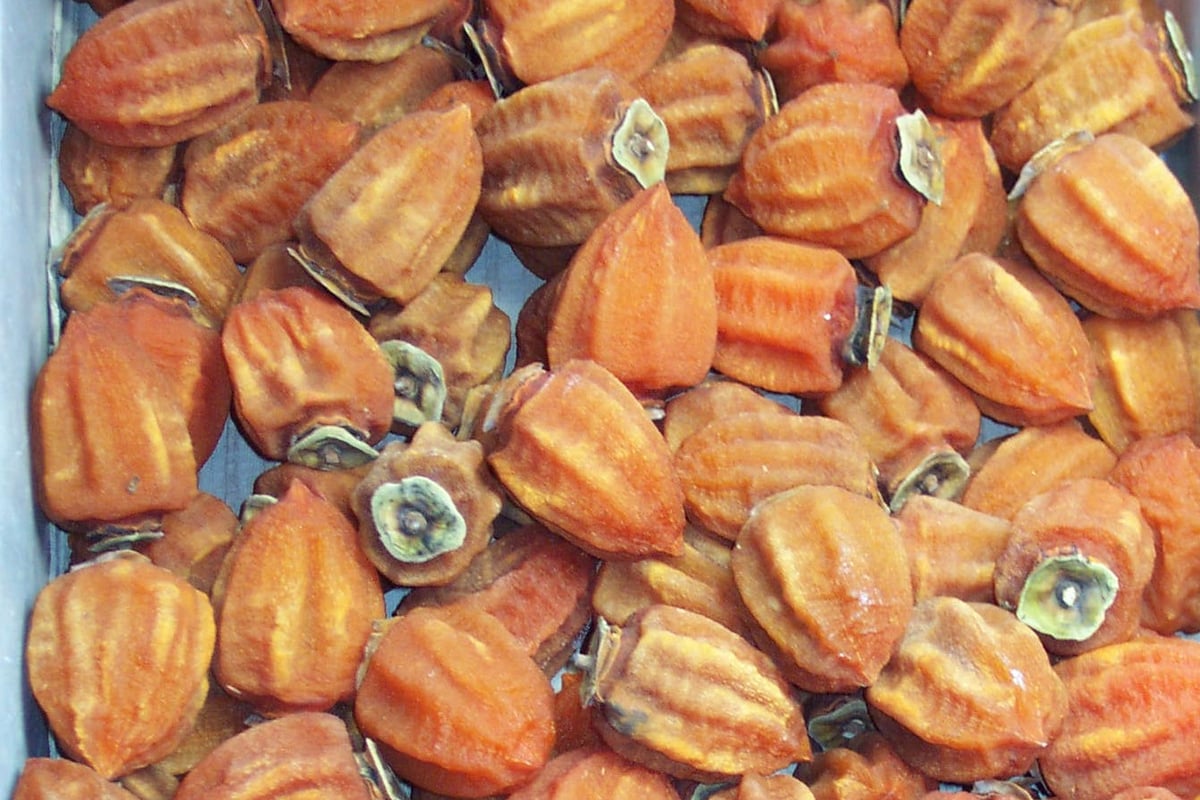
Anpogaki (Semi-dried persimmon)
Anpogaki (Semi-dried persimmon)
Anpogaki is a semi-dried persimmon that originated in the Isazawa district of Yanagawa-machi, Date City, Fukushima Prefecture. Astringent persimmons are fumigated with sulfur before being dried, producing vivid orange flesh with a soft, jelly-like texture. While ordinary dried persimmons are dried until firm, anpogaki is characterized by retaining more moisture, offering a refined sweetness that can be enjoyed either eaten as is or scooped out with a spoon. In the Isazawa district, regarded as the birthplace of anpogaki nationwide, techniques passed down through persimmon-growing families for more than a hundred years since the early Taisho era continue to be used, and the fruit is shipped nationwide as a taste representative of winter in Fukushima. In an area once known for sericulture, producers historically poured their efforts into persimmon cultivation as a new specialty product unaffected by fluctuations in the raw silk market, and today the whole of Date City is known as one of Japan's leading anpogaki-producing areas.
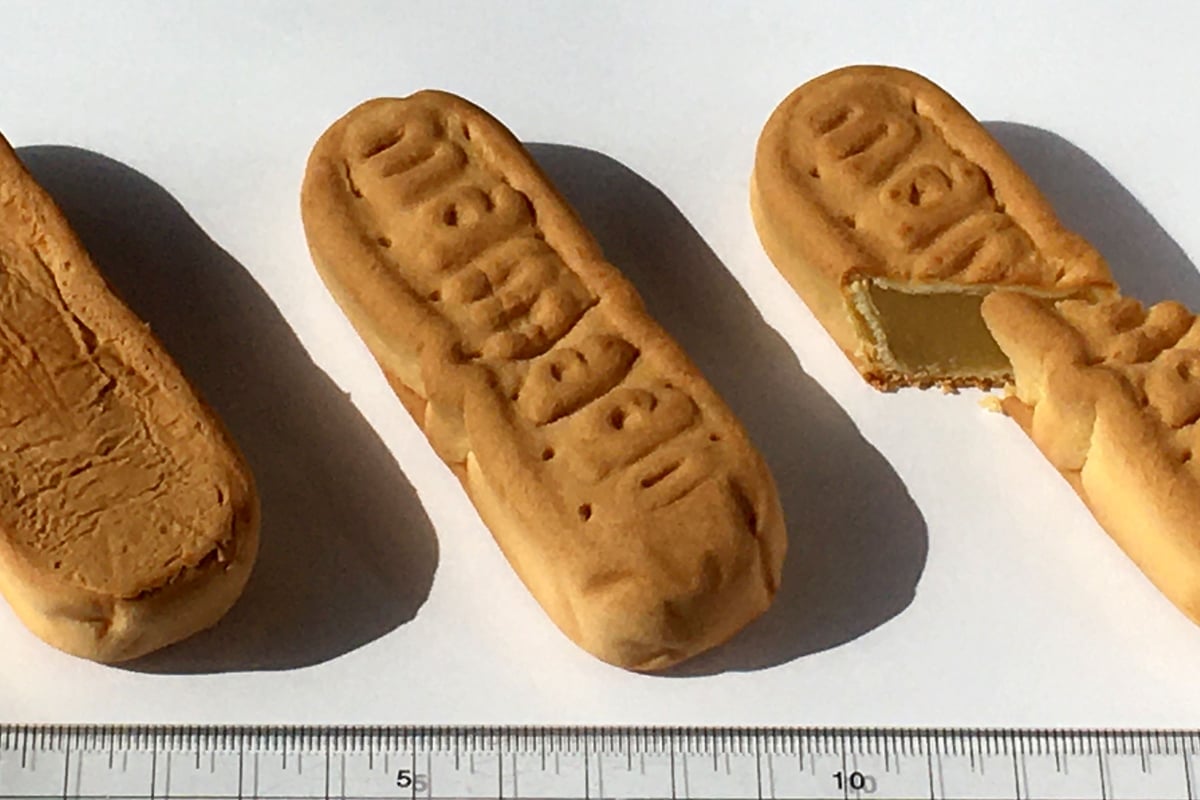
Mamadoru (Milk-filled butter cake)
Mamadoru (Milk-filled butter cake)
Mamadoru is a traditional local confection representative of Fukushima Prefecture, made by wrapping a milk-flavored filling in butter-enriched dough and baking it. It has been a long-selling favorite since Sanmangoku, a long-established confectionery in Koriyama City, Fukushima Prefecture, first released it in 1967, and it is widely known as a classic Fukushima souvenir enjoyed for more than half a century. The name is said to derive from a Spanish phrase meaning 'a child nursing at the breast,' and the confection is characterized by the combination of a gentle milk aroma and moist dough. At the time of its release, it drew attention as a Western-style baked confection that was still uncommon, and today it is counted among the representative confections not only of Fukushima but of the wider Tohoku region. The yellow-based packaging has remained largely unchanged since its debut, and its simple flavor, beloved across generations, is one reason for its long-standing popularity.
Model Course
A Course of Aizu-nuri Lacquerware and Local Flavors in Aizuwakamatsu
In Aizuwakamatsu, the setting for the Boshin War at the foot of Tsuruga Castle, visit shops carrying Aizu-nuri lacquerware with a 400-year history, enjoy a hands-on painting experience with Akabeko, the symbolic folk toy of Aizu, then savor Kozuyu, a festive soup, to taste Aizu's food culture — a course exploring the history and handcrafts of Aizu.
A Course to Enjoy Pottery and Local Ramen in Kitakata and Aizu-Hongo
Visit a kiln for Aizu-Hongo-yaki, said to be the oldest kiln site in Tohoku, then savor Kitakata Ramen, counted among Japan's Three Great Ramen — a course exploring the pottery and ramen culture of the Aizu region.
A Course to Enjoy Folk Toys and Local Gourmet Food in Miharu, Koriyama, and Fukushima City
Visit Miharu, home of Miharu-koma, one of Japan's Three Great Folk Toys, then savor Mamadoru, a milk confection that originated in Koriyama, and Enban-gyoza (disc-shaped pan-fried gyoza), which originated in Fukushima City — a course exploring the handcrafts and food of the Nakadori region.
Events
Aizu Festival
Every year, the 3rd Saturday through Monday of September (September 19-21 in 2026) / Various locations in Aizuwakamatsu (Shinmei-dori Street, the main keep of Tsuruga Castle, and others)
View details →Fukushima Waraji Festival
Every year, the 1st Friday through Sunday of August (August 7-9 in 2026) / Fukushima City, National Route 13 Shinobu-dori Street to the Fukushima Station front street
View details →