Image: Wikimedia Commons
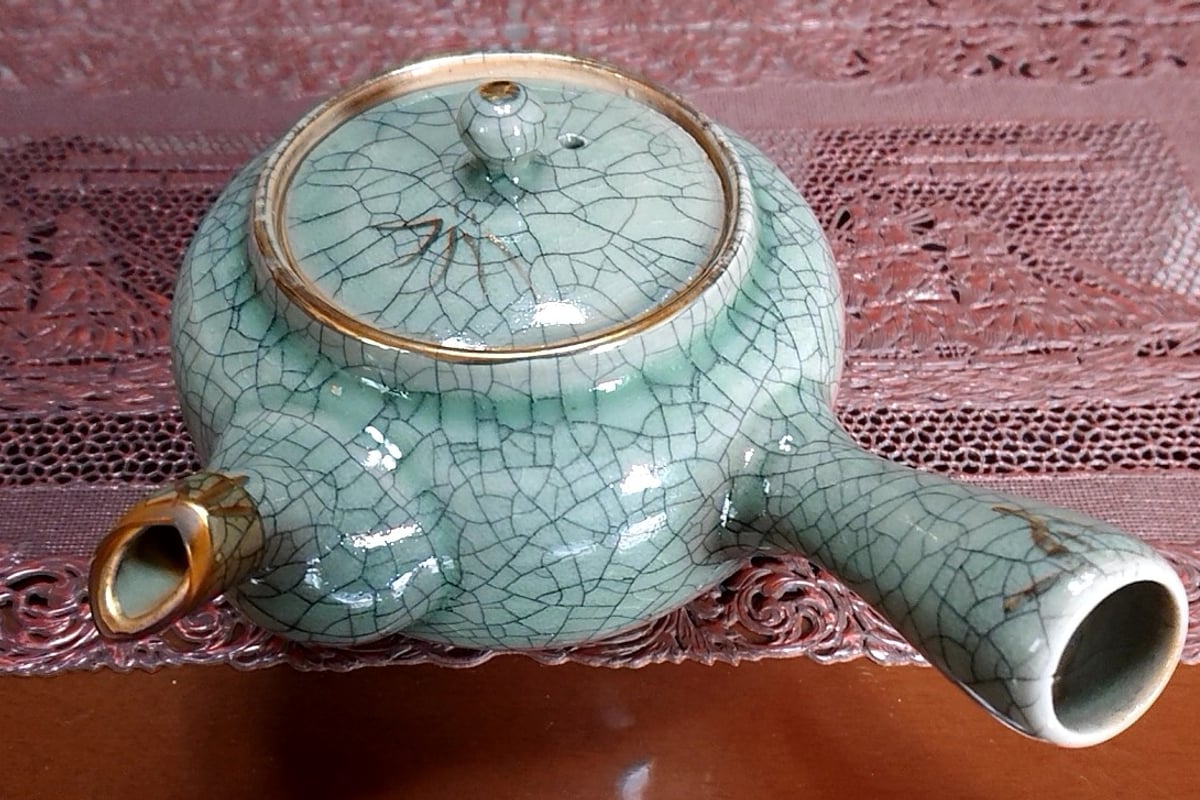
Obori-Soma ware is pottery once fired in the Obori district of Namie Town, Fukushima Prefecture, and is a Nationally Designated Traditional Craft. It is said to have begun in the Genroku era (1688-1704), when Hangai Kyūkan, a retainer of the Soma-Nakamura domain, discovered clay in Obori and had his servant Sama fire everyday wares from it; wheel-forming has been maintained consistently ever since. The ware is known for three features: 'aohibi,' a fine network of crackle running across the entire surface; 'hashiri-goma,' an auspicious design depicting the Soma domain's sacred horse in the brush style of the Kanō school; and 'nijū-yaki,' a double-walled construction that keeps hot liquid from cooling quickly while remaining comfortable to hold. However, following the 2011 Great East Japan Earthquake and the accident at Tokyo Electric Power Company's Fukushima Daiichi Nuclear Power Plant, the entire town of Namie, including the Obori district, became an evacuation zone, and all of the more than 20 kilns that had operated there were forced to evacuate outside the town. Today the kilns have relocated across the prefecture to places such as Nihonmatsu City, Fukushima City, and Koriyama City, and some have also revived operations at Michi-no-Eki Namie within Namie Town, carrying on the traditional craft.
Origin
Obori-Soma ware is said to have begun in the Genroku era (1688-1704), when Hangai Kyūkan, a retainer of the Soma-Nakamura domain, discovered high-quality clay in what is now the Obori district of Namie Town and had his servant Sama fire everyday wares from it. As the Soma-Nakamura domain protected and nurtured pottery-making as an industry, the Obori district grew into a major production center with more than 100 kilns by the end of the Edo period.
History
Production continued after the Meiji era, and after World War II, double-walled nijū-yaki wares became widely popular in the United States as 'double cups.' The craft received national Traditional Craft designation in 1978. However, following the Great East Japan Earthquake and the Fukushima Daiichi nuclear accident in March 2011, the entire town of Namie became an evacuation zone, scattering all of the kilns in the Obori district. Of the more than 20 kilns that existed before the disaster, about half have now resumed operations at new locations both within and outside Fukushima Prefecture.
Features
The most distinctive feature is 'aohibi (crackle),' a fine network of cracks arising from the difference in shrinkage rate between the glaze and the clay body. In addition, the 'hashiri-goma' design, depicting the Soma domain's sacred horse in the brush style of the Kanō school, has long been cherished as an auspicious motif. 'Nijū-yaki,' in which the inner and outer walls are thrown separately on the wheel and joined before firing, is also a technique unique to Obori-Soma ware, giving the vessel the practical benefit of not becoming too hot to hold even when filled with hot liquid.
Techniques
Aohibi (Blue Crackle)
A fine network of crackle that forms from the difference in shrinkage rate between the celadon glaze and the clay body. Cracks appear audibly as the piece is removed from the kiln, creating a distinctive look -- a decorative effect unique to Obori-Soma ware that is not found in Aizu lacquerware.
Hashiri-goma (Running Horse)
A painted design depicting the Soma domain's sacred horse in the brush style of the Kanō school. The dynamic figure of the running horse has long been cherished as a symbol of good fortune and has become the emblematic motif of Obori-Soma ware.
Nijū-yaki (Double-Walled Firing)
A technique in which the outer and inner walls of a vessel are thrown separately on the wheel and joined together before firing. This gives the piece thickness, making it comfortable to hold and slow to cool even when filled with hot liquid.
Materials Used
Production Process
- 1
Forming
The clay body is thrown on a potter's wheel; for double-walled pieces, the outer and inner walls are made separately.
- 2
Bisque Firing
The piece is fired once at 900-950°C to stabilize the clay body.
- 3
Underglaze Painting and Glazing
Designs such as the running horse are painted with cobalt underglaze pigment, and celadon glaze is applied.
- 4
Main Firing
The piece is fired at a high temperature of 1,250-1,300°C, and overglaze painting is added.
- 5
Ink Rubbing
Sumi ink is rubbed into the crackle of the finished piece and wiped off with a cloth to bring out the crackle pattern.
| Main Production Areas |
|
|---|
Artisans & Workshops
休閑窯(半谷窯)
A kiln run by Hangai Hidetatsu, the 15th-generation descendant of Hangai Kyūkan, the founder of Obori-Soma ware. After the disaster, the kiln was relocated from Namie Town to the family's home in Nihonmatsu City and reopened in September 2019, carrying on some 320 years of tradition.
Official site →いかりや窯
A kiln passed down through generations since the Edo period. After the disaster, it relocated to Shirakawa City and continued operating, producing not only the traditional aohibi crackle and running-horse designs but also contemporary tableware.
Official site →How to Buy
- Michi-no-Eki Namie 'Namie Techniques and Trades Hall'
- A display and sales corner run by the Obori-Soma Ware Cooperative Association inside Namie Town's roadside station. It is the only permanent outlet in Namie Town where visitors can view and purchase wares from multiple kilns in one place.Where to buy →PR
- Obori-Soma Ware Web Main Store
- An online store that introduces and sells works from various kilns together. Visitors can browse products by individual kiln.Where to buy →PR
Hands-on Experiences
なみえの技・なりわい館 陶芸体験教室
福島県双葉郡浪江町大字幾世橋字知命寺40(道の駅なみえ内)
Advance reservation required, held every Saturday. Hand-building starts at around 1,760 yen, and painting starts at around 1,320 yen (finished pieces are shipped later; shipping fee not included).
View details →