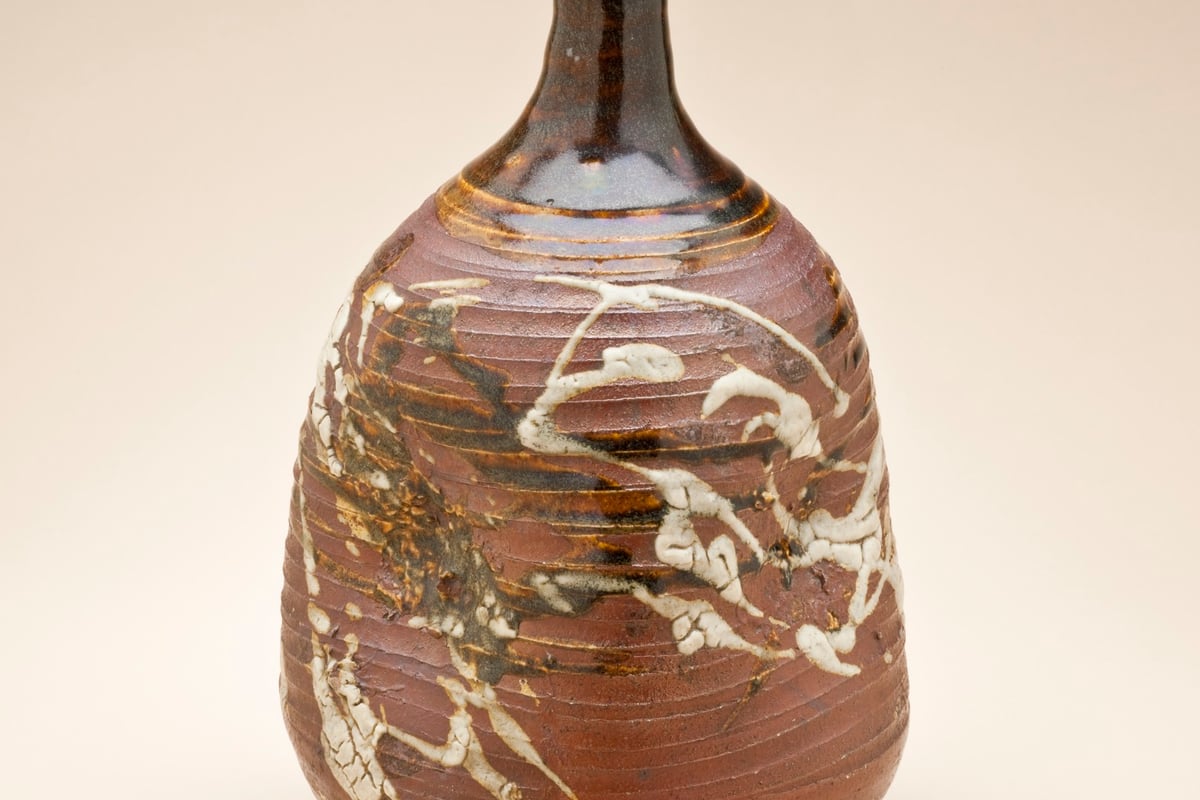
Image: Wikimedia Commons
Aizu-Hongo ware is ceramic ware produced in Aizumisato Town, Fukushima Prefecture, and is a Nationally Designated Traditional Craft with roughly 400 years of history as Tohoku's oldest kiln site. Its origins trace back to 1593, when Gamō Ujisato, lord of Aizuwakamatsu Castle, had roof tiles fired for the castle, and in 1645 full-scale pottery production began when Aizu domain lord Hoshina Masayuki invited the potter Mizuno Genzaemon from Seto, in Owari Province. Around 1800, Sato Ihee learned the technique for making porcelain in Arita, in Hizen Province, and brought it back, giving the region the rare distinction, unusual nationwide, of producing both pottery and porcelain in the same production area. Today, a dozen or so distinctive kilns are still scattered across the Hongo district, producing everything from everyday tableware to fine art pieces, including Ryumon-yaki, known for its flowing-glaze technique. Every year on the first Sunday of August, the 'Seto Ichi' pottery market begins before dawn, drawing many visitors from within and outside the prefecture in search of a good find, and has become a summer tradition in Aizu.
Origin
The origins of Aizu-Hongo ware are said to date to 1593, when Gamō Ujisato, lord of Aizuwakamatsu Castle, invited tile craftsmen from Harima Province to fire roof tiles during the castle's renovation. Full-scale ceramic production began in 1645, when Aizu domain lord Hoshina Masayuki invited the potter Mizuno Genzaemon, a native of Seto in Owari Province, and pottery production began using clay discovered in Hongo village.
History
Later, around 1800, the potter Sato Ihee secretly entered Arita in Hizen Province to learn the technique for making porcelain and brought it back, after which porcelain production also began in Aizu-Hongo. This established a system, rare even nationwide, of firing both pottery and porcelain in the same production area, and techniques have been passed down for more than 400 years as Tohoku's oldest kiln site. Starting with Ryumon-yaki, founded in 1900 (Meiji 33), new kilns have continued to join the production area into the modern era, and it continues to develop as a center of production.
Features
The greatest characteristic is that both pottery and porcelain are produced in the same production area, a rare example even nationwide. Pottery has a rustic, warm texture, while porcelain is distinguished by varied decoration such as blue-and-white designs painted in cobalt (sometsuke) and vividly colored overglaze enamels (iroe). Ryumon-yaki in particular is known for creating unique patterns using the 'nagashi-yu' (flowing glaze) technique, in which glaze is poured over the piece and melts and streams during firing.
Materials Used
Production Process
- 1
Clay Preparation and Forming
Clay and porcelain stone are refined, and the wheel or molds are used to shape the piece.
- 2
Bisque Firing
The piece is fired once at low temperature to stabilize the clay body.
- 3
Painting and Glazing
Patterns are added using cobalt-painted sometsuke or iroe overglaze enamels, and glaze is applied. For Ryumon-yaki, glaze is poured over the piece.
- 4
Main Firing
The piece is fired at high temperature in the kiln, completing the distinct character of the pottery or porcelain.
| Main Production Areas |
|
|---|
Artisans & Workshops
宗像窯
One of the oldest kilns in the Hongo district, said to have been founded in 1718. Its ancestors were missionaries of Munakata Taisha shrine in Fukuoka, and it hand-crafts each piece using Matoba clay taken from Mt. Hakuho and locally sourced natural ash.
Official site →流紋焼
Founded in 1900 (Meiji 33), the largest kiln in Aizu-Hongo ware. It is known for the 'nagashi-yu' (flowing glaze) technique, in which colorful glazes are poured over the piece and melt and flow at high temperature to create patterns.
Official site →How to Buy
- Aizu-Hongo Ceramics Hall
- A hub facility that gathers and displays works from kilns in the Hongo district for sale. Visitors can compare the characteristics of each kiln before purchasing.
- Aizu-Hongo Seto Ichi (Pottery Market)
- A pottery market held every year on the first Sunday of August, starting before dawn at 4 a.m. Kilns from within and outside the prefecture, including Aizu-Hongo ware producers, set up stalls, drawing around 30,000 visitors in search of a good find.
Hands-on Experiences
流紋焼 絵付け体験
福島県大沼郡会津美里町川原町1933
Reservation required, takes about 40 minutes. Prices start at around 850 yen for a teacup or plate, and around 900 yen for a coffee cup (shipping fee not included).
View details →