Image: Wikimedia Commons
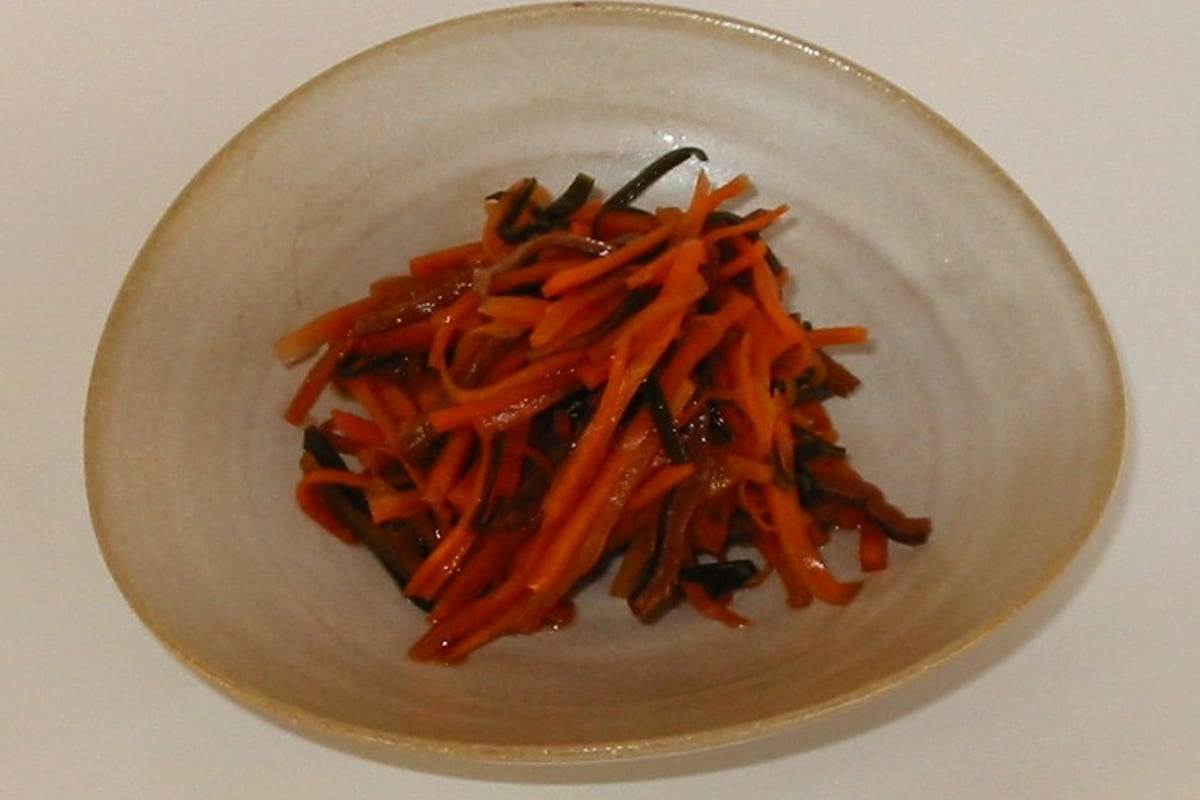
Ika Ninjin is a local dish from Fukushima Prefecture made by marinating thin strips of dried squid (surume-ika) and carrot in a sweet-savory sauce of soy sauce, sake, and mirin (or coarse sugar). In Fukushima, where heavy snow makes it hard to harvest vegetables in winter, this long-keeping preserved food has been made since long ago. Because surume can be written with characters meaning 'a long-lived woman,' making it an auspicious food, it has also become an essential New Year's dish, and households throughout the prefecture — not only in the Fukushima City area of the Kenpoku region but also in Aizu — still keep the custom of preparing a large batch at year's end to serve at the New Year's table. It is also being reappraised as a low-carbohydrate, low-fat preserved food, and today it is enjoyed year-round as a side dish and an accompaniment to sake, as well as being a popular souvenir. It is often compared to Hokkaido's matsumae-zuke, but its Fukushima character is said to lie in its simplicity — made with just squid and carrot, without kombu kelp.
Origin
Ika Ninjin is said to have been handed down in Fukushima Prefecture since the late Edo period, with the Kenpoku region centered on Fukushima City regarded as its main home. It is said to have originated as a home dish made only in winter, when snow shut the region off and other vegetables were scarce, by combining the long carrots (naga-ninjin) that come into season in winter with dried squid. Despite its humble combination of ingredients, each household has put its own touch into the seasoning and marinating method.
History
It has been made continuously in households for more than a hundred years, valued as a precious preserved food for the snowbound winter months. Because surume is considered an auspicious food, it eventually became established as a New Year's dish as well, appearing on New Year's tables not only in the Kenpoku region but throughout the prefecture, including Aizu. In recent years its recognition as a local specialty has grown, and it is now sold year-round in supermarket deli sections and souvenir shops.
Features
Its defining feature is the way the umami of the dried squid and the sweetness of the carrot slowly soak into the seasoned marinade. The flavor deepens the longer it is marinated — often several days — and its long shelf life makes it valued as a preserved food. Unlike Hokkaido's matsumae-zuke, which adds kombu kelp, Ika Ninjin is characterized by its simple composition of just squid and carrot, with each household adjusting the sweetness and soy sauce strength to taste.
Main Ingredients
Food Culture
It has been prepared in households as a preserved food to get through the deep-snow winter, and because it uses the auspicious surume, it has become an essential dish at New Year's. Even today, it appears on supermarket and deli shelves at year's end, making it a seasonal fixture. It is eaten as an everyday accompaniment to rice or sake, at home and at gatherings with coworkers alike.
How It Differs from Home Cooking
At home the process is simple — just marinating the ingredients in the seasoned liquid — but specialty shops and producers take great care with preparing the ingredients and the marinating time, bringing out the full umami of the dried squid. The fineness of the cut and the length of marinating also vary from shop to shop.
Famous Shops
会津天宝醸造
福島県会津若松市大町1-1-24
A miso brewery founded in 1871 (Meiji 4). It sells items with a flavor similar to Ika Ninjin, such as 'Ika Daikon' (squid and daikon), starting at around 400 yen.
View details →西野屋食品
A pickle maker specializing in producing and selling Ika Ninjin. Its online shop offers products such as 180g packs for mail order.
View details →| Ika Ninjin (vacuum-packed) | A classic souvenir item available year-round at station shops, roadside stations (michi-no-eki), and supermarket deli sections. Its long shelf life also makes it well suited for taking home outside the prefecture.Where to buy →PR |
|---|
FAQ
Q. How is it different from matsumae-zuke?
A. Hokkaido's matsumae-zuke typically adds kombu kelp and herring roe, whereas Ika Ninjin is characterized by its simple composition of just dried squid and carrot, giving it a more rustic, lighter flavor.