Image: Wikimedia Commons
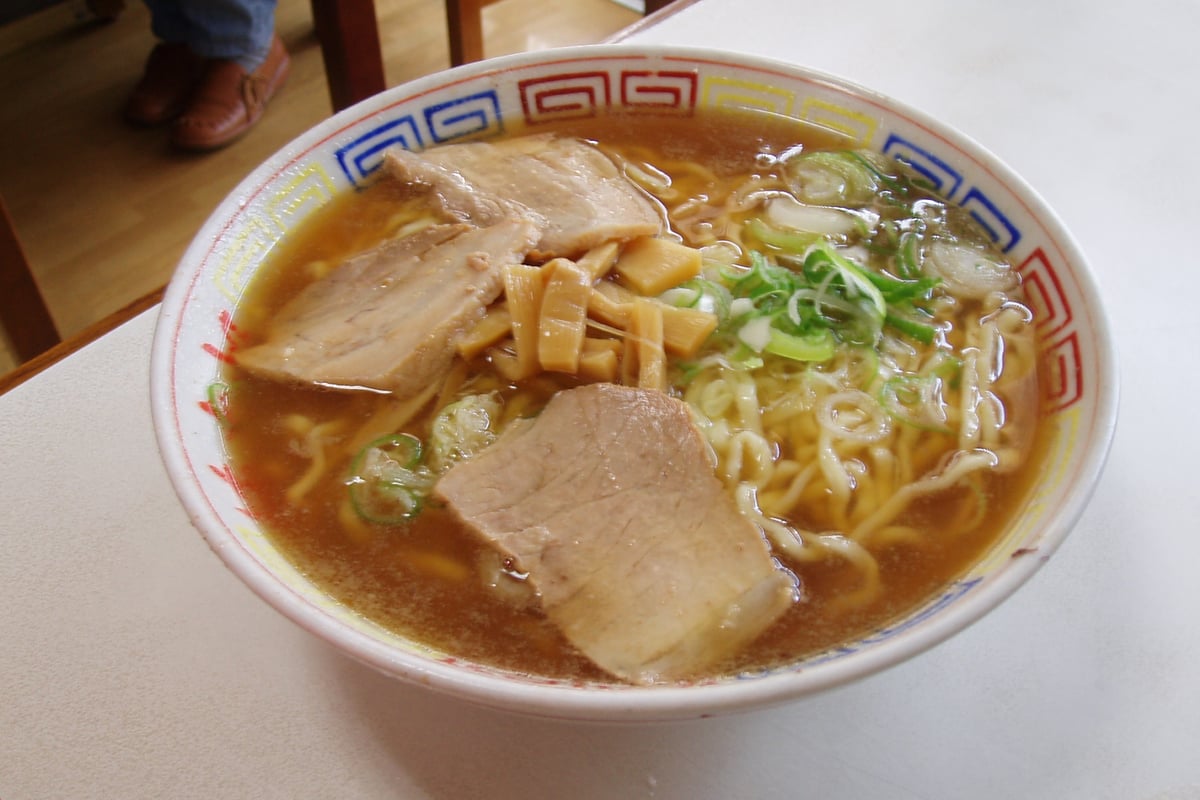
Kitakata Ramen is a local ramen that developed in Kitakata City, Fukushima Prefecture, and is sometimes counted, alongside Sapporo and Hakata, as one of Japan's Three Great Ramen. It is characterized by thick, flat, well-aged, high-hydration noodles with a strong, springy texture that pairs well with a clean pork bone and dried sardine-based soy sauce broth. Kitakata, known as a 'town of storehouses' lined with lacquerware workshops and sake breweries, has one of the highest densities of ramen shops per capita in Japan, and the custom of 'asa-ra' — eating ramen for breakfast — is deeply rooted among residents. It is said to have taken hold as a warming meal for factory workers coming off night shifts or returning from winter seasonal work, and tourists, too, can be seen visiting the city early in the morning just for asa-ra. Since gaining nationwide recognition through a television program in the late 1970s, it has continued to thrive as one of the city's leading tourism draws.
Origin
Kitakata Ramen is said to have originated in the late Taisho era (early-to-mid 1920s), when a young man named Pan Qinxing, who had come to Japan from China, began selling handmade 'Shina soba' (Chinese-style noodles) from a food stall in Kitakata City. His noodles, made by hand, earned a strong reputation, and shops later spread throughout the city through a system of branch shops (noren-wake), marking the starting point of Kitakata Ramen's growth into a distinct food culture. The practice of hand-making high-hydration noodles from that era already set it apart from ramen in other regions.
History
After the war, restaurants in the city learned the recipe, and local noodle makers refined it further, developing the distinctive style of noodles with a high water content used today. A television program in the late 1970s introduced the dish nationwide, sparking a boom and establishing it as a tourism resource for the town of storehouses. Shops belonging to the 'Kura no Machi Kitakata Roumenkai' (Kitakata Old Noodle Association) continue to carry on the flavor and technique today, though in recent years some long-established shops have closed due to a lack of successors, making it a challenge to secure the next generation of noodle makers.
Features
Its defining feature is thick, flat, well-aged, curly noodles made with a high water content. The broth is typically a clean soy sauce base combining pork bone with dried sardines and chicken, which pairs well with the springy texture of the noodles. The city has one of the highest numbers of ramen shops per capita in Japan, and part of the enjoyment is comparing shops, each with its own subtle differences in noodle thickness and broth blend. Toppings are simple — chashu pork, menma (fermented bamboo shoots), and green onion — with many shops relying on the balance between noodles and broth to stand out.
Main Ingredients
Food Culture
The custom of 'asa-ra' (morning ramen) took hold from the habit of warming up with a hot bowl after a factory night shift or a return from winter seasonal work, and today tourists, too, line up early in the morning for it. Locally, ramen is enjoyed as an everyday food any time of day, and taking visitors to a ramen shop has become a standard way of showing hospitality.
How It Differs from Home Cooking
When made at home, store-bought fresh noodles and soup bases are often used, but specialty shops make their high-hydration noodles fresh every day and simmer their broth slowly and carefully, resulting in a marked difference in the noodles' springiness and the broth's depth of flavor. The noodle thickness and water content are closely guarded secrets that vary from shop to shop.
Famous Shops
坂内食堂
福島県喜多方市細田7230
Founded in 1958. Famous for its 'niku soba' generously topped with chashu, priced at around 1,150 yen, alongside a simpler 'shina soba' at around 850 yen.
View details →食堂はせ川
福島県喜多方市関柴町
A popular shop known for its broth combining dried sardines and chicken. It has won the Ramen Walker Gold Award multiple years running, and lines form before opening.
FAQ
Q. What kind of custom is 'asa-ra'?
A. It is the local custom of Kitakata residents eating ramen for breakfast. It is said to have started as a warming meal after a factory night shift or a return from winter seasonal work, and today it has also become a draw for tourists.