Image: Wikimedia Commons
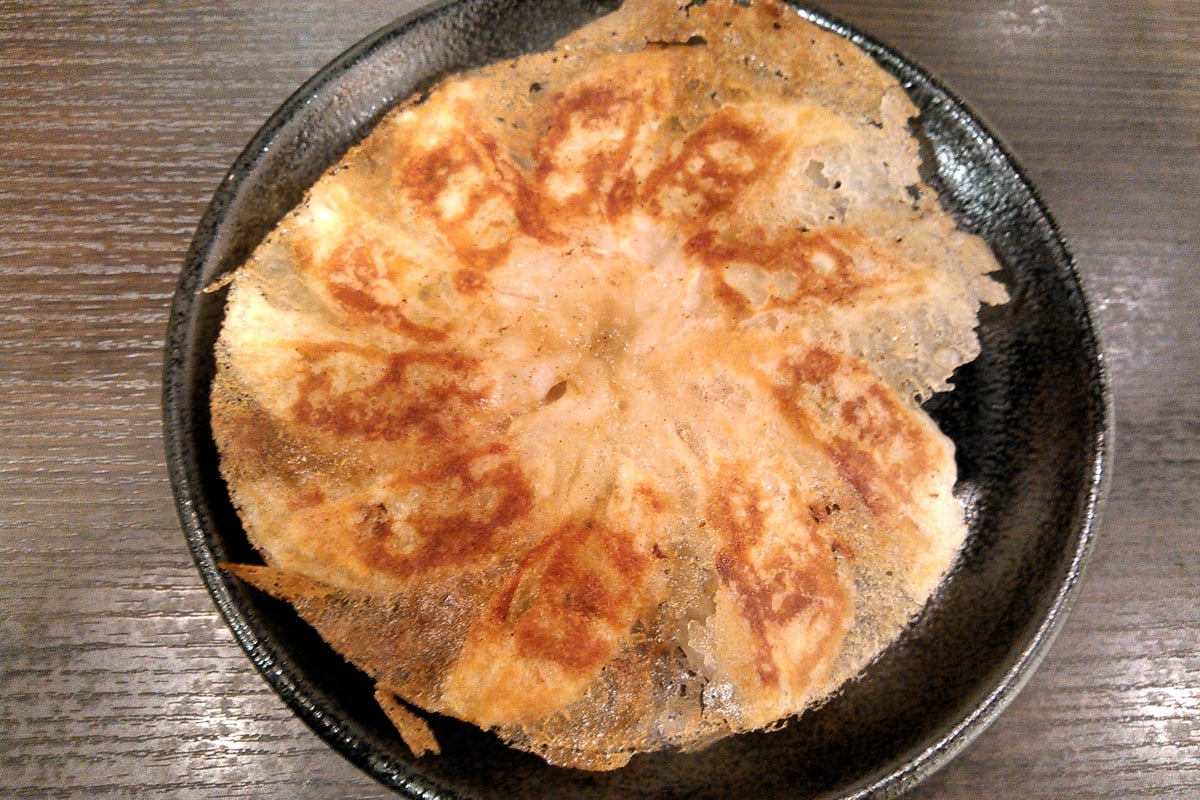
Enban Gyoza is a local specialty dish of Fukushima Prefecture in which 20 to 30 small dumplings are arranged edge to edge across an entire frying pan, then served on a plate in that same disc, or 'enban,' shape. It is said to have originated after the war, when repatriates returning from Manchuria began serving the style of gyoza they had learned there at food stalls and eateries, and it has been passed down ever since in restaurants and specialty shops around Fukushima City, where it originated, as well as in Koriyama City and elsewhere across the prefecture. Many shops take particular care with fillings generously packed with napa cabbage and with hand-stretched wrappers, and sharing a single plate among family or friends has become the established way to eat it. In 2024, it was certified as one of the Agency for Cultural Affairs' '100-Year Foods,' and it remains a beloved local soul food across generations. Alongside ramen and horse sashimi, it is counted as one of Fukushima Prefecture's leading B-grade gourmet dishes.
Origin
In the chaotic postwar period, people who had returned to Fukushima City from Manchuria began serving the style of gyoza they had learned there at food stalls and eateries, marking the dish's beginning. In an era of food scarcity, cooks needed to fry many dumplings at once on the limited griddles and woks available, and arranging them edge to edge in a circle to match the shape of the pan gave rise to the name 'Enban Gyoza' (disc gyoza).
History
Starting with 'Manpuku,' founded in 1953, restaurants that opened in the early postwar years began serving Enban Gyoza one after another in Fukushima City, and the dish has been carried on as a local flavor for roughly 70 years since. Today, shops belonging to the 'Fukushima Gyoza no Kai' (Fukushima Gyoza Association) lead efforts to pass on the tradition and promote it both within and outside the prefecture, and the style has also spread to eateries in neighboring cities such as Koriyama.
Features
Its defining feature is the style of arranging 20 to 30 small dumplings edge to edge in a frying pan, frying them all at once, and then flipping them straight onto a plate in their disc shape. Many shops take care with fillings generously packed with napa cabbage and with the chewy texture of hand-stretched wrappers, and sharing a single plate among several people is the standard way to enjoy it. Some shops hand-stretch the wrappers one by one only after an order is placed, so the freshly fried aroma stands out.
Main Ingredients
Food Culture
Since a single plate holds so many dumplings, sharing them among family and friends is the standard way to enjoy Enban Gyoza. The serving method itself — flipping the dumplings straight from the pan onto the plate — has become a beloved signature, and locally it is an indispensable part of everyday meals and gatherings.
How It Differs from Home Cooking
At home, dumplings are often fried a few at a time, but specialty shops fry 20 to 30 at once in a large pan, producing a crisp wrapper texture and the striking presentation of the disc shape. Many shops also make their wrappers in-house, giving them a thick, chewy texture that sets them apart from home-style gyoza.
Famous Shops
元祖円盤餃子 満腹
福島県福島市仲間町1-24
Founded in 1953, this long-established restaurant is regarded as the birthplace of Enban Gyoza. Its handmade gyoza, generously filled with napa cabbage, comes as a plate of 30 for around 1,980 yen.
餃子の店 山女
福島県福島市南沢又字河原前73-52
Founded in 1964. A long-established shop that hand-stretches its wrappers, offering a plate of 20 for around 1,650 yen. About a 5-minute walk from the east exit of JR Fukushima Station.
FAQ
Q. Which city did Enban Gyoza originate in?
A. It is said to have originated in Fukushima City. Within Fukushima Prefecture, it is also served at eateries in other cities such as Koriyama City, and it is enjoyed as a local specialty dish across the whole prefecture.