Image: Wikimedia Commons
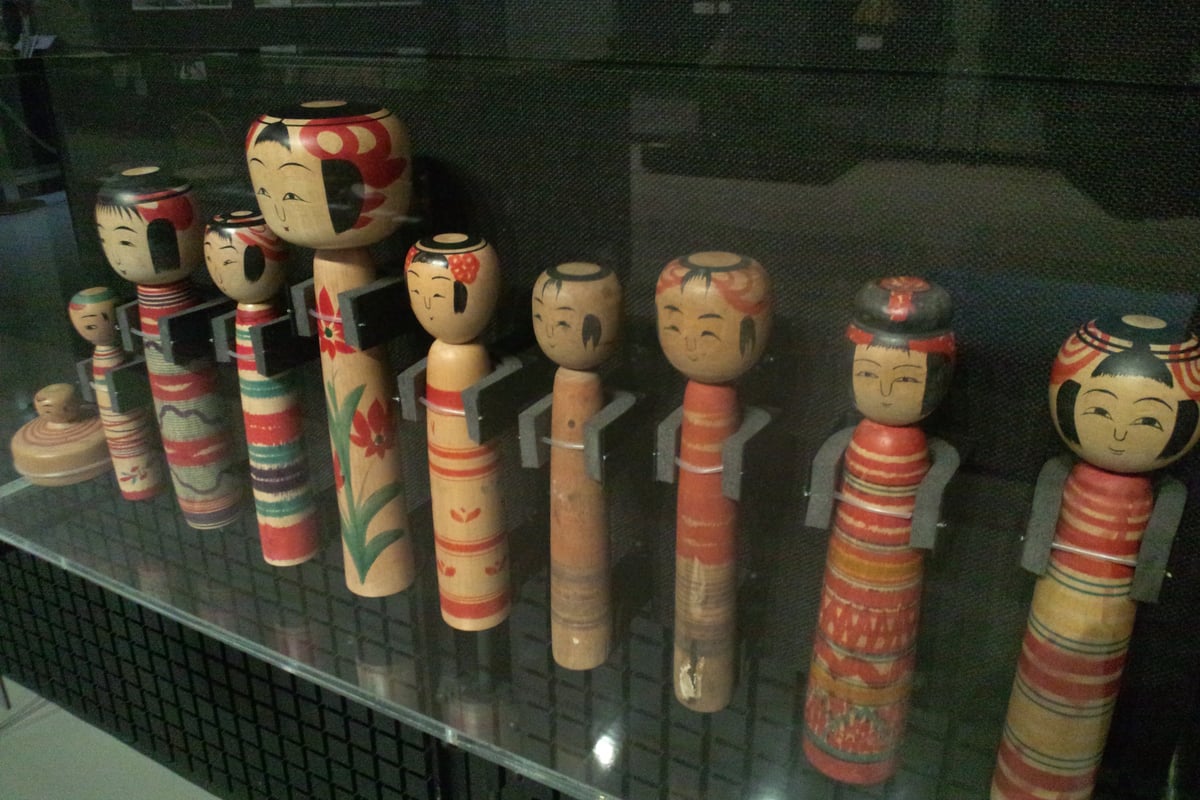
Tsuchiyu Kokeshi are traditional kokeshi dolls nurtured in Tsuchiyu Onsen in Fukushima City, and together with the Naruko and Togatta lineages of Miyagi Prefecture, they are counted among the three major birthplaces of kokeshi in the Tohoku region. They are said to have emerged around 300 years ago from the handiwork of kijishi (woodworking artisans) who made wooden vessels and tools during the Edo period, and since then they have been cherished as souvenirs for hot spring visitors and as children's toys. Compared with dolls from other regions, Tsuchiyu Kokeshi have a distinctively feminine look, with a small head and slender body. The head is painted with a black snake-eye ring pattern, and the face is framed by long bangs and a red hair ornament called 'kase' on either side, with whale-like eyes, a drooping nose, and a small pursed mouth giving them a simple, gentle expression. The head is fitted into the body using a socket-joint construction, and turning the head makes a distinctive squeaking sound - another charming feature unique to Tsuchiyu Kokeshi. Today, craftsmen still keep workshops in Tsuchiyu Onsen, continuing to turn each doll by hand.
Origin
Tsuchiyu Onsen is a hot spring town in western Fukushima City said to have a history of over 1,000 years, nestled along the Arakawa Gorge at the foot of the Azuma mountain range. Tsuchiyu Kokeshi are said to have emerged around 300 years ago from the hands of kijishi (woodworking artisans) who turned wooden vessels and tools in this area, and together with the Naruko and Togatta lineages of Miyagi Prefecture, they are counted among the three major birthplaces of kokeshi in the Tohoku region. They are said to have originated as souvenirs for hot spring visitors and as children's toys.
History
From the late Edo period through the Meiji, Taisho, and Showa eras, families of kijishi in Tsuchiyu Onsen passed their techniques down through the generations, developing a distinctive style. After the war, through changes in hot spring culture, the kokeshi boom, and growing interest in collecting folk crafts, Tsuchiyu Kokeshi also became established as a tourist souvenir. Craftsmen still keep workshops in the hot spring town today, sharing the appeal of Tsuchiyu Kokeshi with visitors through painting experiences.
Features
Tsuchiyu Kokeshi are characterized by a small head and slender body compared with other regional styles, giving them a gentle, feminine appearance. The head is painted with a black snake-eye ring pattern, and long bangs along with a red hair ornament called 'kase' are drawn on either side of the face, while whale-like eyes, a drooping nose, and a small pursed mouth create a simple expression. The head is tightly fitted into the body using a socket-joint construction, and the squeaking sound made when the head is turned is another charm unique to Tsuchiyu Kokeshi.
Materials Used
Production Process
- 1
Wood Selection and Drying
Logs are cut into rounds and thoroughly dried to the dimensions needed for kokeshi.
- 2
Lathe Turning
The wood is mounted on a lathe, and the head and body are each shaped and finished with cutting tools.
- 3
Socket Fitting
The head is tightly fitted into the body using a socket-joint construction, finished so that turning the head makes a sound.
- 4
Painting
The snake-eye ring pattern, bangs, the red hair ornament called 'kase,' and the facial expression are painted using a brush and dye.
| Main Production Areas |
|
|---|
Artisans & Workshops
陳野原幸紀(こけし工人)
Born in Tsuchiyu Onsen. After learning woodworking from his older brother, he entered the world of kokeshi making and serves as head of the Tsuchiyu Onsen Kokeshi Craftsmen's Association. He is one of the artisans carrying on the tradition of Tsuchiyu Kokeshi today.
How to Buy
- まつや物産店
- A souvenir shop in Tsuchiyu Onsen displaying and selling Tsuchiyu Kokeshi along with other local folk crafts and souvenirs. It also offers a painting experience from around 800 yen.Where to buy →PR
- 土湯こけしオンラインストア
- An online shop where traditional kokeshi made by Tsuchiyu Onsen craftsmen can be purchased over the internet.Where to buy →PR
Hands-on Experiences
土湯温泉観光交流センター 湯夢舞台
福島県福島市土湯温泉町字坂ノ上27-3
Offers a kokeshi painting experience from around 970 yen. Groups of fewer than 10 people can join without a reservation.
View details →