Image: Wikimedia Commons
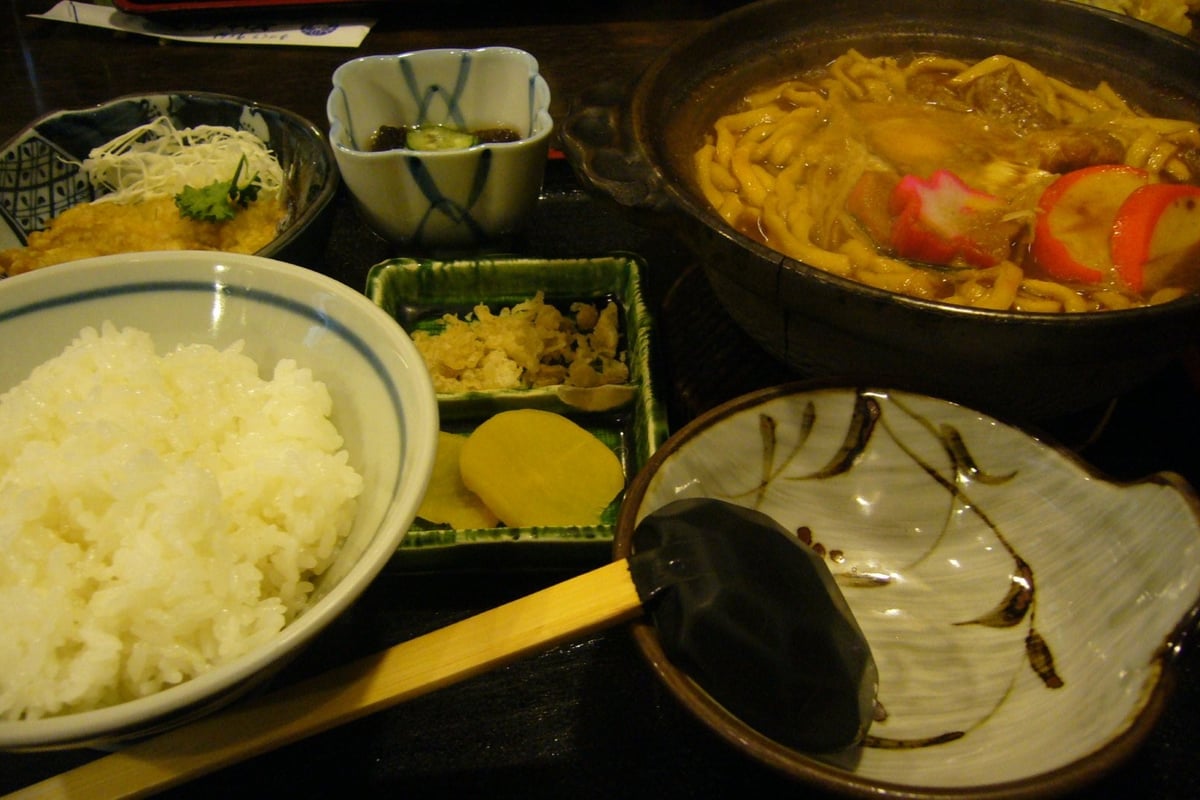
Miso Nikomi Udon is a Nagoya specialty in which thick, firm udon noodles are simmered bubbling hot in a single-serving earthenware pot filled with a rich miso broth made from bonito dashi and Hatcho miso. Because the raw noodles are made only from flour and water, with no salt, and go into the pot without being pre-boiled, they keep a notably firm, chewy bite even after simmering; chicken, fried tofu, kamaboko fish cake, egg, and green onion are typically added as toppings. Building on the simple miso-based udon dishes found across Japan since the Edo period, Yamamotoya, founded in Osu, Nagoya, is said to have established the current style of simmering a single serving per earthenware pot during the Taisho era (1912-1926). Today the shop's lineage has split into two separate businesses, Yamamotoya Sohonke and Yamamotoya Honten, both cherished as leading specialists in Nagoya-style miso nikomi udon.
Origin
Dishes of noodles simmered in a miso-based broth are thought to have originated as simple home cooking found across Japan since the Edo period, but the current style of simmering thick, firm raw noodles directly in a single-serving earthenware pot is said to have been established during the Taisho era by Yamamotoya, a shop in Osu, Nagoya.
History
Yamamotoya was founded by Manyoshi Shimamoto and his wife Kinu, and in 1925 the second generation, Shuichi and Yukie Machida, took over the shop in Osu, in Nagoya's Naka Ward. The Machidas' four children later each developed the business further, splitting it into the two lineages of Yamamotoya Sohonke and Yamamotoya Honten, both of which became known as Nagoya specialties.
Features
The defining feature is that raw noodles made only from flour and water, with no salt, go straight into the earthenware pot and are simmered in a rich broth combining bonito dashi with Hatcho miso (sometimes blended with white miso). The noodles keep a firm bite and resist going soft even after simmering, and the dish is also known for the distinctive custom of eating with the pot's own lid used as a small plate.
Main Ingredients
Food Culture
A noodle dish that symbolizes Aichi's soybean miso culture, epitomized by Hatcho miso. It is typically served in its own earthenware pot, and the distinctive custom of using the lid as a small plate has become firmly established. Within Aichi Prefecture it is also widely made as a home-cooked dish.
How It Differs from Home Cooking
At home it is often made simply with store-bought udon and miso, whereas specialty shops use dedicated salt-free raw noodles simmered directly in the pot and slowly develop a rich broth based on Hatcho miso.
Famous Shops
山本屋総本家 本家
愛知県名古屋市中区栄3丁目12番19号
Founded in 1925. Known for a broth blending Hatcho miso with white miso. Miso nikomi udon priced in the low thousands of yen and up.
View details →山本屋本店 大門本店
愛知県名古屋市中村区賑町35番地
A long-established shop carrying on the other Yamamotoya lineage. Miso nikomi udon priced in the low thousands of yen and up.
View details →FAQ
Q. What is the difference between Yamamotoya Sohonke and Yamamotoya Honten?
A. Both trace back to the Yamamotoya founded in the Taisho era, but because the founding family's children each developed the business separately, the shops are now run as two separate companies.