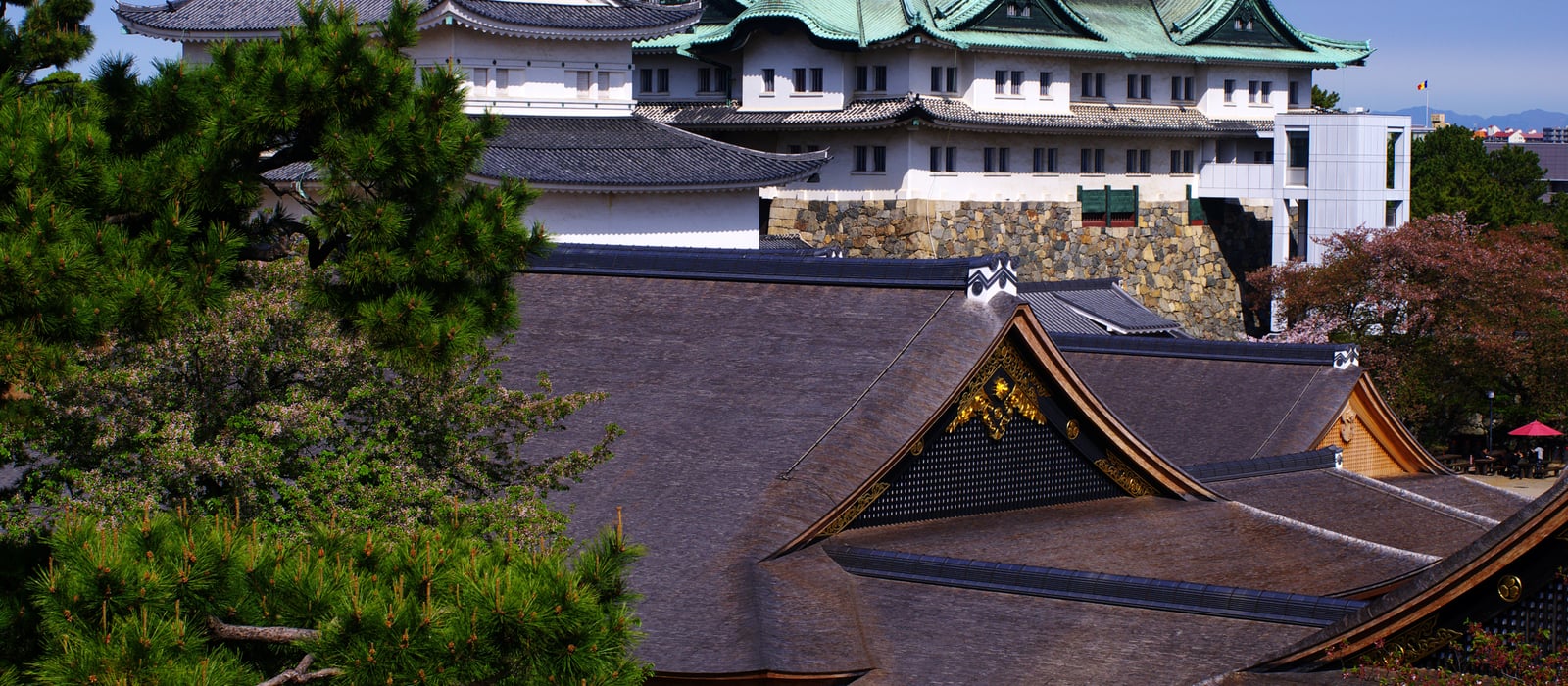
 Image: Wikimedia Commons
Aichi Prefecture
Home to Tokoname and Seto — two of Japan's Six Ancient Kilns — this region carries on a rich tradition of division-of-labor craftsmanship rooted in its castle-town history, including Arimatsu-Narumi Shibori tie-dyeing, Owari Shippo cloisonne ware, and Nagoya butsudan Buddhist altars and Owari butsugu altar fittings. Centered on Nagoya, which flourished as the castle town of the Owari Tokugawa family, one of the three principal Tokugawa branch houses, the area is nationally known for its rich, distinctive food culture called Nagoya meshi (Nagoya's local specialty cuisine): dishes built on soybean miso (Hatcho miso), such as Misokatsu and miso nikomi udon, alongside hitsumabushi, tebasaki (chicken wings), and kishimen (flat wheat noodles). The region's own coffee-shop culture centered on the 'morning service,' along with sweets such as uiro and Ogura Toast, are also local specialties. In the Mikawa region, a long tradition of handcraft dating back to the Edo period runs deep, seen in centers such as Toyohashi, known for calligraphy brushes, and Mikawa cotton weaving.
Aichi's Traditional Crafts
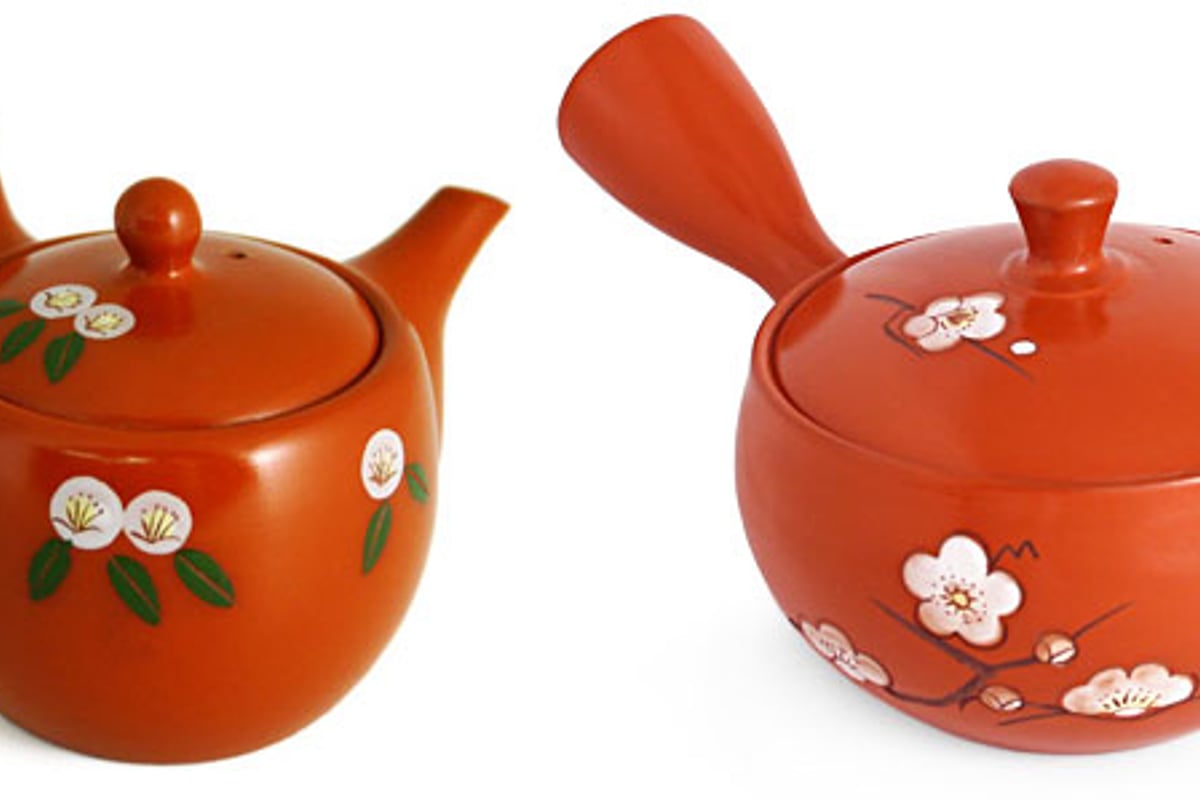
Tokoname-yaki
Tokoname-yaki
Tokoname-yaki is a stoneware tradition centered on Tokoname City on the Chita Peninsula in Aichi Prefecture, counted among 'Japan's Six Ancient Kilns' alongside Echizen-yaki, Shigaraki-yaki, Tamba Tachikui-yaki, Bizen-yaki, and Seto-yaki. Its origins trace back to around the 12th century, at the end of the Heian period, when climbing kilns dug into hillsides fired 'Old Tokoname' wares such as yamajawan bowls and sanshin-tsubo jars, and Tokoname grew into the largest production center among the Six Ancient Kilns. In 1835, during the late Edo period, the potter Koie Hokyu completed a noborigama climbing kiln, and in the 1850s the region's signature red-clay ware, shudei-yaki, was born. From the Meiji era onward, Tokoname developed into a major center for industrial ceramics such as clay pipes, sanitary ware, and tiles, and today it produces everything from shudei teapots made with iron-rich clay to tea bowls, flower vases, and beckoning-cat figurines. It was designated a national Traditional Craft in 1976.
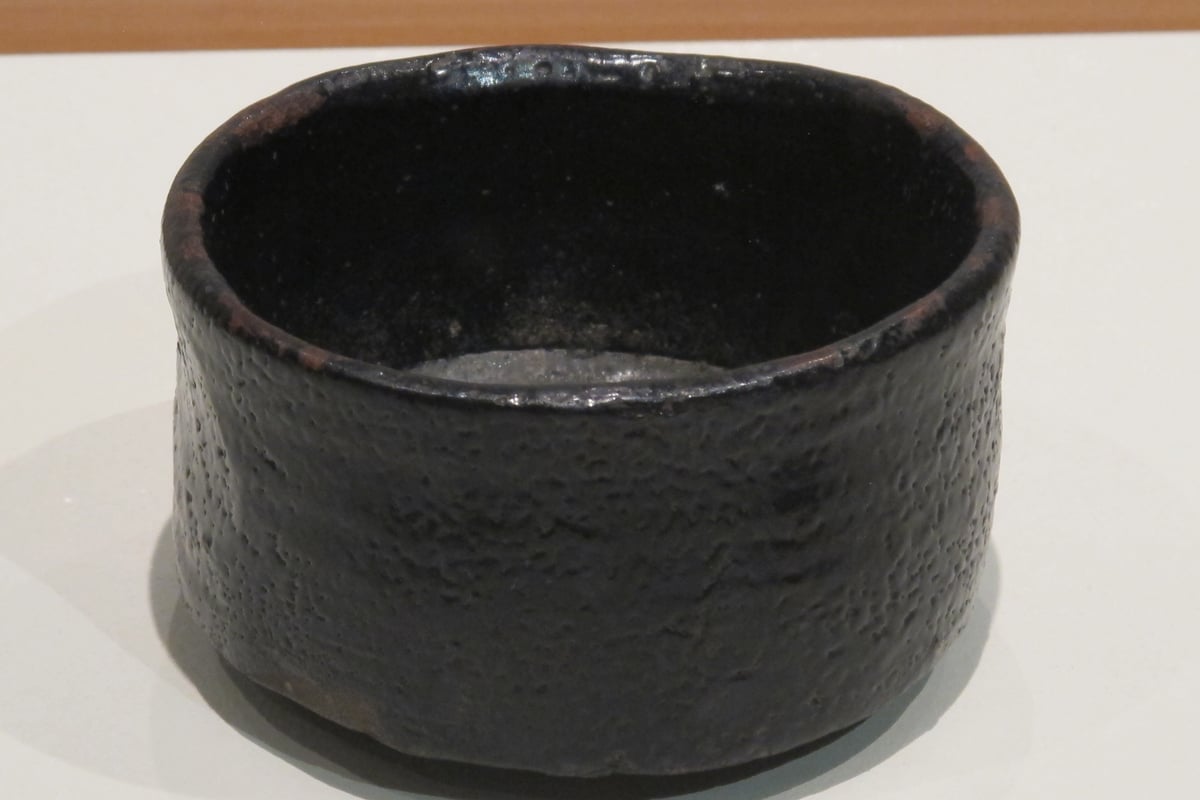
Seto-yaki
Seto-yaki
Seto-yaki is a general term for the ceramics produced around Seto City in Aichi Prefecture, and together with Tokoname-yaki it is counted among Japan's Six Ancient Kilns. Its origins trace back to the late 5th century, to the production of sue ware at the Sanage kilns in what is now the Higashiyama hills of Nagoya City, and by the end of the 12th century Seto had begun producing 'Old Seto' ware - the only Japanese region to continue firing glazed pottery throughout the medieval period. In the Bunka era of the late Edo period (1804-1818), Kato Tamikichi introduced porcelain-making techniques from Hizen Arita, and sometsuke porcelain, painted with cobalt pigment, developed from there; from then on, traditional 'hongyo-yaki' pottery and 'sometsuke-yaki' porcelain were produced side by side. Blessed with high-quality kibushi and gairome clays, Seto-yaki is known for its white, low-iron body, and its products range from everyday tableware to fine art pieces. It is also the origin of 'setomono,' the word used across Japan to mean pottery in general, and was certified as a Japan Heritage site in 2017. Nationally designated Traditional Crafts include Akazu-yaki (1977) and Seto Sometsuke-yaki (1997).

Arimatsu-Narumi Shibori
Arimatsu-Narumi Shibori
Arimatsu-Narumi Shibori is a general term for the tie-dyeing tradition passed down for about 400 years in the Arimatsu and Narumi districts of Midori Ward, Nagoya City. It is said to have begun around 1608, in the Keicho era of the early Edo period, when Owari Domain laid out the town of Arimatsu as newly reclaimed land along the Tokaido road, and Takeda Shokuro, one of the area's first settlers, began selling tie-dyed hand towels made of Mikawa cotton to travelers. Techniques developed further with the invention of shikoro-shibori in the Kanbun era, and in 1781 Owari Domain granted merchants in Arimatsu an exclusive right to produce shibori, allowing it to grow into a major industry. Techniques such as mame-shibori, Miura-shibori, arashi-shibori, and sekka-shibori proliferated, with over 100 distinct techniques developed at the tradition's peak, more than 70 of which are still practiced today. In 1975 it became the first Traditional Craft in Aichi Prefecture to receive national designation. In recent years, its use has expanded beyond kimono, with new forms of expression including collaborations with overseas brands.

Nagoya Yuzen
Nagoya Yuzen
Nagoya Yuzen is a dyed kimono textile produced mainly around Nagoya City in Aichi Prefecture. In contrast to the vivid, colorful palette of Kyo Yuzen, it is known for its subdued, tasteful tones. Its origins trace back to the 1730s in the early Edo period, when Tokugawa Muneharu, lord of the Owari domain, pursued an aggressive policy of prosperity that drew many Yuzen dyers back and forth between Kyoto, Edo, and Owari, bringing the technique to the region. After Muneharu's downfall, austerity edicts were imposed, refining the style toward restrained, monochromatic gradations. By the late Edo period, the production base for stencil-dyed 'kata-yuzen' had become established, and in the Taisho era, 'kuro-montsuki-zome' - dyeing that leaves family crests white against a black ground - was added. Today, the term Nagoya Yuzen collectively refers to three techniques: hand-painted yuzen (tegaki-yuzen), stencil yuzen (kata-yuzen), and black crest dyeing (kuro-montsuki-zome). It was designated a national Traditional Craft in 1983.
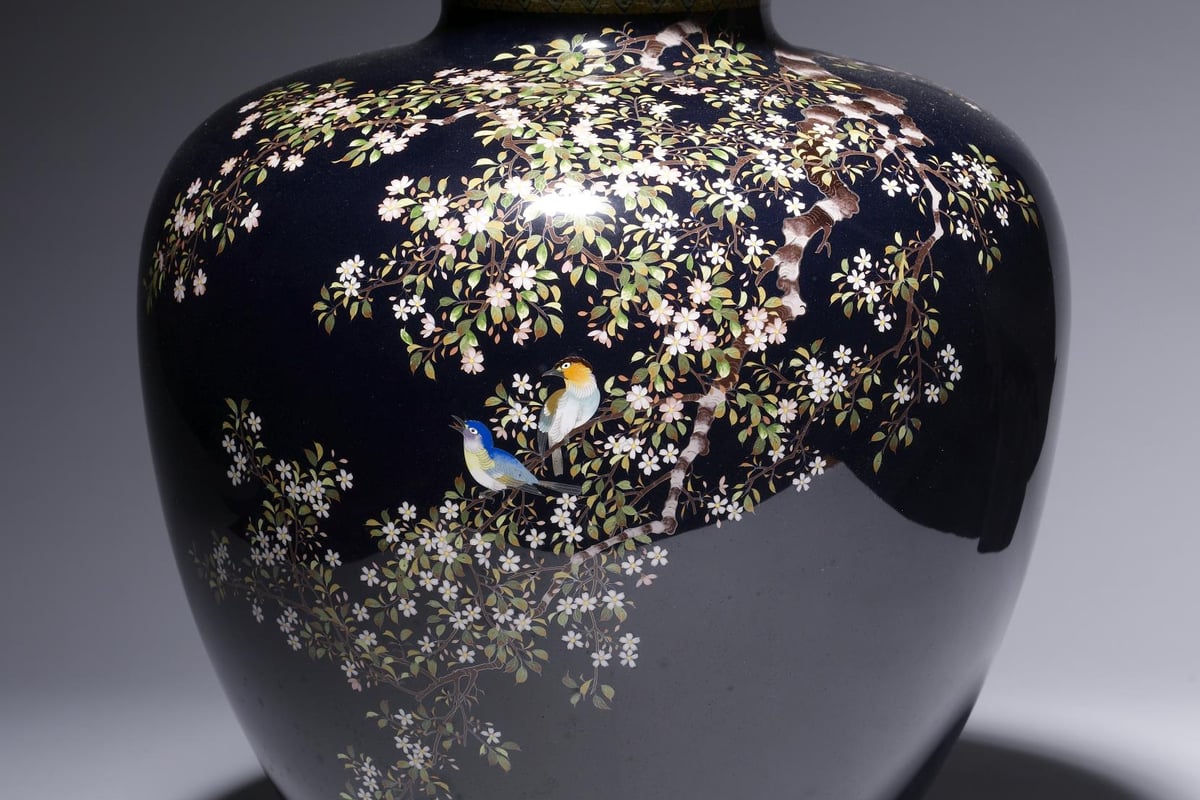
Owari Shippo
Owari Shippo
Owari Shippo is a craft produced mainly around Ama City (formerly Shippo Town) in Aichi Prefecture, in which a glass-like glaze is fired onto a metal base. Its origins trace back to the Tenpo era (1830-1844) in the late Edo period, when Kaji Tsunekichi of Owari Province studied and refined a production method based on a cloisonne dish that had arrived on a Dutch ship. Its signature technique, yusen shippo (wired cloisonne), involves standing thin silver wire along the outlines of a design on a copper or silver base and firing on glaze, producing intricate depictions of flowers, birds, and landscapes. After being exhibited at the 1867 Paris World's Fair, it gained worldwide recognition, and during the Meiji era it also developed as an export craft. Today, vases, framed panels, and accessories are still produced mainly in the Shippo district of Ama City, and it was designated a national Traditional Craft in 1995.
Owari Butsugu
Owari Butsugu
Owari Butsugu is the collective name for Buddhist altar fittings produced mainly around Osu, a temple town in the southern part of Nagoya City. It is characterized by the deep luster of many layers of lacquer applied over a wooden base, lavish decoration with gold leaf and gold powder, and finely crafted ornamental metal fittings (kazari-kanagu). Its origins trace back to the construction of Nagoya Castle in 1609, when the temple carpenters who built the castle town's 'Minami-deramachi' (southern temple district) later turned to making Buddhist fittings. In the late Edo period, the craft absorbed the techniques of ornamental metal fittings, which had been a side occupation for lower-ranking samurai, and developed under a sophisticated division of labor - woodworking, carving, lacquering, gold leaf application, and metal fittings - using fine materials such as Kiso cypress. From the Meiji era onward, a distribution network centered on wholesalers took shape, and with the Owari region serving as a transportation hub, Owari Butsugu came to be supplied widely to temples and households across the country. Today, more than 1,000 types of Buddhist fittings are still produced according to sect and use, characterized by forms that combine function and ornamentation, such as altar platforms (shumidan), incense burners, candlesticks, and ring lanterns (rinto). It was designated a national Traditional Craft in 2017.
Nagoya Kiri-tansu (Paulownia Wood Chests)
Nagoya Kiri-tansu
Nagoya Kiri-tansu is the general term for chests of drawers and other furniture made entirely of paulownia wood (kiri) that developed in the castle town of Nagoya. Its origins trace back roughly 400 years to the construction of Nagoya Castle, when carpenters gathered from across the country and settled around the Fukuromachi and Osu districts of the castle town, going on to make chests and long chests (nagamochi). The production area was further boosted by the abundant high-quality paulownia timber available from the nearby Hida region (Gifu Prefecture). The craft involves more than 130 processes -- from timber selection and cutting to correcting warping, shaping, decorating, and fitting metal hardware -- and its defining feature is that a single craftsperson handles the entire process from start to finish. Compared with kiri-tansu from other production areas, Nagoya Kiri-tansu is built wider, and nails are made from hiba cypress or an equivalent material. The natural humidity-regulating properties of paulownia wood keep out moisture and make the furniture highly resistant to fire and heat, with little warping -- qualities that have long made it prized as high-grade furniture. It was designated a Traditional Craft (designated by the Minister of Economy, Trade and Industry) on June 22, 1981.
Nagoya Butsudan (Nagoya Buddhist Altars)
Nagoya Butsudan
Nagoya Butsudan is the general term for Buddhist altars developed in and around Nagoya City, characterized by a raised base structure known as 'makuri' and, representatively, by the lavishly decorated miya-den style known as 'kuden-gobo-zukuri.' The raised base is said to reflect the wisdom of daily life, protecting the altar from flooding by the Kiso Three Rivers. Its origins are said to trace back to 1695 (Genroku 8), when Takagi Niemon founded the Buddhist altar specialty shop 'Hiroya.' Since then, a single altar has been built through the division of labor among specialized craftsmen known as the 'eight trades' -- kijishi (woodworkers), shogonshi (ornamentation specialists), chokokushi (carvers), kazarikanagushi (metal fitting makers), nushishi (lacquerers), makieshi (maki-e artists), hakuokishi (gold leaf appliers), and shikumishi (assemblers). High-grade woods such as zelkova, cypress, and sandalwood are used, and skilled techniques are applied at every stage, from the wood base to lacquering, gold leafing, and maki-e. It was designated a Traditional Craft (designated by the Minister of Economy, Trade and Industry) in 1976.
Toyohashi Fude (Toyohashi Writing Brushes)
Toyohashi Fude
Toyohashi Fude are calligraphy brushes made primarily in Toyohashi City, Aichi Prefecture, along with Tahara City and Toyokawa City, with hundreds of varieties produced for calligraphy as well as Japanese painting and cosmetic use. Its origins are said to trace back to 1804 (Bunka 1), when Suzuki Jinzaemon was invited from Kyoto to the Yoshida domain (present-day Toyohashi) and introduced the craft of brush-making. Its defining feature is a unique technique called 'nerimaze,' in which animal hair such as raccoon dog and weasel fur is softened with water and blended together, skillfully combining hair of different types, thicknesses, and lengths to achieve a smooth writing feel and excellent ink retention and release. About 36 processes -- from selecting and kneading the hair to cutting, blending, mounting, finishing, and engraving the maker's name -- are all done by hand. In production volume it ranks second nationwide after Kumano Fude (Hiroshima Prefecture), but as a production area for high-grade brushes for calligraphers it holds one of the leading positions in Japan, with roughly 1.8 million brushes distributed nationwide each year. It was designated a Traditional Craft (designated by the Minister of Economy, Trade and Industry) in 1976.
Mikawa Momen (Mikawa Cotton Textiles)
Mikawa Momen
Mikawa Momen is the general term for cotton textiles that have long been grown and produced in the Mikawa region of eastern Aichi Prefecture (around Nishio City, Gamagori City, and Toyokawa City). According to tradition, cotton cultivation in Japan began in 799 (Enryaku 18), when a person from Konron (said to have been Indian) drifted ashore and introduced cotton seeds, in a place identified as Hazu District, Mikawa Province (present-day Nishio City). The earliest documentary reference dates to 1510 (Eisho 7), when the record 'Eisho-nenchuki' of Kofuku-ji Temple's Daijo-in notes that 'Mikawa momen' was paid as a tax tribute. During the Edo period, cotton growing and cotton weaving flourished throughout the Mikawa region, and the textiles were shipped to Edo as one of the 'three white products' (sanpaku momen). From the Meiji era onward, the industry developed by adopting Western spinning and weaving technology, and it became known nationwide under the brand names 'Mikawa Momen' and 'Mikawa-jima.' Products include 'Mikawa-jima,' known for its distinctive vertical stripes and pale indigo color, and multi-layered woven gauze prized for its warmth and absorbency. It was registered as a Regional Collective Trademark in 2007.
Aichi's Local Food
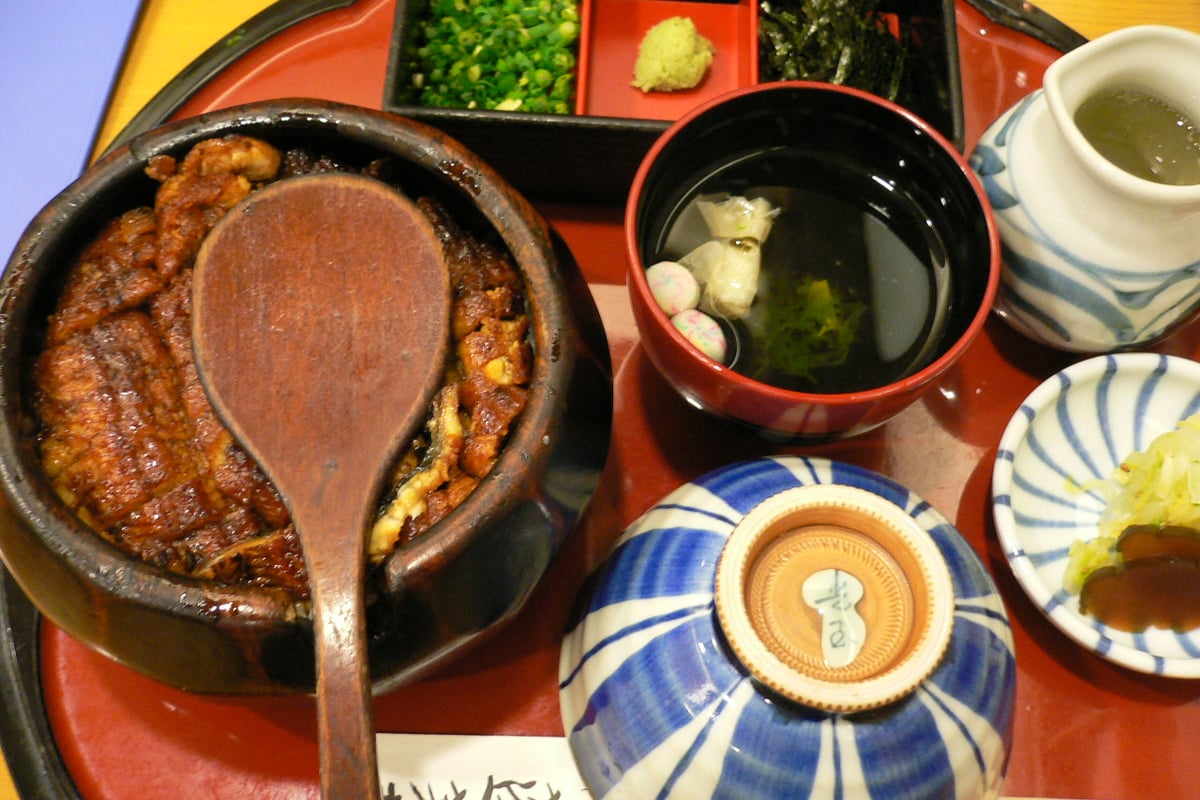
Hitsumabushi (Nagoya-Style Chopped Eel Rice)
Hitsumabushi
Hitsumabushi is a local dish that originated in Nagoya City, Aichi Prefecture, in which finely chopped grilled eel (unagi kabayaki) is mixed into white rice and served in an ohitsu (a wooden rice tub). Its greatest appeal is that a single serving can be enjoyed in several different ways: the first bowl is savored plain to taste the eel itself, the second is topped with condiments, the third is turned into a chazuke-style dish with dashi or tea poured over it, and the fourth is eaten however one likes. It is said to have been devised in the Meiji era by Atsuta Horaiken in Atsuta Ward, Nagoya City, which began using wooden ohitsu instead of ceramic bowls to prevent breakage during deliveries. Ibasho, in Nishiki 3-chome, also claims to be its birthplace, and the two shops differ on when the dish was actually established. The hiragana name 'hitsumabushi' itself is a registered trademark of Atsuta Horaiken, and today it is widely loved by tourists as one of Nagoya's signature local dishes.
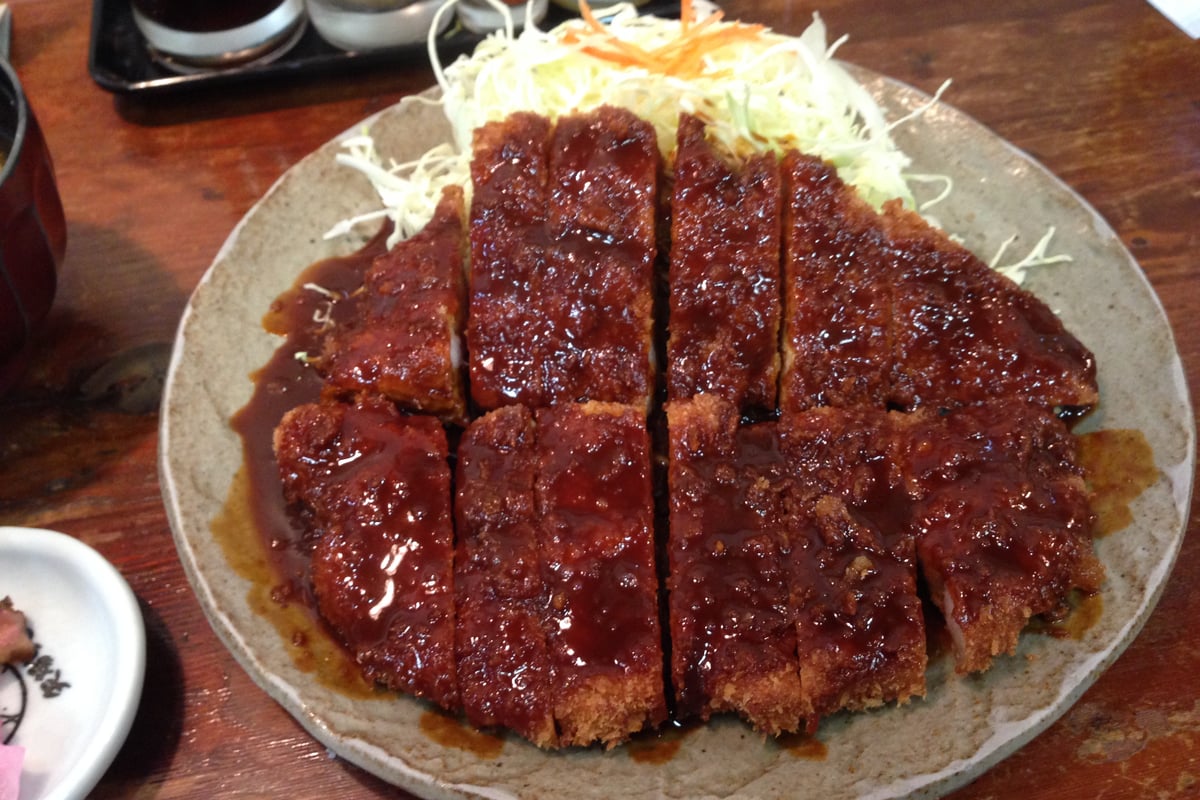
Misokatsu (Miso-Glazed Pork Cutlet)
Misokatsu
Misokatsu is a signature local dish of Nagoya in which a pork tonkatsu (breaded, deep-fried pork cutlet) is topped with a rich, slightly sweet miso sauce based on Hatcho miso. Aichi Prefecture has had a deeply rooted food culture centered on soybean miso (Hatcho miso) since the Edo period, and after World War II the practice of pairing tonkatsu with miso sauce spread through Nagoya. Several theories exist about its origin: one holds that it began when tonkatsu sold at food stalls was dipped in the sauce used for miso dengaku (grilled tofu with miso), while another says a soba restaurant owner who had returned to postwar Nagoya invented a miso-sauce katsu don inspired by the sauce used for tendon (tempura rice bowl). Long-established restaurants such as Yabaton and Misho Kanou helped turn misokatsu into a specialty known throughout Japan, and today it is served in many forms beyond the simple cutlet, including misokatsu don (rice bowl) and misokatsu sandwiches. The contrast between the rich, deep flavor of red miso and the crispy breading is its main appeal.
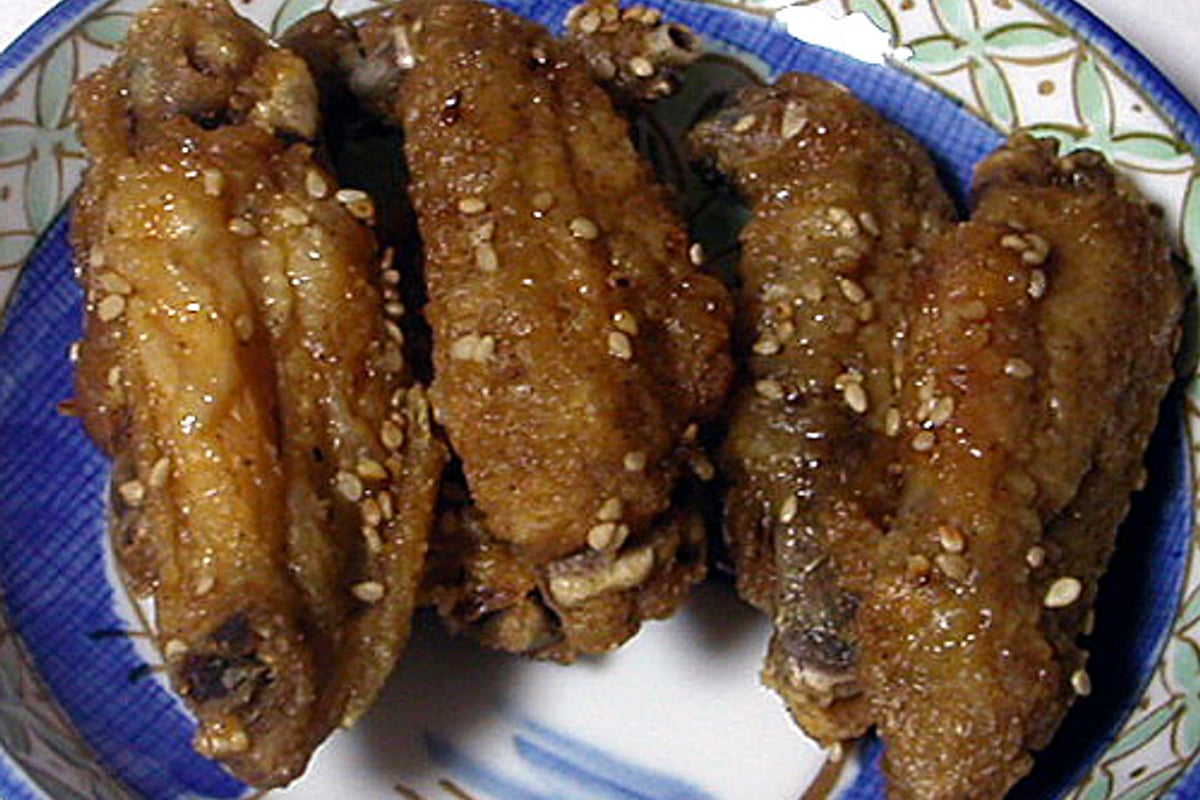
Nagoya Tebasaki (Twice-Fried Chicken Wings)
Nagoya Tebasaki
Nagoya tebasaki (fried chicken wing tips) is an izakaya dish in which chicken wing tips are fried twice until crisp, then finished with a sweet-savory sauce and condiments such as pepper and sesame. Furaibo, founded in 1963 in Atsuta Ward, Nagoya City, began serving fried wing tips coated in the sauce used for its signature whole roasted chicken, 'Tarzan-yaki,' and the dish proved so popular that it became the restaurant's own signature item. Later, Sekai no Yamachan gained popularity with its own distinctively spiced wing tips, and these two chains led the spread of Nagoya's tebasaki culture nationwide as a representative izakaya dish. Its appeal lies in eating the wings by hand, bone in, along with each restaurant's own character, whether a sweet-savory sauce or a spicy style, making it a classic accompaniment to beer.
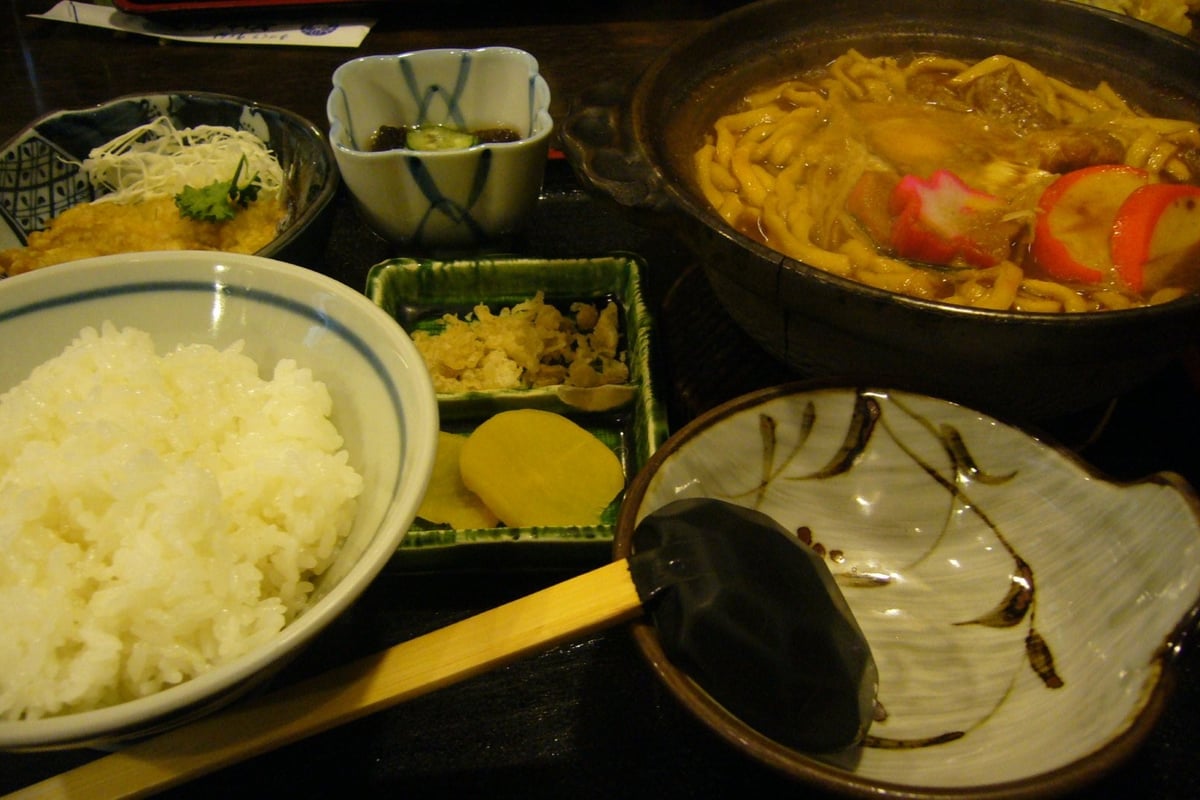
Miso Nikomi Udon (Miso-Simmered Udon Hot Pot)
Miso Nikomi Udon
Miso Nikomi Udon is a Nagoya specialty in which thick, firm udon noodles are simmered bubbling hot in a single-serving earthenware pot filled with a rich miso broth made from bonito dashi and Hatcho miso. Because the raw noodles are made only from flour and water, with no salt, and go into the pot without being pre-boiled, they keep a notably firm, chewy bite even after simmering; chicken, fried tofu, kamaboko fish cake, egg, and green onion are typically added as toppings. Building on the simple miso-based udon dishes found across Japan since the Edo period, Yamamotoya, founded in Osu, Nagoya, is said to have established the current style of simmering a single serving per earthenware pot during the Taisho era (1912-1926). Today the shop's lineage has split into two separate businesses, Yamamotoya Sohonke and Yamamotoya Honten, both cherished as leading specialists in Nagoya-style miso nikomi udon.
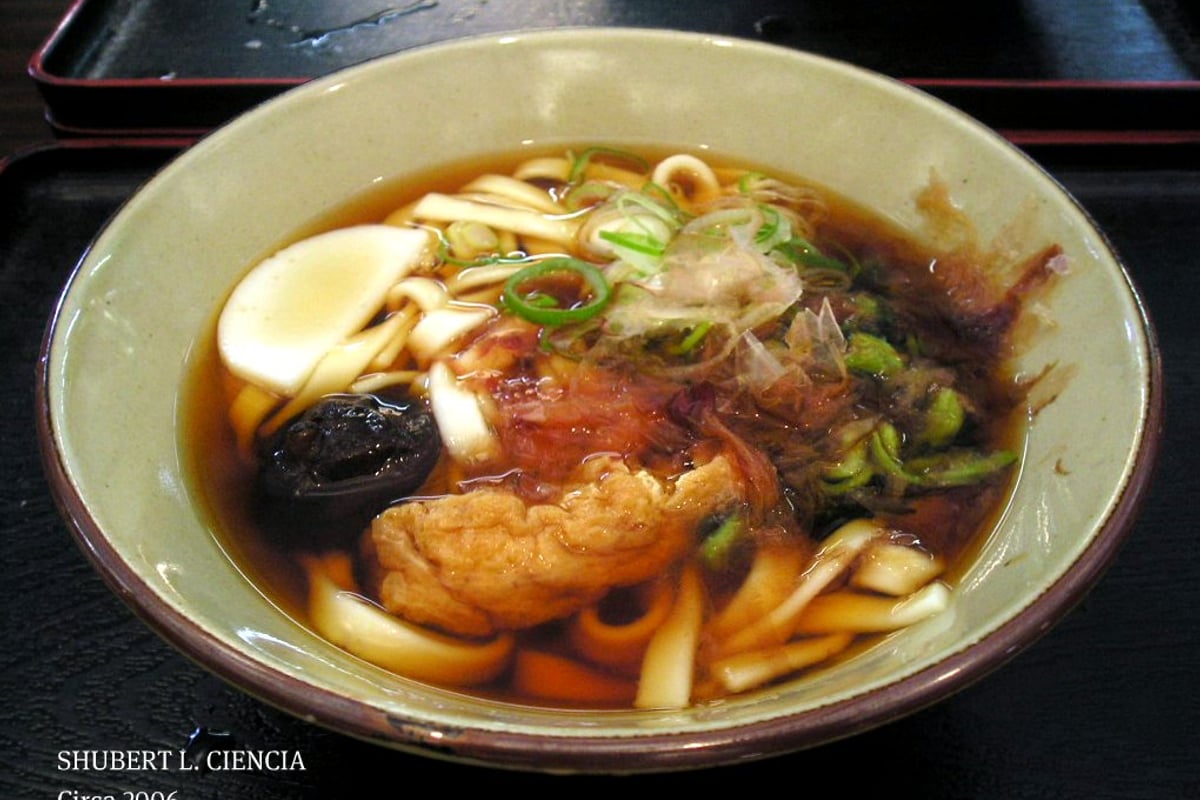
Kishimen (Flat Udon Noodles)
Kishimen
Kishimen is a Nagoya specialty of flat udon noodles, about 7-8mm wide and roughly 1mm thick, served in a soy-sauce-based broth flavored with bonito, topped with fried tofu, kamaboko fish cake, greens, and bonito flakes. A poem referencing kishimen already appears in the 1728 haiku collection Futae-bukuro, showing that it was enjoyed by ordinary people by at least the early 18th century. Several theories explain the origin of the name, including that it comes from kijimen, noodles shaped like go stones and eaten with roasted soybean flour, or from kijimen, a udon dish with pheasant meat once favored by the lords of Owari. Making the noodles flat is also said to have shortened boiling time and saved fuel, and kishimen is still widely served today at specialty shops around Nagoya Station and Atsuta Shrine.
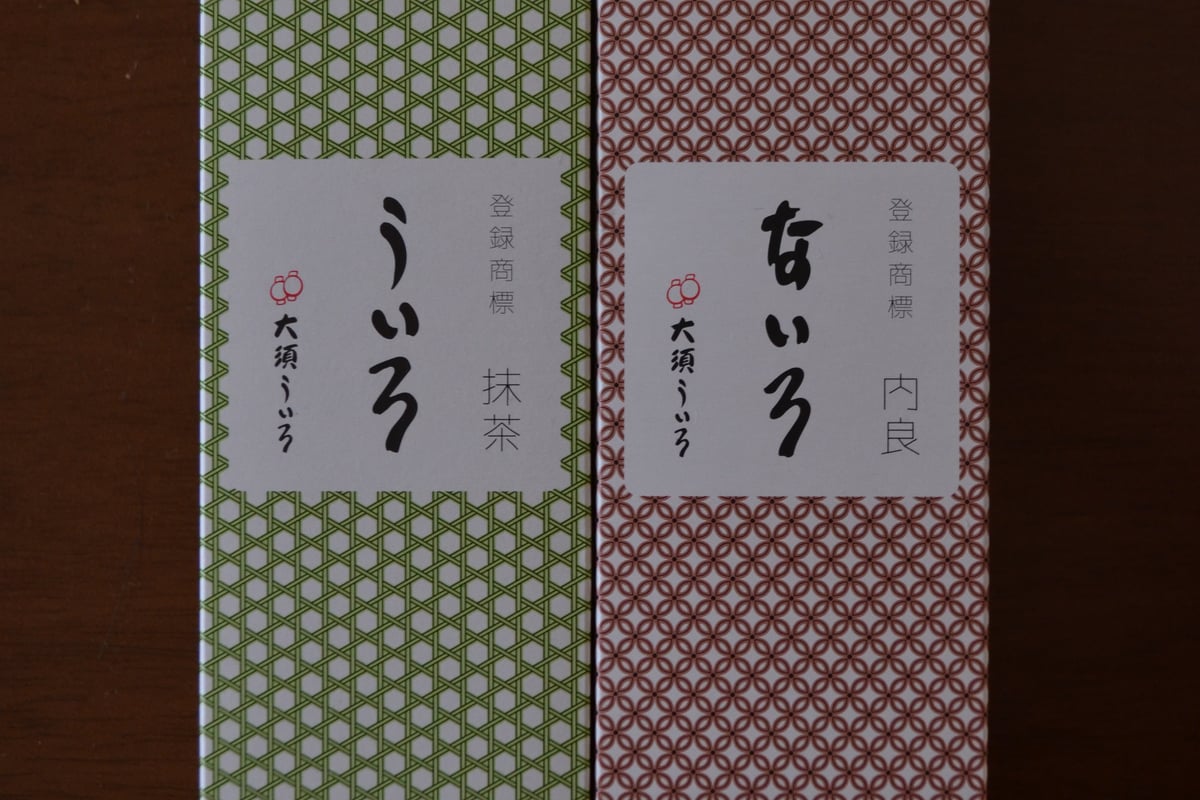
Uiro (Steamed Rice Cake)
Uiro
Uiro is a Japanese confection with a chewy, mochi-like texture, made by steaming a dough of rice flour mixed with sugar and hot water. It is famous as a signature confection of Nagoya, but its origins do not actually lie in Nagoya — uiro as a confection is also found in places such as Hakata, Odawara, and Yamaguchi. In Nagoya, the long-established shop Mochibun Sohonten, said to have been founded in 1659 (Manji 2) in the early Edo period, is regarded as the starting point of the city's uiro culture, and Aoyagi Sohonke, founded later in the Meiji era, greatly expanded the business afterward. It became known nationwide especially after in-train sales began with the opening of the Tokaido Shinkansen in 1964 (Showa 39), cementing its status as a classic Nagoya souvenir. It comes in a wide range of flavors, including red bean, matcha, and chestnut, and its bar shape, easy to slice, is also well loved.
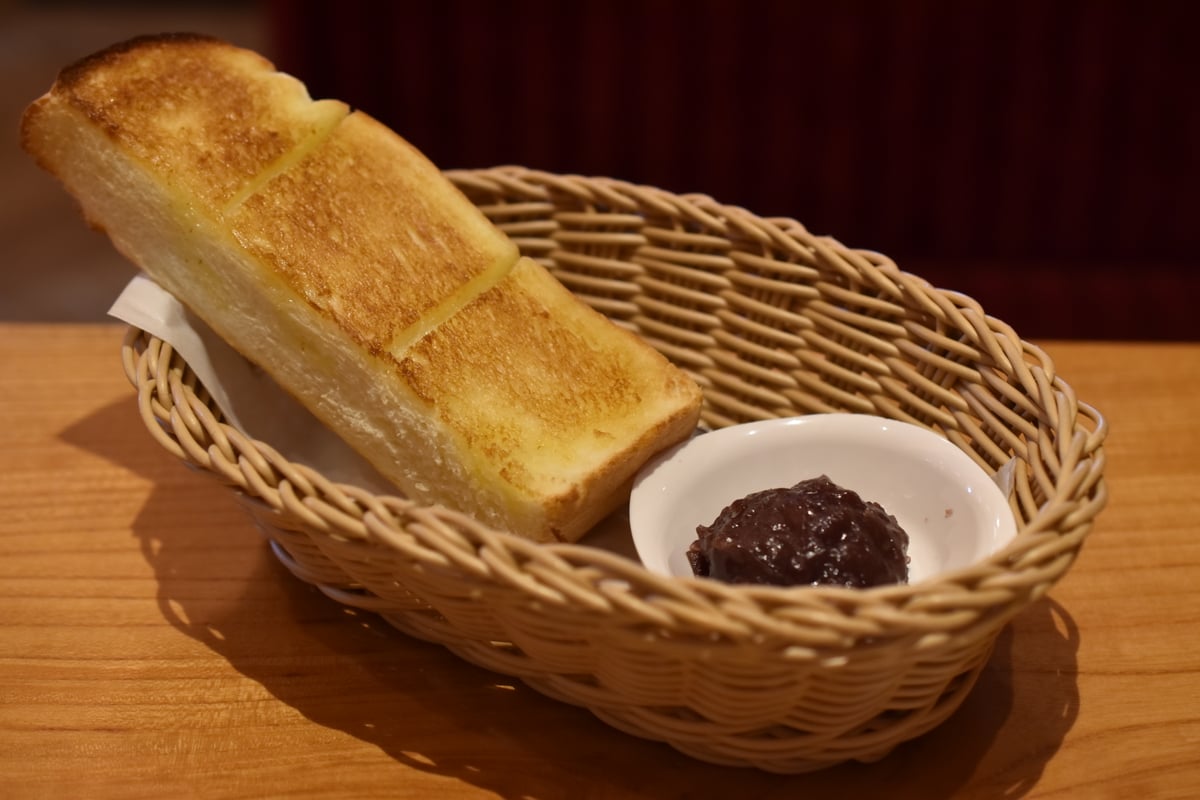
Ogura Toast (Toast with Sweet Red Bean Paste)
Ogura Toast
Ogura Toast is a light snack that symbolizes Nagoya's kissaten (coffee shop) culture: thick-cut toast spread with butter or margarine and topped with ogura an, a chunky sweet red bean paste. Though its origins are debated, the most widely accepted account traces it to around 1921, when the owner of a coffee shop called Mitsuba in Nagoya's Sakae district noticed student customers dipping their toast into zenzai (sweet red bean soup) and was inspired to create the dish. Since then it has become a staple on the menus of Nagoya's coffee shops, served in distinctive styles at long-established shops such as Compal and Kissa Mountain, as well as at Komeda's Coffee, the chain that grew from Nagoya into a nationwide brand. Its close association with the morning-service culture, where it is eaten alongside coffee from the early hours, is another distinctly Nagoya trait.
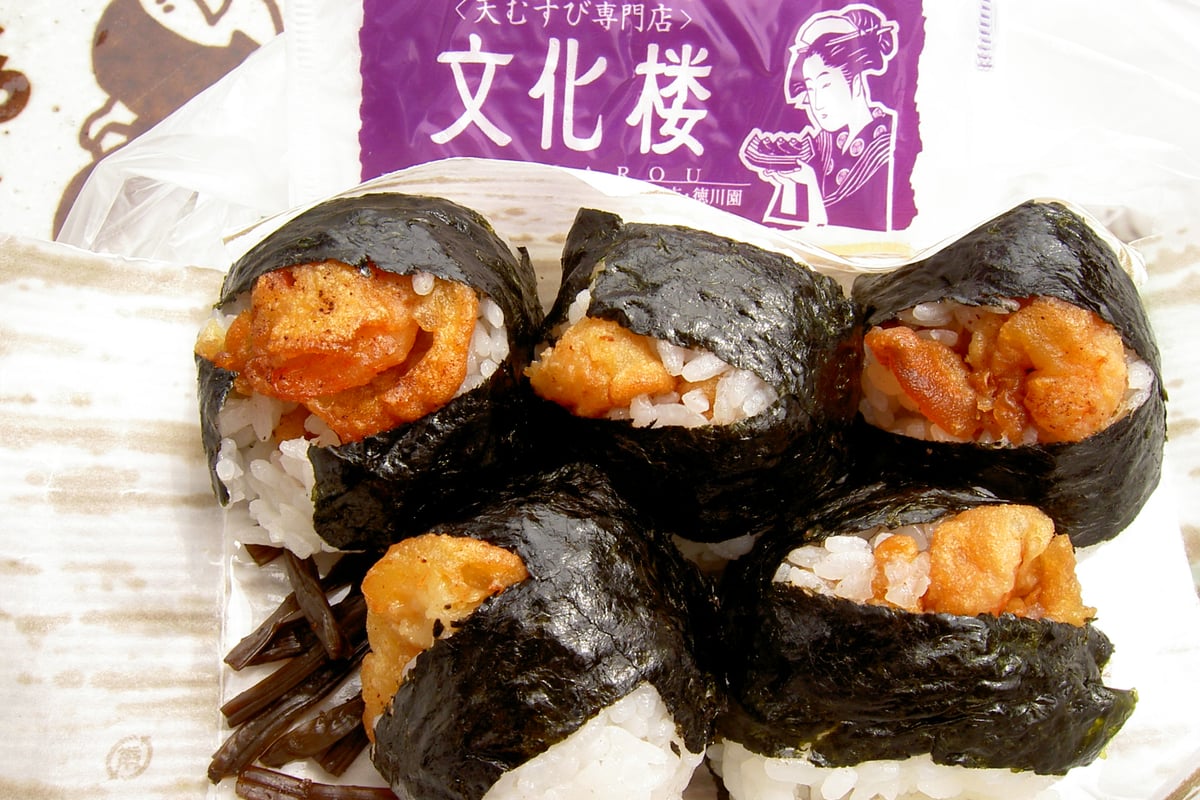
Tenmusu (Shrimp Tempura Rice Ball)
Tenmusu
Tenmusu is a bite-sized rice ball built around a piece of small shrimp tempura, prized for the combination of tempura lightly seasoned with tentsuyu (tempura dipping sauce) or salt and fluffy steamed rice. It is said to have originated in Tsu City, Mie Prefecture, where Yone Mizutani, the founding proprietress of a tempura restaurant, began tucking kuruma prawn tempura into rice balls for her husband's busy workday lunches. Around 1980, a branch of the Tsu restaurant Senju opened in Osu, Nagoya, and word of mouth among celebrities and tourists spread, and before long the dish came to be known nationwide as a 'Nagoya specialty.' Easy to eat and just the right size for one or two bites, it is also popular as a souvenir and a light snack.
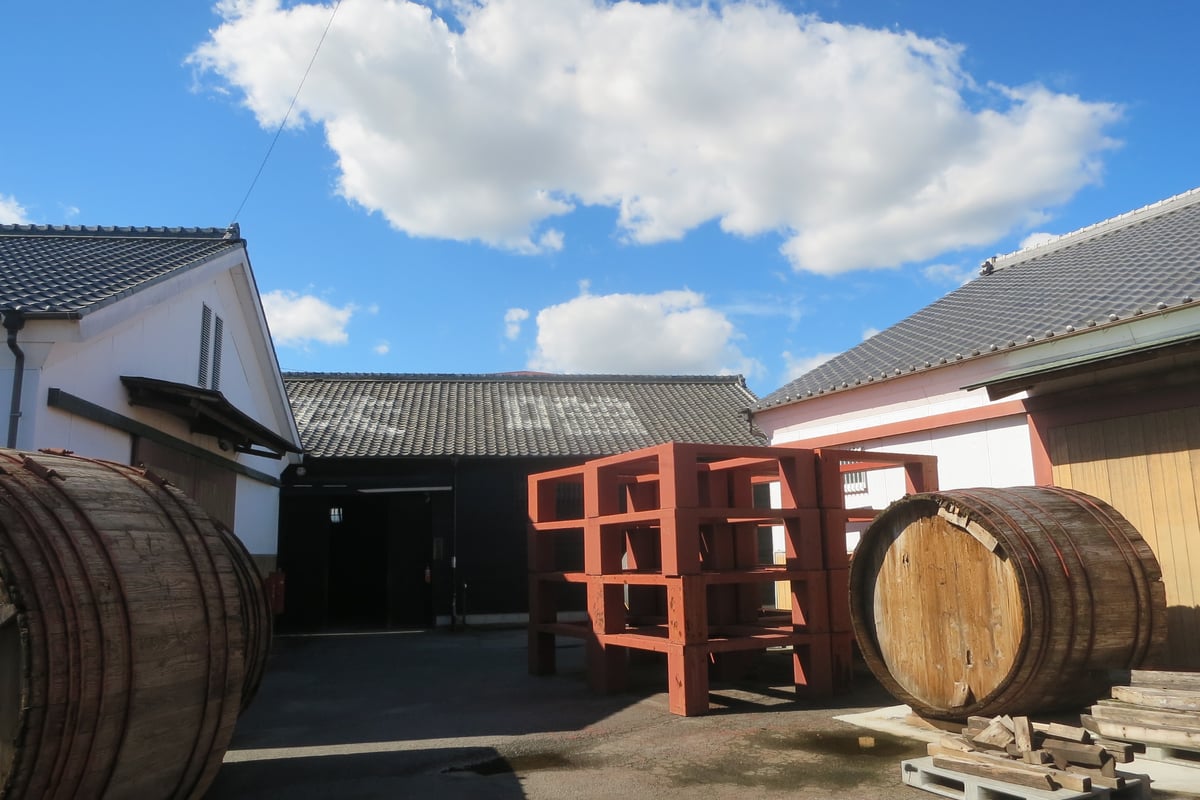
Hatcho Miso
Hatcho Miso
Hatcho miso is a soybean miso from Okazaki City, Aichi Prefecture, made from only soybeans and salt, packed into wooden barrels, weighted with a conical pile of heavy stones, and aged for two years or more. The name comes from Hatcho village (present-day Hatchodori, Okazaki City), located hatcho — about 870 meters — west of Okazaki Castle. Blessed with groundwater from the Yahagi River and situated at a key point on the Tokaido road and waterway network, Hatcho village has been home to two miso breweries, Kakukyu and Maruya Hatcho Miso, which have brewed miso facing each other since the early Edo period; the miso's long shelf life is also said to have made it valuable as military provisions. It is defined by a distinctive flavor combining rich umami with a characteristic astringency and bitterness, and it forms the flavor foundation of Aichi's signature local dishes such as miso nikomi udon and Misokatsu.
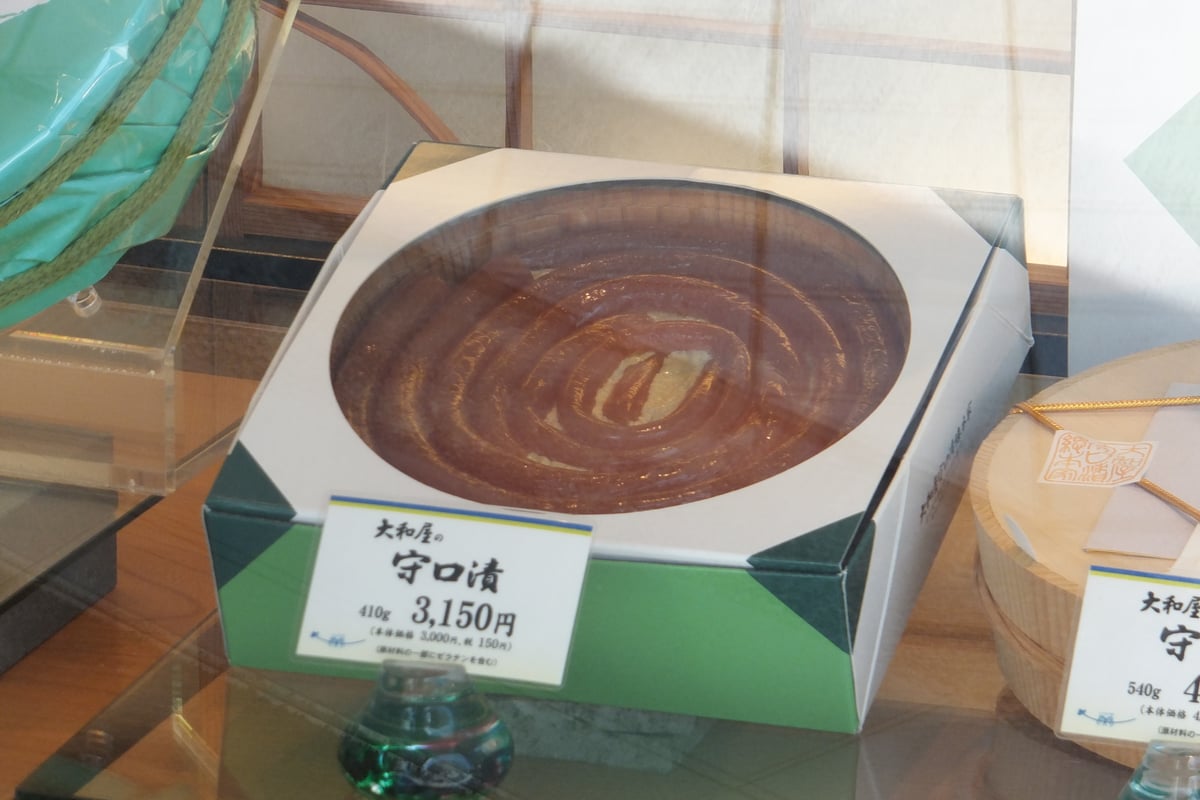
Moriguchi-zuke (Pickled Moriguchi Daikon Radish)
Moriguchi-zuke
Moriguchi-zuke is a Nara-zuke-style pickle unique to Aichi Prefecture, made by curing Moriguchi daikon — said to be the world's longest daikon radish — in sake lees and mirin lees. Moriguchi daikon is a slender radish about 2 centimeters in diameter and over a meter long, and it is one of Aichi's traditional vegetables, with much of the nationwide crop grown around the town of Fuso along the Kiso River. Both the cultivation and the pickling process are labor-intensive, and the whole process from sowing to a finished pickle is said to take roughly three years. Repeated re-pickling in sake lees and mirin lees produces an amber color, refined sweetness, rich aroma, and pleasant crunch, making it a beloved souvenir and gift item representative of Nagoya.
Model Course
A half-day course exploring the pottery towns of Tokoname and Seto
This course visits Tokoname and Seto, two of Japan's Six Ancient Kilns and Aichi's two great pottery towns. In Tokoname, learn about the history of making vermilion-clay teapots, then travel to Seto to tour the kilns of a thousand-year-old production area that gave rise to the Japanese word setomono ('pottery,' literally 'Seto-ware'). A must for pottery lovers, this course lets you experience two contrasting pottery towns in a single day.
A course savoring Arimatsu-Narumi tie-dyeing and Nagoya meshi
Tour the Arimatsu-Narumi Shibori Kaikan to see over 100 tie-dyeing techniques, then visit a Nagoya Yuzen workshop to experience the world of hand-painted yuzen dyeing, before heading into central Nagoya to enjoy Nagoya meshi dishes such as hitsumabushi and Misokatsu. A course that lets you enjoy textile dyeing and food culture in a single day.
A course exploring metalwork, woodwork, and coffee-shop culture in the castle town of Nagoya
Experience the brilliance of Owari Shippo cloisonne at the Ama Shippo Art Village, then visit a Nagoya kiri-tansu (paulownia chest) workshop to see joinery techniques, before taking a break with Ogura Toast and Tenmusu, two dishes representative of Nagoya's coffee-shop culture. A course exploring craftsmanship and the region's distinctive coffee-shop culture.
A course visiting miso breweries and the Buddhist altar and fittings district in Okazaki
Tour the division-of-labor production system behind Buddhist altars and altar fittings centered on Nagoya, then travel to Hatchocho in Okazaki City to visit the breweries of Kakukyu and Maruya Hatcho Miso, finishing with a bowl of miso nikomi udon made with soybean miso. A course exploring traditional industry and food culture.
A course enjoying brush-making and cotton weaving in Toyohashi and Mikawa, and kishimen noodles
Visit a Toyohashi fude workshop, producer of the majority of Japan's calligraphy brushes, then a Mikawa cotton weaving mill, before returning to Nagoya to finish with the flat noodles of kishimen and Moriguchi-zuke pickles, the flavors of Owari — a course tracing a path from Mikawa to Owari.
Events
Arimatsu Shibori Festival
The first Saturday and Sunday of June every year / Arimatsu district, Midori Ward, Nagoya City
View details →Seto Setomono Festival
The second Saturday and Sunday of September every year / Around the Seto River, Seto City