Image: Wikimedia Commons
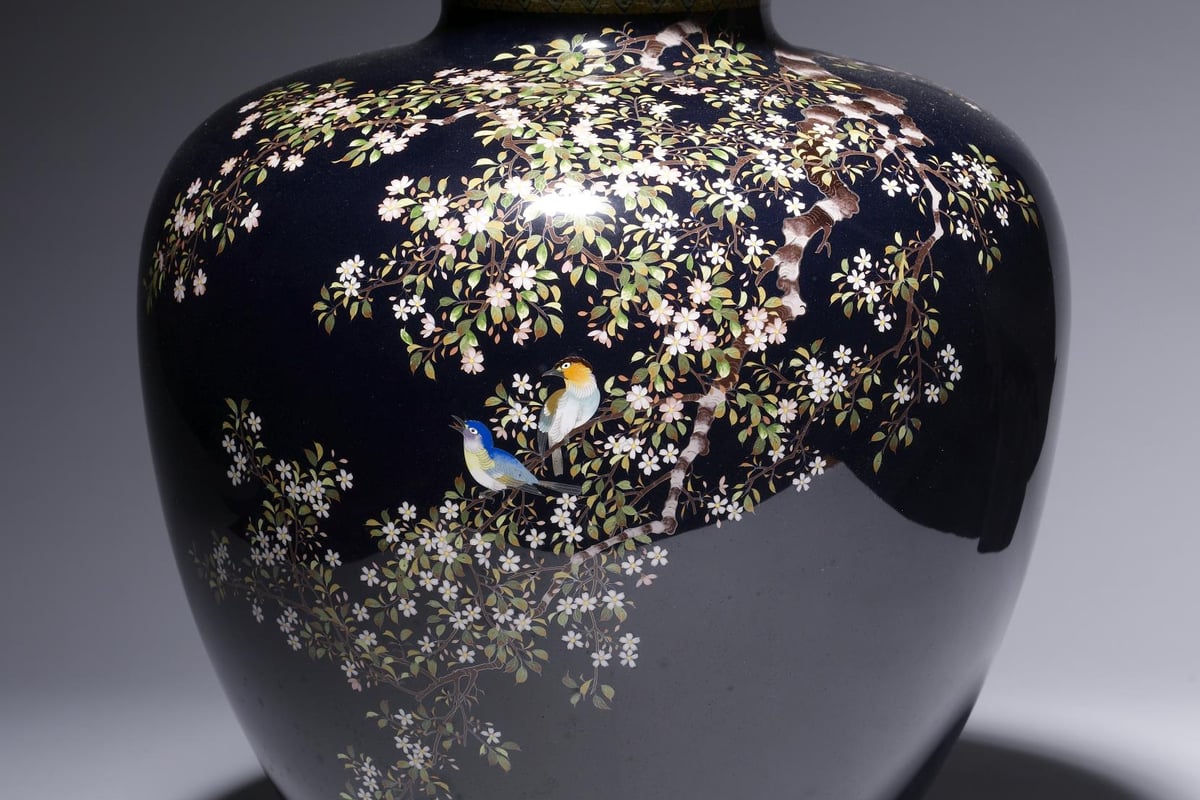
Owari Shippo is a craft produced mainly around Ama City (formerly Shippo Town) in Aichi Prefecture, in which a glass-like glaze is fired onto a metal base. Its origins trace back to the Tenpo era (1830-1844) in the late Edo period, when Kaji Tsunekichi of Owari Province studied and refined a production method based on a cloisonne dish that had arrived on a Dutch ship. Its signature technique, yusen shippo (wired cloisonne), involves standing thin silver wire along the outlines of a design on a copper or silver base and firing on glaze, producing intricate depictions of flowers, birds, and landscapes. After being exhibited at the 1867 Paris World's Fair, it gained worldwide recognition, and during the Meiji era it also developed as an export craft. Today, vases, framed panels, and accessories are still produced mainly in the Shippo district of Ama City, and it was designated a national Traditional Craft in 1995.
Origin
The origins of Owari Shippo lie in the Tenpo era (1830-1844) of the late Edo period. Kaji Tsunekichi, who lived in Owari Province, is said to have studied the production method using a cloisonne dish imported on a Dutch ship as a clue, and to have completed it with his own original improvements.
History
Kaji Tsunekichi's technique was later passed down to his grandson Kaji Sataro and others, and developed at kilns and workshops including Ando Cloisonne Company, founded in 1880. After being exhibited at the 1867 Paris World's Fair, the name 'Owari Shippo' became widely known around the world, and by the Meiji era some workshops had even become purveyors to the Imperial Household, flourishing as an export craft. It was designated a national Traditional Craft on April 5, 1995.
Features
Owari Shippo is a craft in which a glass-like glaze is fired onto the surface of a copper or silver metal base to depict designs such as flowers, birds, and landscapes. Its representative technique, yusen shippo (wired cloisonne), involves standing thin silver wire along the outlines of a design, filling the sections with glaze, and then polishing the piece after firing. It demands advanced skill to achieve both intricate patterning and vivid color at once, and is used in a wide range of products, from vases and decorative plates to accessories.
Materials Used
Production Process
- 1
Shaping the base
Copper or silver sheet is shaped into the form of the vessel.
- 2
Wiring
Thin silver wire is bent and affixed along the outlines of the design.
- 3
Applying glaze
Colorful glaze is applied into the sections marked out by the silver wire.
- 4
Firing
The piece is fired at high temperature to fix the glaze.
- 5
Polishing
The surface is polished to a smooth finish.
| Main Production Areas |
|
|---|
Artisans & Workshops
安藤七宝店
Founded in 1880, this long-established workshop invited Kaji Sataro, grandson of Kaji Tsunekichi, as its first factory head to carry on the technique. It became a purveyor to the Imperial Household Ministry in 1901 and continues to produce traditional wired cloisonne today.
Official site →How to Buy
- 安藤七宝店 名古屋本店
- The directly operated store of a long-established cloisonne workshop founded in 1880, located in Naka Ward, Nagoya City. It carries a wide range of wired cloisonne products, including vases, decorative plates, and accessories.Where to buy →PR
Hands-on Experiences
あま市七宝焼アートヴィレッジ
愛知県あま市七宝町遠島十三割2000番地
Admission 310 yen for adults; cloisonne-making workshops run about 60 minutes and start from around 1,000-1,500 yen (price varies by piece).
View details →