Craft Genre
Metalwork
A cross-regional look at Metalwork from across Japan.
Region(multiple selection allowed)
29 items

Annaka Uchihamono (forged blades)
Annaka Uchihamono
Annaka Uchihamono is a forged type of farm tool and blade passed down in Annaka, Gunma Prefecture. Annaka was once a region where sericulture flourished, and from the Meiji era onward many blacksmiths were active there forging the farm tools essential to agricultural work; place names related to blacksmithing still remain within the old city of Annaka today. The uchihamono technique - shaping heated iron and steel by repeatedly hammering it - is connected to the craft of forging Japanese swords, and unlike blades mass-produced with a mold, each piece is finished by hand, one at a time, by a craftsman. Farm tools such as the kusakaki (weeding hoe) and tekuwa (hand hoe) combine durability with a supple feel in use, while blades such as kitchen knives and trimming hoes are prized for their sharp cutting edge. Today, blacksmith workshops such as Honke Matsunaga Seisakusho and Yamazaki Seisakusho continue to uphold this traditional handcraft, making tools that, through repeated repair, can be used for a long time.
Sakai Uchihamono (Sakai Forged Knives)
Sakai Uchihamono (Sakai Forged Knives)
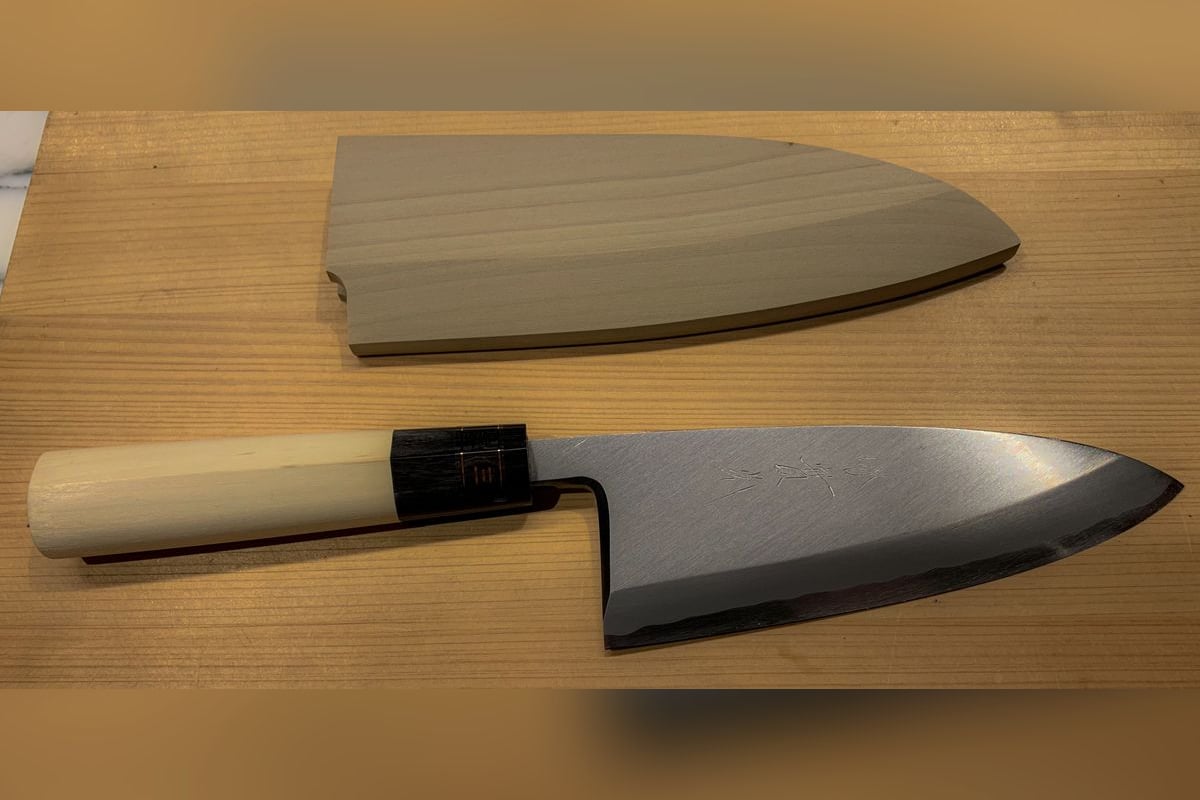
Sakai Uchihamono (堺打刃物) are kitchen knives, scissors and other bladed tools made mainly in Sakai City, Osaka Prefecture. After firearms and tobacco arrived from Portugal in the 16th century, Sakai began making 'tobacco knives' for shredding tobacco leaves. The Edo shogunate is said to have recognized their quality and allowed them to be sold stamped with the 'Sakai Kiwame' hallmark. This spread Sakai's name throughout the country, and production eventually developed into cooking knives such as the deba knife. Making a knife is divided among specialists: 'forging,' which shapes the blade; 'sharpening (hatsuke),' which grinds and hones the edge; and 'handle fitting (etsuke),' which attaches the handle. Knives made by forge-welding hard blade steel onto a soft iron base are said to neither break nor bend and to cut well. Sakai is also said to account for about 90 percent of the domestic market for Japanese kitchen knives (wa-bocho) used by professional chefs. In 1982 (Showa 57), Sakai Uchihamono was designated a Traditional Craft Designated by the Minister of Economy, Trade and Industry.
Chiba Koshogu
Chiba Koshogu
Chiba Koshogu is a general term for the blades and hand tools, such as sickles, hoes, kitchen knives, and Western-style scissors, that blacksmiths across Chiba Prefecture continue to make using traditional techniques. On November 30, 2017, it became the second craft in Chiba Prefecture, after Boshu Uchiwa, to be designated a Traditional Craft Product designated by the Minister of Economy, Trade and Industry (METI). The Boso Peninsula saw large-scale civil engineering and land reclamation projects throughout the Edo period, including the eastward diversion of the Tone River beginning in 1594 and the reclamation of Lake Inbanuma starting in 1724, and demand for hand tools such as sickles and hoes used in land clearing grew as a result, forming the basis for the craft's development in the region. Exchange of skills between swordsmiths and farm-tool smiths allowed excellent blade-edging techniques to take root locally. In the Meiji era, production of Western-style scissors began there ahead of the rest of the country, and the manufacture of barber and beauty scissors also flourished following the decree encouraging short hairstyles. Today, craftspeople, including women blacksmiths, continue to forge blades one by one entirely by hand at workshops across the prefecture, including in Kashiwa City, Tateyama City, Narita City, and Nagareyama City.
Osaka Naniwa Suzuki (Osaka Naniwa Pewterware)
Osaka Naniwa Suzuki (Osaka Naniwa Pewterware)
Osaka Naniwa Suzuki (大阪浪華錫器) is tinware (suzu-ki) made in Osaka City and other areas. Tin is a precious metal ranking next to gold and silver, and since ancient times it has been used for tableware at the imperial court and for ritual implements at shrines and temples. Tinware making is said to have begun in Kyoto, and by the mid-Edo period Osaka had become a major production center. Tin shops gathered in Shinsaibashi, Tenjinbashi and Tennoji, making sake vessels and tea utensils. The main techniques are casting, in which molten tin is poured into molds, and lathe turning (rokuro-biki), in which the piece is shaved on a lathe to refine its shape. Tin does not oxidize easily and is said to make sake taste mellower, and because it is highly airtight it is also suited to tea caddies. In 1983 (Showa 58), it was designated a Traditional Craft Designated by the Minister of Economy, Trade and Industry. Today, 大阪錫器株式会社 carries on the techniques and accounts for about 70 percent of domestic tinware produced with traditional techniques.
Yamagata Imono (Yamagata Cast Metalwork)
Yamagata Imono
Yamagata Imono is a metal-casting craft centered on Yamagata City with a history of roughly 900 years. It is said to have begun in the late Heian period, during the Kohei era (mid-11th century), when foundry craftsmen who had accompanied Minamoto no Yoriyoshi's military campaign discovered that the sand and soil along the Mamigasaki River were well suited to mold-making, and settled in the area. In the Edo period, when Mogami Yoshiaki laid out the castle town, he established a foundry workers' quarter (present-day Dōmachi) where he gathered craftsmen together, laying the foundation for the area as a production center. In contrast to the heavy, decorative style of Nanbu ironware, Yamagata Imono is characterized by a simple beauty that makes the most of its thin-walled, delicate cast surface, and is used to make everything from everyday items such as tea-ceremony kettles, iron kettles (tetsubin), and vases to temple bells and stone lanterns. In 1975 (Showa 50), it was designated a Traditional Craft Designated by the Minister of Economy, Trade and Industry. In recent years, in addition to iron kettles and wind chimes, makers have also been developing new products such as interior goods suited to modern life.
Boshu Nokogiri
Boshu Nokogiri
Boshu Nokogiri is a saw-forging technique with over 450 years of history in the Minamiboso region. It is said to have originated during the Sengoku (Warring States) period, when a blacksmith serving the Satomi clan, who ruled the Boso region, created it as a 'ship saw' for building the Japanese-style boats used in trade and other purposes. During the Edo period, the technique spread throughout the coastal areas of Awa and developed its own distinctive character; a story is also told that its sharpness became known to the shogunate after thieves used Boshu Nokogiri to break into earthen storehouses, spreading the saw's fame widely. Made from the same steel used for Japanese swords, with unique refinements in blade curvature and tooth-setting, Boshu Nokogiri combines thinness and flexibility with outstanding sharpness and durability. Prioritizing quality over efficiency, the traditional method of doing all 20-plus steps entirely by hand is still upheld today. However, with no successors having been trained, the technique is currently kept alive by only a single craftsman in all of Japan, a severe situation.
Echizen Uchihamono (Echizen Forged Blades)
Echizen Uchihamono
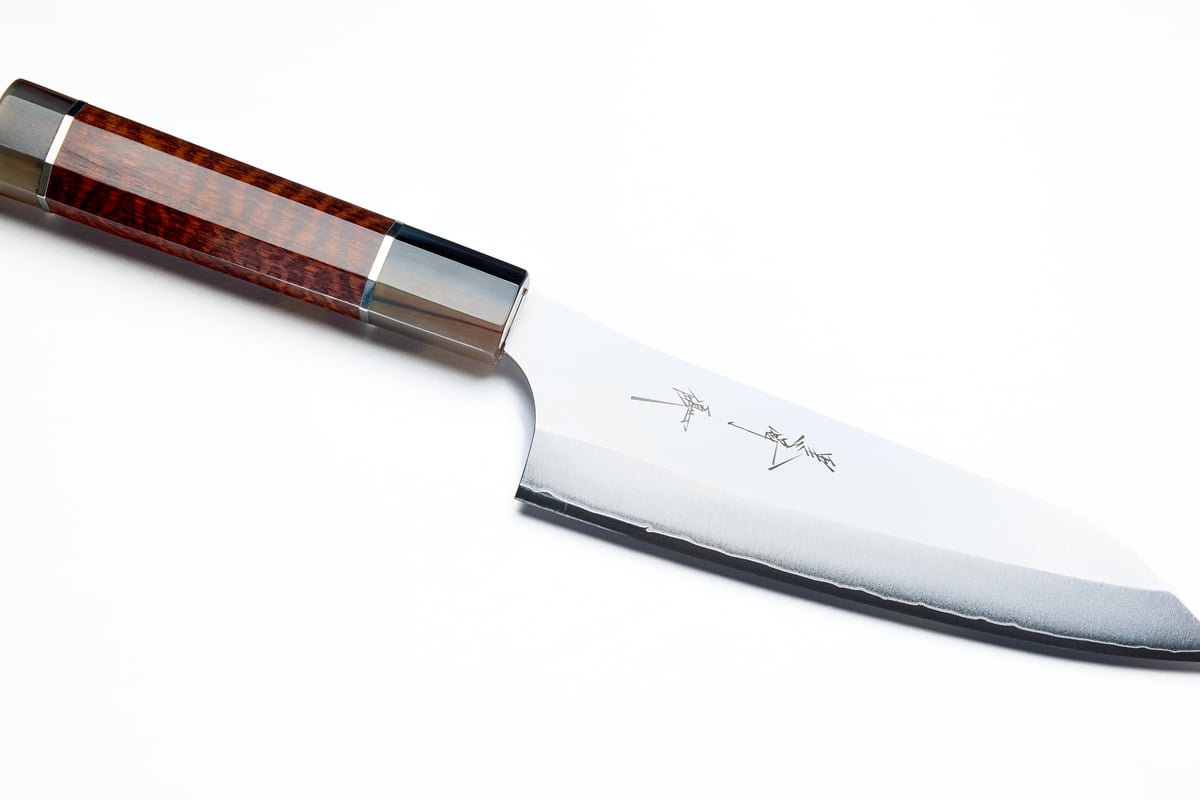
Echizen Uchihamono are forged blades made in Echizen City, Fukui Prefecture. They are said to have begun about 700 years ago in the Nanboku-cho period, when Chiyozuru Kuniyasu, a swordsmith from Kyoto, moved to Fuchu (present-day Echizen City) in search of good water for swordmaking and made sickles for the local farmers. In the Edo period the craft developed under the protection of the Fukui Domain. As Echizen lacquer-tapping craftsmen traveling around the country carried sickles with them and sold them, the name of Echizen blades spread far and wide. Techniques of hizukuri (hot forging) and hand finishing have been handed down, including 'nimai-hiroge,' in which two blades are stacked and hammered out together. The blades are known for being thin, light and exceptionally sharp, and today the main products are kitchen knives and other knives. In 1979, it became the first forged-blade craft to be designated a Traditional Craft Designated by the Minister of Economy, Trade and Industry. At Takefu Knife Village in the city, visitors can watch craftsmen at work up close.
Kanazawa Gold Leaf
Kanazawa-haku
Kanazawa Gold Leaf is gold leaf produced mainly in Kanazawa, Ishikawa Prefecture, and accounts for over 99% of all gold leaf used in Japan. Its origins are said to trace back to 1593, when Maeda Toshiie, founder of the Kaga domain, ordered gold leaf production to begin in Kanazawa while on campaign accompanying Toyotomi Hideyoshi's invasion of Korea. During the Edo period, the shogunate issued a ban restricting gold and silver leaf production to Edo and Kyoto, but the Kaga domain continued making it in secret, refining techniques to produce large quantities of high-quality gold leaf from limited materials. In 1864, thanks to the efforts of its craftsmen, gold leaf production was finally officially authorized as work for the shogunate. After the Meiji Restoration, while Edo's leaf makers declined, Kanazawa's gold leaf industry continued to grow. The craftsmanship of hammering an alloy of pure gold with a small amount of silver and copper into sheets roughly one ten-thousandth of a millimeter thick, together with Kanazawa's favorable climate and water quality, has produced a level of skill unmatched by any other region. It was designated a material for Traditional Crafts in 1977.
Owari Shippo
Owari Shippo
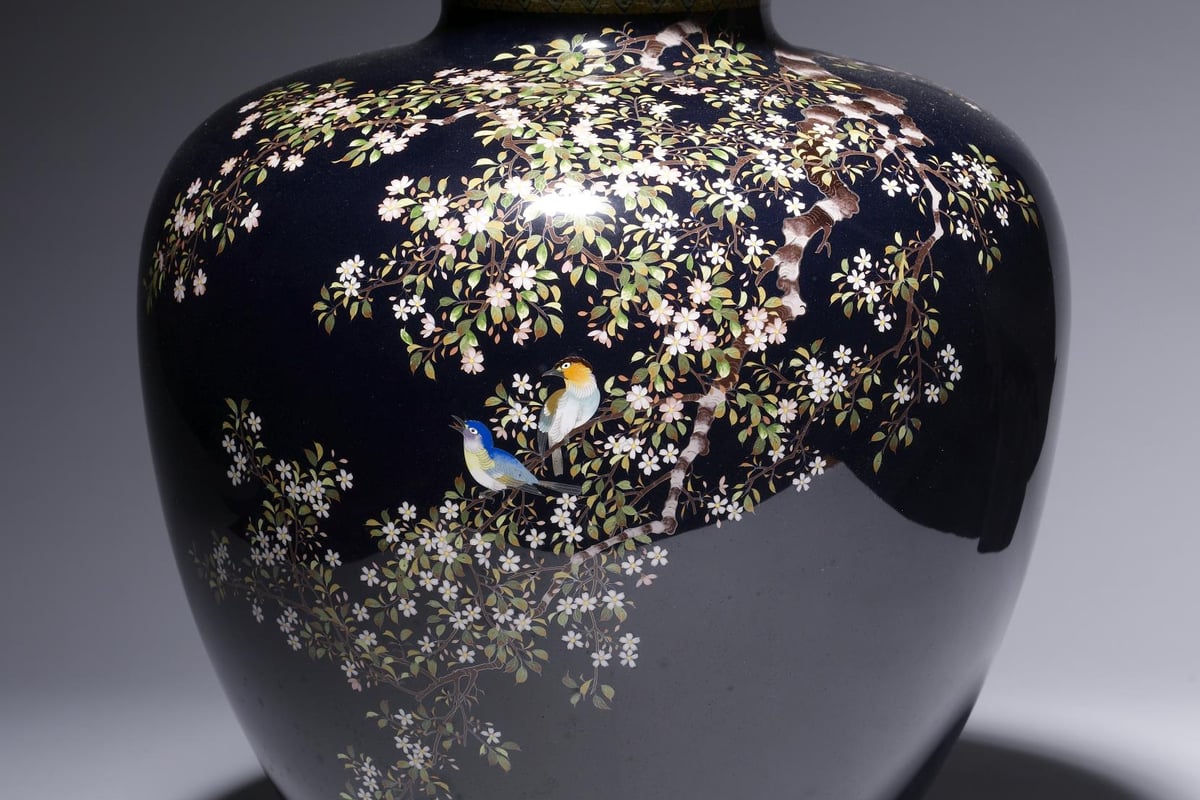
Owari Shippo is a craft produced mainly around Ama City (formerly Shippo Town) in Aichi Prefecture, in which a glass-like glaze is fired onto a metal base. Its origins trace back to the Tenpo era (1830-1844) in the late Edo period, when Kaji Tsunekichi of Owari Province studied and refined a production method based on a cloisonne dish that had arrived on a Dutch ship. Its signature technique, yusen shippo (wired cloisonne), involves standing thin silver wire along the outlines of a design on a copper or silver base and firing on glaze, producing intricate depictions of flowers, birds, and landscapes. After being exhibited at the 1867 Paris World's Fair, it gained worldwide recognition, and during the Meiji era it also developed as an export craft. Today, vases, framed panels, and accessories are still produced mainly in the Shippo district of Ama City, and it was designated a national Traditional Craft in 1995.
Akita Ginsen Zaiku (Silver Filigree Work)
Akita Ginsen Zaiku
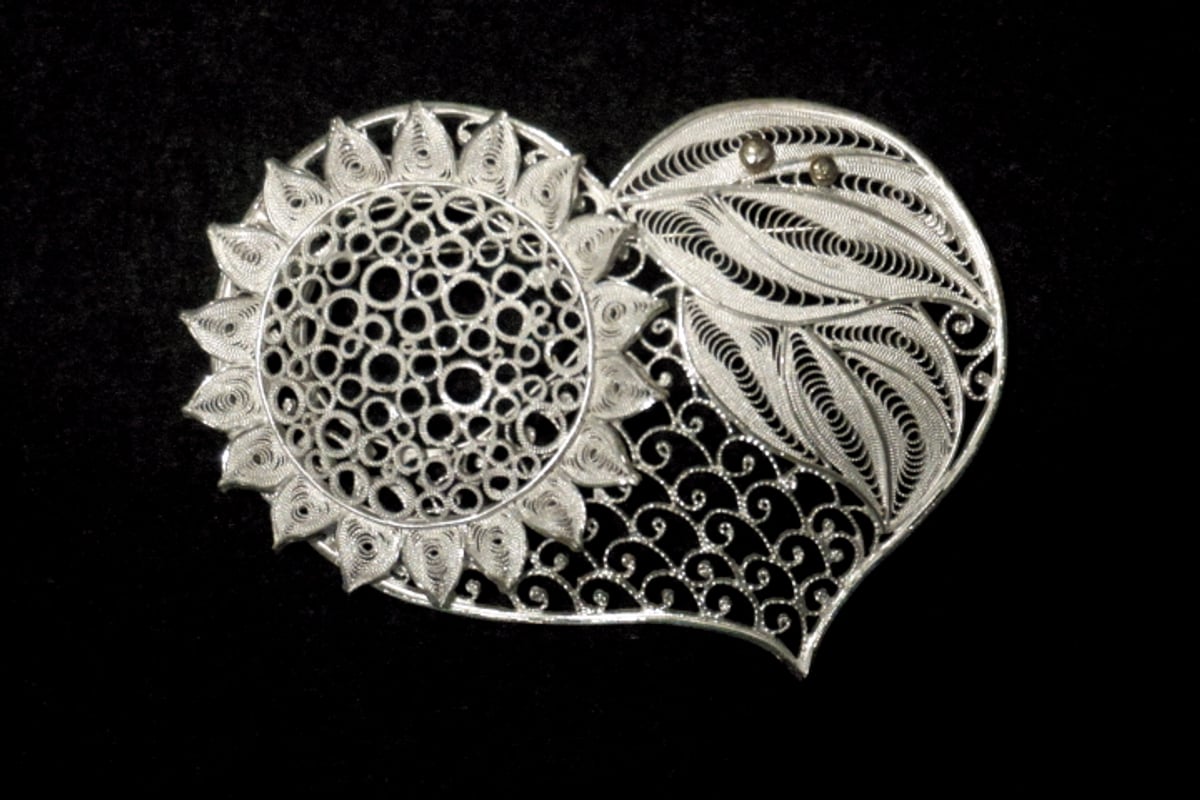
Akita Ginsen Zaiku is a metalwork craft in which high-purity silver is drawn into fine wire about 0.2 to 0.3 millimeters in diameter, twisted together, and shaped into swirl- or arabesque-patterned parts called 'hirado,' which are then set into a silver frame and assembled. Its origin is traced to 1602 (Keicho 7), when Satake Yoshinobu brought gold- and silversmiths with him as he moved from Hitachi Province to Akita, and the craft developed as a technique for sword fittings and decorative metal hardware under mining development in Akita, including the Innai Silver Mine, and the protection of successive lords of the Satake clan. From the Meiji era onward, as demand from the samurai class declined, its use expanded into accessories such as brooches and pendants, and it established its own distinctive style by incorporating the 'Hirado-zaiku' technique said to have been introduced by Portuguese ships. Its greatest appeal lies in the composed luster unique to pure silver and the delicate designs created by its intricate wirework; it was selected as a national Intangible Cultural Property in 1955 (Showa 30), and today it is carried on as a Traditional Craft of Akita Prefecture and a City-Designated Intangible Cultural Property of Akita City.
Owari Butsugu
Owari Butsugu
Owari Butsugu is the collective name for Buddhist altar fittings produced mainly around Osu, a temple town in the southern part of Nagoya City. It is characterized by the deep luster of many layers of lacquer applied over a wooden base, lavish decoration with gold leaf and gold powder, and finely crafted ornamental metal fittings (kazari-kanagu). Its origins trace back to the construction of Nagoya Castle in 1609, when the temple carpenters who built the castle town's 'Minami-deramachi' (southern temple district) later turned to making Buddhist fittings. In the late Edo period, the craft absorbed the techniques of ornamental metal fittings, which had been a side occupation for lower-ranking samurai, and developed under a sophisticated division of labor - woodworking, carving, lacquering, gold leaf application, and metal fittings - using fine materials such as Kiso cypress. From the Meiji era onward, a distribution network centered on wholesalers took shape, and with the Owari region serving as a transportation hub, Owari Butsugu came to be supplied widely to temples and households across the country. Today, more than 1,000 types of Buddhist fittings are still produced according to sect and use, characterized by forms that combine function and ornamentation, such as altar platforms (shumidan), incense burners, candlesticks, and ring lanterns (rinto). It was designated a national Traditional Craft in 2017.
Tsubame Tsuiki Doki (hammered copperware)
Tsubame Tsuiki Doki
Tsubame Tsuiki Doki is copperware made in Tsubame City, Niigata Prefecture. A single flat copper sheet is repeatedly hammered up with a metal hammer and finished into a seamless, three-dimensional vessel. 'Tsuiki' means to raise a form by hammering. In Tsubame, making Japanese forged nails (wakugi) spread as a side job for farmers in the early Edo period, and skills in handling the hammer took root there. Against the backdrop of copper being mined at nearby Mt. Yahiko, the technique of tsuiki (hammering up) is said to have been introduced in 1768 (Meiwa 5) by Toshichi, an itinerant craftsman from Sendai. Gyokusendo, founded in 1816 (Bunka 13), is the representative workshop that has carried on this technique for more than 200 years. Kettles, teapots, sake vessels, flower vases, and other items are made, and their appeal lies in the advanced skill of hammering out even the spout from a single sheet, and in coloring that deepens the more the piece is used. It was designated a national Traditional Craft in 1981.
Echigo Sanjo Uchihamono (forged blades)
Echigo Sanjo Uchihamono
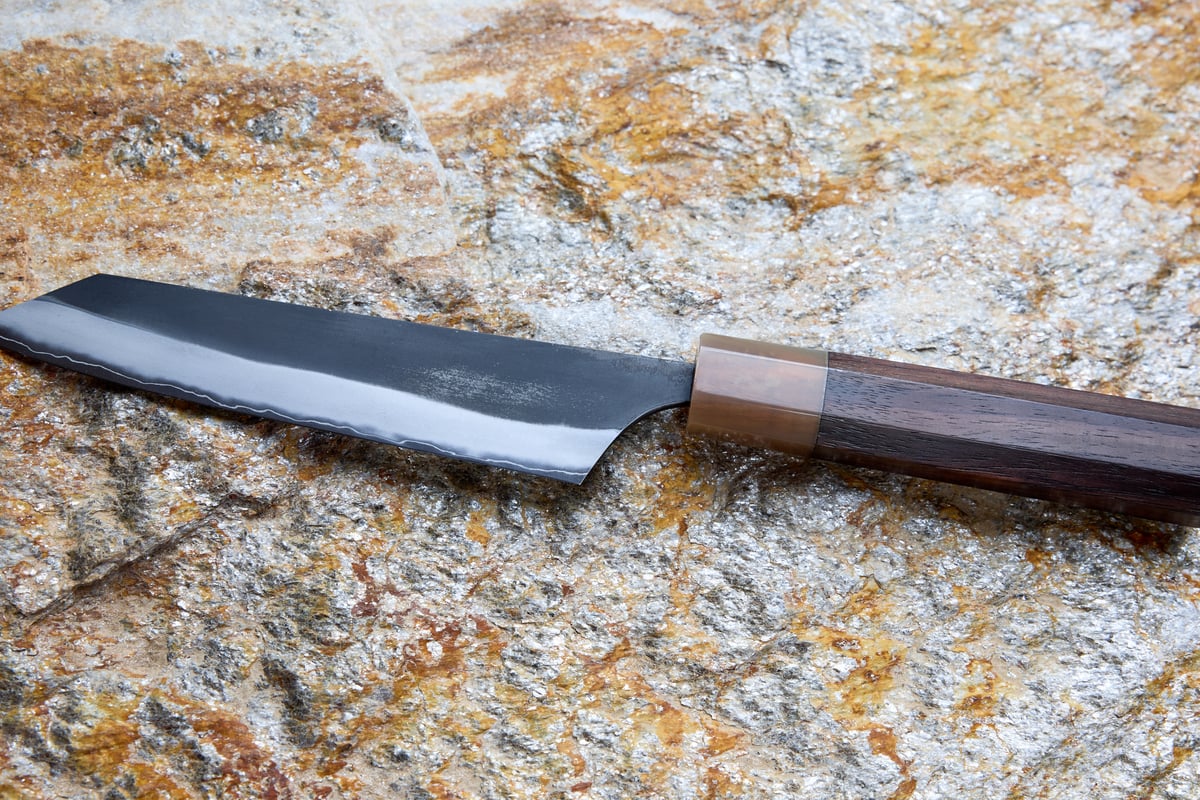
Echigo Sanjo Uchihamono are forged blades made in Sanjo City, Niigata Prefecture. Making use of the technique of 'free forging,' in which iron and steel are heated in a furnace until red-hot and shaped by striking them with a hammer, the area has produced a wide variety of items. The range includes kitchen knives and kiridashi knives, carpentry tools such as planes and chisels, sickles and nata hatchets, pruning shears, yattoko pincers, and even Japanese forged nails (wakugi). Its beginnings are traced to 1625 (Kan'ei 2) in the early Edo period. It is said that, to help farmers suffering from river floods, Otani Seibei invited nail smiths from Edo and spread the making of Japanese forged nails as a side job. In time, full-time blacksmiths emerged, and when methods for making saws and nata hatchets were introduced from the Aizu area, the products expanded to blades in general. Valued for shapes and materials specialized for each use, ease of handling, and long-lasting sharpness, it became a Traditional Craft Designated by the Minister of Economy, Trade and Industry in 2009. At Sanjo Blacksmith Dojo in the city, visitors can casually try their hand at blacksmithing.
Seki Hamono
Seki Hamono
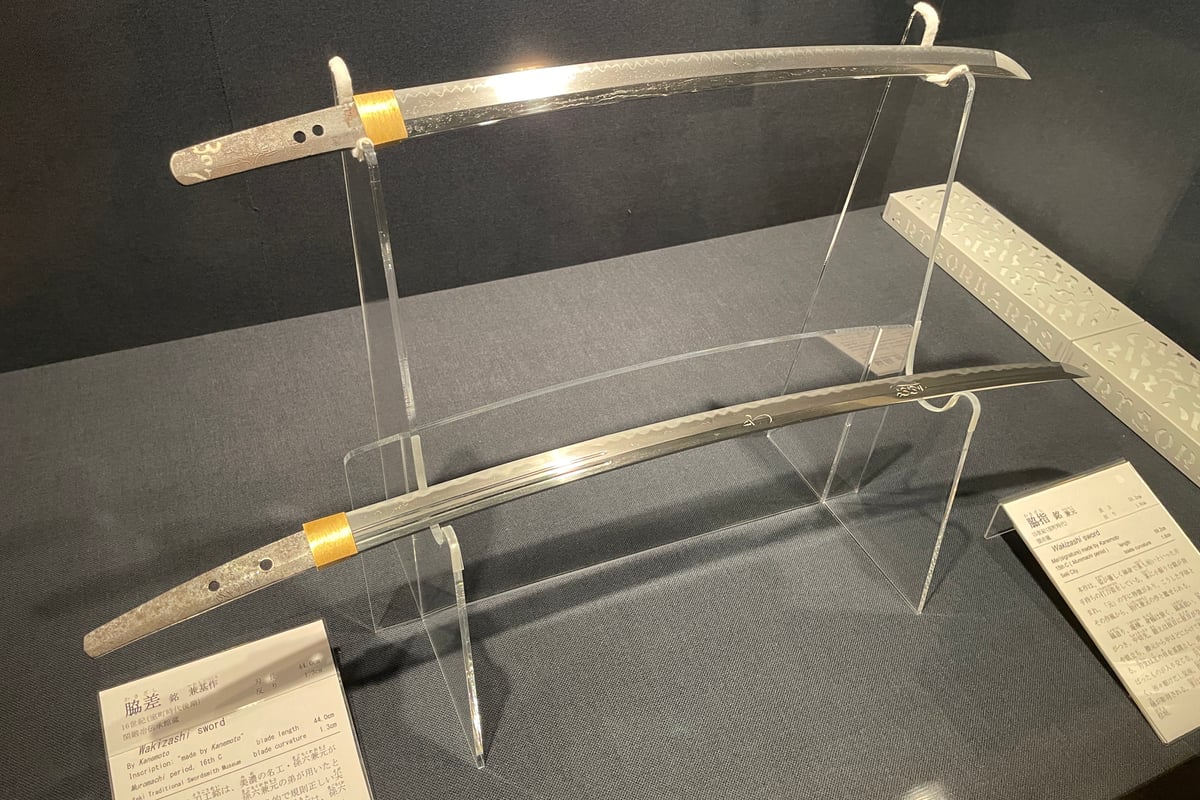
Seki Hamono is the collective name for the cutlery and blades made in Seki City, Gifu Prefecture, a leading production center that accounts for roughly half of Japan's total shipment value of household blades. Its origins are said to trace back to the Kamakura period, when the swordsmith Motoshige settled in Seki and began forging swords there. In the Nanboku-cho period, Kaneshige and Kaneuji, two of the Ten Great Disciples of Masamune, and others established a distinctive forging technique known as the Mino tradition, which came to be counted among the Five Traditions (Gokaden) of Japanese swordmaking. By the Muromachi period, the number of swordsmiths in Seki exceeded 300, and swords from Seki, praised as unbreakable, unbending, and sharp, became known throughout the country. From the Edo period onward, as demand for swords declined, blacksmiths shifted their skills toward everyday blades such as kitchen knives, razors, and scissors, and from the Meiji era the craft developed into a modern cutlery industry. Today, Seki Hamono is registered as a regional collective trademark by the Japan Patent Office, and Seki is regarded as one of the world's three great cutlery-producing regions.
Shinshu Forged Blades
Shinshu Uchihamono (Shinshu Forged Blades)
Shinshu Forged Blades are forged blades made mainly in Shinano Town, Kamiminochi District, in northern Nagano Prefecture. Iron and steel are heated in a forge and hammered out one by one with a hammer (tsuchi) to shape them. The representative product is the 'Shinshu sickle' (Shinshu-gama), whose back is thick and whose blade is extremely thin, making it sturdy and sharp. Thanks to 'shibatsuke,' which bends the part inserted into the handle, and 'tsuri,' which curves the blade face inward, the grass that has been cut gathers toward the user's hand. The craft is said to have originated in the mid-16th century, around the time of the Battles of Kawanakajima. It is believed to have begun when local villagers learned the techniques from blacksmiths who came to repair armor and swords. The prototype of today's Shinshu sickle was born at the end of the Edo period, and when the Shin'etsu Line opened in the Meiji period, its sales routes expanded nationwide. In 1982 it became a Traditional Craft Designated by the Minister of Economy, Trade and Industry. Today, besides sickles, hoes (kuwa), hatchets (nata), kitchen knives and other tools are also made.
Yamagata Uchihamono (forged blades)
Yamagata Uchihamono
Yamagata Uchihamono refers to forged bladed tools whose blacksmithing techniques have been passed down mainly in Yamagata City. Its origins are said to trace back to 1356, during the Nanboku-cho period, when Shiba Kaneyori, the founding ancestor of the Mogami clan, brought blacksmiths with him when he entered Yamagata; they formed a blacksmithing settlement and made weapons and farming tools. During the Edo period, Yamagata domain lord Mogami Yoshiaki established a blacksmiths' district in the castle town and gave preferential treatment to smiths, and the craft was refined under the patronage of successive lords. In the late Edo period, the district produced the renowned swordsmith Shoji Naotane, and from the Meiji era onward, as demand for swords declined, the focus shifted to blades rooted in daily life, such as kitchen knives, sickles, scissors, and hoes. The technique known as 'jiyu-tanren' (freehand forging), in which soft iron and hard steel are joined by fire-forging and carefully hammered together, is still practiced today, and the resulting blades are prized for combining sharpness with toughness.
Koshigaya Katchu
Koshigaya Katchu
Koshigaya Katchu is a traditional technique from Koshigaya City, Saitama Prefecture, for making the miniature armor and helmets of Gogatsu Ningyo displayed for Boys' Day (Tango no Sekku). Its distinctive feature is combining several craft techniques passed down since the Edo period, metalworking, lacquerwork, leather craft, and braided cord, into a single suit of armor, resulting in vivid colors and a dignified, stately look. Craftsmen known as 'katchushi' apply specialized skills to each part, such as the helmet bowl, the fukikaeshi (turned-back brim), and the odoshi (lacing) of the armor, and because everything is finished by hand, the doll maker's skill determines the quality of the finished piece. Workshops in Koshigaya City, led by Katchu Kobo Asahina, founded in 1959, have been central to passing down the technique, and in 1996 (Heisei 8) it was designated a Saitama Prefecture-designated Traditional Handicraft as 'Koshigaya Katchu.' Armor with designs inspired by Sengoku-era warlords is also popular, and demand continues today for Boys' Day gifts.
Sabae Eyewear
Sabae Eyewear
Sabae Eyewear refers to eyeglass frames made mainly in Sabae City, Fukui Prefecture. It is not a Traditional Craft Designated by the Minister of Economy, Trade and Industry but a local industry that began in the Meiji era, and through the skills of its artisans and a system of divided labor, it has built a production area known around the world. It began in 1905 (Meiji 38), when Masunaga Gozaemon of Shono, Asozu Village, Asuwa District (present-day Shono-cho, Fukui City) invited eyeglass craftsmen from Osaka and spread eyeglass making as a side business for farming households during the snowy winters. The techniques eventually spread to Sabae, and the city came to promote itself as 'Megane no Machi Sabae' (Sabae, the eyeglass town). In 1983, the world's first titanium eyeglass frames were successfully developed and produced here. Today, about 95% of Japanese-made eyeglass frames are made in Fukui Prefecture, with Sabae City at its center. At the Megane Museum in the city, visitors can learn about the history of the production area, try making frames by hand and buy products from manufacturers in the prefecture.
Kawaguchi Imono
Kawaguchi Imono
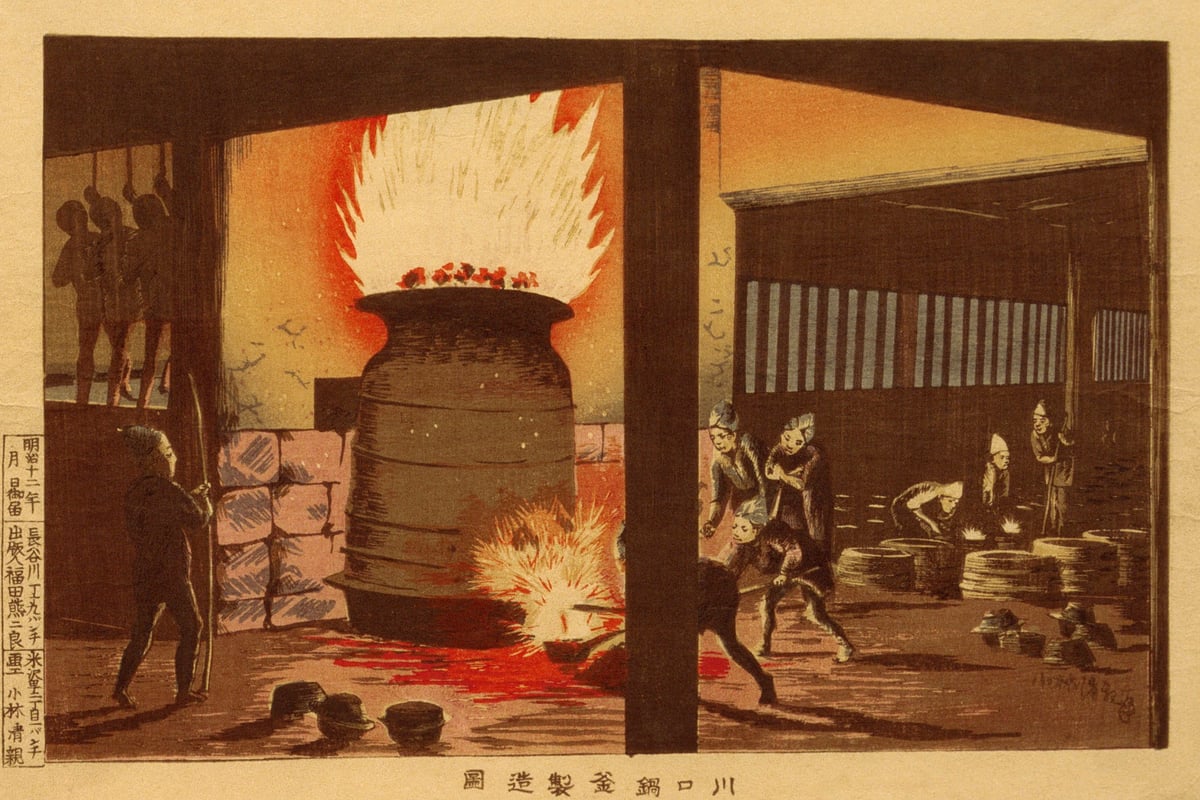
Kawaguchi Imono is the general term for the casting industry that developed in Kawaguchi City, situated between the Arakawa and Shiba rivers, an area known as 'Kawaguchi, the Town of Casting.' Its origins remain uncertain, with several competing theories placing its beginnings in the Heian, Kamakura, Nanboku-cho, or Sengoku periods, but it is thought that casters had settled in the area by at least the medieval period. Good-quality sand and clay suited to mold-making could be obtained along the Arakawa and Shiba river basins, and the area's proximity to the major consumer center of Edo (Tokyo), together with its convenient water transport, allowed it to develop from the Edo period onward into a major production center for pots, kettles, farm tools, temple bells, and more. From the Meiji era, factory production and technological innovation advanced, and in 1942 Kawaguchi achieved the highest production volume in Japan among single cities; it is also known as the setting of the film 'Kyupora no Aru Machi' (The Town with the Cupola Furnace). In recent years, production has continued across a wide range of fields, from household goods to industrial products, pursuing lighter weight and refined design.
Kuwana Imono (Kuwana Casting)
Kuwana Imono (Kuwana Cast Metalwork)
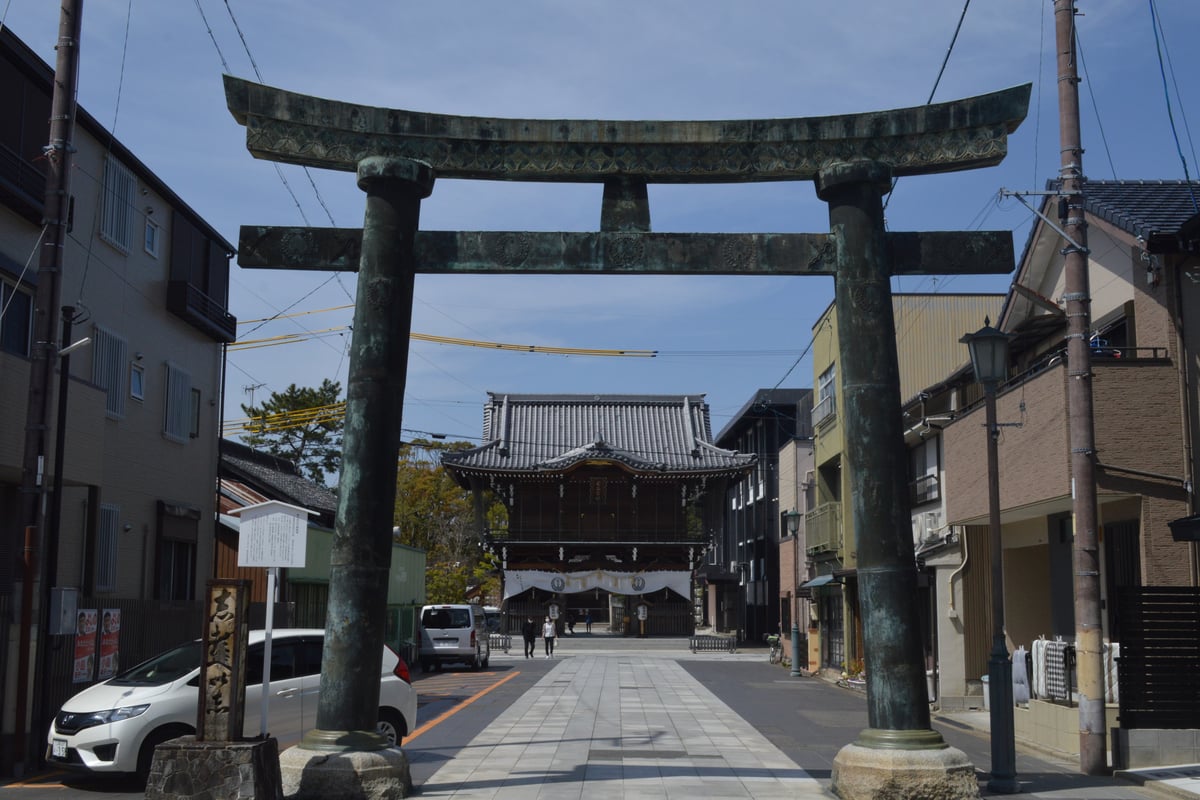
Kuwana Imono is cast metalwork made in Kuwana City, Mie Prefecture. It is said to have begun in 1601 (Keicho 6), when Honda Tadakatsu became the first lord of the Kuwana Domain and invited casters (imoji) to the area. Under the domain's encouragement, firearms and other items were manufactured, and the casting industry took root. In the Edo period, lanterns, temple bells, pots and other items were made, and the bronze torii gate of Kuwana Sosha (Kasuga Shrine) is a renowned example. In the Meiji period, machine casting for products such as noodle-making machines and water-supply fittings began, and Kuwana grew into a production center ranked alongside Kawaguchi in the saying 'Kawaguchi in the east, Kuwana in the west.' Kuwana, which prospered as a post town on the Tokaido, is still known as a 'town of casting.' Today, industrial castings such as manhole covers and machine parts are the mainstay, but everyday items such as iron kettles and pots are also made. In 2026 (Reiwa 8), it became a Mie Prefecture Designated Traditional Craft, covering kettlebells and iron pots.
Nakaniida Uchihamono
Nakaniida Uchihamono
Nakaniida Uchihamono forged blades are hand-forged cutlery rooted in the blacksmithing tradition of Kami Town (formerly Nakaniida Town), Kamigun, Miyagi Prefecture. According to tradition, their origins trace back to the Kanbun era of the Edo period (roughly 1661 to 1673), when Funano Gorobei, a bladesmith of the Sendai Domain, began making sickles. For more than 300 years since, a forging method known as the kuu-uchi method, using the same hand-forging technique as swordsmithing, has been passed down for beating and combining iron and steel. The distinctively shaped sickles, designed to be used with the blade facing upward, are valued for reducing friction with soil so the edge resists chipping and can be easily re-sharpened. Beyond sickles, various other forged blades are also made, including nakiri kitchen knives and peeling knives. At its peak, eleven blacksmith workshops operated side by side, but due to a shortage of successors, today only Ishikawa Michio, the fourth-generation head of Ishikawa Hamono Seisakusho, continues to preserve the technique as its sole craftsman. It was designated a Traditional Craft by the Governor of Miyagi Prefecture in 1982 (Showa 57).
Kyo-butsugu (Kyoto Buddhist Fittings)
Kyo-butsugu
Kyo-butsugu is a general term for the tools used in Buddhist rites at temples and homes, including incense burners, candlesticks, flower vases (kebyo), Buddhist statues, and other ceremonial fittings — a comprehensive art form drawing together woodworking, lacquerwork, metalwork, dyeing and weaving, and other diverse techniques. Production of Buddhist fittings is said to have begun with the introduction of Buddhism in the 6th century, and in Kyoto it became fully established in the early 11th century when the Buddhist sculptor Jocho set up the "Shichijo Busho" workshop in Shichijo, marking over a thousand years of history since. Because the design and specifications of fittings differ by Buddhist sect, mass production is unsuited to this craft, and each piece is finished by hand under a division-of-labor system involving more than forty specialized trades. Today, roughly 70% of the fittings produced in Kyoto are for temple use, and Kyoto supplies much of the Buddhist fitting equipment used in temples nationwide. It became a Traditional Craft designated by the Minister of Economy, Trade and Industry in 1976.
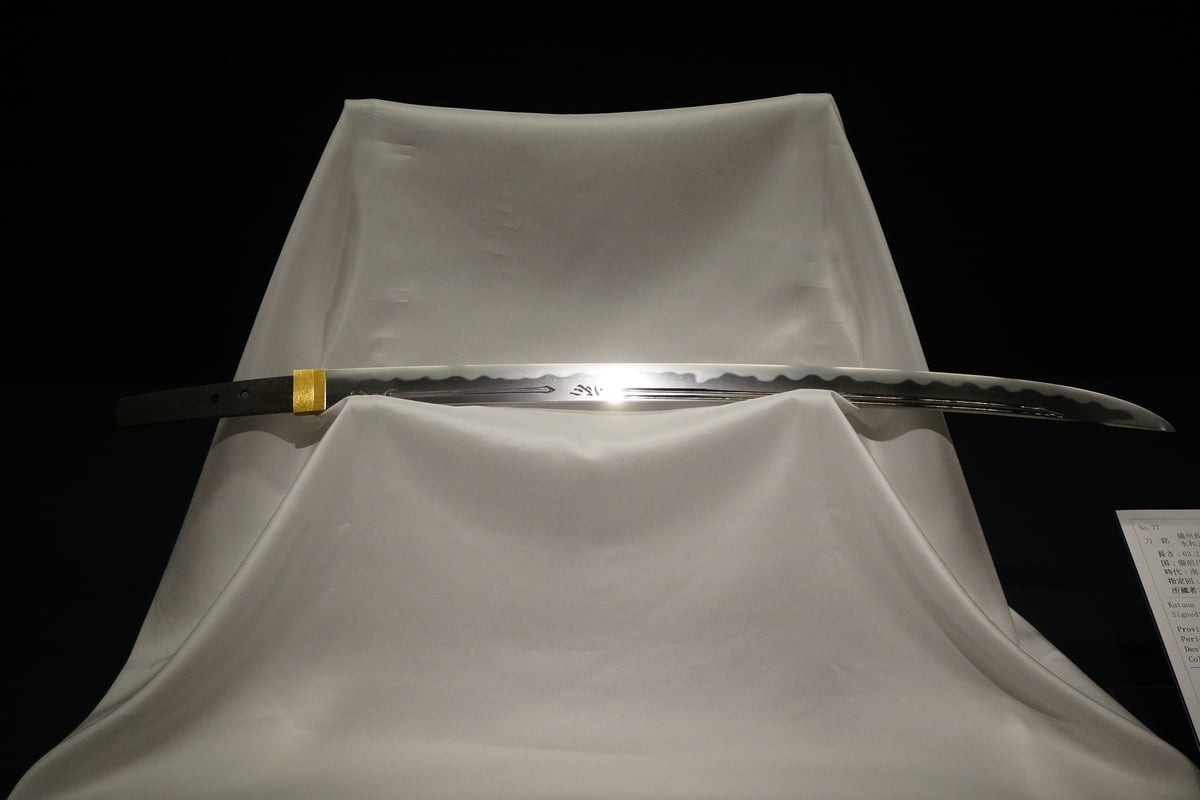
Bizen-to (Osafune)
Bizen-to (Osafune)
Bizen-to is the collective name for Japanese swords produced in the former province of Bizen (present-day Setouchi City and the eastern part of Okayama City, Okayama Prefecture). Among its swordsmiths, the 'Osafune school,' based at Osafune along the Yoshii River (present-day Osafune-cho, Setouchi City), is known as the largest group of swordsmiths in the history of the Japanese sword. Bizen province produced high-quality iron sand (akome sand iron) in the lower reaches of the Yoshii River, making it a major center of Japanese sword production throughout the medieval period. It formed the 'Bizen tradition,' one of the five major schools known as the 'Gokaden,' and Bizen swords are said to account for roughly 40 percent of Japanese swords designated as National Treasures or Important Cultural Properties. Although production declined at times due to warfare and shifting demand, in the Taisho and Showa periods Imaizumi Toshimitsu researched and revived swordmaking techniques through self-study and orally transmitted knowledge, and came to be known as 'the father of the Bizen sword revival.' Today, active swordsmiths still work in Osafune-cho, Setouchi City, and visitors can observe forging and polishing processes at the Bizen Osafune Sword Museum and the Bizen Osafune Sword Village.
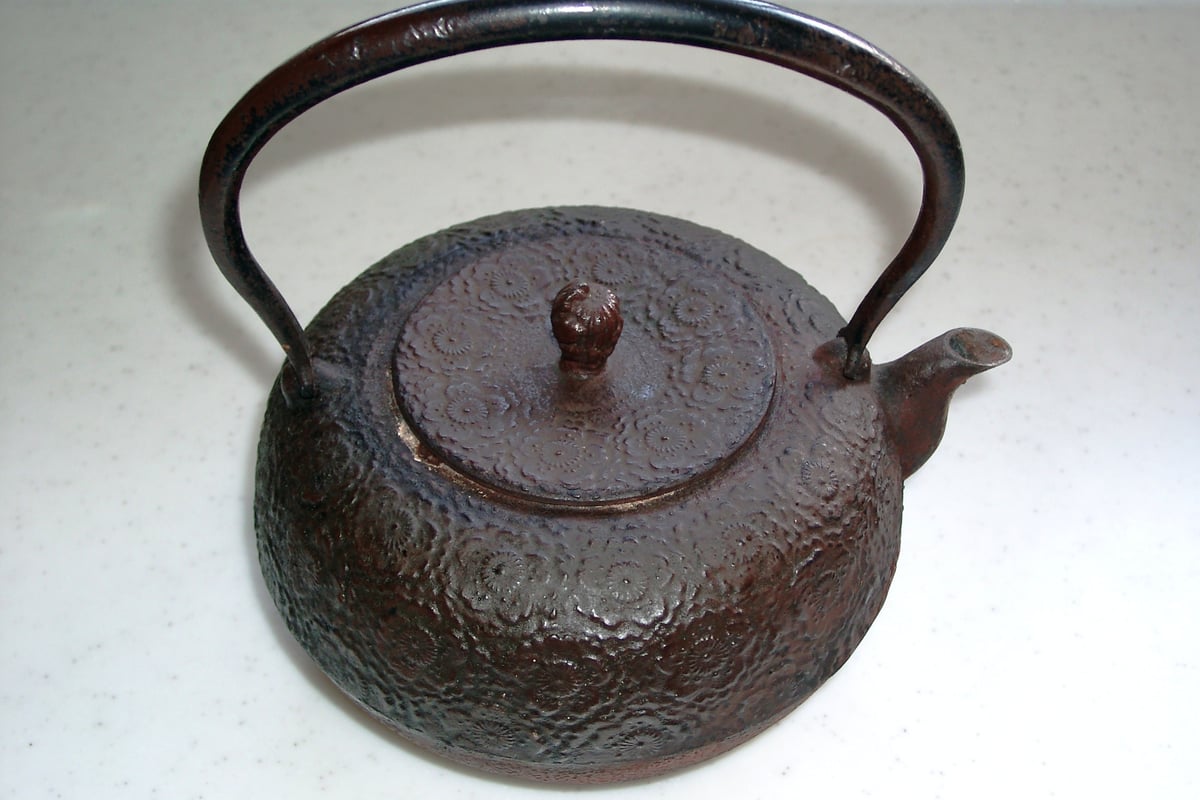
Nanbu Tekki
Nanbu Tekki
Nanbu Tekki is cast ironware produced mainly in Morioka City and the Mizusawa district of Oshu City, Iwate Prefecture, with a history of around 400 years. In Morioka, the craft is said to have begun in the mid-17th century when a lord of the Nanbu domain invited kettle-makers from Kyoto to produce tea-ceremony kettles, while in Mizusawa it is said to trace back to the late Heian period, when the Oshu Fujiwara clan invited casters from Omi Province. Both areas were rich in resources well suited to casting, such as iron sand, river sand, clay, and charcoal, and casting has flourished there since ancient times. In 1975 Nanbu Tekki was designated a Traditional Craft by the Minister of Economy, Trade and Industry. Prized for its solid, sturdy build and its ability to transmit heat evenly while retaining warmth, it is used to make iron kettles, teapots, pots, and wind chimes, and in recent years has become highly popular overseas as teaware. The handcrafted 'yakigata' (baked-mold) technique continues to be passed down today.
Odawara Casting
Odawara Imono
Odawara Casting is a metalworking craft passed down in Odawara City, Kanagawa Prefecture. It is said to have begun in 1534, near the end of the Muromachi period, when Yamada Jirōzaemon, who had moved to Odawara from Kawachi Province, opened a foundry there. In 1702, during the Edo period, the Kashiwagi family started their own foundry business and made a name for themselves producing sound-making objects using an alloy of copper and tin blended to their own ratio, called sahari. Today the main products are 'sound objects' — wind chimes (furin), Buddhist altar bells (orin), and hand bells — prized for their clear, long-lingering tones, and the Kashiwagi Art Casting Institute, the only foundry now remaining in Odawara, carries this tradition forward. The workshop is also known for making the ornate palace-style wind chimes used in Akira Kurosawa's film 'Red Beard,' and it displays and sells wind chimes, altar bells, and other products at its on-site 'Sahari Gallery: Sound Object Hall,' while in recent years it has also worked on collaborative pieces with Hakone Yosegi-zaiku (marquetry).

Takaoka-doki
Takaoka-doki
Takaoka-doki is a cast metalware craft produced mainly in Takaoka City, Toyama Prefecture, and is known as Japan's leading production center, accounting for the majority of the country's copperware output. Its origin dates back to 1611, when Maeda Toshinaga, the second lord of the Kaga Domain, invited seven metal casters from the Tonami region and elsewhere to Kanaya-machi in the castle town of Takaoka to promote local industry. Production initially centered on everyday iron items such as pots and farm tools, but expanded into copperware in the late Edo period, developing into Buddhist altar fittings, temple bells, and art objects. After being exhibited at the 1867 Paris World's Fair and receiving high acclaim, output grew dramatically during the Meiji and Taisho eras, spreading Takaoka's reputation at home and abroad. Its greatest strength lies in combining a range of casting techniques—including double-shell molds, baked molds, lost-wax casting, and green-sand molds—with engraving methods such as line engraving and openwork, plus coloring techniques that produce hues such as blackened iron and bronze tones, allowing craftsmen to create everything from small ornaments to temple bells and large outdoor monuments. Designated a METI-designated Traditional Craft in 1975, Takaoka-doki today spans a wide range of products from Buddhist altar fittings to contemporary art and everyday household goods.
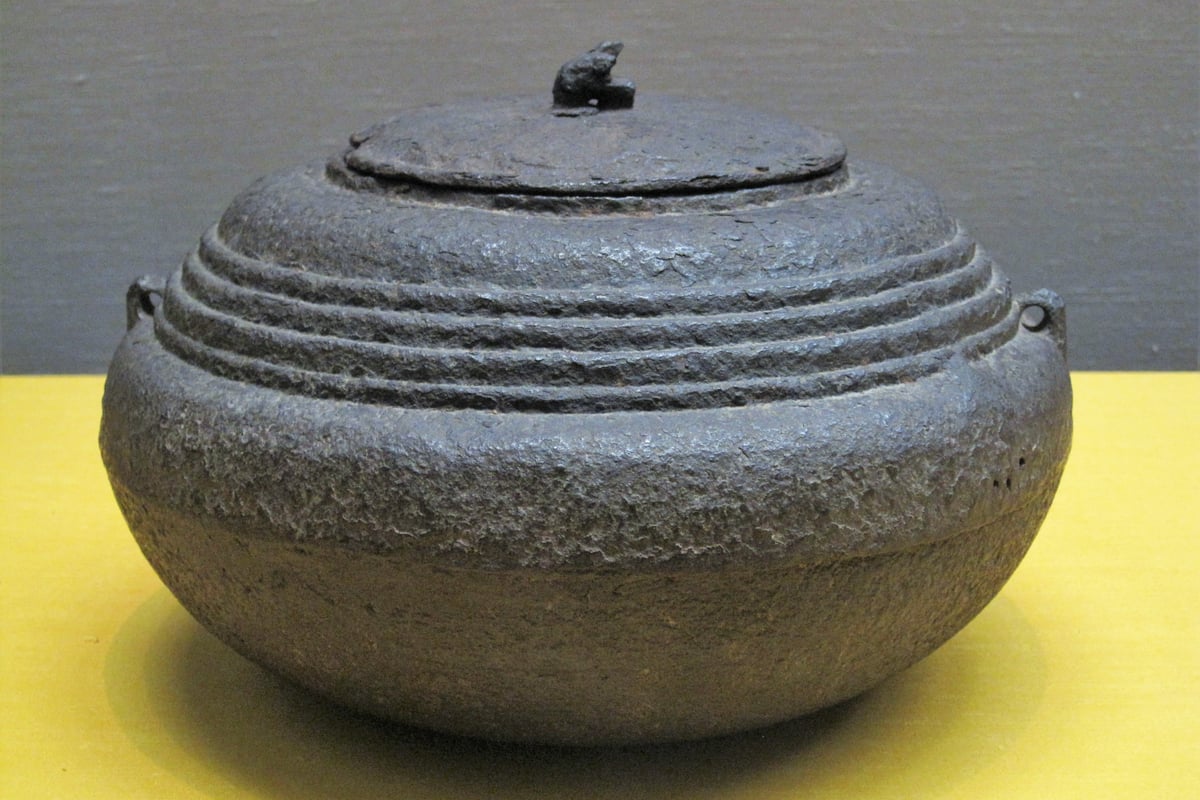
Temmyo Imono
Temmyo Imono
Temmyo Imono is a traditional cast-metal craft passed down in Sano City, Tochigi Prefecture. According to tradition, it began during the Tengyo era (938-947), when five casters who had relocated from Kawachi Province cast weapons on the order of Fujiwara no Hidesato, making it one of the oldest surviving casting centers in Japan with a history of over a thousand years. By the end of the Kamakura period, everyday cast-iron pots such as rice-porridge cauldrons and water-boiling kettles were being widely produced, and as the tea ceremony grew popular, tea kettles with a rustic, rough-textured surface became prized by tea masters, earning Temmyo the nickname 'Ashiya in the west, Temmyo in the east' alongside the Ashiya kettles of Fukuoka. Sen no Rikyu, Oda Nobunaga, and Toyotomi Hideyoshi are all said to have used Temmyo tea kettles. Today, casters in Sano still preserve the sand-mold casting technique much as it was in the Edo period, hand-finishing wind chimes, tea kettles, and temple bells one at a time. In March 2024, 'Tools and Products of Sano's Temmyo Casting' was designated an Important Tangible Folk Cultural Property, drawing renewed attention to its value.
Tokyo Ginki
Tokyo Ginki
Tokyo Ginki is a silverware craft produced in Tokyo's Taito, Arakawa, and Bunkyo wards, in which tea utensils, personal accessories, and sake vessels are made using traditional techniques such as forging (tankin), chasing/engraving (chokin), inlay work (kirihame), and soldering/brazing. Japan's history of silverware dates back a long way; records of silver tableware and sake vessels already appear in the Engishiki, a Heian-period legal code. From the mid-Edo period, silverware came into wide use among townspeople who had gained economic power, and specialist artisans known as kazari-shokunin (ornament makers) and shirogane-shi (silversmiths) developed their craft. From the Meiji era onward, Western refining techniques were also incorporated, and at the 1867 Paris Exposition, the sophistication of Japanese silverware is said to have astonished experts from abroad. Made with silver of at least 92.5% purity, the craft is characterized by techniques such as hammered texture (tsuchime), created by striking patterns with a metal hammer, and distinctive surface textures such as rock-grain (ganseki-me) and matting (goza-me). Today it remains widely loved as tea utensils, accessories, and other items that grow more comfortable to use with age. It was designated a Traditional Craft Designated by the Minister of Economy, Trade and Industry in 1979.
Tsugaru Forged Blades (Tsugaru Uchihamono)
Tsugaru Uchihamono
Tsugaru Uchihamono are forged blades that trace their roots to the sword- and farm-tool smiths who once lined the streets of Hirosaki Castle Town during the domain era. So many blacksmiths gathered in early-Edo-period Hirosaki that a district was named 'Kajimachi' (Blacksmith Town), and their skills in forging swords and cannons were passed down over the generations into the making of everyday tools such as sickles, hoes, and kitchen knives. Blades forged using the traditional 'hizukuri' (fire-forging) and 'dorotsuchi' (mud-coating) tempering techniques combine excellent sharpness with durability. Because Aomori Prefecture is a major apple-growing region, the shears and saws used for pruning and fruit thinning have also become an important Tsugaru Uchihamono product, and the craft has developed hand in hand with apple cultivation around Hirosaki. It was designated an Aomori Prefecture Traditional Craft in March 1996, and blacksmiths today continue to carry out the entire process, from fire-forging to finishing, by hand.