Image: Wikimedia Commons
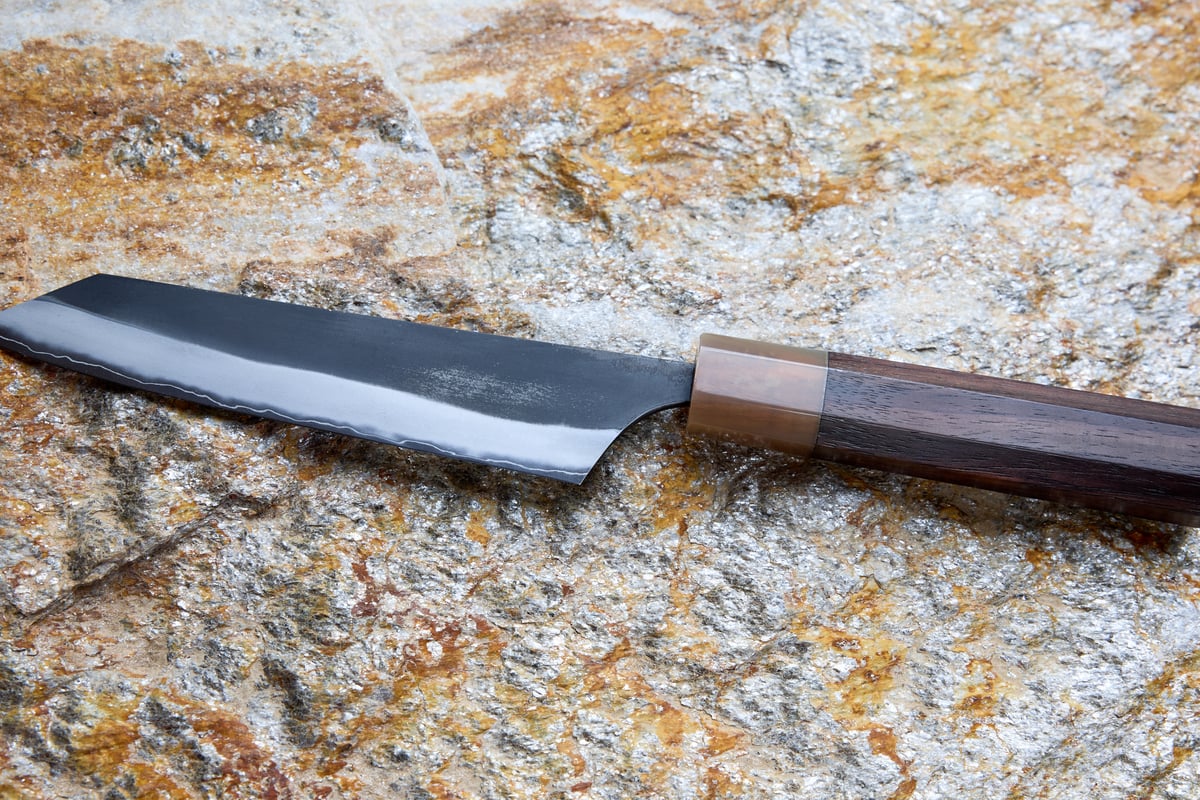
Echigo Sanjo Uchihamono are forged blades made in Sanjo City, Niigata Prefecture. Making use of the technique of 'free forging,' in which iron and steel are heated in a furnace until red-hot and shaped by striking them with a hammer, the area has produced a wide variety of items. The range includes kitchen knives and kiridashi knives, carpentry tools such as planes and chisels, sickles and nata hatchets, pruning shears, yattoko pincers, and even Japanese forged nails (wakugi). Its beginnings are traced to 1625 (Kan'ei 2) in the early Edo period. It is said that, to help farmers suffering from river floods, Otani Seibei invited nail smiths from Edo and spread the making of Japanese forged nails as a side job. In time, full-time blacksmiths emerged, and when methods for making saws and nata hatchets were introduced from the Aizu area, the products expanded to blades in general. Valued for shapes and materials specialized for each use, ease of handling, and long-lasting sharpness, it became a Traditional Craft Designated by the Minister of Economy, Trade and Industry in 2009. At Sanjo Blacksmith Dojo in the city, visitors can casually try their hand at blacksmithing.
Origin
The beginning of blacksmithing in Sanjo is traced to 1625 (Kan'ei 2) in the early Edo period. It is said that, to help farmers suffering from river floods, Otani Seibei invited nail smiths from Edo and spread the making of Japanese forged nails (wakugi) as a side job for farming households. Around 1649 (Keian 2), full-time blacksmiths appeared, and the name 'Kaji-machi' (Blacksmiths' Town) can be seen in a 1658 (Manji 1) land survey register. This suggests that a settlement of craftsmen had already formed.
History
When methods for making saws, nata hatchets, and other tools were introduced from the Aizu area in 1661 (Kanbun 1), the products expanded from nails to sickles, saws, and kitchen knives. Farm tools such as sickles and hoes developed alongside the reclamation of new rice fields, and as commerce flourished through boat transport on the Shinano River, production extended to carpentry tools such as chisels and planes, as well as kitchen knives. By the end of the Edo period, the area had become a major production center for Japanese forged nails, and hardware merchants expanded sales channels beyond the prefecture. In April 2009, it was designated a national Traditional Craft.
Features
Its greatest characteristic is the advanced free forging technique, in which iron, or iron and carbon steel, is heated in a furnace and shaped by hammering it out lengthwise and widthwise. Because the shape is formed by the craftsman's hands without relying on molds, shapes and materials can be tailored to each use. Easy to handle, with lasting sharpness and the durability to be used for a long time, these blades are highly trusted by professionals such as carpenters and chefs. As a Traditional Craft, the handles are required to be made of wood.
Techniques
Free forging
A technique of shaping iron or steel, heated red in a furnace, by hammering it out lengthwise and widthwise without using molds. Because the craftsman can adjust thickness and shape by feel, it forms the foundation of Sanjo uchihamono, which produces a diverse range of items from kitchen knives to farm tools and carpentry tools.
Forge welding (tansetsu)
A technique in which iron for the body and carbon steel for the cutting edge are layered, heated, and hammered to join them into one piece. Many of the processes, from forge welding to quenching and edging, are still carried out by hand by craftsmen today.
Materials Used
Production Process
- 1
Forging and forge welding
Iron and steel are heated in a furnace, then hammered out while being joined together.
- 2
Shaping
The metal is hammered out and refined into a shape suited to its use.
- 3
Quenching
The heated blade is rapidly cooled to harden the edge.
- 4
Edging and sharpening
An edge is put on the blade and sharpened to finish its cutting performance.
| Main Production Areas |
|
|---|
Artisans & Workshops
越後三条鍛冶集団
The production-area organization for Echigo Sanjo Uchihamono, based within Sanjo Blacksmith Dojo. Led by certified traditional craftsmen, it works to preserve and pass on the techniques unique to the area, and is also involved in the hands-on courses at the dojo.
Official site →庖丁工房タダフサ
A kitchen knife maker founded in Sanjo City in 1948 (Showa 23). It makes everything from household knives to professional-grade knives and soba-cutting knives, and runs a factory shop adjacent to its factory.
Official site →How to Buy
- 庖丁工房タダフサ ファクトリーショップ
- A directly run store attached to the factory in Higashi-Honjoji, Sanjo City. It carries kitchen knives, cutting boards, and whetstones, and also offers resharpening of kitchen knives, including those of other makers, and resurfacing of cutting boards. Open Monday to Saturday and on public holidays, 9:00 to 17:00.Where to buy →PR
- 燕三条地場産業振興センター 物産館
- About a 5-minute walk from Tsubame-Sanjo Station. It displays and sells around 10,000 items from the Tsubame-Sanjo area, including blades, metal Western tableware, kitchenware, and pots, so visitors can compare local products while choosing.Where to buy →PR
Hands-on Experiences
三条鍛冶道場
新潟県三条市元町11-53
An experience making a paper knife by hammering a gosun-kugi (five-sun nail) costs around 2,200 yen for visitors from outside Sanjo City (about 30 minutes for one person). Courses in making Japanese forged nails and sharpening kitchen knives are also offered. Reception hours are 9:00 to 11:00 and 13:00 to 15:30; groups of 4 or more must reserve.
View details →FAQ
Q. What kinds of items are included in Echigo Sanjo Uchihamono?
A. Ten items are designated as Traditional Crafts: kitchen knives, kiridashi knives, planes, chisels, nata hatchets, masakari (broad axes), sickles, pruning shears, yattoko pincers, and Japanese forged nails. Its range, from everyday blades to craftsmen's tools, is a distinctive feature.
Q. Are Japanese forged nails still made in Sanjo?
A. Japanese forged nails are one of the items designated as Traditional Crafts. In 1991, for the Shikinen Sengu (periodic rebuilding) of Ise Grand Shrine, about 68,000 nails of 5 types and about 13,500 sets of metal fittings of 24 types were supplied from Sanjo.