 Image: Wikimedia Commons
Niigata Prefecture
Facing the Sea of Japan and crossed by the Shinano River, Niigata Prefecture is home to crafts shaped by life in deep snow and a food culture rooted in its standing as a rice-growing region. It has 17 items designated as Traditional Crafts by the Minister of Economy, Trade and Industry. Textiles such as Ojiya Chijimi, whose bolts are finished by spreading them out on the snow, as well as Shiozawa Tsumugi and Tokamachi Gasuri, have been handed down alongside lacquer arts such as Murakami Kibori Tsuishu and Niigata Shikki. In Tsubame-Sanjo, metalworking skills such as Tsubame Tsuiki Doki copperware and Echigo Sanjo Uchihamono forged blades remain active, and in Kamo, paulownia chest making still thrives. Mumyoi-yaki from Sado is a hard ware made by firing the red clay of the gold mine. For food, the region is known for Hegi Soba from Uonuma and Ojiya, made with funori seaweed as a binder; Shiobiki-zake salt-cured salmon from Murakami; and Noppe, a simmered dish that makes use of the thickness of taro. Distinctive flavors such as Niigata City's Tarekatsu-don and Italian, as well as Sasa Dango, can also be enjoyed.
Niigata's Traditional Crafts
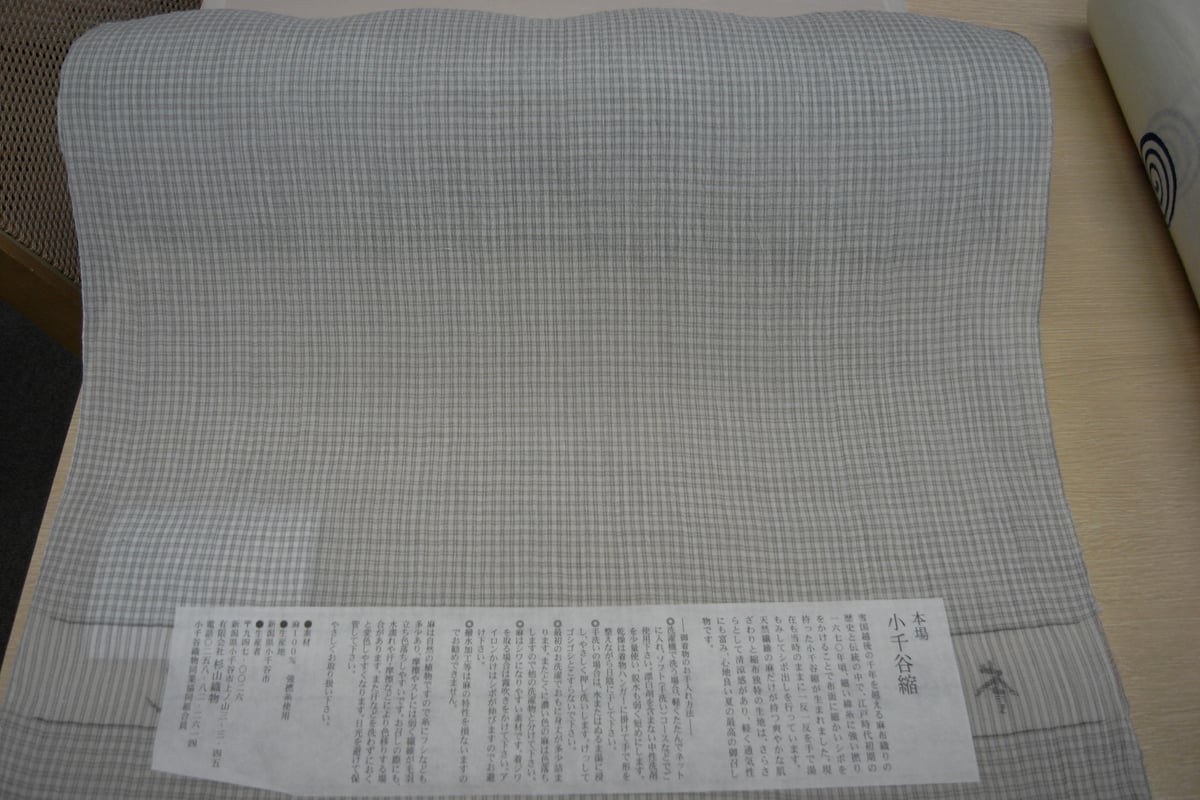
Ojiya Chijimi (ramie crepe)
Ojiya Chijimi
Ojiya Chijimi is a bast-fiber textile made from ramie (choma), woven mainly in Ojiya City, Niigata Prefecture. Choma is a plant also known as ramie, and its fibers are long, with firmness and body. The weft is given a hard twist before weaving, and the cloth is finished with yumomi (kneading in hot water), which brings out fine wrinkles on the surface of the fabric called shibo (fine crinkles). Thanks to this shibo, the cloth does not cling to the skin, and it has long been cherished as a summer kimono fabric with excellent breathability and moisture absorption. It is said to have begun in the early Edo period, when Hori Jiro Masatoshi (Akashi Jiro), who is said to have come from Akashi in Harima Province (Banshu), made improvements to the bast-fiber cloth of Echigo. On clear days from February to March, the woven bolts of cloth are spread out on snowfields for snow bleaching (yuki-zarashi), a seasonal sight in Ojiya. It was designated an Important Intangible Cultural Property in 1955 and a Traditional Craft Designated by the Minister of Economy, Trade and Industry in 1975. In 2009, it was inscribed on the UNESCO Intangible Cultural Heritage list together with Echigo Jofu.

Shiozawa Tsumugi (silk pongee)
Shiozawa Tsumugi
Shiozawa Tsumugi is a yarn-dyed (dyed before weaving) silk textile woven mainly in the Shiozawa district of Minamiuonuma City, Niigata Prefecture. Yarn-dyeing is a method in which the thread is dyed first and then woven into cloth. Bast-fiber textiles have been woven in the Shiozawa area since ancient times, and bast-fiber cloth woven here during the Tenpyo era of the Nara period survives in the Shosoin Repository. Shiozawa Tsumugi is said to have been born around the Meiwa era (1764–1771) in the mid-Edo period by bringing the techniques of this bast-fiber textile, namely Echigo Jofu, to silk. Raw silk or tamaito is used for the warp and thread hand-spun from silk floss (mawata) for the weft, and kasuri (ikat) threads dyed by hand-binding or hand-rubbing (te-surikomi) are aligned one by one as the cloth is woven. Extremely fine kasuri called kagasuri (mosquito kasuri) and the delicate patterns of cross (juji) kasuri and tortoiseshell (kikko) kasuri create an elegant, understated character. It became a Traditional Craft Designated by the Minister of Economy, Trade and Industry in February 1975. The same Shiozawa production area is also home to Hon-Shiozawa, long known by the name 'Shiozawa Omeshi,' which was designated as a separate Traditional Craft in December 1976.
Tokamachi Gasuri (silk kasuri)
Tokamachi Gasuri
Tokamachi Gasuri is a yarn-dyed (dyed before weaving) silk textile woven in Tokamachi City and Tsunan Town, Niigata Prefecture. Yarn-dyeing is a method in which the thread is dyed first and then woven into cloth. It inherited the techniques of traditional Echigo Chijimi (a bast-fiber textile) and was born in the mid-19th century when these techniques were applied to silk weaving. The weaver proceeds while aligning the patterns of warp and weft threads that have been partially dyed in advance, creating delicate designs that freely combine warp kasuri (ikat) and weft kasuri. Its appeal lies in the distinctive luster of silk and a calm, understated texture, and it is worn widely, from everyday kimono to stylish outing wear. Tokamachi has long been a weaving town and was known in the Edo period as a production area for Echigo Chijimi. From the Meiji period onward, it built its foundation as a silk textile production area with summer fabrics such as Tokamachi Akashi Chijimi, and from the Showa 30s (1955–1964) it also expanded into dyeing, represented by Tokamachi Yuzen. Today it is one of Japan's leading comprehensive kimono production areas, with techniques for both yarn-dyeing and piece-dyeing (dyeing after weaving), and Tokamachi Gasuri became a Traditional Craft Designated by the Minister of Economy, Trade and Industry in November 1982.
Murakami Kibori Tsuishu (carved lacquerware)
Murakami Kibori Tsuishu
Murakami Kibori Tsuishu is lacquerware made in Murakami City, Niigata Prefecture. Delicate carving is applied to a wooden base of Japanese bigleaf magnolia (ho), Japanese horse chestnut (tochi), katsura, or similar woods, and natural lacquer is then applied over it again and again to finish it. Tsuishu (carved red lacquer) is originally a technique of Chinese origin in which patterns are carved into thickly built-up layers of red lacquer, but in Murakami the distinctive feature is that the wooden base itself is carved before the lacquer is applied. Its origin is said to date back about 600 years, when lacquer craftsmen who came from Kyoto to build temples passed on the techniques. In the Edo period, samurai of the Murakami domain learned carving from master craftsmen, and with the encouragement of successive domain lords, the craft spread from the samurai to the townspeople. Representative tsuishu is characterized by a calm surface texture achieved by giving the red top coat a matte finish, and the red grows more vivid with the passing years. Today, six techniques, including tsuishu, tsuikoku, and shudame-nuri, are collectively called Murakami Kibori Tsuishu. It was designated a Niigata Prefecture Intangible Cultural Property in 1955 and a Traditional Craft Designated by the Minister of Economy, Trade and Industry in February 1976.
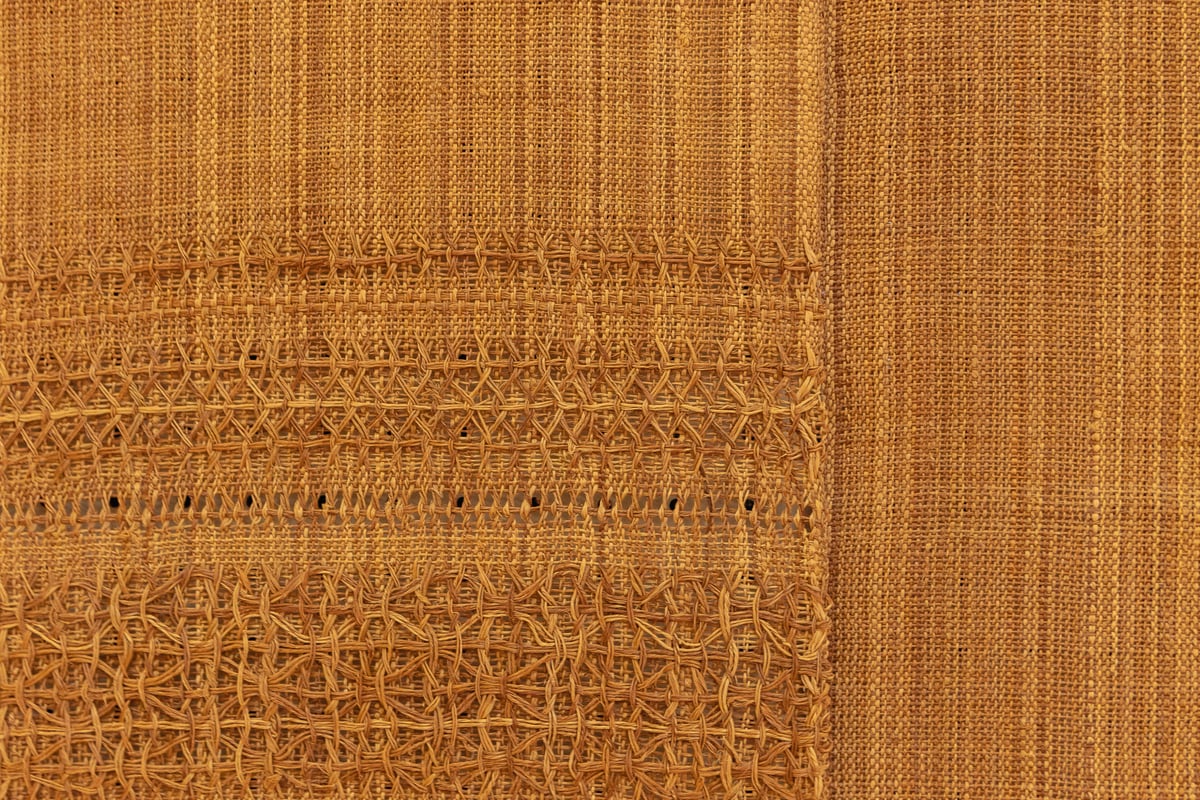
Uetsu Shinafu (bark-fiber cloth)
Uetsu Shinafu
Uetsu Shinafu is a cloth handed down in the Sekigawa district of Tsuruoka City, Yamagata Prefecture, and the Yamakumada and Kaminari districts of Murakami City, Niigata Prefecture, made by spinning thread from the bark fibers of trees such as the Japanese linden and the giant-leaved linden and weaving it into cloth. As a textile made from tree bark, it is considered the oldest of its kind in Japan, and as one of the 'primitive cloths' said to date back to the Jomon period, it is counted among Japan's three great ancient cloths, alongside Okinawa's bashofu (banana-fiber cloth) and Shizuoka's kuzufu (kudzu-fiber cloth). Every step, from thread-making to weaving, is done entirely by hand, and the cloth takes about a year to complete through roughly 22 processes. It is durable and water-resistant, and grows more supple in texture the more it is used. It was once used for work clothes, rice sacks, and fishing nets, but today it lives on in the form of hats, bags, obi sashes, and other items. In 2005, the shina cloth of the three production areas spanning Yamagata and Niigata was designated a Traditional Craft Designated by the Minister of Economy, Trade and Industry under the name 'Uetsu Shinafu.'
Niigata Shikki (lacquerware)
Niigata Shikki
Niigata Shikki is lacquerware made in Niigata City. It is said to have begun in the Genna era (1615–1624) at the start of the Edo period, when Shunkei-nuri from Akita (Noshiro) was introduced. In the 15th year of Kan'ei (1638), an area where lacquerware was sold exclusively, called 'wandana,' was established in what is now Furumachi 7-bancho. The port town of Niigata was a port of call for the Kitamaebune trading ships, a place where goods and culture gathered, and a variety of lacquering techniques from around the country were brought here. For this reason, Niigata Shikki is called 'a treasure trove of kawari-nuri (decorative lacquer finishes),' and several dozen types of finishes are said to have been handed down. Among them, 'take-nuri (bamboo-imitation lacquer),' so realistic it can be mistaken for real bamboo, is known as a rare finish not seen in other production areas. In March 2003, five techniques, hana-nuri, ishime-nuri, nishiki-nuri, isogusa-nuri, and take-nuri, became a Traditional Craft Designated by the Minister of Economy, Trade and Industry. Chopsticks, trays, bowls, business card holders, and other items remain popular today as tools for everyday life.
Tsubame Tsuiki Doki (hammered copperware)
Tsubame Tsuiki Doki
Tsubame Tsuiki Doki is copperware made in Tsubame City, Niigata Prefecture. A single flat copper sheet is repeatedly hammered up with a metal hammer and finished into a seamless, three-dimensional vessel. 'Tsuiki' means to raise a form by hammering. In Tsubame, making Japanese forged nails (wakugi) spread as a side job for farmers in the early Edo period, and skills in handling the hammer took root there. Against the backdrop of copper being mined at nearby Mt. Yahiko, the technique of tsuiki (hammering up) is said to have been introduced in 1768 (Meiwa 5) by Toshichi, an itinerant craftsman from Sendai. Gyokusendo, founded in 1816 (Bunka 13), is the representative workshop that has carried on this technique for more than 200 years. Kettles, teapots, sake vessels, flower vases, and other items are made, and their appeal lies in the advanced skill of hammering out even the spout from a single sheet, and in coloring that deepens the more the piece is used. It was designated a national Traditional Craft in 1981.
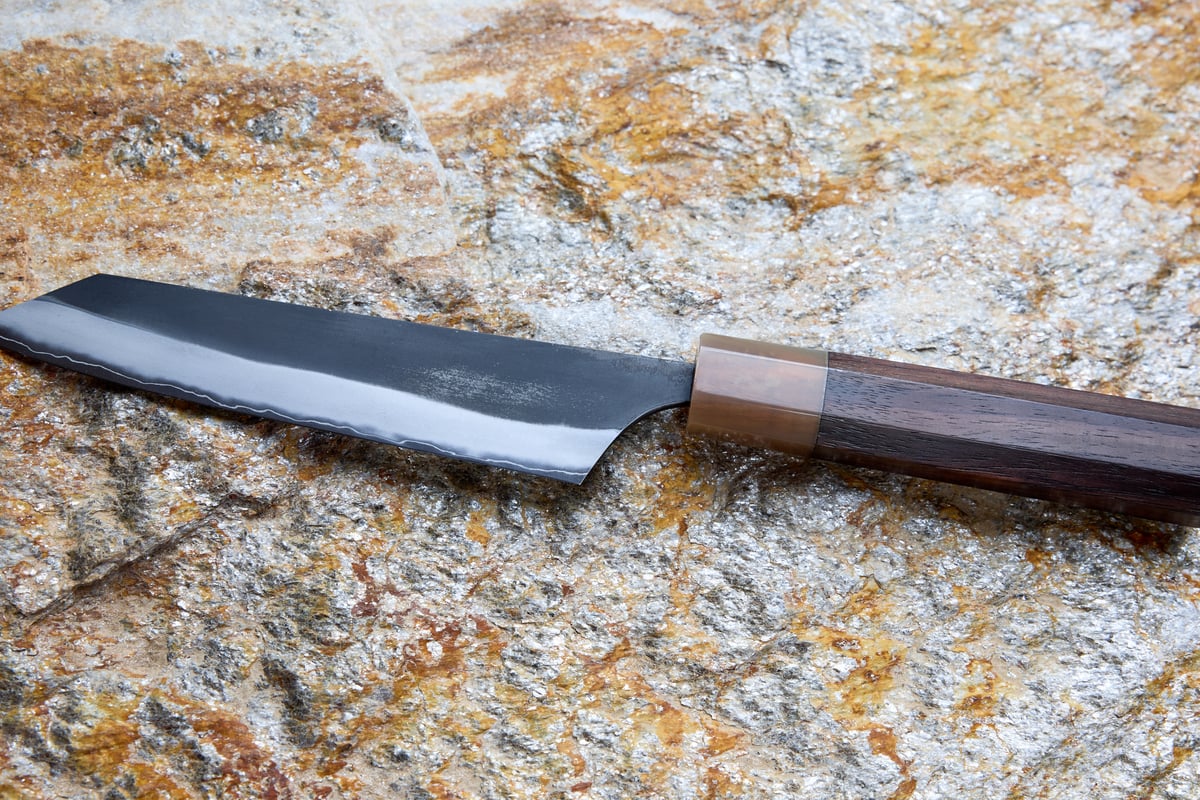
Echigo Sanjo Uchihamono (forged blades)
Echigo Sanjo Uchihamono
Echigo Sanjo Uchihamono are forged blades made in Sanjo City, Niigata Prefecture. Making use of the technique of 'free forging,' in which iron and steel are heated in a furnace until red-hot and shaped by striking them with a hammer, the area has produced a wide variety of items. The range includes kitchen knives and kiridashi knives, carpentry tools such as planes and chisels, sickles and nata hatchets, pruning shears, yattoko pincers, and even Japanese forged nails (wakugi). Its beginnings are traced to 1625 (Kan'ei 2) in the early Edo period. It is said that, to help farmers suffering from river floods, Otani Seibei invited nail smiths from Edo and spread the making of Japanese forged nails as a side job. In time, full-time blacksmiths emerged, and when methods for making saws and nata hatchets were introduced from the Aizu area, the products expanded to blades in general. Valued for shapes and materials specialized for each use, ease of handling, and long-lasting sharpness, it became a Traditional Craft Designated by the Minister of Economy, Trade and Industry in 2009. At Sanjo Blacksmith Dojo in the city, visitors can casually try their hand at blacksmithing.
Kamo Kiri Tansu (paulownia chests)
Kamo Kiri Tansu
Kamo Kiri Tansu are chests of drawers made of paulownia wood in Kamo City, Niigata Prefecture, and the surrounding area. Paulownia swells when humidity is high, keeping moisture out, and shrinks when dry, improving ventilation, which makes it well suited to storing clothing. Chest-making in Kamo began in the Tenmei era (1781-1789) of the Edo period, and it is said to have originated with Maruya Koemon, who made chests from cedar alongside his carpentry work. Because natural paulownia wood was plentiful in the surrounding mountains, the area grew into a production center for paulownia chests (kiri-tansu), which were shipped by boat via the Kamo River and the Shinano River to Niigata and the Tohoku region. It is still regarded as Japan's leading production area, accounting for about 70 percent of national paulownia chest output, and in 1976 it became a Traditional Craft Designated by the Minister of Economy, Trade and Industry (at the time, the Minister of International Trade and Industry). The chests are assembled without gaps using sashimono joinery techniques that use no metal nails, and because the surface can be planed down and restored even when old, they are said to last more than 100 years.
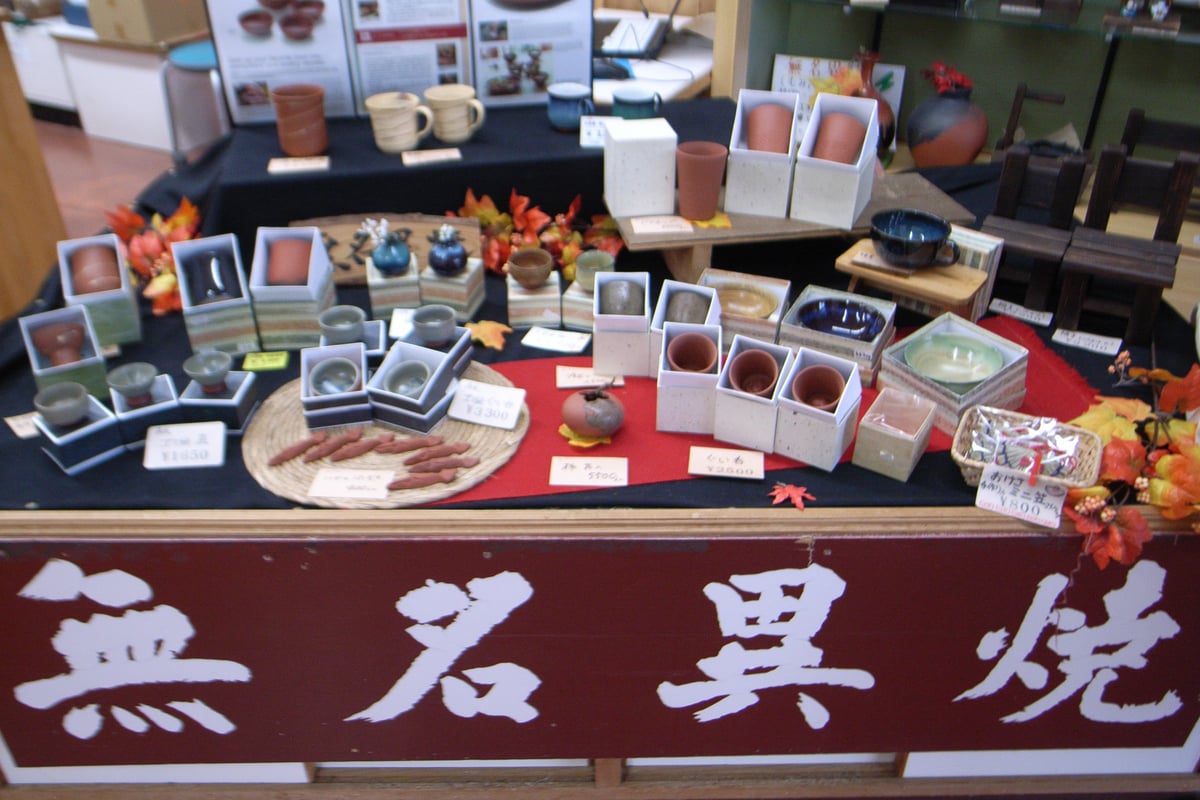
Mumyoi-yaki (Sado red-clay pottery)
Mumyoi-yaki
Mumyoi-yaki is pottery made mainly in the Aikawa district of Sado City, Niigata Prefecture. 'Mumyoi' refers to a red clay rich in iron oxide that is produced at the Sado Gold and Silver Mine, and in the past it was also used as a medicine, for example to stop bleeding. When this mumyoi is used in the clay body and fired hard at high temperatures, it shrinks by as much as about 30 percent between forming and drying, and the finished piece is extremely hard. It is characterized by the clear metallic sound it makes when tapped and by a luster that increases the more it is used. Its beginnings are traced to 1819 (Bunsei 2), when raku ware using mumyoi was fired, and the present technique of firing it hard at high temperatures was established in the Meiji era. In 2003 it was designated a national Important Intangible Cultural Property, and Ito Sekisui V was recognized as its holder (Living National Treasure). Further, in October 2024, it became a Traditional Craft Designated by the Minister of Economy, Trade and Industry under the name 'Sado Mumyoi-yaki.' Some kilns on the island offer pottery wheel experiences.
Oguni Washi (handmade paper)
Oguni Washi
Oguni Washi is handmade washi paper made in Oguni Town, Nagaoka City, Niigata Prefecture. In Oguni, an area of heavy snowfall, unique methods that make use of snow have been handed down. Representative examples are snow bleaching (yuki-zarashi), in which the bark of the raw material, kozo (paper mulberry), is laid out on the snow in the sun to bleach it, and kangure, in which the stack of freshly made sheets (shito) is buried in snow and kept there until spring. The practice of 'drying in the sun on the snow,' in which made sheets are pasted onto boards and dried on the snow, is also carried out. According to records, kozo cultivation and papermaking were carried out as winter work by farming households in 1682 (Tenna 2). In the Edo period, paper was paid as annual tax from mountain settlements that had no rice paddies. In the early Showa era, as many as 22 million sheets were produced in a single winter, and today the Oguni Washi Production Cooperative passes on these skills. The methods using snow became a national Selected Intangible Cultural Property and a Niigata Prefecture Intangible Cultural Property, and in 2022 it was designated a Prefecturally Designated Traditional Craft of Niigata Prefecture. It is used for calligraphy and painting paper, sake labels, and more.
Niigata's Local Food
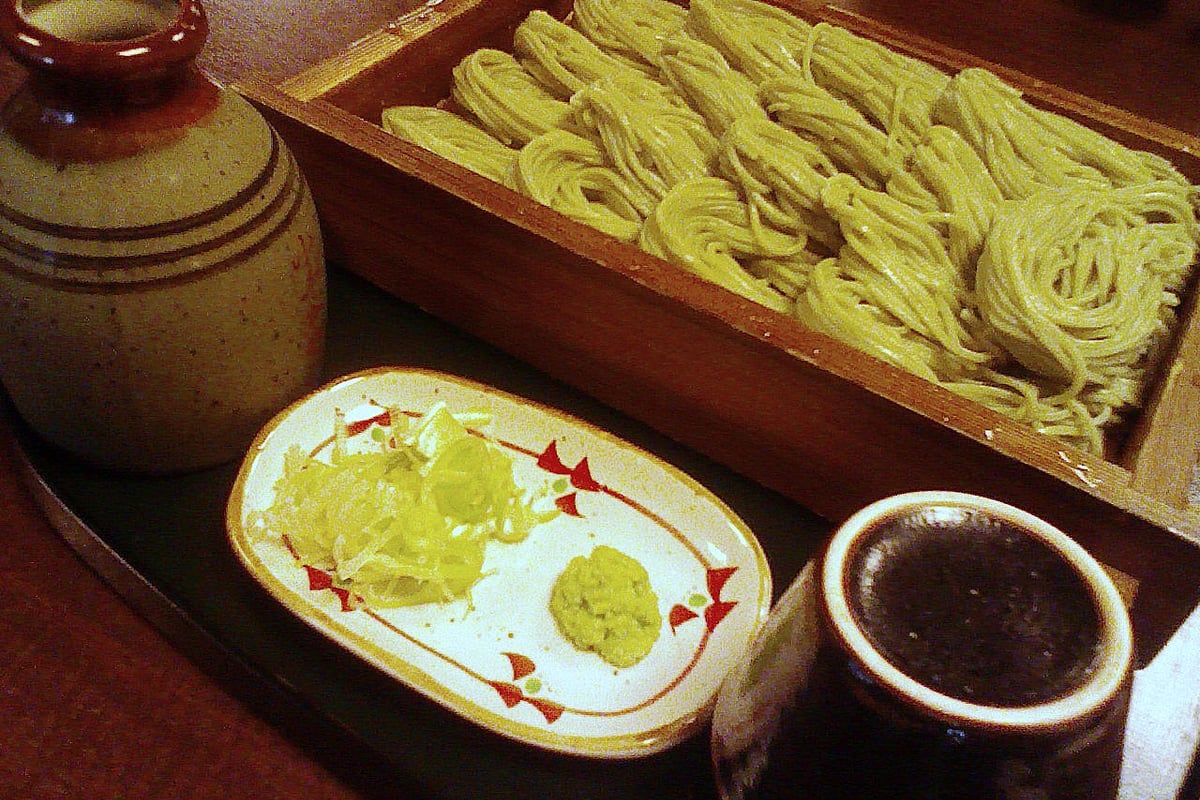
Hegi Soba
Hegi Soba
Hegi Soba is a local dish of Niigata Prefecture in which soba noodles made with funori seaweed as a binder are arranged in bite-sized portions on a hegi (square wooden tray). It is said to have originated in the Uonuma region, and Ojiya City and Tokamachi City in particular are known as soba towns. Funori was originally used to size (starch) the threads of textiles such as Ojiya Chijimi. Repurposing this seaweed, familiar in a textile-producing area, for soba making gave rise to this distinctive noodle. Soba bound with funori is prized for its smooth, slippery texture going down the throat and its firm, springy bite. The way the boiled noodles are gathered into bite-sized coils and lined up is called tefuri (bite-sized coiled portions), and its visual beauty is part of the appeal. Serving it with karashi mustard rather than wasabi as a condiment is another custom unique to this area. At specialty restaurants, it can be ordered by the number of people, from a single serving to portions for several, so a group can share soba served on a large hegi. Today it is eaten not only in the Uonuma region but throughout Niigata Prefecture.
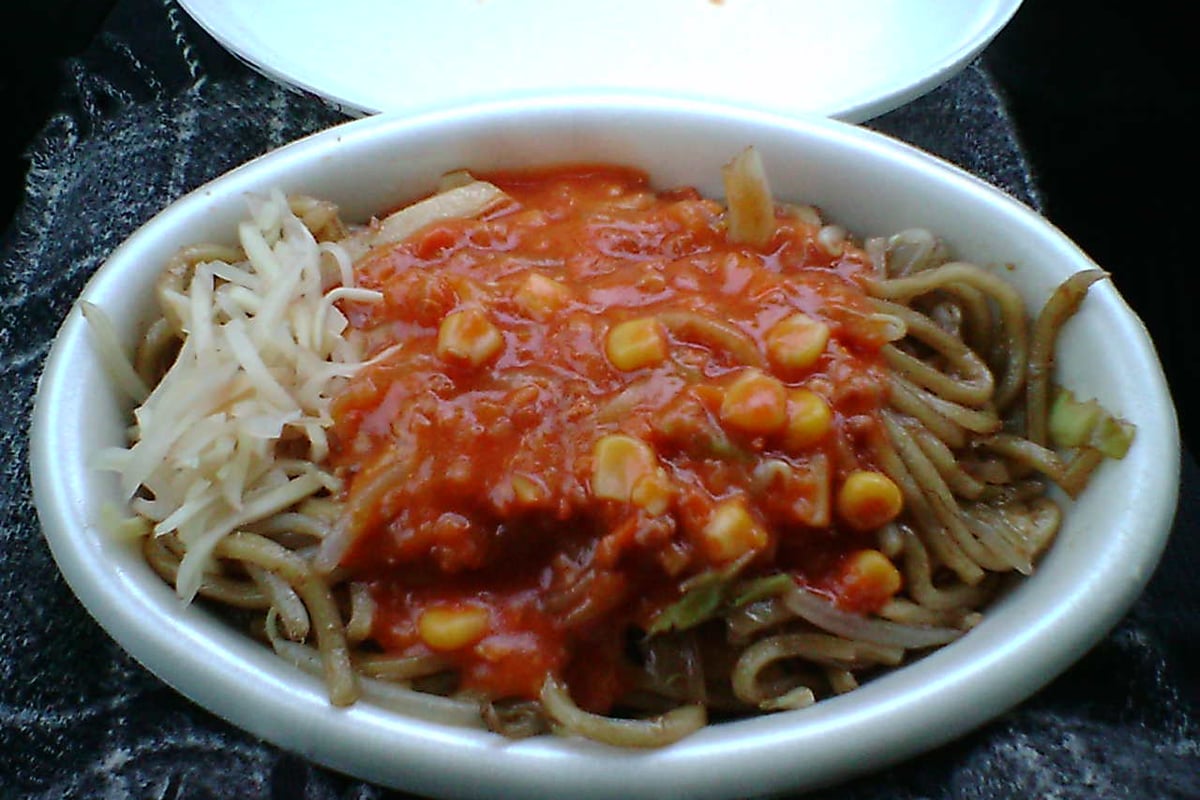
Italian (Niigata-style yakisoba)
Niigata Italian
Italian is a fast food that originated in Niigata City, consisting of sauce-flavored yakisoba (stir-fried noodles) topped with tomato sauce or meat sauce. Although its name evokes Italian cuisine, it is actually a Niigata-original local specialty that gives Japanese yakisoba a Western-style twist. It is said to have been devised in 1959 by Mikazuki Haruzo (三日月晴三), the proprietor of the sweets cafe Mikazuki (三日月) in Niigata City, inspired by sauce yakisoba he had eaten in Tokyo. The name comes from borrowing the image of spaghetti and making it a dish eaten with a fork. Today, two chains are known as its leading representatives: Mikazuki, centered in Niigata City, and Friend, centered in Nagaoka City. Each has its own character in sauce, garnish, and way of eating — Mikazuki, for example, serves tomato sauce with white pickled ginger, while Friend serves meat sauce with red pickled ginger. Since it can be enjoyed casually for a few hundred yen, it has long been loved as a soul food of the people of Niigata Prefecture.
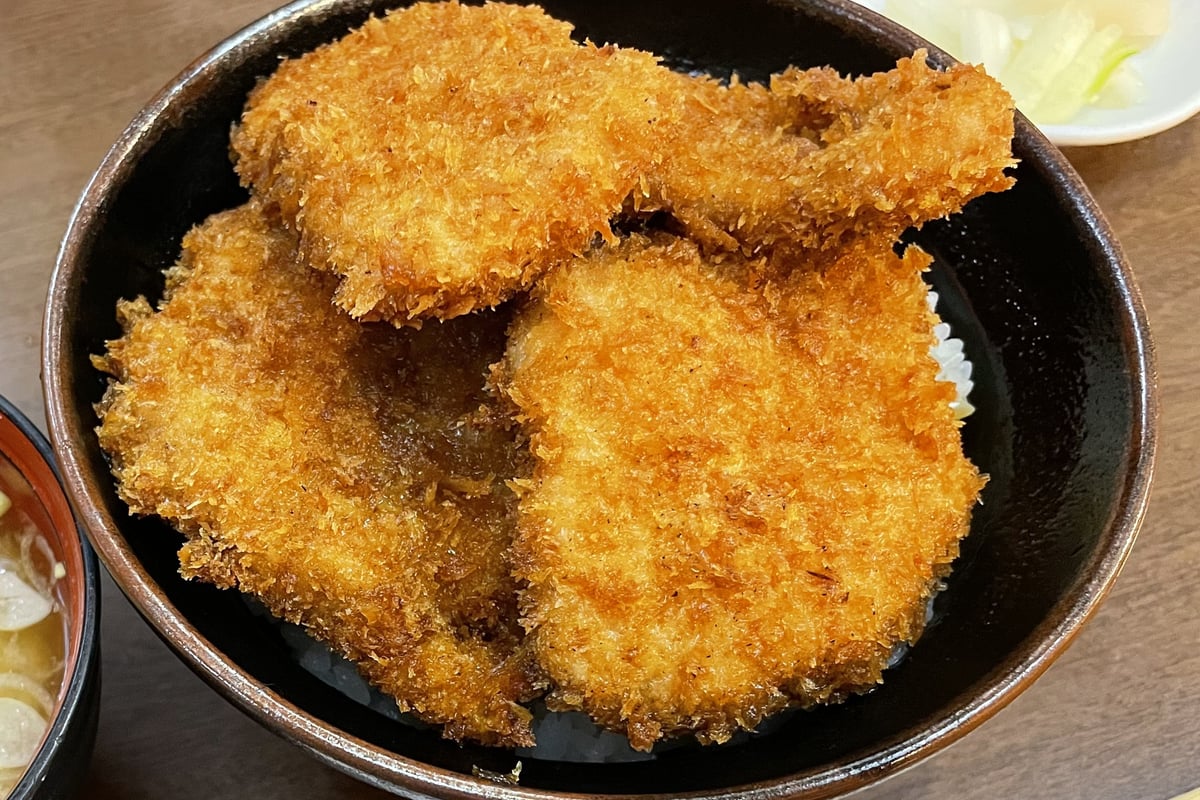
Niigata Tarekatsu-don
Niigata Tarekatsu-don
Niigata Tarekatsu-don is a rice bowl that originated in Niigata City, made by dipping thin, freshly fried pork cutlets in a sweet and savory soy-based sauce and placing them on rice. Unlike the katsudon common throughout Japan, which is simmered with egg, it has a simple preparation finished only with the flavor of the sauce, without egg. It is said to have been devised in the early Showa period by Komatsu Michitaro (小松道太郎), the first owner of Tonkatsu Taro (とんかつ太郎), one of the food stalls that lined the canals in central Niigata City. When he dipped cutlets — then a modern Western-style dish — in soy-based sauce and served them on rice, the dish became a great hit. It is common to place several thin cutlets on top, and the sweet and savory sauce soaks nicely into the rice. At Tonkatsu Taro, the originating restaurant, the dish is still listed simply as 'katsudon.' The name 'Tarekatsu-don' was coined and popularized around 1990 by the second-generation owner of Tonkatsu Masachan (とんかつ政ちゃん). Today, centered on Niigata City, it is a standard menu item at tonkatsu restaurants and eateries throughout the prefecture.
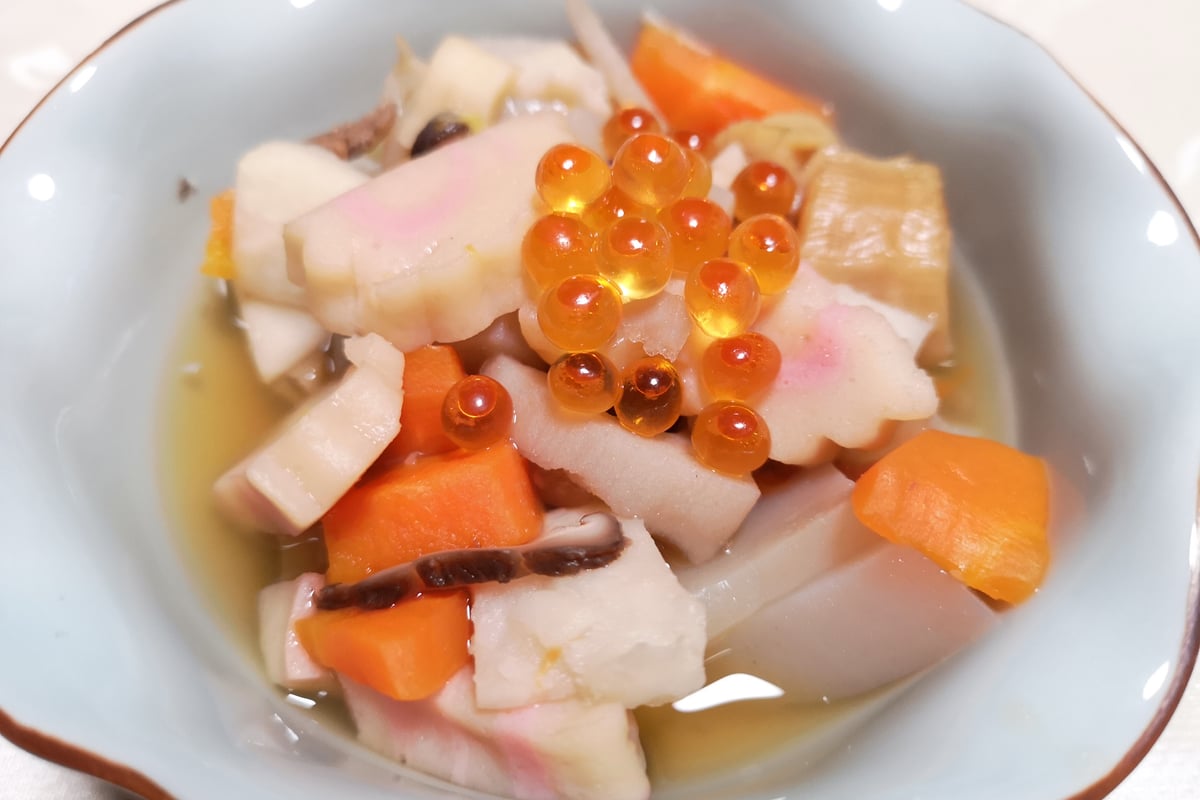
Noppe
Noppe
Noppe is a representative local dish of Niigata Prefecture in which taro takes center stage, simmered in a light broth with carrot, konnyaku, dried shiitake mushroom, bamboo shoots, and other ingredients. Thickened by the natural sliminess of taro or by potato starch, Niigata's Noppe is characterized by being closer to a simmered dish than a soup. The broth is made from dried ingredients such as dried scallops and dried shiitake, and it is finished colorfully with scallops, ginkgo nuts, salmon, salmon roe, and more. As well as being a staple on New Year's Eve and New Year's Day, it has long been considered indispensable at gatherings such as festivals, memorial services, and weddings. It is delicious both warm and chilled, and not a few households prefer cold Noppe. The ingredients, cutting style, and method of thickening vary by area and household, and its name also changes from place to place, such as 'konimo' or 'kokusho.' Each household's recipe has been handed down from mother to child, and it is also enjoyed in school lunches, restaurants, and ekiben (station bento).
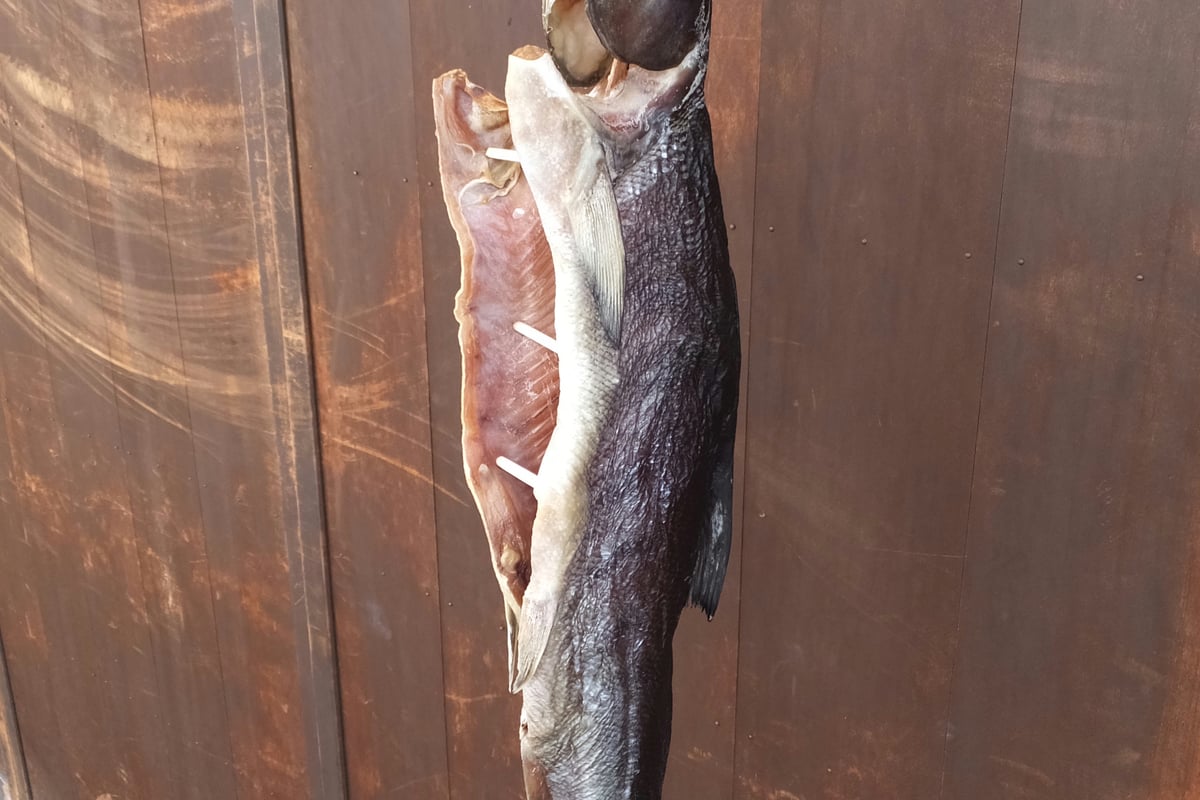
Shiobiki-zake (salt-cured salmon)
Murakami Shiobiki-zake
Shiobiki-zake is a processed salmon product handed down in Murakami City, Niigata Prefecture, made by rubbing salt into salmon caught in autumn and drying it in the cold wind. In Murakami, salmon is called 'iyoboya' in the local dialect, and the city has been closely tied to salmon since ancient times — salmon from the Miomote River is said to have been presented to the imperial court in the capital as early as the Heian period. In the Edo period, Aoto Buheiji, a samurai of the Murakami domain, focused on salmon's homing instinct and succeeded in what is regarded as the world's first natural hatching and propagation of salmon. In the castle town of Murakami, where seppuku (ritual disembowelment) was abhorred, a unique method of cutting called tomebara, in which the belly is split while leaving part of it connected, is still practiced today. From late autumn to early winter, the moist wind blowing in from the Sea of Japan slowly dries the flesh, producing a tender, mellow umami. In Murakami, it is an indispensable year-end fish (toshitori-zakana) for New Year's Eve. Some long-established shops in the city hang large numbers of salmon from their ceilings, conveying the culture of this salmon town to the present day.
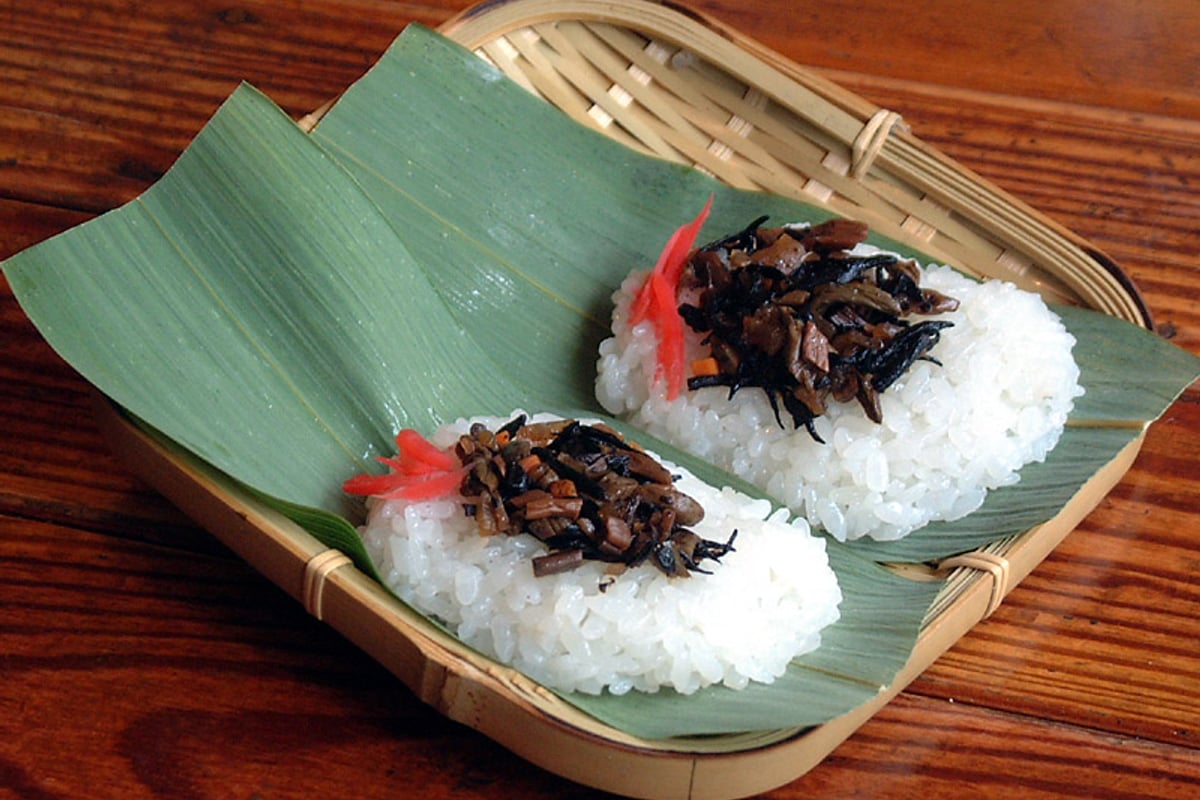
Sasa-zushi (Bamboo-Leaf Sushi)
Sasa-zushi
Sasa-zushi is a local dish of the Joetsu region of Niigata Prefecture in which bite-sized portions of vinegared rice are placed on kumazasa (Sasa veitchii) bamboo-grass leaves and colorfully topped with ingredients such as mountain vegetables, shredded thin omelet (kinshi tamago), and flaked salmon (soboro). It is made mainly in Myoko City, Joetsu City, and Itoigawa City, and Sasa-zushi of the same lineage is also handed down in the Hokushin area of northern Nagano Prefecture. Because the leaves are folded into the shape of a mi (winnowing basket), a farming tool, to hold the rice, some areas of the Joetsu region call it 'mizushi.' As for its birth, there is a story that Uesugi Kenshin's troops in the Sengoku (Warring States) period used sasa leaves in place of dishes to serve rice in the mountains, and another that it was presented to Kenshin on his way to the Battles of Kawanakajima. However, both are handed down as legends. Sasa leaves are said to have antiseptic properties, and because it can be easily picked up and eaten by hand, it has been passed down as a feast for special occasions such as Obon and festivals. Today it is also sold at sushi restaurants, farm produce stands, and tourist facilities.
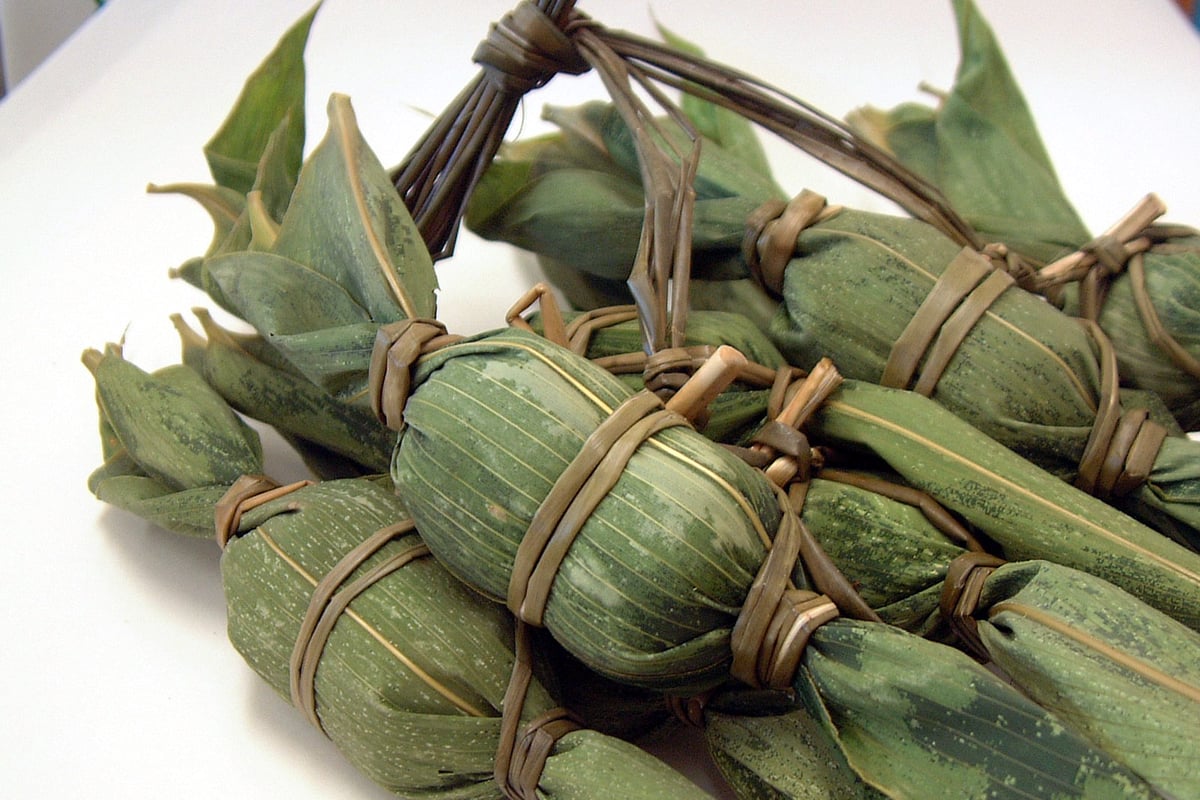
Sasa Dango (Bamboo-Leaf Wrapped Mugwort Dumplings)
Sasa Dango
Sasa Dango is a local confection representative of Niigata Prefecture, made by wrapping sweet red bean paste in dumpling dough kneaded with mugwort (yomogi), enclosing it in several sasa (bamboo-grass) leaves, tying it with cords of sedge or rush, and steaming it. It is distinguished by its bale-like shape, with cords tied at both ends. It is said to have been eaten for about 500 years in the Chuetsu and Kaetsu regions of Niigata and in parts of the Aizu region of Fukushima Prefecture. One theory holds that it was a portable preserved food of the Sengoku (Warring States) period that made use of the antibacterial properties of sasa leaves, and that Uesugi Kenshin carried it as field rations; another holds that it arose from the wisdom of making tasty use of broken rice that could not be paid as annual tax. It was once a confection for seasonal events, offered to Yakushi (the Buddha of healing) on the eighth day of the fourth month of the old lunar calendar and made in large quantities for the Boys' Festival (Tango no Sekku) on May 5. It became known nationwide after being chosen as a recommended souvenir by the prefecture and city for the Niigata National Sports Festival (1964, Showa 39), and it is now a classic Niigata souvenir.
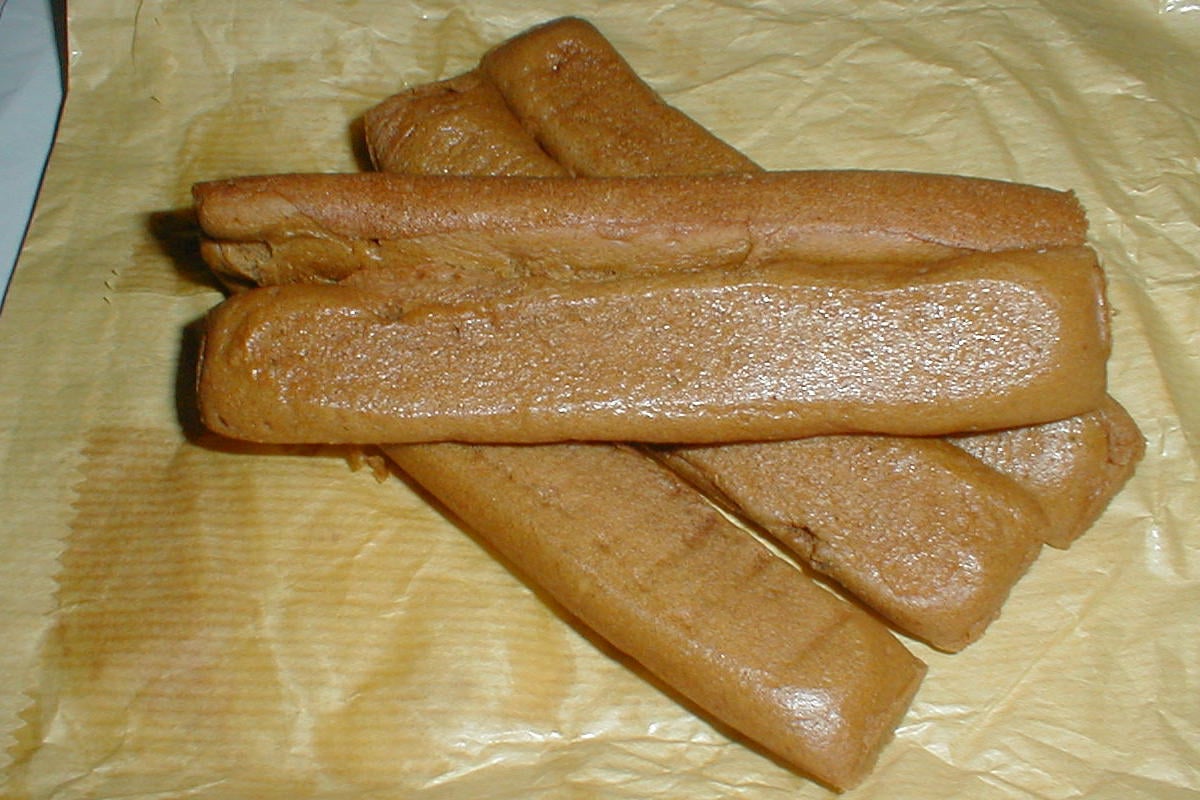
Poppo-yaki (Brown Sugar Baked Sticks)
Poppo-yaki
Poppo-yaki is a local confection of the Kaetsu region of Niigata Prefecture, made by baking a batter of wheat flour mixed with brown sugar (kokuto), water, and baking soda into long, thin sticks in a special baking device. It is brown and shaped like a slightly flattened stick, and its appeal lies in its chewy texture and the rustic sweetness of brown sugar. It is said to have originated around the end of the Meiji era as a baked dough confection devised by townspeople in the castle town of Shibata City, and north of the Agano River, centered on Shibata City, it is also called 'joki-pan.' It is sold mainly at stalls at festivals, temple and shrine fairs, and cherry blossom viewing sites, and the steam rising from the baking device and its sweet aroma are a seasonal hallmark of Niigata festivals. Sales are centered in the Kaetsu region, including Shibata City, Niigata City, and Murakami City, and have spread to Sanjo City in Chuetsu, with more stalls appearing in the Joetsu region in recent years. There are also shops that sell it year-round as well as vacuum-packed products, so it can now be enjoyed outside festival season too.
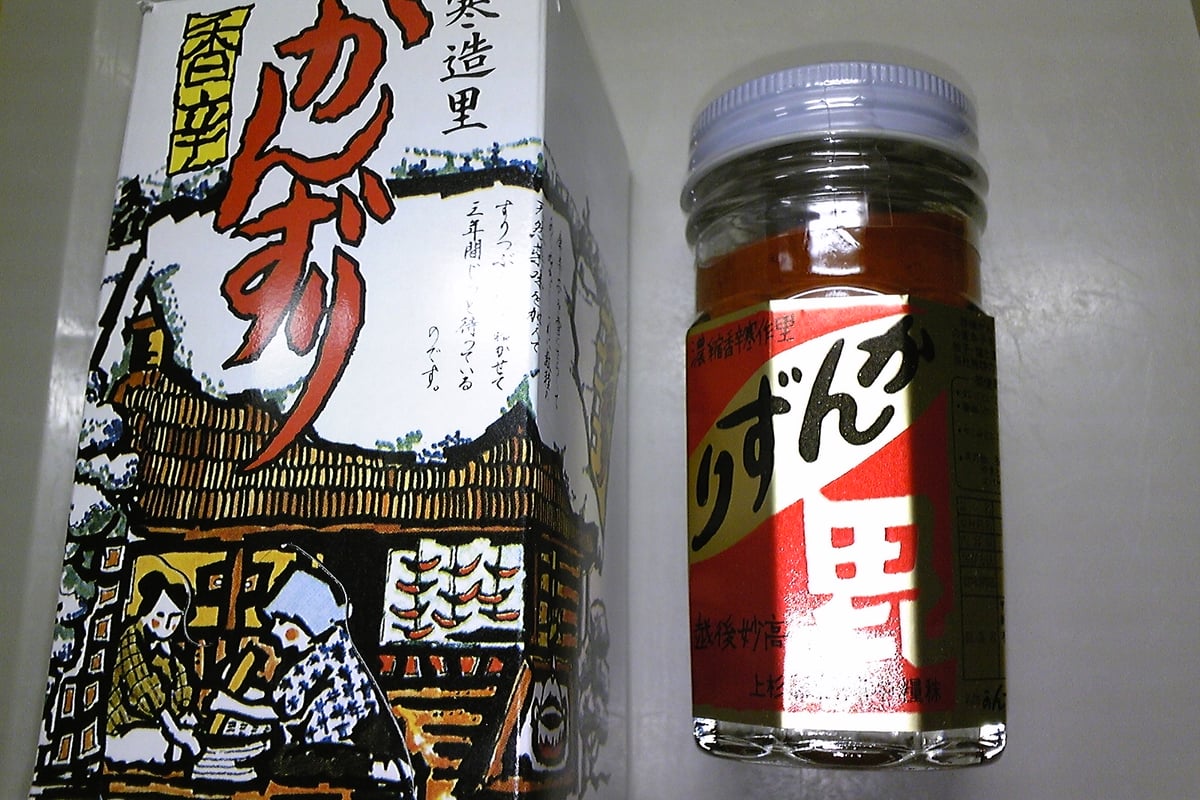
Kanzuri (Fermented Chili Paste)
Kanzuri
Kanzuri is a fermented spicy seasoning handed down in Myoko City (formerly Arai City), Niigata Prefecture. Salt-pickled chili peppers are laid out on the snow around Daikan (around January 20, the coldest time of year), then combined with rice koji, yuzu, and salt and aged and fermented for about three years. Exposing the chilies to the snow is said to draw out their strong harshness, giving a mellower heat, and it is characterized by a deep flavor in which the aroma of yuzu overlaps with the umami of koji. It is a local flavor that has long been eaten to warm chilled bodies in Myoko, so snowy that it is designated a Special Heavy Snowfall Area, and it is also written with the characters '寒造里.' This regional traditional food was commercialized in 1966 (Showa 41) by Kanzuri Co., Ltd., and the name 'Kanzuri' is the company's registered trademark. 'Snow bleaching' (yuki-zarashi), in which bright red chilies are scattered over white snowfields at Daikan, is known as a signature winter scene of Myoko. Its uses are wide-ranging, from a condiment for hot pots and ramen to an accompaniment for sashimi, and it has become established as a Niigata souvenir.
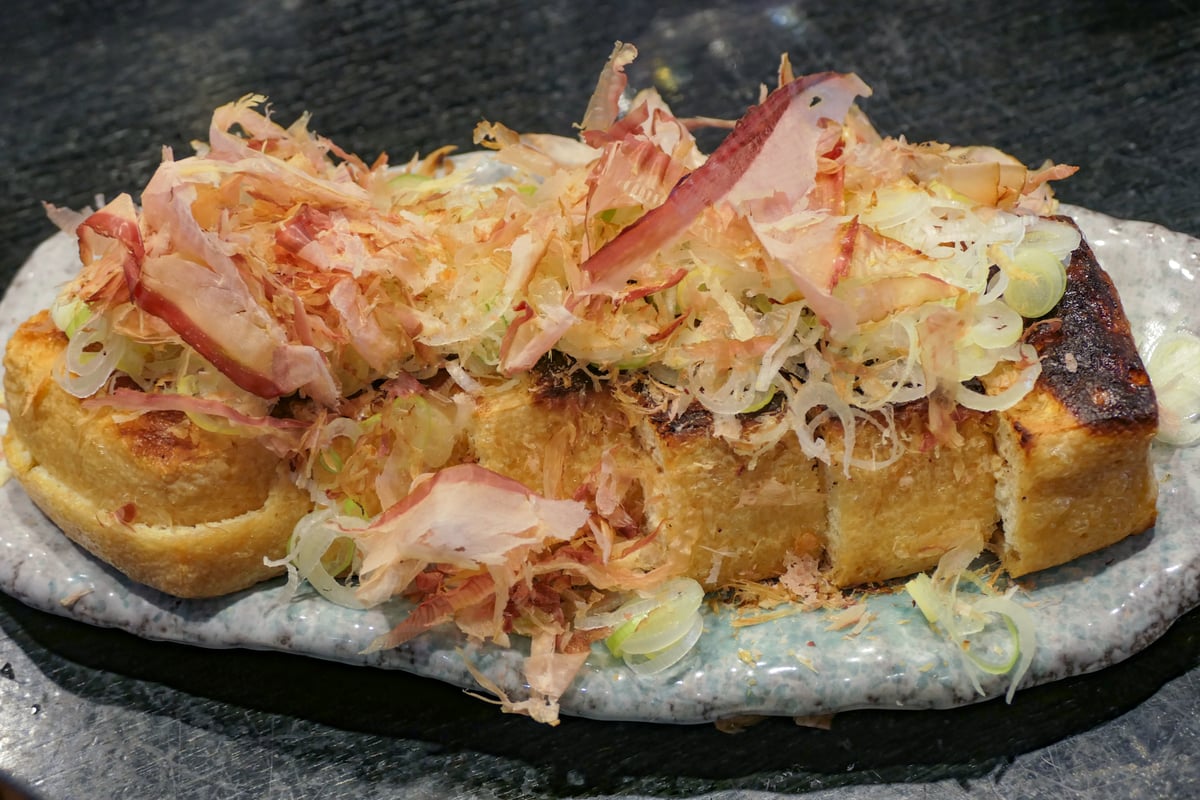
Tochio Aburaage (Giant Deep-Fried Tofu)
Tochio Aburaage
Tochio Aburaage is a large deep-fried tofu made in the Tochio area of Nagaoka City, Niigata Prefecture, and called 'aburage' in the local dialect. Measuring about 20 to 22 cm long, 6 to 8 cm wide, and 3 cm thick, it is more than three times the size of ordinary aburaage, and it is characterized by a crisp exterior and a fluffy interior. It is fried twice, in two pots at low and high temperatures, and after frying it is pierced with metal skewers to drain the oil, leaving a skewer hole in the center. Its origins are said to date back to the mid-Edo period. One theory holds that it was devised as a souvenir for pilgrims to Akiha Sanjakubo Daigongen, worshiped as a deity that protects against fire, and another holds that bakuro (livestock dealers) at Tochio's horse market ate it as a snack with sake. Today there are more than 15 aburage shops in the Tochio area, and besides being grilled and eaten with ginger and soy sauce, it is also used in simmered dishes and in dishes where it is stuffed with fillings and grilled.
Model Course
A Course of Metalworking and Paulownia Chest Craftsmanship in Tsubame-Sanjo and Kamo
Join a free factory tour at Gyokusendo (玉川堂) in Tsubame City, where copperware is hammered up from a single copper sheet. Next, at the Tsubame Industrial Materials Museum (燕市産業史料館), try adding hammer marks to a sake cup. In the afternoon, make a paper knife from a five-sun nail at Sanjo Kaji Dojo (三条鍛冶道場) and compare blades at the Tsubame-Sanjo Regional Industries Promotion Center (燕三条地場産業振興センター). The course ends in neighboring Kamo City, a production center for paulownia chests.
A Course of Snow-Country Textiles and Hegi Soba in Ojiya, Tokamachi, and Uonuma
Try weaving a coaster on a hand loom at the hands-on workshop Orinoza (体験工房 織之座) in Ojiya City's Sunplaza. For lunch, enjoy Hegi Soba made with funori seaweed as a binder at a long-established shop in Ojiya or Tokamachi. In the afternoon, see the spinning and weaving tools of Echigo Chijimi at the Tokamachi City Museum, then get acquainted with Shiozawa Tsumugi at Ori no To (織の戸) in Shiozawa, Minamiuonuma City. A course tracing the textile culture of snow country.
A Course Exploring the Tsuishu and Salmon Culture of the Castle Town of Murakami
At the Murakami Kibori Tsuishu Kaikan (村上木彫堆朱会館), view tsuishu works created by layering vermilion lacquer over carving, and try carving a pair of chopsticks. At midday, visit Sennen Sake Kikkawa (千年鮭 きっかわ), where salmon hang from the ceiling of a townhouse, and learn about the culture of Shiobiki-zake. Groups of five or more can also make a reservation and travel to Yamakumada in the Sanpoku district to try shina weaving at Sanpoku Nariwai no Sato (さんぽく生業の里).
A Course of Lacquerware and Niigata Local Food in Niigata City
For lunch, have Tarekatsu-don, with cutlets dipped in a sweet and savory soy-based sauce, at Tonkatsu Taro (とんかつ太郎) in Furumachi. At Mikazuki (みかづき) in Bandai, taste Italian, yakisoba topped with sauce. Try Noppe at a local-cuisine restaurant and buy Sasa Dango at Niigata Station on your way home, completing a tour of Niigata City's flavors. If time allows, head out to Iwamuro Onsen in Nishikan Ward to enjoy a chopstick polishing experience in Niigata Shikki lacquerware (reservation required).
A Course of Snow-Country Washi and Jumbo Aburaage in Nagaoka and Tochio
Try papermaking using traditional snow-country methods at the Oguni Washi Production Cooperative (小国和紙生産組合) in Oguni Town, Nagaoka City (reservation required). In the afternoon, move on to Tochio and enjoy a thick, large Tochio Aburaage fresh from the fryer at a tofu shop. A course exploring the crafts and food handed down in the mountains of Nagaoka.
Events
Tsubame-Sanjo Factory Festival (燕三条 工場の祭典)
Every autumn (October 1-4 in 2026) / Factories throughout Sanjo City and Tsubame City, Niigata Prefecture, and surrounding areas
View details →Tokamachi Kimono Festival
Usually in early May (the 50th festival on May 3 in 2026) / Honcho-dori, Takadamachi-dori, and Eki-dori streets, Tokamachi City
View details →Nagaoka Festival Grand Fireworks Display
Every year, August 2 and 3 / Riverbed of the Shinano River, Nagaoka City (downstream of Chosei Bridge)
View details →