Image: Wikimedia Commons
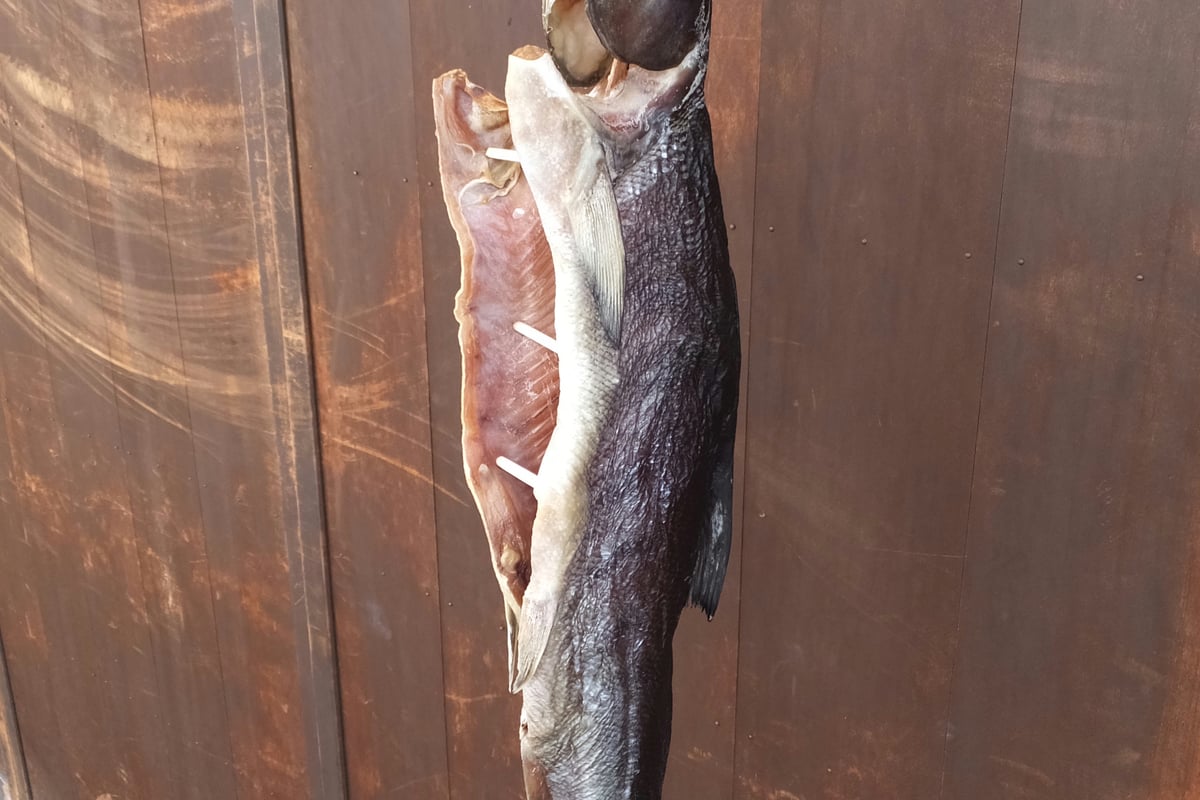
Shiobiki-zake is a processed salmon product handed down in Murakami City, Niigata Prefecture, made by rubbing salt into salmon caught in autumn and drying it in the cold wind. In Murakami, salmon is called 'iyoboya' in the local dialect, and the city has been closely tied to salmon since ancient times — salmon from the Miomote River is said to have been presented to the imperial court in the capital as early as the Heian period. In the Edo period, Aoto Buheiji, a samurai of the Murakami domain, focused on salmon's homing instinct and succeeded in what is regarded as the world's first natural hatching and propagation of salmon. In the castle town of Murakami, where seppuku (ritual disembowelment) was abhorred, a unique method of cutting called tomebara, in which the belly is split while leaving part of it connected, is still practiced today. From late autumn to early winter, the moist wind blowing in from the Sea of Japan slowly dries the flesh, producing a tender, mellow umami. In Murakami, it is an indispensable year-end fish (toshitori-zakana) for New Year's Eve. Some long-established shops in the city hang large numbers of salmon from their ceilings, conveying the culture of this salmon town to the present day.
Origin
The Miomote River, which flows through Murakami, has long been known as a river where salmon are plentiful. In the Heian period, salmon from the Miomote River is said to have been paid as tax to the imperial court in Kyoto. In Murakami, not only the flesh but also the head, innards, backbone, and even skin of the salmon are used without waste, and more than 100 kinds of salmon dishes are said to have been handed down. Shiobiki-zake is the foremost of these, passed down as a traditional flavor that makes the most of Murakami's climate and natural environment.
History
In the Edo period, Aoto Buheiji (1713-1788), a samurai of the Murakami domain, focused on the habit of salmon returning to the river where they were born. He created 'tanegawa,' artificial branch channels of the Miomote River where salmon could spawn easily, and established the Tanegawa system to protect the salmon. Construction is said to have begun around 1755 and taken about 30 years to complete. This is regarded as the world's first natural hatching and propagation of salmon, and the salmon enriched the domain's finances. In 1987 (Showa 62), Iyoboya Kaikan, Japan's first salmon museum, opened.
Features
Salt is carefully rubbed into gutted salmon, which is left for about a week and then desalted in running water. It is then hung in a well-ventilated place for about two weeks to dry. In Murakami, the fish is characteristically cut with tomebara, in which the belly is cut in two sections while part of it is left connected. When hanging the fish, too, people avoid hanging it by the neck, and hanging it from the tail is said to be the Murakami way. By drying slowly in the moist, cold wind of the Sea of Japan, the flesh becomes tender and takes on a matured umami.
Main Ingredients
Food Culture
As the year-end fish (toshitori-zakana), Shiobiki-zake graces the table on New Year's Eve and is also indispensable at the celebratory New Year meal. When made at home, it is considered the job of the head of the household, and each family is said to have its own particular way of making it.
Famous Shops
千年鮭 きっかわ
新潟県村上市大町1-20
A salmon specialty shop where as many as 1,000 salmon hang from the ceiling of a 130-year-old machiya townhouse (a nationally Registered Tangible Cultural Property), and visitors can also look around. Shiobiki-zake from its official online shop starts at around 2,058 yen for one fillet, and a whole fish starts at around 20,000 yen.
View details →越後村上うおや 本店
新潟県村上市大町4-3
A long-established salmon shop with a history of over 200 years, which relates that its first-generation owner, Sukegoro, started a salmon wholesale business in the Kansei era. Carefully selected autumn salmon is salted for about a week, its saltiness adjusted in running water, and then exposed to the cold wind of the Sea of Japan to make Shiobiki-zake.
View details →千年鮭きっかわ 井筒屋
新潟県村上市小町1-12
A salmon restaurant opened in 2017 by Kikkawa, which took over a machiya townhouse more than 130 years old. The building is a nationally Registered Tangible Cultural Property, and you can enjoy Murakami salmon dishes, including Shiobiki-zake, served as a set meal on a traditional tray.
View details →| Shiobiki-zake fillets in a gift box (Sennen-zake Kikkawa) | Shiobiki-zake sold through the official online shop of Sennen-zake Kikkawa; a gift box of three fillets costs around 6,527 yen. Half-fish and whole-fish products are also available, and the gift-boxed items are well suited as presents.Where to buy →PR |
|---|
FAQ
Q. What is 'tomebara'?
A. It is a method unique to Murakami of preparing salmon without cutting the belly all the way, leaving part of it connected. It is said to derive from the aversion to seppuku in the castle town. It is also said to carry the sentiment that the salmon, which saved the domain, must not be made to commit seppuku.
Q. What does 'iyoboya' mean?
A. It is the word for salmon in the Murakami dialect. Both 'iyo' and 'boya' are words meaning fish, giving it a sense of 'the fish among fish.' The word is used only for salmon, and it also gives its name to the salmon museum Iyoboya Kaikan.