Image: Wikimedia Commons
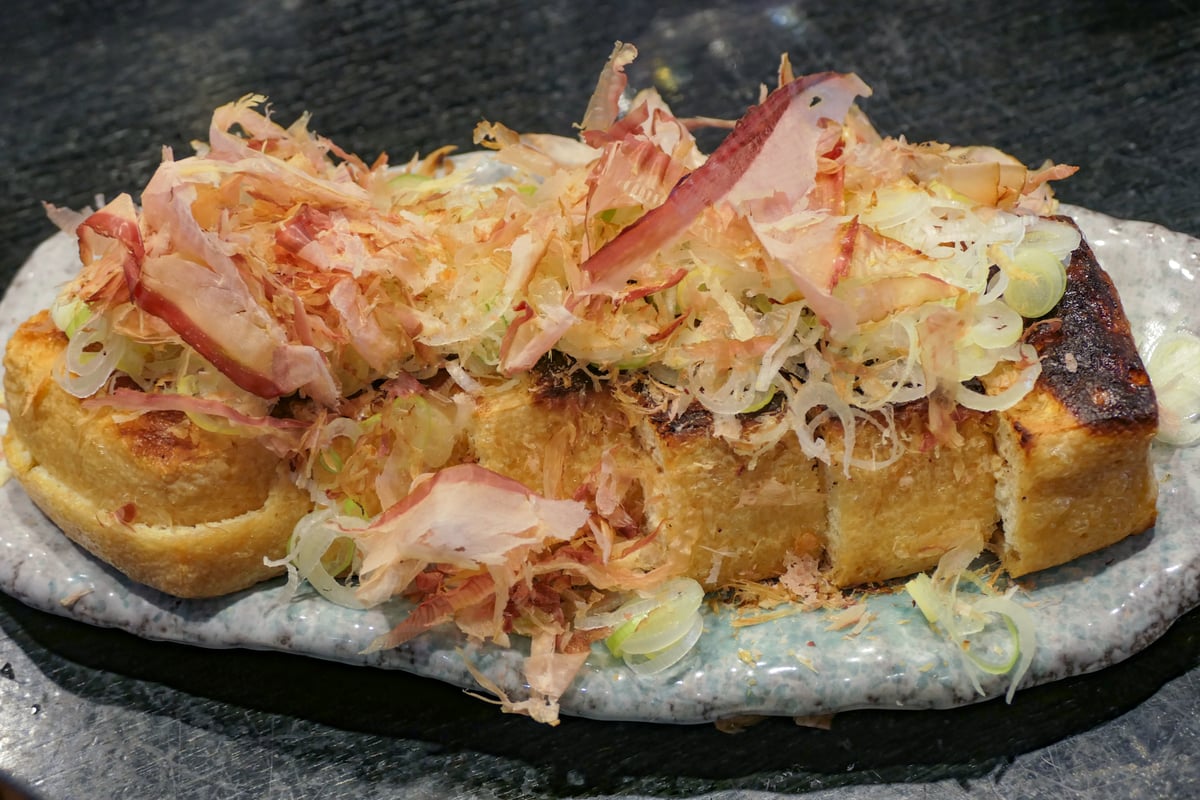
Tochio Aburaage is a large deep-fried tofu made in the Tochio area of Nagaoka City, Niigata Prefecture, and called 'aburage' in the local dialect. Measuring about 20 to 22 cm long, 6 to 8 cm wide, and 3 cm thick, it is more than three times the size of ordinary aburaage, and it is characterized by a crisp exterior and a fluffy interior. It is fried twice, in two pots at low and high temperatures, and after frying it is pierced with metal skewers to drain the oil, leaving a skewer hole in the center. Its origins are said to date back to the mid-Edo period. One theory holds that it was devised as a souvenir for pilgrims to Akiha Sanjakubo Daigongen, worshiped as a deity that protects against fire, and another holds that bakuro (livestock dealers) at Tochio's horse market ate it as a snack with sake. Today there are more than 15 aburage shops in the Tochio area, and besides being grilled and eaten with ginger and soy sauce, it is also used in simmered dishes and in dishes where it is stuffed with fillings and grilled.
Origin
There are two main theories about its origin. One holds that around 1758 (Horeki 8), the head priest of Joanji Temple, the betto (administering temple) of Akiha Sanjakubo Daigongen, which was worshiped as a deity that protects against fire (some sources say it was a Shinto priest), asked a tofu maker named Rinzo to create a souvenir for pilgrims. Rinzo is said to have trained at a tofu shop in Edo and devised aburage that made use of Tochio's soybeans and water. The other theory holds that it was born as a snack to go with sake when deals were closed at Tochio's horse market.
History
In the mid-Edo period, Akiha Sanjakubo Daigongen drew pilgrims from distant places such as Sado, Joshu (Gunma Prefecture), and Aizu (Fukushima Prefecture). Meanwhile, Tochio held a horse market counted among the three great horse markets of Echigo, and it is said that the aburage gradually grew to its present size so that bakuro could eat it heartily with their hands and fill their stomachs. Today, the prevailing view is that it began as a souvenir of Akiha Shrine and also spread as a snack with sake for bakuro.
Features
Its greatest feature is double frying, once each in two pots at different temperatures, low and high. This makes it fluffy all the way through while the surface turns out crisp. After frying, about 10 pieces at a time are pierced together on a long metal skewer resembling a fencing sword to drain the oil. The hole left in the center is the mark of this skewer, and it is said that letting heat escape through the hole limits overall shrinkage and preserves the thickness.
Food Culture
The standard way to eat it is grilled, served with condiments such as ginger, grated daikon radish, or mustard, and dipped in soy sauce. It is also widely used in home cooking, whether simmered or stuffed with fillings and grilled. Some local shops let you enjoy it freshly fried on the spot.
Famous Shops
栃尾の油揚げ 豆撰
新潟県長岡市栄町2-8-26
A shop committed to domestic soybeans, making aburaage with revived Tochio-grown soybeans and the traditional 'nama-shibori' (raw-pressing) method. In the eat-in area, a set of freshly fried aburaage costs around 510 yen, and a Tochio sushi bento is also available. It also offers aburaage-making experiences.
View details →佐藤豆腐店
新潟県長岡市金町2-3-11
An aburage shop with a history of about 100 years. In addition to the main store, it runs 'Agedokoro Sato' (新潟県長岡市栃尾宮沢1764) inside Michi-no-Eki R290 Tochio. Its aburage has a densely packed interior, starting from around 160 yen per piece. Mail order is also available.
View details →栃尾の油揚げ 毘沙門堂本舗
新潟県長岡市北荷頃1121-5
A Tochio aburage shop that has been featured on TV programs and has also appeared in a special feature on Nagaoka Kanko Navi. Open from 10:00 to 18:00, closed on Wednesdays.
| Mamesen's Simmered Tochio Aburaage | A refrigerated product in which Mamesen's Tochio Aburaage is carefully simmered in soy sauce, sugar, shiro-dashi, and other seasonings without chemical seasonings. It is sold through the Niigata Furusato-mura online shop and elsewhere.Where to buy →PR |
|---|
FAQ
Q. How do you read '栃尾の油揚げ'?
A. Because aburaage is called 'aburage' in the local Tochio dialect, it is generally read 'Tochio no aburage.' Nagaoka City's tourism website also gives the reading as 'aburage,' and it is sometimes written 'Tochio aburage' (栃尾あぶらげ).