Image: Wikimedia Commons
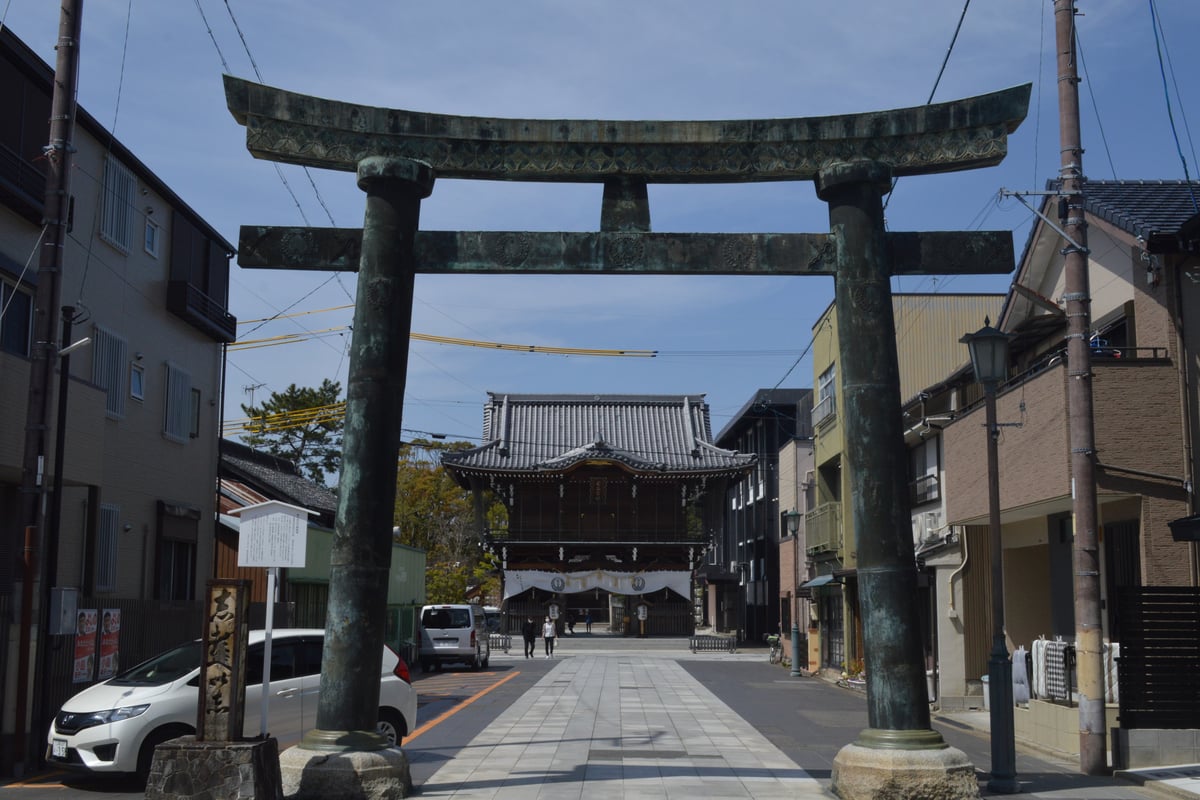
Kuwana Imono is cast metalwork made in Kuwana City, Mie Prefecture. It is said to have begun in 1601 (Keicho 6), when Honda Tadakatsu became the first lord of the Kuwana Domain and invited casters (imoji) to the area. Under the domain's encouragement, firearms and other items were manufactured, and the casting industry took root. In the Edo period, lanterns, temple bells, pots and other items were made, and the bronze torii gate of Kuwana Sosha (Kasuga Shrine) is a renowned example. In the Meiji period, machine casting for products such as noodle-making machines and water-supply fittings began, and Kuwana grew into a production center ranked alongside Kawaguchi in the saying 'Kawaguchi in the east, Kuwana in the west.' Kuwana, which prospered as a post town on the Tokaido, is still known as a 'town of casting.' Today, industrial castings such as manhole covers and machine parts are the mainstay, but everyday items such as iron kettles and pots are also made. In 2026 (Reiwa 8), it became a Mie Prefecture Designated Traditional Craft, covering kettlebells and iron pots.
Origin
The origins of Kuwana Imono are said to date back to 1601 (Keicho 6). When Honda Tadakatsu, one of the Four Heavenly Kings of the Tokugawa, became the first lord of the Kuwana Domain, the caster 広瀬氏 was invited and granted a residence. Under the domain's encouragement, the manufacture of firearms and other items began, and full-scale casting production is said to have arisen. Later, Matsudaira Sadatsuna also invited the caster 辻内氏 and granted a residence. Edo-period Kuwana is said to have had three 'official casters' (御鋳物師), and these are regarded as the roots of today's Kuwana Imono.
History
In 1667 (Kanbun 7), on the orders of Matsudaira Sadashige, lord of the Kuwana Domain, a great bronze torii gate was erected at Kuwana Sosha. It is said to have been made by 善右衛門(藤原種次), the first generation of the 辻内 family, and it was celebrated in the saying 'The things too fine for Kuwana in Seishu are its copper torii and its two-shu courtesans' (勢州桑名に過ぎたるものは、銅の鳥居に二朱女郎). The 辻内 family also made many temple bells, small signal bells (喚鐘) and ornamental post-top finials (擬宝珠) for temples. In 1903 (Meiji 36), the production of machine castings such as noodle-making machines and water-supply fittings began. During the Meiji and Taisho periods, Kuwana became one of Japan's two great casting centers, alongside Kawaguchi in Saitama Prefecture.
Features
Kuwana's casting has produced a wide range of products, from everyday items to torii gates and temple bells for shrines and temples, and machine parts. The artisans excel at thin-wall casting, which demands a beautiful cast surface and precise dimensions, and are said to have the skill to finish pieces as thin as 3 to 4 mm. The kettlebells and iron pots covered by the prefectural designation are products that make use of iron's weight and heat retention. 伊藤鉉鋳工所 continues to use hand molding by artisans (making sand molds by hand), almost unchanged since its founding. 城田鋳工's sukiyaki pot is made only of iron, without any coating.
Materials Used
| Main Production Areas |
|
|---|
Artisans & Workshops
有限会社伊藤鉉鋳工所
Founded in 1950 (Showa 25), the company has made castings in Kuwana for three generations. Using hand molding by artisans, it handles small-lot orders with short delivery times. It manufactures and sells kettlebells, a type of training equipment, and has expanded its range of weights. It is one of the prefecture-designated organizations for Kuwana Imono.
Official site →城田鋳工株式会社
A casting manufacturer founded in 1947 (Showa 22), with a factory in 芳ヶ崎, Kuwana City. In its early days it made sukiyaki pots and other items for households, and today it also produces castings for products such as industrial motors. In 2025 it released the iron '寿喜鍋' (sukiyaki pot). It is one of the prefecture-designated organizations for Kuwana Imono.
Official site →桑原鋳工株式会社
A casting manufacturer in Kuwana that makes manhole covers and other products. It also produces its own brand of everyday items such as frying pans, pots, iron kettles and coasters modeled on manhole covers. Since around 2016 it has also been selling iron kettles and other products overseas.
辻内鋳物鉄工株式会社
A company descended from the 辻内 family, official casters (御鋳物師) in the Edo period. The first generation, 善右衛門, made the bronze torii of Kuwana Sosha, and the family also made many temple bells, small signal bells and ornamental post-top finials. Many of its works were lost in the wartime metal collection drives, but the company continues to operate.
Official site →How to Buy
- 城田鋳工 '寿喜鍋'
- An iron sukiyaki pot about 21 cm in diameter and weighing about 1.7 kg, with no coating applied. In a 2025 crowdfunding campaign, the planned general retail price was given as 9,900 yen (tax included). Check the company's website for the latest sales information.Where to buy →PR
- Kettlebells by 伊藤鉉鋳工所
- The company sells its own 'Hardstyle Kettlebells' through online shopping sites and other channels. Weights range from 4 kg to 48 kg. Prices on online shopping sites are about 4,400 yen for 4 kg and about 9,240 yen for 12 kg.Where to buy →PR
Hands-on Experiences
CASTER HOME(キャスターホーム)
三重県桑名市安永1811
A casting workshop opened in June 2023 by the casting manufacturer 大洋産業. Participants pour molten tin into molds to make chopstick rests, coasters, small plates and more. Fees include 3,000 yen for two chopstick rests, 4,000 yen for a coaster and 5,000 yen for a sake cup (ochoko). The experience takes about two hours, and advance reservations are required.
View details →FAQ
Q. Why were kettlebells designated as a traditional craft?
A. In Mie Prefecture's designation, the items covered for Kuwana Imono are kettlebells and iron pots. The requirements for designation are that the items are mainly used in daily life, that the main parts of production are done by hand, and that they are made with traditional techniques and raw materials. Kettlebells, made by artisans who form sand molds by hand and pour in iron, can be described as tools that apply Kuwana's casting techniques to modern life.