Image: Wikimedia Commons
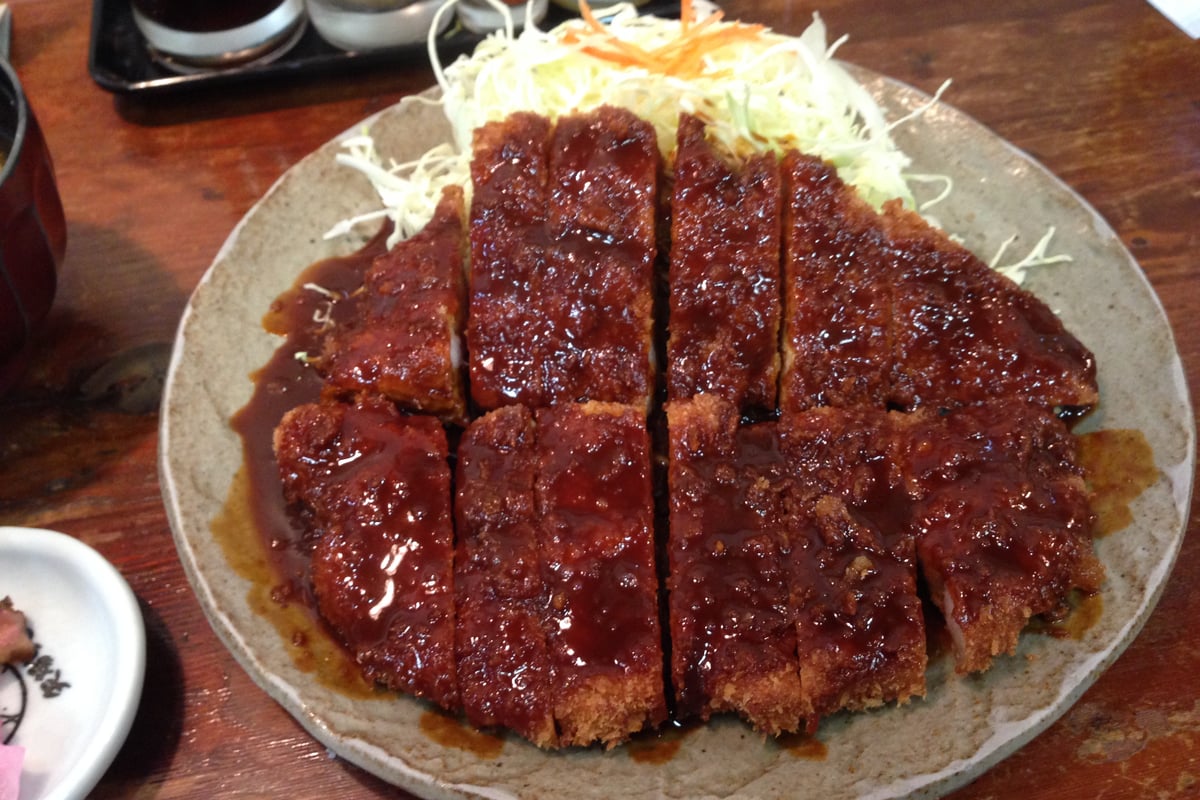
Misokatsu is a signature local dish of Nagoya in which a pork tonkatsu (breaded, deep-fried pork cutlet) is topped with a rich, slightly sweet miso sauce based on Hatcho miso. Aichi Prefecture has had a deeply rooted food culture centered on soybean miso (Hatcho miso) since the Edo period, and after World War II the practice of pairing tonkatsu with miso sauce spread through Nagoya. Several theories exist about its origin: one holds that it began when tonkatsu sold at food stalls was dipped in the sauce used for miso dengaku (grilled tofu with miso), while another says a soba restaurant owner who had returned to postwar Nagoya invented a miso-sauce katsu don inspired by the sauce used for tendon (tempura rice bowl). Long-established restaurants such as Yabaton and Misho Kanou helped turn misokatsu into a specialty known throughout Japan, and today it is served in many forms beyond the simple cutlet, including misokatsu don (rice bowl) and misokatsu sandwiches. The contrast between the rich, deep flavor of red miso and the crispy breading is its main appeal.
Origin
There are several theories about its origin. One holds that skewered tonkatsu sold at food stalls was dipped into the sauce used for dote-nabe (a simmered miso hotpot) and proved popular. Another says that a soba restaurant owner who returned to Nagoya after the war invented a katsu don topped with Hatcho miso instead of soy sauce, inspired by the sauce used for tendon; Misho Kanou claims to be the originator of this version.
History
Yabaton was founded in 1947 as 'Yaba no Tonkatsu' and played a major role in spreading misokatsu nationwide by adding miso sauce to its menu. Misho Kanou was founded in 1949 and is said to have created the 'original misokatsu don,' inspired by tendon. Through these and other Nagoya restaurants, misokatsu developed into one of the defining postwar dishes of Nagoya meshi.
Features
The dish consists of a breaded, deep-fried pork cutlet topped with a rich miso sauce made from Hatcho miso sweetened with sugar and mirin. Each restaurant has its own recipe for the sauce, and its thick, sweet-savory flavor pairs well with the richness of the pork fat. Besides being served as a standalone cutlet at tonkatsu specialty restaurants, it is also enjoyed as a rice bowl or in a katsu sandwich.
Main Ingredients
Food Culture
Aichi Prefecture is home to soybean miso (Hatcho miso), which is aged for a long period using only soybeans and salt, and misokatsu was born from the fusion of this soybean-miso culture with tonkatsu, a Western-style dish. It is regarded as one of the leading examples of Nagoya meshi, the cuisine that symbolizes Nagoya's food culture.
How It Differs from Home Cooking
At home, misokatsu is often made simply by mixing store-bought miso sauce or seasonings, whereas specialty restaurants spend considerable time and effort making their sauce, often aging their own secret recipe for a long period.
Famous Shops
矢場とん 矢場町本店
愛知県名古屋市中区大須3-6-18
Founded in 1947. A leading representative of Nagoya's famous misokatsu. The waraji tonkatsu set meal costs around 1,900 yen and up.
View details →味処 叶
愛知県名古屋市中区栄3丁目(栄駅より徒歩約3分)
Founded in 1949, a long-established restaurant that invented the original misokatsu don. The original misokatsu don costs around 1,800 yen and up.
View details →FAQ
Q. How is misokatsu different from regular tonkatsu?
A. The frying method itself is the same as regular tonkatsu; the biggest difference is that a sweet-savory miso sauce based on Hatcho miso is used instead of tonkatsu sauce.