Image: Wikimedia Commons
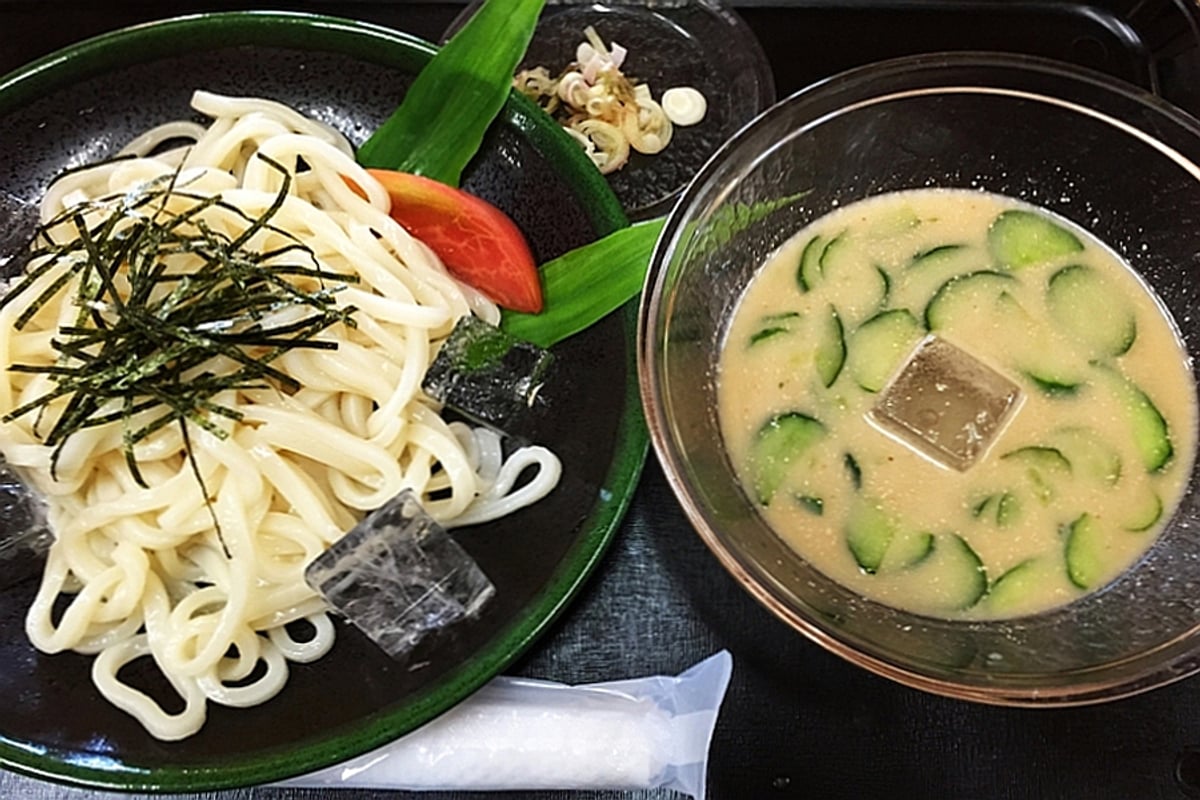
Hiyajiru udon is a local specialty of Saitama Prefecture in which udon noodles are dipped into a cold sauce made by grinding sesame and miso together in a mortar, then thinning it with cold water and adding summer vegetables such as cucumber, shiso, and myoga ginger. It is also called 'suttate,' a name derived from eating the sauce freshly ground ('suritate'), and has long been enjoyed in the rice-farming areas of the prefecture, centered on Kawajima in Hiki District, as well as Omiya, Kawagoe, and Kazo. Saitama developed its own distinctive 'udon culture' from growing wheat as a secondary crop after rice, and suttate evolved within that tradition as a wise dish that let farmers quickly restore their energy during the hot, busy farming season. The cold dipping sauce, combining the fragrance of sesame, the richness of miso, and the freshness of the garnish vegetables, goes down easily even when summer heat dulls the appetite, and each household has its own blend of ingredients and garnishes. In recent years it has drawn attention as a local 'B-kyu gourmet' dish, and a growing number of restaurants in Kawajima serve it as 'Kawajima Suttate.'
Origin
The name 'suttate' is said to come from making the dipping sauce by grinding ('suritate') sesame, miso, and vegetables together in a mortar. Kawajima, a low-lying area surrounded by several rivers including the Arakawa, Iruma, and Ichino, has long been a center of rice farming, and the cold sauce there has traditionally been called 'suttate,' a staple of farming households. In some areas the name is passed down in the altered form 'tsuttate.'
History
In the days when farm work was done by hand, the busy farming season meant working from morning to dusk, and the cold sauce was valued because it let people restore their nutrition without much effort even in summer when appetites tend to drop. Since Saitama was also a wheat-producing region, the custom of dipping udon noodles into the sauce took hold and spread as a home-style dish across the prefecture. In 2007 it was selected for the Ministry of Agriculture, Forestry and Fisheries' '100 Local Dishes of Rural, Mountain, and Fishing Villages,' and in Kawajima, 16 local restaurants have joined forces to promote regional revitalization through 'suttate,' also developing a new soybean-based dish called 'Kawajima Gojiru' for the winter months when visitor numbers tend to decline.
Features
The basic method is to thoroughly grind sesame and rice miso together in a mortar, then thin it with cold water or dashi stock along with garnish vegetables such as cucumber, onion, shiso, and myoga ginger. Cold udon noodles are dipped into this sauce, creating a flavor where the fragrance of sesame, the richness of miso, and the refreshing garnishes come together. Some households pour it over rice instead of using it with noodles, and the blend of garnishes varies from home to home.
Main Ingredients
Food Culture
In Saitama Prefecture, where wheat was widely grown as a secondary crop after rice, a food culture of eating udon on a daily basis took root, and suttate has been passed down as a piece of wisdom for getting through meals quickly amid the heat of the busy farming season.
Famous Shops
Serves the local specialty suttate. Suttate (udon or soba) is about 1,200 yen, and suttate with vegetable tempura is about 1,700 yen.