Image: Wikimedia Commons
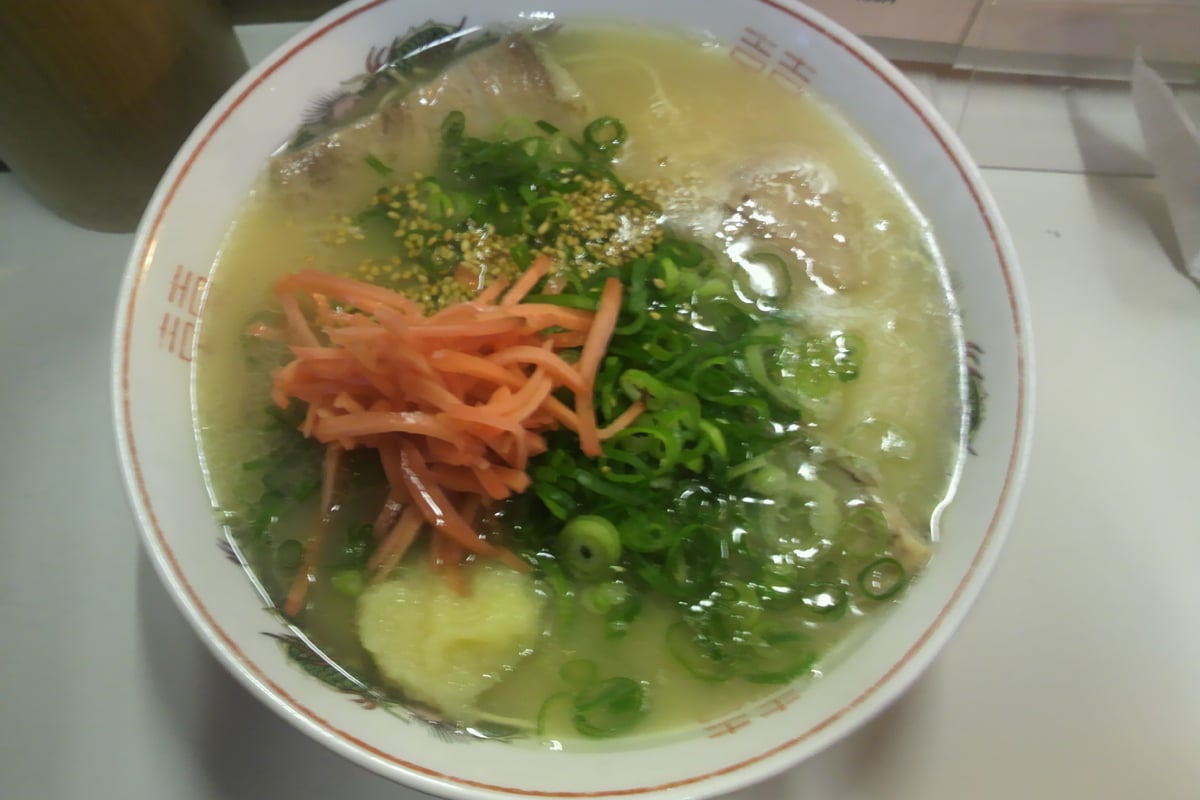
Hakata Ramen is a style of tonkotsu (pork bone broth) ramen eaten mainly in the Hakata area of Fukuoka City. Its defining feature is the combination of a cloudy white tonkotsu broth, made by boiling pork bones over high heat for a long time, and ultra-thin straight noodles said to be based on techniques from Shimabara somen. Because the noodles cook quickly, this became a way for food stalls to serve customers faster. The noodles also go limp quickly, which is said to have given rise to the 'kaedama' (extra noodle serving) custom, letting diners add just noodles, a little at a time, as many times as they like. Part of the fun is adjusting the flavor to your own taste with tabletop condiments such as red pickled ginger, spicy pickled mustard greens, white sesame seeds, and wood ear mushrooms. Born out of the postwar food-stall culture, it is now one of Fukuoka's signature local ramen styles, and many famous shops that started here have expanded chains nationwide and even overseas.
Origin
The roots of Hakata Ramen are said to trace back to food stalls that lined the Nakasu and Yanagibashi areas of Hakata in the late Showa 10s (around 1935-1944), where ramen made with pork bone broth first began to be served. Around 1941-42, Kentaro Mori is said to have served clear tonkotsu ramen at his stall 'Sanbaro,' and in 1946, Seizaemon Inoue at the stall 'Hakatasou' and Shigeru Tsuda at the stall 'Akanoren' are each said to have served ramen made with pork bones.
History
There is a well-known story that the cloudy tonkotsu broth we know today was born by accident, after pork bones were mistakenly simmered over high heat for too long. It spread through the town of Hakata along with the postwar food-stall culture, and for a long time was simply called 'ramen.' In 1977, Rumi Sotomura, a shop owner in Sawara Ward, Fukuoka City, coined the name 'Hakata Ramen,' which took hold as a brand carrying the region's name.
Features
Hakata Ramen is characterized by a cloudy white broth made by boiling pork bones over high heat, and ultra-thin straight noodles prized more for their easy slurping than for firmness. The noodles cook in under a minute, and while they go limp quickly, this led to the unique 'kaedama' custom of ordering an extra serving of noodles alone partway through the meal. It's also common to enjoy changing the flavor with tabletop condiments such as red pickled ginger, spicy pickled mustard greens, white sesame seeds, wood ear mushrooms, and chopped green onion.
Main Ingredients
Famous Shops
一風堂 博多駅店
福岡県福岡市博多区博多駅中央街1-1 JR博多シティ アミュプラザ博多10F
A popular Hakata-born shop with locations worldwide. Its signature Shiromaru Motoaji starts at around 950 yen.
元祖博多だるま 博多デイトス店
福岡県福岡市博多区博多駅中央街1-1 博多デイトス2F
Founded in 1963. Known for its rich tonkotsu broth and ultra-thin noodles; ramen starts at around 700-750 yen.
一蘭 博多店(サンプラザ地下街内)
福岡県福岡市博多区博多駅前2-2-1 福岡センタービルB2
A popular shop known for its private, booth-style single-seat counters. Natural tonkotsu ramen starts at around 980 yen.
FAQ
Q. Why did the 'kaedama' custom come about?
A. Because Hakata Ramen's noodles are very thin and go limp quickly, ordering a large portion at once would leave the noodles overcooked by the time you finished eating. To prevent this, the food-stall culture is said to have given rise to 'kaedama,' a system letting diners add small extra servings of noodles alone while keeping the broth.
Q. Are Hakata Ramen and Nagahama Ramen the same thing?
A. Nagahama Ramen is a tonkotsu ramen originally served to workers at the Nagahama fish market on Hakata Bay, and is considered one of the roots of Hakata Ramen. It shares features such as ultra-thin noodles and kaedama, but because it originated from different stalls and areas, it is sometimes strictly distinguished as a separate lineage.