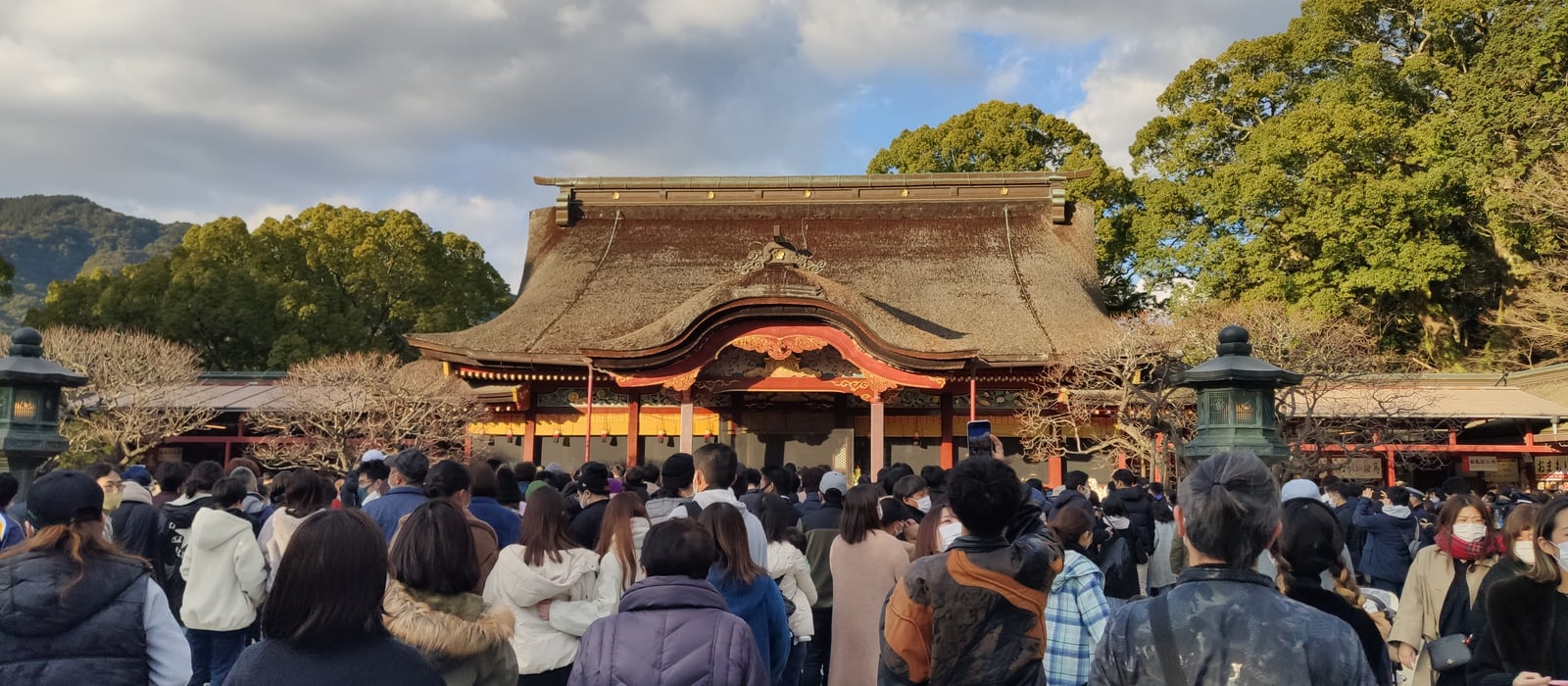
 Image: Wikimedia Commons
Fukuoka
As the gateway to Kyushu, Fukuoka Prefecture still carries a strong imprint of its long history of exchange with the Asian continent. Traditional crafts such as Hakata Ori and Hakata Ningyo grew alongside the prosperity of Hakata as a trading port, while distinctive production areas flourish across the prefecture, including Agano-yaki, Koishiwara-yaki, and Kurume Kasuri. Its food culture runs equally deep, from Hakata favorites such as tonkotsu ramen, Motsunabe, and Mizutaki to souvenir treats like Karashi Mentaiko and Umegae-mochi, all shaped by a distinctive food-stall (yatai) culture. What makes Fukuoka distinctive is the way both its crafts and its cuisine have flexibly absorbed continental influences while developing a character all their own.
Fukuoka's Traditional Crafts
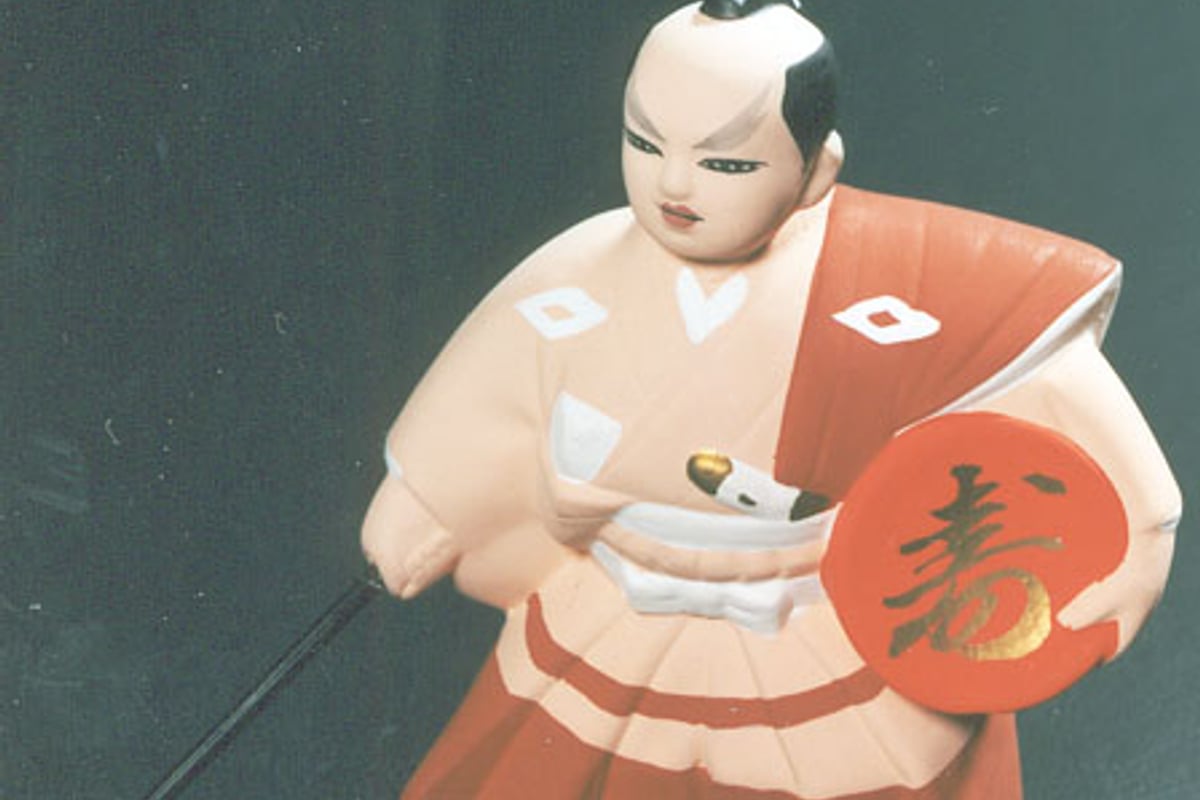
Hakata Ningyo (Hakata Dolls)
Hakata Ningyo
Hakata Ningyo are unglazed clay dolls traditionally made in and around Hakata Ward, Fukuoka City, and are a Traditional Craft Designated by the Minister of Economy, Trade and Industry. Their origins trace back to 1600, when Kuroda Nagamasa entered Chikuzen Province and gathered many craftsmen in Hakata; the technique of making unglazed clay dolls is said to have emerged from among them. Several lineages came together in their development, including figurative dolls made by deko craftsmen, Soshichi ware descended from roof-tile makers, and the line begun by Nakanoko Kichibei, who created folk toys in the late Edo period. A defining feature is that the dolls are fired unglazed after coloring, and they depict a wide range of subjects—from the realistic 'beauty' figures for which Hakata Ningyo are especially known to Kabuki and Noh characters, warriors, zodiac animals, and Fukusuke—with fine detail and realism. In the Meiji era, the dolls earned high acclaim at overseas expositions such as the Paris World's Fair, becoming known worldwide as a representative Japanese doll craft.
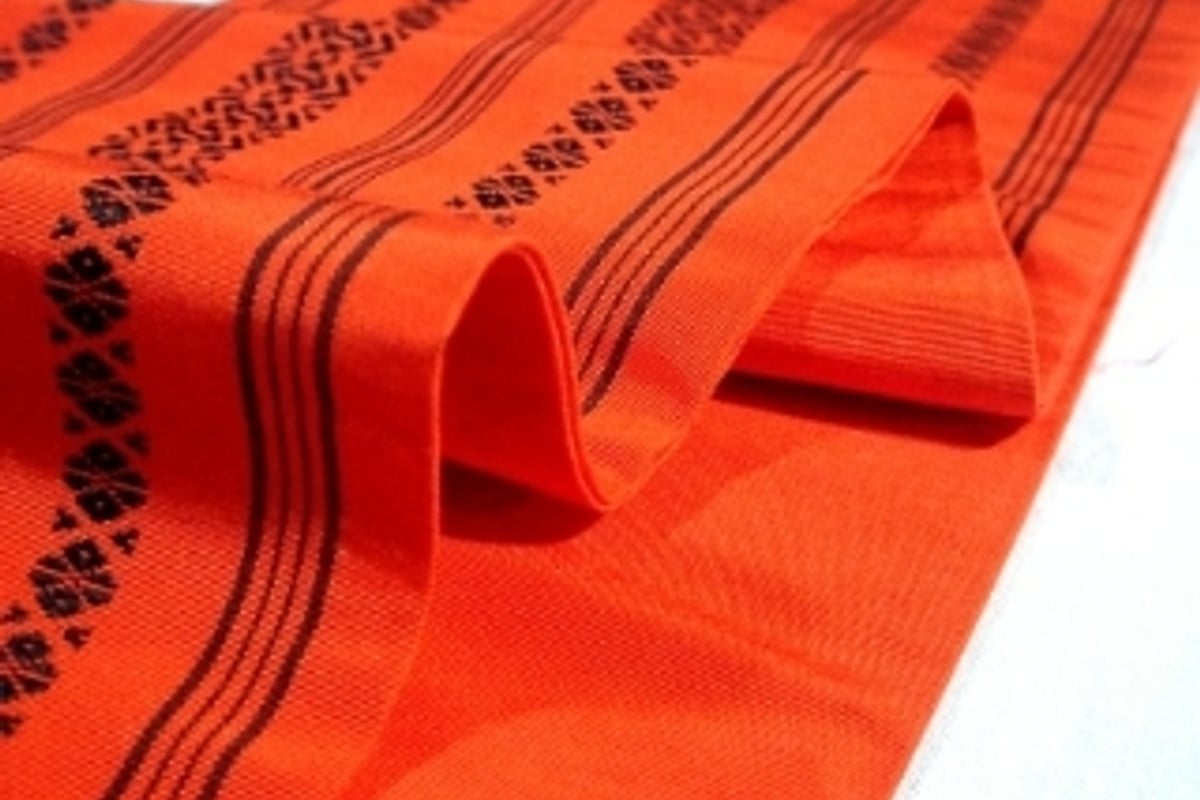
Hakata-ori
Hakata Ori
Hakata-ori is a silk textile woven in the Hakata district of Fukuoka City and is a Traditional Craft Designated by the Minister of Economy, Trade and Industry. Its origins are said to date back to 1241, when the Hakata merchant Mitta Yazaemon traveled to Song-dynasty China together with the Zen monk Enni (Shoichi Kokushi) and brought back weaving techniques. In 1600, at the start of the Edo period, Kuroda Nagamasa, who ruled Chikuzen, chose Hakata-ori as a tribute to the shogunate, beginning the annual custom of presenting obi fabric—giving rise to the name 'Kenjo Hakata-ori' ('tribute Hakata-ori'). Its representative design, the kenjo pattern, combines a motif based on the dokko and hanazara (Buddhist ritual implements) with 'oyako-jima' stripes symbolizing a parent protecting a child and 'koko-jima' stripes symbolizing a child's devotion to a parent. A distinctive weaving method—densely arranging warp threads and beating the weft in firmly—produces fabric with thickness and firmness, and the resulting obi have long been prized for staying tightly tied once fastened. Designated a national Traditional Craft in 1976, Hakata-ori has produced two Living National Treasures to date.
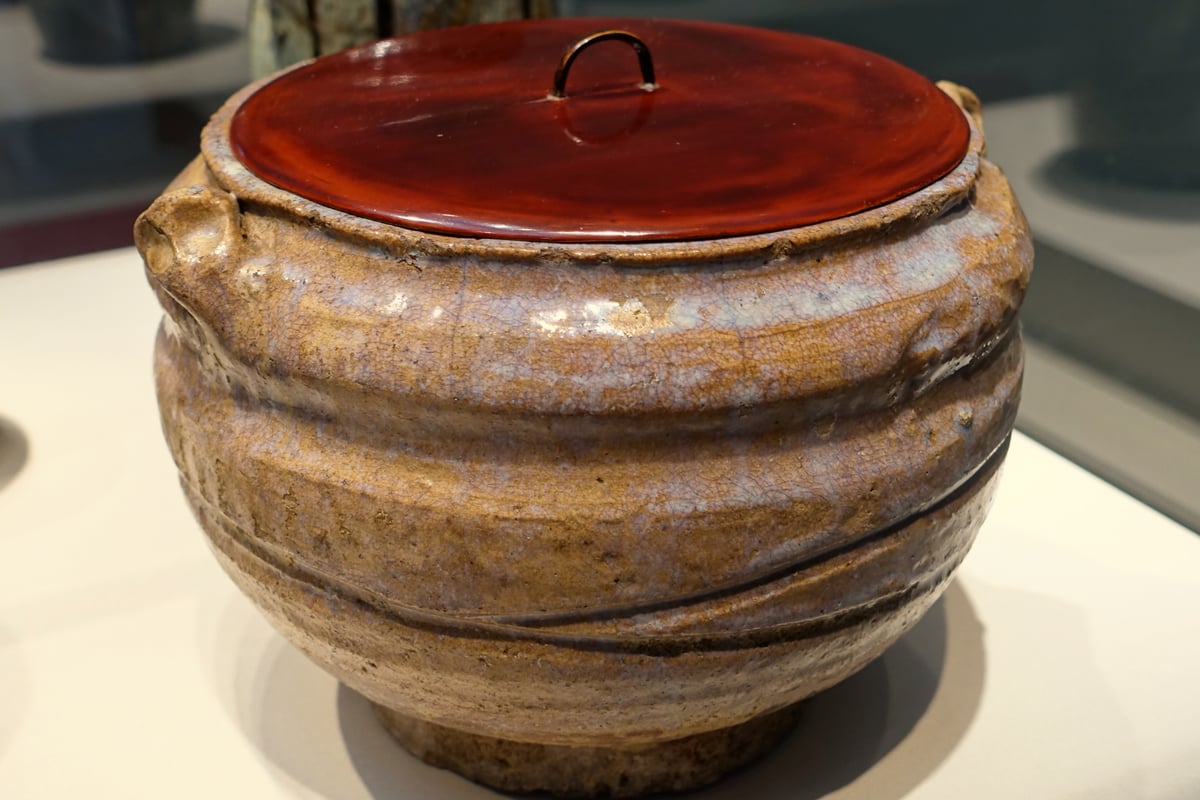
Agano ware
Agano-yaki
Agano ware is a type of pottery fired across a region centered on Fukuchi Town, Fukuoka Prefecture, and spanning also Kawara Town and Oto Town in Tagawa District, and is a Traditional Craft Designated by the Minister of Economy, Trade and Industry. It is said to have begun in 1602, when Hosokawa Tadaoki, lord of the Buzen Kokura domain, invited the Korean-born potter Sonkai to open a kiln at the foot of Mt. Fukuchi, in the village of Agano. The kiln subsequently developed as an official domain kiln under the patronage of successive lords—first the Hosokawa clan, then the Ogasawara clan—and by the Edo period it was so prized by tea masters that it was counted among the 'Enshu Seven Kilns.' Its defining characteristic is an extremely light, thin-walled construction; the ware is rarely painted, and instead is known for the beauty of its kiln transformations produced by a wide range of glazes, from the deep bluish-green 'ryokusho-nagashi' that streams down over a thin white body to iron, ash, straw-white, and sansai (three-color) glazes. Designated a national Traditional Craft in 1983, around 20 kilns still carry on the tradition today, centered on the Agano district of Fukuchi Town.
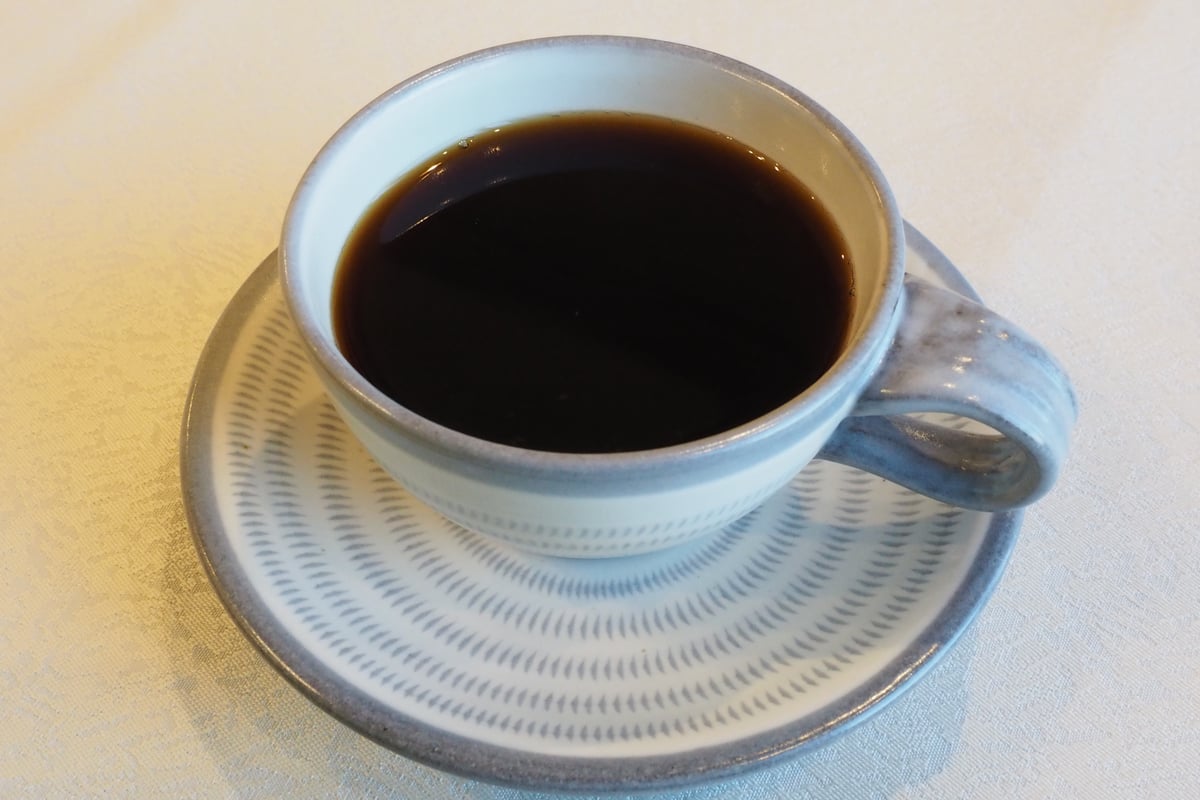
Koishiwara ware
Koishiwara-yaki
Koishiwara ware is pottery fired throughout the Koishiwara district of Toho Village, Asakura District, Fukuoka Prefecture, and is a Traditional Craft Designated by the Minister of Economy, Trade and Industry. It is said to have originated in 1682, when Kuroda Mitsuyuki, the third lord of the Chikuzen-Fukuoka domain, invited potters to open kilns in the area, modeling the venture on Imari, which was then flourishing as a center of ceramics production. Porcelain was also fired when the kilns first opened, but production gradually shifted toward everyday pottery, and the techniques have been passed down for about 340 years. Its most distinctive features are geometric patterns born from the movement of tools and hands — such as 'tobi-kanna' (flying-plane carving), in which a blade is pressed against the clay as it spins on the wheel to create rhythmic, chattered grooves, and 'hakeme,' in which patterns are brushed on with a stiff brush. Prized within the Mingei (folk-craft) movement as everyday tableware embodying the 'beauty of function,' it became the first pottery in Japan to be designated a national Traditional Craft, in 1975. Today around 50 kiln workshops remain active in the area, and the region's largest pottery market, the 'Minto Mura Matsuri,' is held each spring and autumn.
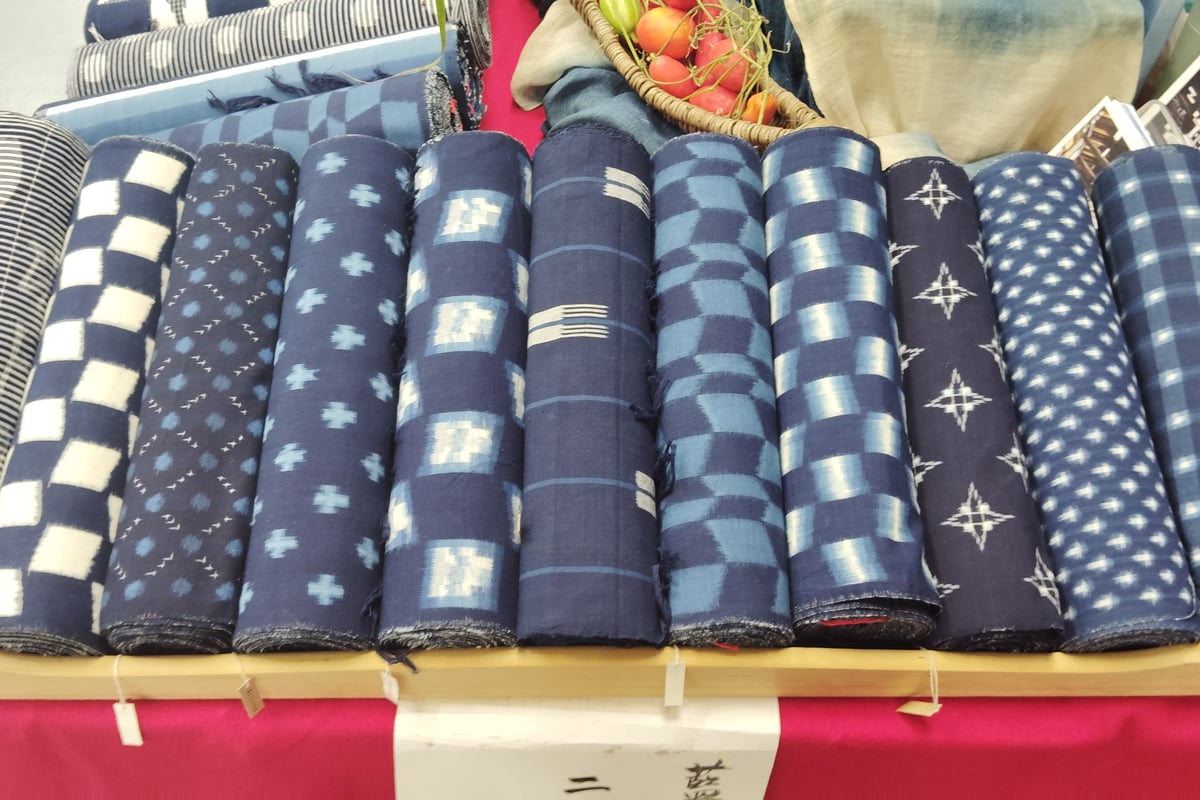
Kurume Kasuri (Kurume ikat cotton weave)
Kurume Kasuri
Kurume Kasuri is an indigo-dyed cotton ikat cloth woven in the area of the former Kurume domain, centered on present-day Kurume City in Fukuoka Prefecture, and is one of Japan's three major ikat weaves alongside Iyo Kasuri and Bingo Kasuri. It is said to have been created by a woman named Inoue Den in the late Edo period. At the age of 13, she noticed white speckles on the faded parts of a worn indigo-dyed kimono and devised a technique of binding threads beforehand to dye them selectively, producing an ikat pattern of mottled navy and white threads that came to be called 'Kasuri.' From binding the threads to resist the dye and dyeing them in indigo ('kukuri'), to untying the dyed threads and weaving them while matching the pattern, the cloth still passes through around 30 processes even today, when mechanization has advanced, and takes several months to complete. It is known for its rustic, warm texture with softly blurred outlines. It was designated an Important Intangible Cultural Property in 1957 and a national Traditional Craft in 1976.
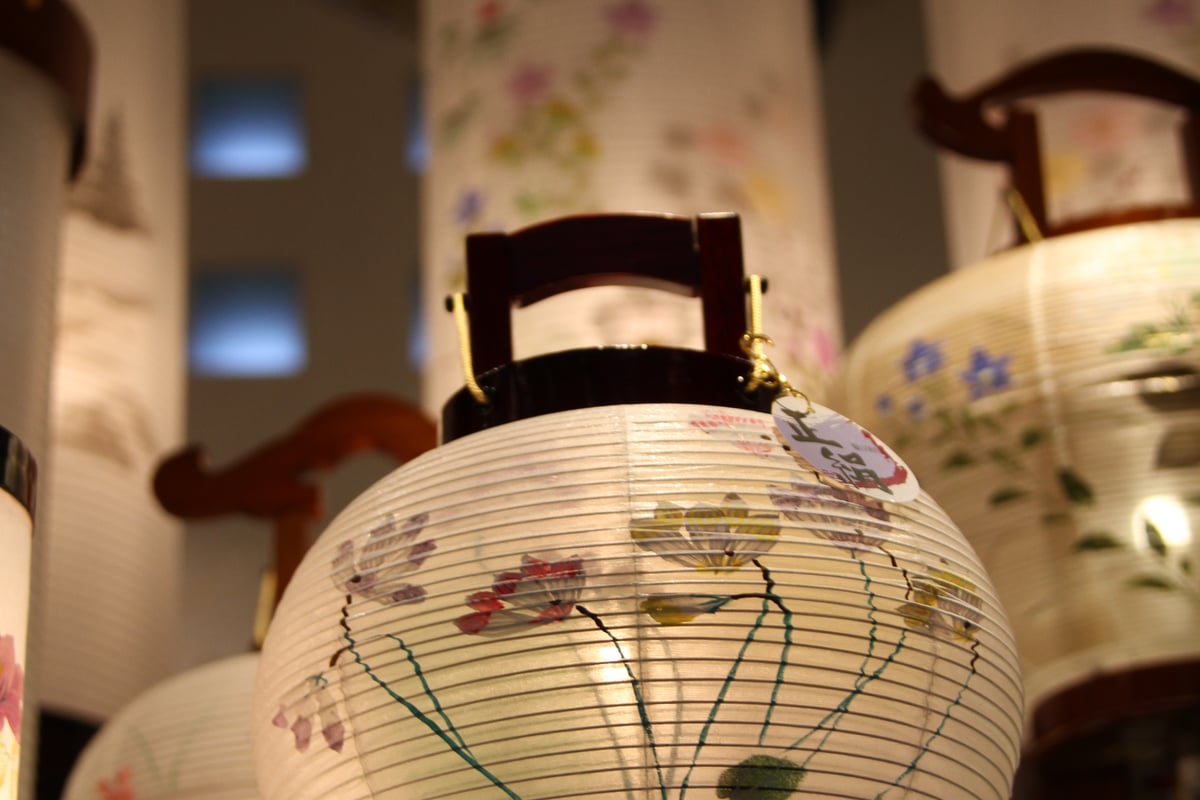
Yame Chochin
Yame Chochin
Yame Chochin is a Traditional Craft representing the Bon lanterns made in Yame City, Fukuoka Prefecture (the former town of Fukushima). It is said to have originated when Aramaki Bun'emon first created the lanterns during the Bunka era (around 1813), and later Yoshinaga Taihei devised the 'single-strand spiral method,' in which a single length of bamboo rib is wound into a spiral frame. Using thin washi paper that let the light inside glow softly through, this innovation dramatically improved the lanterns' quality. The paper shades are decorated with delicate paintings of flowers, birds, and seasonal scenery, and the lanterns come in many varieties, including Sumiyoshi Chochin, Ouchi Andon, and Gotenmaru (also written 御天丸). The single-rib spiral structure that is now the mainstream method of lantern-making is said to have originated with Yame Chochin. Designated a national Traditional Craft in 2001, Yame Chochin has the highest production volume in Japan and is also shipped overseas. Demand centers on Bon lanterns used in Buddhist observances, but in recent years young artisans have also been developing products with more contemporary designs.

Yame Fukushima Butsudan
Yame Fukushima Butsudan
Yame Fukushima Butsudan are magnificent tower-style Buddhist altars made in Yame City, Fukuoka Prefecture (the former town of Fukushima), finished with gold leaf and lacquer. It is said that in 1821 (Bunsei 4), the joiner-carpenter Toowatari Sansaku had a dream of building a splendid temple and, together with fellow carpenters Inoue Rikyuhei and Hirai Sansaku, began making altars, and by around 1850 the production techniques had been established. By the end of the Edo period, the craft had grown into a major industry bringing together artisans specializing in lacquering, metal fittings, carving, Buddhist images, and woodwork. Under a system in which woodworkers, palace-structure makers, carvers, metal-fitting makers, lacquerers, and maki-e artists each handle a separate stage, a single altar is completed through about 80 processes, from the wood base and palace structure to carving, metal fittings, lacquering, and maki-e and gold-leaf application. On March 30, 1977 (Showa 52), it was designated a Traditional Craft Designated by the Minister of Economy, Trade and Industry, establishing its status as Fukuoka Prefecture's leading center of Buddhist altar production.
Okawa Kumiko
Okawa Kumiko
Okawa Kumiko is a woodworking technique developed in Okawa City, Fukuoka Prefecture—a delicate craft of assembling thin, finely shaped pieces of wood into geometric patterns without using any nails or metal fittings. Kumiko techniques transmitted from China during the Bunka era (around 1804-1818) became linked with Okawa's sashimono and fittings-making, in a town known for furniture and fittings, and developed through use in shoin-style shoji screens, ranma transoms, and folding screens. Around 200 or more patterns, including asanoha (hemp leaf), are worked into a triangular base lattice called 'mitsu-gumite,' with as many as tens of thousands of pieces sometimes combined to complete a single work. Its greatest characteristic is that, while it looks delicate and fragile, the precise interlocking of its components gives it the strength of a single solid board. Designated a Traditional Craft Product Designated by the Governor of Fukuoka Prefecture in 1987 (Showa 62), the traditional technique has also been put to use in contemporary interiors, including the interior of the luxury sleeper train 'Nanatsuboshi in Kyushu.'
Yame Washi
Yame Washi
Yame Washi (Yame handmade washi paper) is traditional handmade Japanese paper (washi) produced mainly in Yame City, Fukuoka Prefecture. According to tradition, its origins date to the Tensho era (the 1590s), when a Buddhist priest named Nichigen Shonin, who came from Echizen Province (present-day Fukui Prefecture), visited Yame, recognized that the water quality and climate of the Yabe River basin were well suited to papermaking, and passed the technique on to the local people. Made using kozo (paper mulberry) with fibers that are longer and thicker than those found in other production areas, together with the clear water of the Yabe River, Yame Washi is known for a strength and durability not found in paper from other regions. Because its thick, sturdy fibers give the paper excellent durability, it is highly valued as a mounting paper for hanging scrolls, shoji paper, and the inner lining of fusuma sliding doors, and it is said to have even been used to restore National Treasures. It is regarded as one of the oldest washi-producing areas in Kyushu and has been designated a Traditional Craft Product by the Governor of Fukuoka Prefecture.
Hakata Magemono
Hakata Magemono
Hakata Magemono is bentwood ware (magemono) made by bending thin sheets of cedar or cypress into a round shape, binding the seams with cherry bark, and fitting a base panel into the bottom, all without using a single metal nail. Its origins are said to be old: the Shibata family of Hakata has carried on magemono-making as a family trade for more than 400 years, and the current head of the family, the eighteenth generation, is Tamaki Shibata. In the Edo period, magemono were also dedicated as ritual vessels at Hakozaki-gu Shrine in Higashi Ward. Loved as everyday items such as ohitsu (rice tubs), bento boxes, and tea caddies, cedar ohitsu in particular are prized by sushi chefs and many other cooks because the wood absorbs and releases excess moisture, keeping cooked rice fluffy. Depending on how it is used and cared for, a piece is said to last as long as 50 years, and in March 2025 (Reiwa 7), Hakata Magemono was newly designated an Intangible Cultural Property Designated by Fukuoka Prefecture (craft technique).
Fukuoka's Local Food
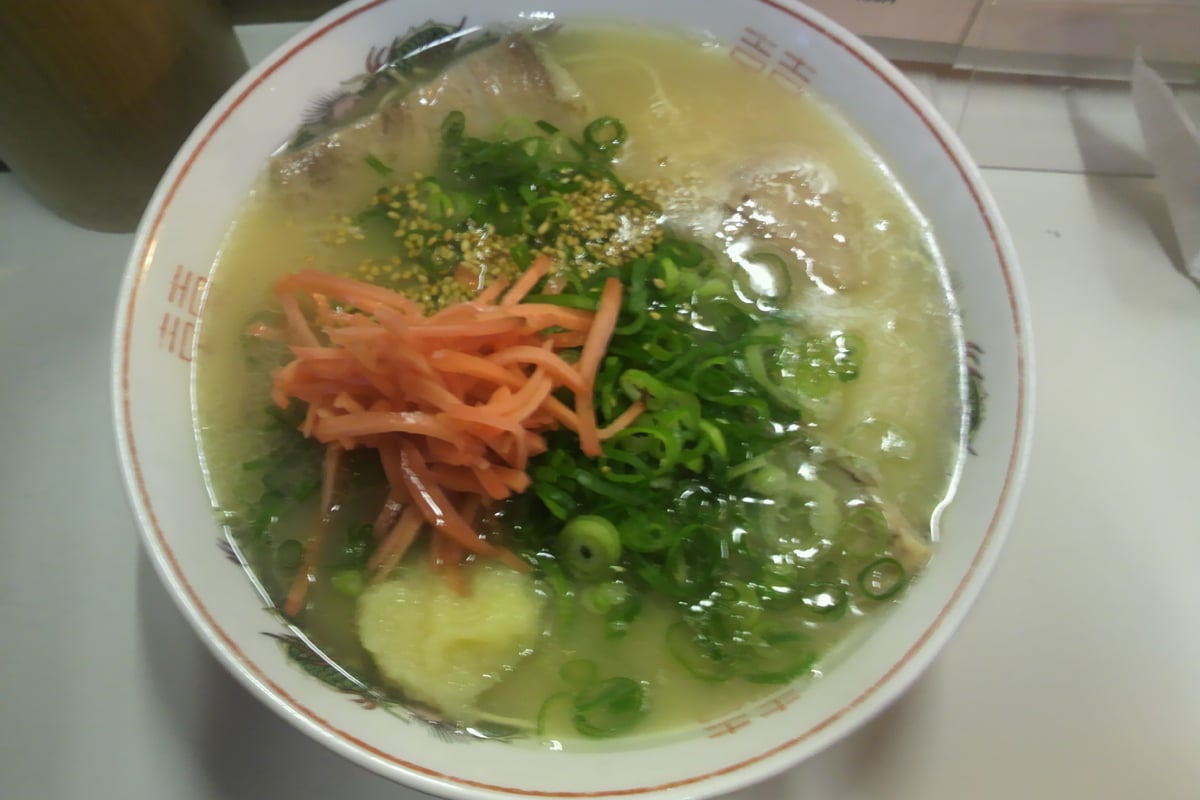
Hakata Ramen
Hakata Ramen
Hakata Ramen is a style of tonkotsu (pork bone broth) ramen eaten mainly in the Hakata area of Fukuoka City. Its defining feature is the combination of a cloudy white tonkotsu broth, made by boiling pork bones over high heat for a long time, and ultra-thin straight noodles said to be based on techniques from Shimabara somen. Because the noodles cook quickly, this became a way for food stalls to serve customers faster. The noodles also go limp quickly, which is said to have given rise to the 'kaedama' (extra noodle serving) custom, letting diners add just noodles, a little at a time, as many times as they like. Part of the fun is adjusting the flavor to your own taste with tabletop condiments such as red pickled ginger, spicy pickled mustard greens, white sesame seeds, and wood ear mushrooms. Born out of the postwar food-stall culture, it is now one of Fukuoka's signature local ramen styles, and many famous shops that started here have expanded chains nationwide and even overseas.
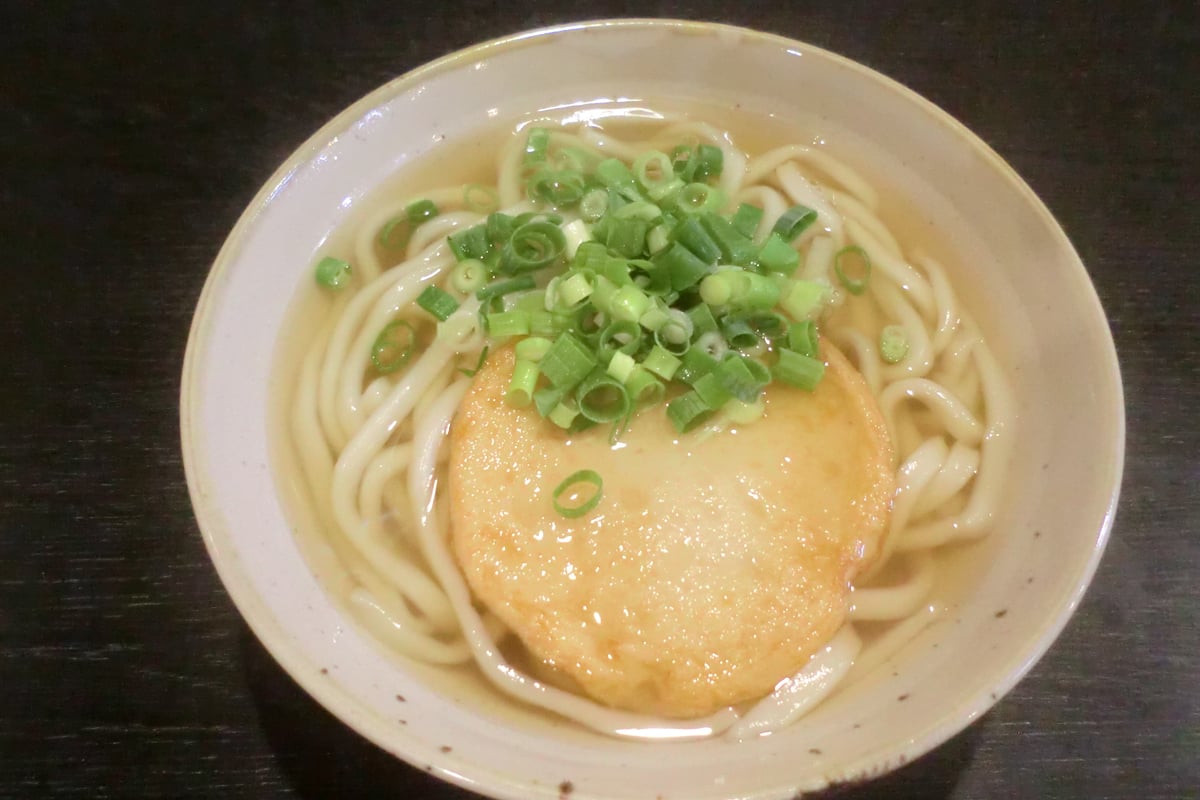
Hakata Udon
Hakata Udon
Hakata Udon is a style of udon eaten mainly in the Hakata Ward of Fukuoka City that emphasizes softness and the rich flavor of its broth over the noodle's firmness. It is said that Shoichi Kokushi (Enni), a Zen monk who returned from Song-dynasty China in the Kamakura period, brought both flour-milling techniques and udon to Japan, making Hakata known as one of the birthplaces of udon. Hakata Udon noodles are typically pre-boiled and soft, and pair well with a sweet broth made from flying fish (ago), kelp, and thick bonito shavings. A signature topping is crispy fried burdock root tempura (gobo ten) or fluffy round fish cake tempura (maru ten), and 'gobo ten udon,' topped with these, is beloved as a staple dish of Hakata Udon. From stand-and-eat udon shops at train stations to long-established specialty restaurants, it has taken root as an everyday food for local residents across a wide range of settings.
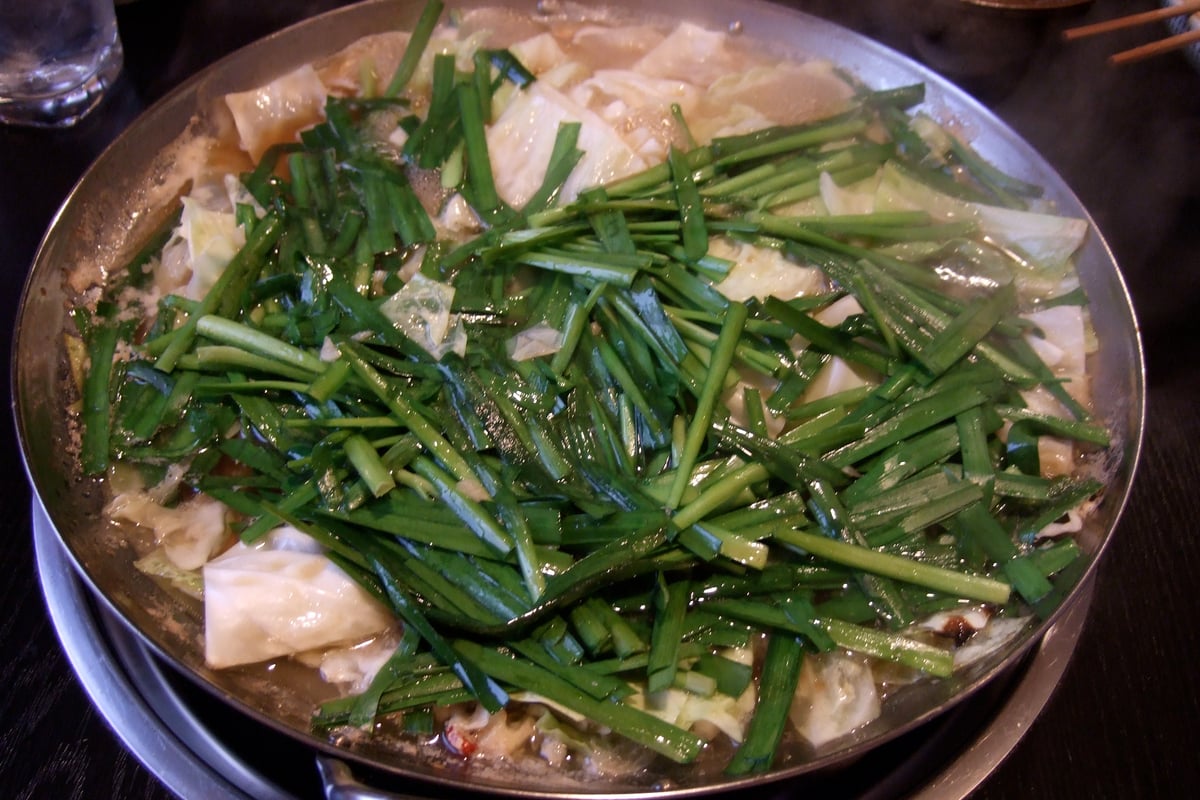
Motsunabe
Motsunabe
Motsunabe is a hot pot dish originating in Hakata, Fukuoka, in which beef or pork motsu (offal) is simmered with cabbage, garlic chives, garlic, and chili peppers in a soy sauce or miso-based broth. It is said to have started right after the war, during a time of food shortages, when people simmered inexpensive beef offal together with vegetables in an aluminum pot. As food supplies improved, cabbage was added, and the dish settled into its current form of offal, garlic chives, cabbage, soy sauce-based broth, and a final course of champon noodles. Specialty restaurants rapidly increased in Hakata from the late 1980s, and a nationwide 'motsunabe boom' in the early 1990s established it as one of Fukuoka's signature local dishes. Its popularity also owes to the springy texture of the offal and the well-balanced nutrition of eating plenty of vegetables in one dish.
Mizutaki (Hakata-Style Chicken Hot Pot)
Mizutaki
Mizutaki is a hot pot dish that represents Hakata, made by simmering chicken bones and bone-in chicken for a long time to produce a cloudy broth, then cooking ingredients such as chicken, napa cabbage, and tofu in it and eating them with ponzu sauce. Despite its name, mizutaki, meaning 'water-simmered,' the broth is not clear — long, slow cooking causes collagen to dissolve out, giving Hakata-style mizutaki its signature rich, white broth. It is said to have originated in 1905 (Meiji 38), when Hayashida Heizaburo, a native of Nagasaki, combined the Western consomme technique and the pai tang (white broth) method of Chinese cuisine that he had learned in Hong Kong, and began serving the dish at his Hakata restaurant, Suigetsu. Fitting for Hakata, a port city with a long history of exchange with overseas cultures, mizutaki is a dish that absorbed an outside food culture and adapted it in its own distinctive way; it has also been selected by the Ministry of Agriculture, Forestry and Fisheries' 'Our Regional Cuisines' as a signature dish of Fukuoka.
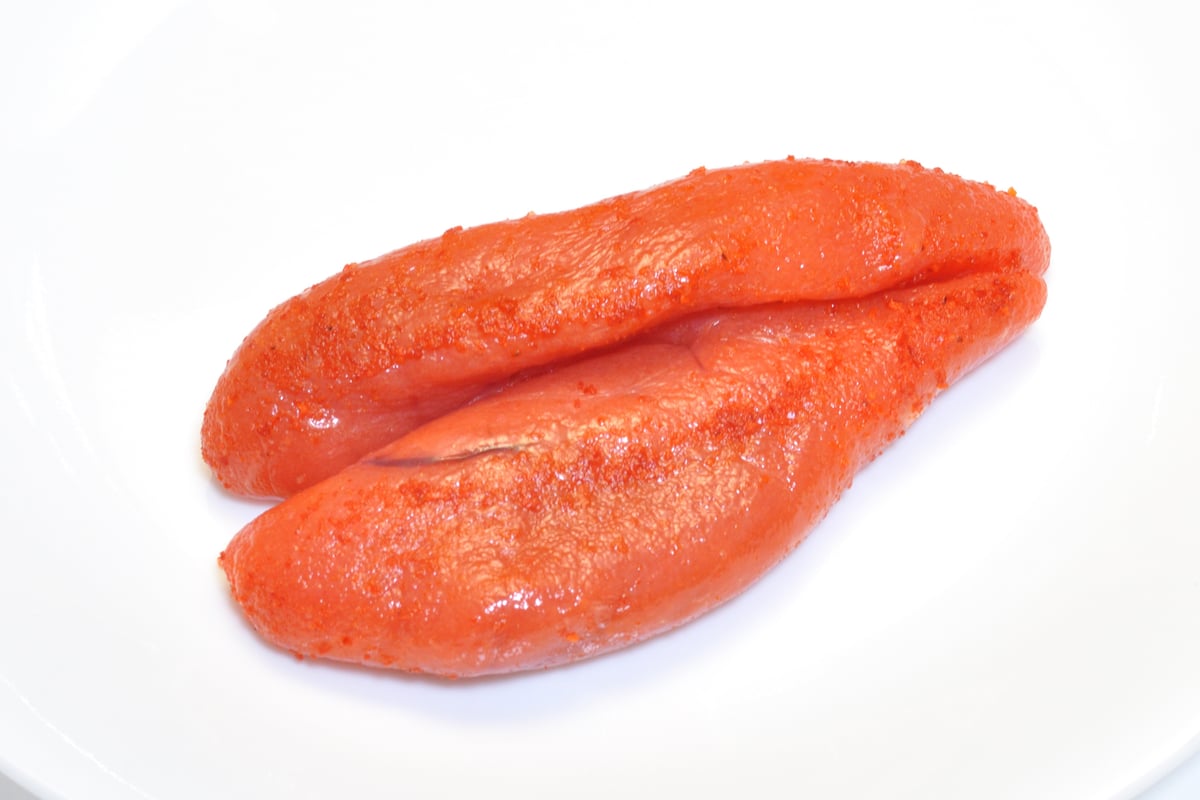
Karashi Mentaiko (Spicy Marinated Pollock Roe)
Karashi Mentaiko
Karashi mentaiko is a processed marine product representative of Fukuoka and Hakata, made by marinating the roe of Alaska pollock in a chili-based seasoning liquid. The custom of eating pollock roe with chili has its roots on the Korean Peninsula, and Kawahara Toshio, who spent his childhood in Busan, could not forget the taste of the 'mentai' (chili-marinated pollock roe) he had eaten there. After returning to Japan, he spent years researching how to adapt it to Japanese tastes and eventually perfected his own version. Fukuya, a shop founded in Hakata's Nakasu district in 1948, became the first in Japan to sell karashi mentaiko as a commercial product in 1949, and it has since become known nationwide as a food that symbolizes Fukuoka. Beyond being eaten simply with rice, it is widely used as a filling for pasta and rice balls and as a seasoning, and it remains a hugely popular souvenir from Fukuoka among visitors from Japan and abroad.
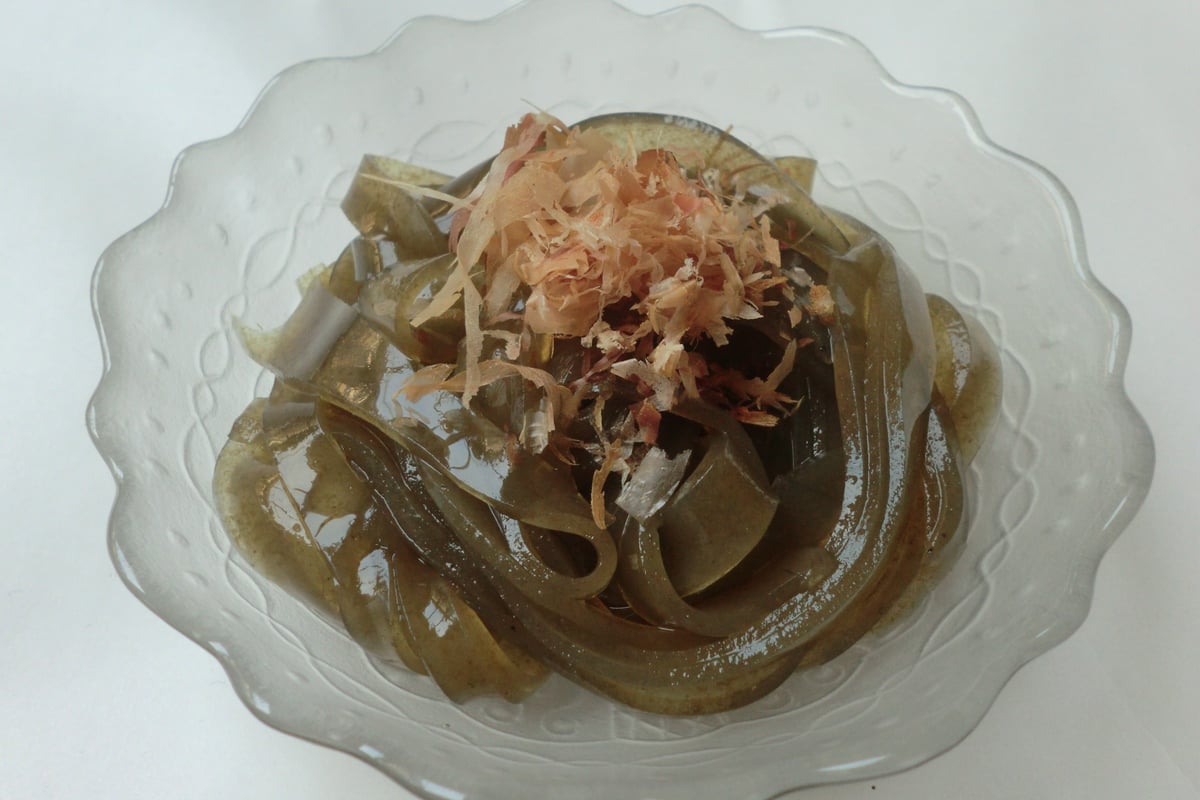
Okyuto
Okyuto
Okyuto is a local dish, made mainly in Fukuoka City, in which egonori seaweed is boiled down and set into a jelly-like block. Cherished since the Edo period as an essential part of Hakata's breakfast table, it was once sold every morning before the war by peddlers carrying baskets on shoulder poles, known as 'okyuto sellers.' It has a distinctive springy texture and a subtle seaweed aroma, and is typically topped with ginger, bonito flakes, or chopped scallions, then eaten with soy sauce or vinegared soy sauce. Because it is low in calories and rich in dietary fiber, it has recently drawn attention as a diet food, and can be found easily at convenience stores and supermarkets. It is also served in school lunches, making it a dish that symbolizes Fukuoka's food culture as it is passed down to younger generations.
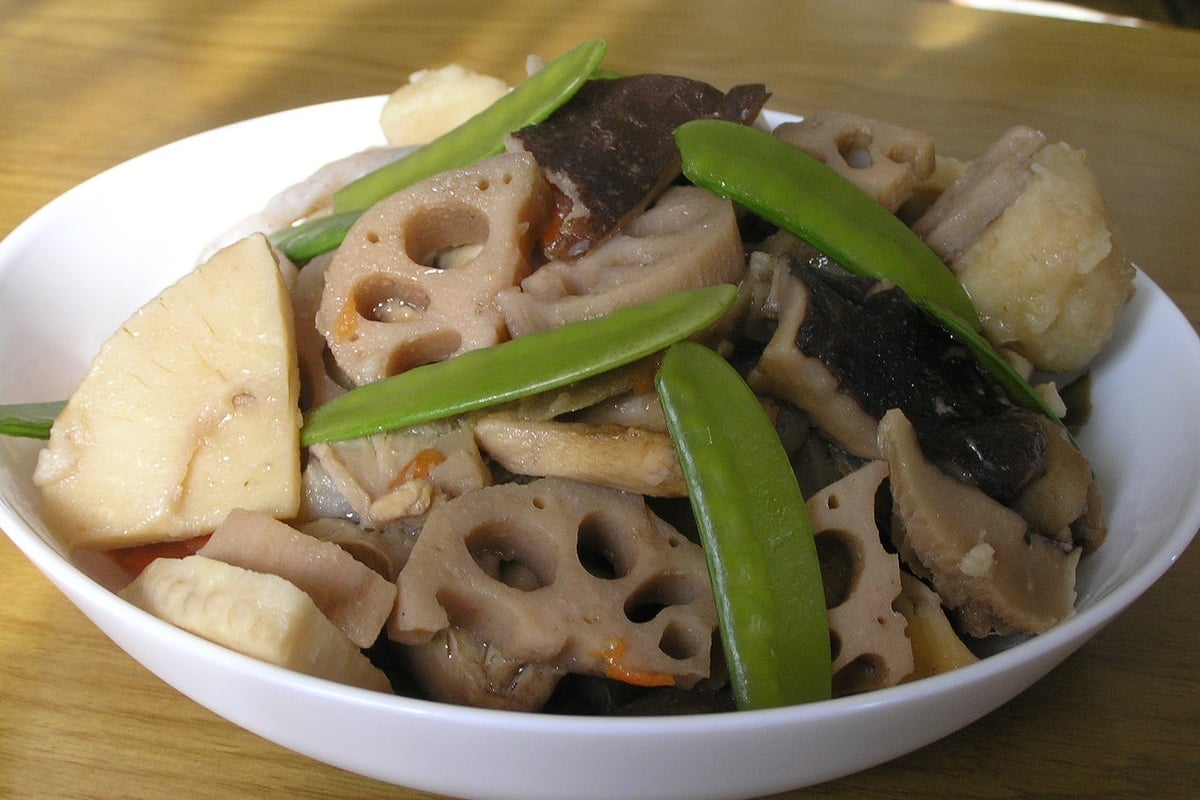
Chikuzen-ni (Gameni)
Chikuzen-ni (Gameni)
Chikuzen-ni (Gameni) is a signature local dish of Fukuoka Prefecture in which chicken, burdock root, lotus root, taro, carrots, and konnyaku are stir-fried in oil and then simmered slowly in dashi broth. In Hakata, the local name 'gameni' is more common, and the name is said to derive from the Hakata dialect word 'gamekurikomu,' meaning 'to gather together.' One theory holds that the dish originated with soft-shelled turtles (dobugame) caught in Hakata Bay, with chicken becoming the standard ingredient only later. It remains an essential dish for celebrations such as New Year's osechi, festivals, and weddings, and continues to color Fukuoka's dinner tables today, with each family passing down its own version.
Nukadaki
Nukadaki
Nukadaki is a local dish from the Kokura area of Kitakyushu City in which oily fish such as sardines or mackerel are simmered for a long time together with a fermented rice-bran bed seasoned with chili pepper and sansho pepper. It is also known as 'nukamiso-daki' or 'jinda-ni.' It is said to have originated roughly 400 years ago when Ogasawara Tadazane, the first lord of Kokura Domain, brought rice-bran miso with him when he was transferred to Kokura from Shinshu, where it met the abundant oily fish caught in the Genkai Sea and Suo Sea. The fish is simmered until even the bones become tender, and the savory aroma of the rice-bran bed together with a sweet-and-salty broth mellows the distinctive smell of the oily fish, resulting in a rich flavor that pairs well with rice or sake. The rice-bran bed, continually replenished at each household or shop, has been the key to its flavor and passed down through generations.
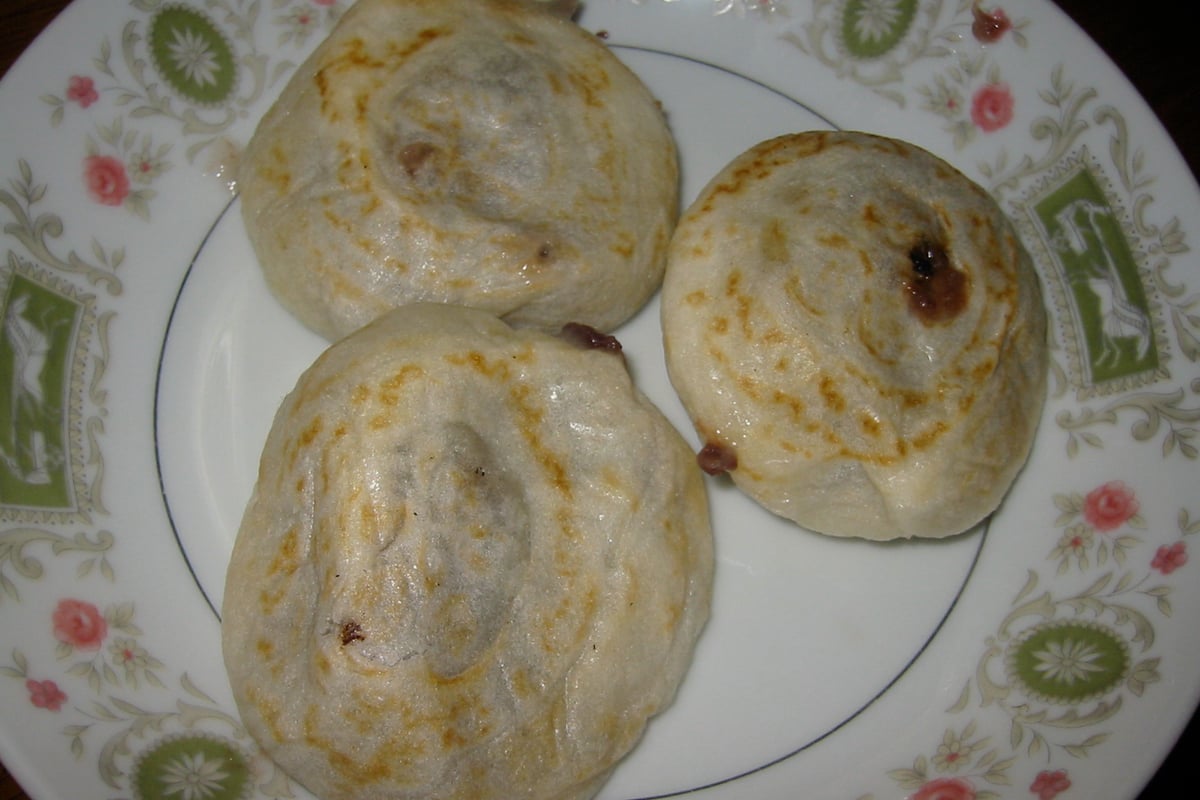
Umegae-mochi
Umegae-mochi
Umegae-mochi is a specialty of the approach to Dazaifu Tenmangu Shrine: sweet red bean paste wrapped in mochi dough and grilled to a fragrant finish using a special mold stamped with a plum blossom design. Known as a mochi confection closely associated with Sugawara no Michizane, the god of learning, the shrine's approach is lined with teahouses and mochi shops serving the cakes freshly grilled, filling the whole street with their fragrant aroma. The name is said to derive from a legend in which an old woman delivered mochi to Michizane skewered on a plum branch. The dish was already known as a specialty of the approach by the Edo period, and long-established shops, including Kasanoya, founded in 1922, continue to insist on serving the mochi freshly grilled today. Crisp and fragrant on the outside with a chewy interior, it pairs beautifully with the refined sweetness of its chunky red bean paste. Eating one fresh off the grill while strolling along the approach is the classic way to enjoy it.
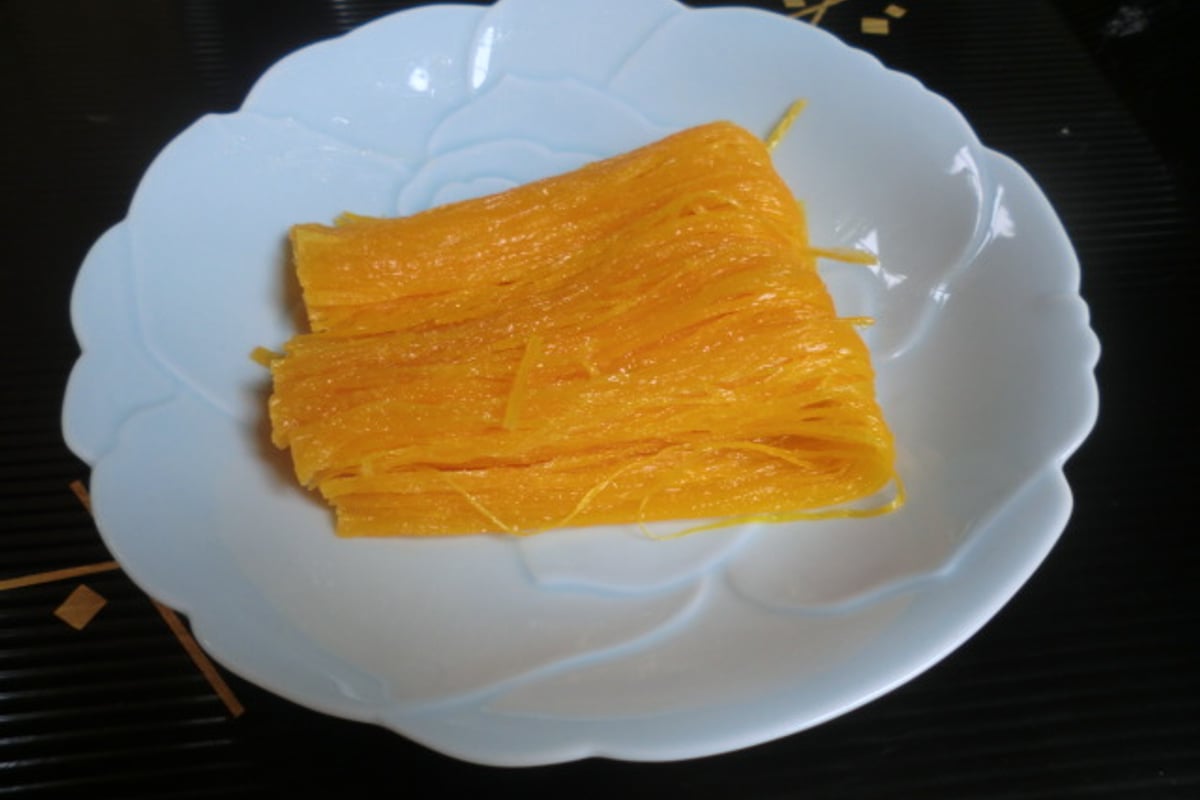
Keiran Somen
Keiran Somen
Keiran somen is a nanban confection resembling somen noodles, made by pouring egg yolk into thin, thread-like strands and simmering it in syrup. It is said to have been introduced to Hakata via Nagasaki along with nanban culture in the 16th century, and is sometimes counted among Japan's 'three great confections,' alongside konpeito and castella. In the early Edo period, Matsuya Riemon, the official confectioner to the Fukuoka domain, established the recipe, and after the domain lord granted him the right to use his shop name in 1673, it has continued to be made for more than 350 years. It is characterized by its rich sweetness, made only from egg yolk and sugar, and its delicate, thread-like texture, and remains cherished in Fukuoka today as a gift for celebratory occasions.
Model Course
A Half-Day Course Through Hakata's Traditional Crafts and Food-Stall Cuisine
View exhibits of Hakata Ningyo and Hakata Ori at the Hakata Traditional Craft Center, browse for Hakata Magemono and souvenirs around Kawabata Shopping Street, then spend the evening enjoying Hakata Ramen and Motsunabe at food stalls and specialty restaurants -- a course that lets you experience Hakata's tradition and food culture in one go.
A One-Day Course Encountering History and Craftsmanship in Dazaifu and Yame
Visit Dazaifu Tenmangu Shrine and stroll the approach sampling the famous Umegae-mochi, then head further out to the Yame Traditional Craft Center in Yame City. Spend the day exploring a townscape where artisans' handiwork -- from Yame Chochin lanterns and Yame Washi paper to Yame Fukushima Butsudan altars -- is still alive today.
Events
Hakata Gion Yamakasa
Every year, July 1-15 (the final Oiyama race takes place early morning on July 15) / Kushida Shrine and the Hakata district
View details →Hakata Dontaku Port Festival
Every year, May 3-4 / Central Fukuoka City (Meiji-dori Avenue, around Hakata Station, and other locations)