Image: Wikimedia Commons
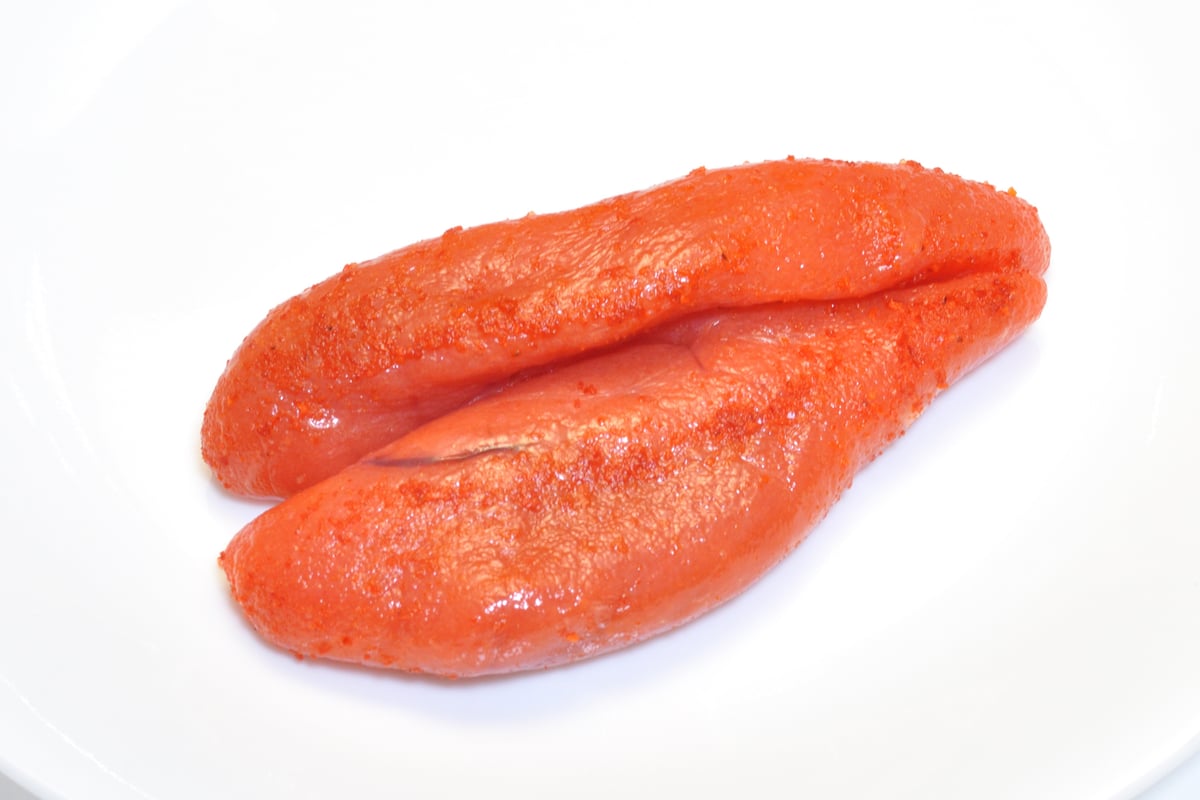
Karashi mentaiko is a processed marine product representative of Fukuoka and Hakata, made by marinating the roe of Alaska pollock in a chili-based seasoning liquid. The custom of eating pollock roe with chili has its roots on the Korean Peninsula, and Kawahara Toshio, who spent his childhood in Busan, could not forget the taste of the 'mentai' (chili-marinated pollock roe) he had eaten there. After returning to Japan, he spent years researching how to adapt it to Japanese tastes and eventually perfected his own version. Fukuya, a shop founded in Hakata's Nakasu district in 1948, became the first in Japan to sell karashi mentaiko as a commercial product in 1949, and it has since become known nationwide as a food that symbolizes Fukuoka. Beyond being eaten simply with rice, it is widely used as a filling for pasta and rice balls and as a seasoning, and it remains a hugely popular souvenir from Fukuoka among visitors from Japan and abroad.
Origin
The custom of marinating pollock roe in chili and other seasonings is said to derive from the Korean dish myeongnan-jeot. Kawahara Toshio, the founder of Fukuya, grew up familiar with this dish in Busan, South Korea, and after returning to Japan following the war, he could not forget its flavor, which led him to work on developing his own commercial version.
History
Kawahara Toshio, who founded the grocery store Fukuya in Hakata's Nakasu district in 1948, perfected a version of karashi mentaiko adapted to Japanese tastes in 1949 after much trial and error, and began selling it as Japan's first commercial karashi mentaiko product. Because Kawahara did not patent his method and freely shared it with other businesses, shops selling karashi mentaiko sprang up one after another around Fukuoka City, and the dish spread as a specialty representative of Hakata.
Features
Karashi mentaiko is made by marinating pollock roe in a seasoning liquid combining chili, kelp, sake, and mirin, and its quality depends on the firm, plump texture of the roe and the balance between spiciness and umami. Beyond being eaten on its own as an accompaniment to rice, it is widely used in pasta, rice balls, dressed dishes, and as a seasoning.
Main Ingredients
Food Culture
In Fukuoka, karashi mentaiko is eaten daily as an accompaniment to plain rice, and it is also in high demand as a gift and souvenir; it is put to wide use in dishes such as pasta, rice balls, and tempura fillings.
| ふくや 中洲本店 | The founding shop that first turned karashi mentaiko into a commercial product in Japan. The main-store-exclusive mentaiko (200g) costs around 3,750 yen (tax included), and nameko mentaiko (140g) costs around 990 yen (tax included).Where to buy →PR |
|---|---|
| かねふく(博多工場直売店) | A mentaiko maker that operates factory direct-sale facilities called Mentai Park both in Japan and overseas. Its Hakata factory direct-sale shop is located in Higashi Ward, Fukuoka City.Where to buy →PR |
| やまや 総本店 | A mentaiko maker that originated in Hakata. It offers a wide range of products, from loose roe to gift-boxed sets, and its products are also sold at souvenir shops nationwide. |
FAQ
Q. What is the difference between tarako and karashi mentaiko?
A. Both are made from Alaska pollock roe, but tarako refers to roe seasoned simply with salt and similar seasonings, while karashi mentaiko refers to roe marinated in a chili-based seasoning liquid to add spiciness. This chili heat is the defining feature of Hakata's karashi mentaiko.