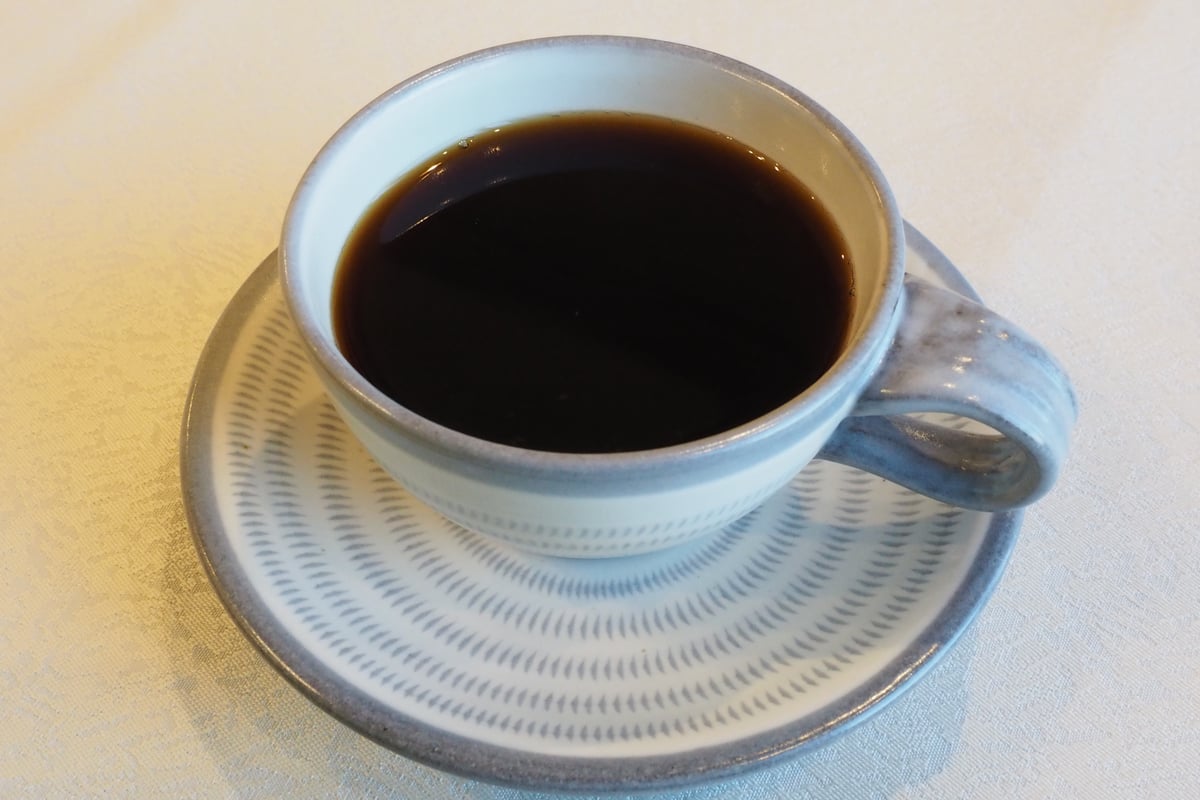
Image: Wikimedia Commons
Koishiwara ware is pottery fired throughout the Koishiwara district of Toho Village, Asakura District, Fukuoka Prefecture, and is a Traditional Craft Designated by the Minister of Economy, Trade and Industry. It is said to have originated in 1682, when Kuroda Mitsuyuki, the third lord of the Chikuzen-Fukuoka domain, invited potters to open kilns in the area, modeling the venture on Imari, which was then flourishing as a center of ceramics production. Porcelain was also fired when the kilns first opened, but production gradually shifted toward everyday pottery, and the techniques have been passed down for about 340 years. Its most distinctive features are geometric patterns born from the movement of tools and hands — such as 'tobi-kanna' (flying-plane carving), in which a blade is pressed against the clay as it spins on the wheel to create rhythmic, chattered grooves, and 'hakeme,' in which patterns are brushed on with a stiff brush. Prized within the Mingei (folk-craft) movement as everyday tableware embodying the 'beauty of function,' it became the first pottery in Japan to be designated a national Traditional Craft, in 1975. Today around 50 kiln workshops remain active in the area, and the region's largest pottery market, the 'Minto Mura Matsuri,' is held each spring and autumn.
Origin
Koishiwara ware is said to have originated in 1682, when Kuroda Mitsuyuki, the third lord of the Chikuzen-Fukuoka domain, invited potters to open kilns in Koishiwara, seeking to establish a ceramics industry modeled on Imari, which was then flourishing as a center of porcelain production. Porcelain was also fired when the kilns first opened, but production gradually shifted toward everyday pottery centered on tableware, in keeping with the qualities of the local clay.
History
From the Edo period to the present, over about 340 years, Koishiwara has developed as a production area for everyday tableware. It won the Grand Prix at the 1958 Brussels World's Fair, and in 1961 a Koishiwara branch of the Japan Folk Crafts Museum was established. Through the Mingei (folk-craft) movement associated with Yanagi Soetsu and others, the ware came to be highly regarded nationwide as everyday tableware embodying the 'beauty of function.' In 1975 it became the first pottery to be designated a national Traditional Craft in Japan.
Features
Koishiwara ware is characterized by rustic, warm geometric patterns created by the movement of tools and hands — including 'tobi-kanna,' in which a blade pressed against the spinning clay produces continuous chattered grooves; 'hakeme,' in which a brush creates regular patterns; and techniques such as comb-tooth carving, finger drawing, trailed glaze, and splashed glaze. Another hallmark is its emphasis on durability and everyday usability over showy decoration. The combination of the clay's rustic character with these regular patterns has made it beloved as tableware embodying the 'beauty of function' in daily life.
Techniques
Tobi-kanna (Flying-Plane Carving)
A technique in which a curved metal blade is pressed against clay coated with slip as it spins on the wheel, continuously carving to create a rhythmic, chattering pattern that seems to leap across the surface.
Hakeme (Brush-Marked Slip)
A technique in which slip is applied with a brush as the piece turns on the wheel, creating concentric ring patterns. It gives the surface a rustic, warm character.
Materials Used
Production Process
- 1
Clay preparation
Local clay is refined and adjusted so that it is easy to shape.
- 2
Shaping
The clay is thrown on the wheel into the shape of everyday tableware.
- 3
Applying slip
White slip is applied to the piece, creating the base needed for the tobi-kanna and hakeme patterns.
- 4
Pattern making
As the piece spins on the wheel, a blade or brush is pressed against it to create the tobi-kanna, hakeme, and other patterns.
- 5
Glazing and firing
Ash glaze and other glazes are applied, and the pieces are fired in a climbing kiln or other kiln to complete their rustic character.
| Main Production Areas |
|
|---|
Artisans & Workshops
マルダイ窯
A kiln workshop located in the Sarayama district, where many of Koishiwara's kilns are clustered. It is currently headed by the 15th-generation potter Ota Kazuya, and produces mainly tableware featuring the traditional tobi-kanna and hakeme patterns.
Official site →How to Buy
- Koishiwara-yaki Traditional Industry Hall
- A facility with four exhibition rooms introducing representative works and profiles from 51 kiln workshops. It also has a sales corner where visitors can compare and purchase pieces from across the production area.Where to buy →PR
- Minto Mura Matsuri (Pottery Market)
- The region's largest pottery market, held twice a year in spring (May) and autumn (October), when around 40 kiln workshops open their doors simultaneously. Toho Village, with a population of about 2,000, typically draws around 100,000 visitors, and pieces are sold at more affordable prices than usual.
Hands-on Experiences
小石原焼伝統産業会館 陶芸体験
福岡県朝倉郡東峰村小石原730-9
Options include hand-building pottery from around ¥1,920, electric-wheel throwing from around ¥3,570, and painting from about ¥970 to ¥2,690. Reservations required (phone 0946-74-2266).
View details →