Image: Wikimedia Commons
Imari ware takes its name from Imari Port, from which porcelain fired in the Arita area was shipped to markets across Japan and overseas. Old Arita ware exported abroad during the Edo period came to be known as 'Old Imari,' while today the name Imari ware more often refers specifically to porcelain fired in Ōkawachiyama, Imari City. In 1675, the Nabeshima clan of Saga Domain relocated its domain kiln from Arita to Ōkawachiyama, which developed as a 'village of secret kilns' producing tribute and gift wares for the shogunate and feudal lords. Set in a mountain valley, the area had checkpoints to prevent technical secrets from leaking out, and potters are said to have spent their entire lives there. General sales began after the Meiji era, and the ware was even exhibited at the 1873 Vienna World's Fair. Known for its meticulous blue-and-white designs and elegant overglaze enamel work, around 30 kilns in the area continue to preserve the tradition today.
Origin
The name 'Imari ware' comes from the fact that porcelain fired throughout the Hizen region, including Arita, was shipped out to markets via Imari Port. In particular, in 1675 the Nabeshima clan of Saga Domain relocated its domain kiln from Arita to the mountain village of Ōkawachiyama to prevent the leakage of porcelain-making techniques. From then on, Ōkawachiyama was developed as a domain-run kiln producing only the finest porcelain for tribute and gifts to the shogunate and feudal lords.
History
Ōkawachiyama had checkpoints to prevent the leakage of techniques, and sales to the general public were strictly limited, earning it the name 'village of secret kilns.' Many potters are said to have spent their entire lives making porcelain there, and a memorial tower for unnamed potters still remains. When domain protection ended with the Meiji Restoration, sales to the general public began, and the ware was introduced abroad, including at the 1873 Vienna World's Fair. Today, around 30 kilns, centered around the Imari-Nabeshima Ware Cooperative, carry on the traditional techniques.
Features
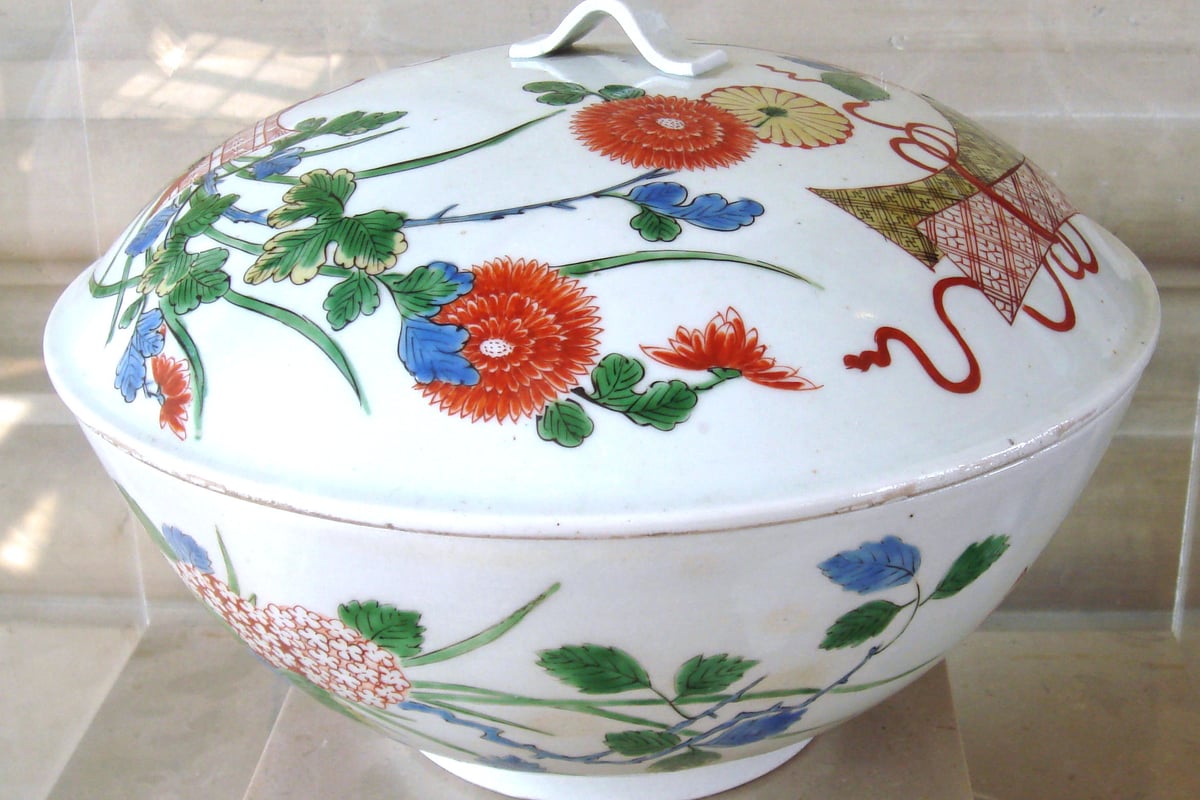
Having developed as a ware for tribute, Imari ware (Nabeshima ware) is characterized by meticulous, dignified designs. Its indigo-blue sometsuke with generous use of empty space, its seiji (celadon) glaze work, and its Iro-Nabeshima enamel ware, elegantly combining red, yellow, and green, all convey the dignity of top-quality pieces finished by the finest craftsmen without regard for cost. The townscape, with kilns lined along a narrow mountain valley, is also a major highlight.
Techniques
Iro-Nabeshima
A technique in which, after underglaze painting with Chinese cobalt (karagosu) and the main firing, only three overglaze colors—red, yellow, and green (or blue)—are applied under strict rules. A special technique called 'sumihajiki,' which produces white outlines, is also used.
Materials Used
| Main Production Areas |
|
|---|
Artisans & Workshops
畑萬陶苑
A kiln based in Ōkawachiyama that carries on the Iro-Nabeshima techniques handed down since the domain-kiln era. As a member of the Traditional Technique Preservation Society, it produces works that convey the designs of tribute pieces to this day.
大秀窯
A kiln known for its 'Ōshu Blue' celadon, made using natural Nabeshima celadon stone found in Ōkawachiyama. It handles everything from everyday tableware to art pieces and also runs an online shop.
Official site →青山窯
Founded in 1883, this Ōkawachiyama kiln traces its roots to the Nabeshima domain kiln of the Edo period. It has carried on the tradition of Imari-Nabeshima ware for more than 130 years.
Official site →How to Buy
- Imari-Nabeshima Ware Cooperative (Ōkawachiyama)
- The official website introducing around 30 kilns in Ōkawachiyama, the 'village of secret kilns.' Visitors can tour each kiln's direct-sale shop to make purchases.Where to buy →PR
Hands-on Experiences
伊万里・有田焼伝統産業会館
佐賀県伊万里市大川内町丙221-2
Free admission; painting experience from ¥900 to ¥1,500 (varies by type of vessel; 30 minutes to 1 hour).
View details →