Image: Wikimedia Commons
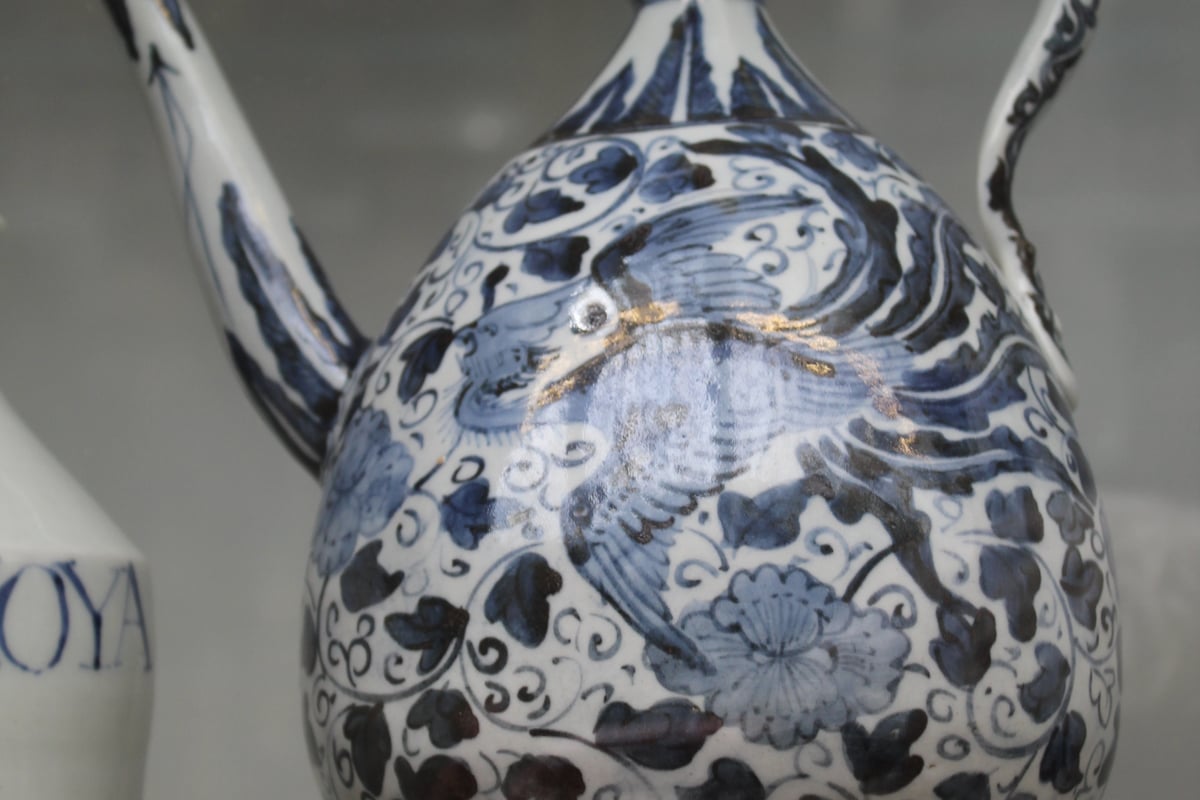
Arita ware is porcelain produced mainly in Arita, Saga Prefecture, known as the birthplace of porcelain in Japan. Around 1616, the Korean potter Yi Sam-pyeong (Ri Sanpei), who had been brought to Hizen during Toyotomi Hideyoshi's invasions of Korea, discovered high-quality porcelain stone at Izumiyama in eastern Arita and fired Japan's first white porcelain at the Tenguya kiln. During the Edo period, styles evolved from indigo-blue Early Imari ware to the red-accented Kakiemon style of the 1640s, the Nabeshima style reserved exclusively for tribute pieces made at the domain kiln, and lavish gilded Kinrande ware. Because it was shipped out through Imari Port, it was exported in large quantities to Europe via the Dutch East India Company under the name 'IMARI,' influencing Western ceramic culture. Designated a METI-designated Traditional Craft Product in 1977, the town of Arita still thrives around its porcelain industry today, centered on Tozan Shrine and the Arita Ceramics Fair.
Origin
The origins of Arita ware date back to around 1616. Yi Sam-pyeong (Ri Sanpei), a Korean potter brought to Hizen during Toyotomi Hideyoshi's invasions of Korea, discovered porcelain stone at Izumiyama in eastern Arita and succeeded in firing porcelain at the Tenguya kiln in Kamishirakawa, marking the beginning of porcelain production in Japan. Yi Sam-pyeong also went by the Japanese name Kanagae Sanbei and is enshrined as the founder of the craft at Tozan Shrine in Arita.
History
In the early Edo period, Early Imari ware based on blue-and-white designs was produced, but in the 1640s the red-accented Kakiemon style emerged, while the Nabeshima domain kiln created the Nabeshima style as the finest-quality ware for tribute and gifts. From the 1650s onward, large quantities were exported to Europe via the Dutch East India Company through Imari Port, becoming known abroad as 'IMARI'; exports declined by the mid-18th century, however, as production resumed at Jingdezhen in China and trade regulations tightened. In 1977, Arita ware was designated a METI-designated Traditional Craft Product.
Features
The defining feature of Arita ware lies in its translucent white porcelain body, decorated either with blue-and-white designs painted in cobalt (sometsuke) or with vividly colored overglaze enamels (iroe). The Kakiemon style is known for its milky-white 'nigoshide' body and painterly designs that make elegant use of empty space, while the Nabeshima style is characterized by refined, dignified motifs, both requiring highly advanced technique. Products range from everyday tableware to fine art pieces, and kilns such as Sakaida Kakiemon and Imaizumi Imaemon have produced Living National Treasures.
Techniques
Sometsuke (blue-and-white ware)
A technique in which designs are painted with cobalt pigment (gosu) on bisque-fired ware, then coated with a clear glaze and fired at high temperature. Known for its calm, monochrome blue designs, it is the oldest and most fundamental technique used in Arita ware.
Iroe (overglaze enamel painting)
A technique in which designs are painted onto fully fired ware using red, yellow, green, and other overglaze enamels, then fired again at a lower temperature. Used for vivid works in the Kakiemon and Nabeshima styles, it is an advanced technique requiring multiple firings.
Materials Used
Production Process
- 1
Preparing the clay
Porcelain stone is crushed and elutriated to remove impurities, producing clay-like porcelain paste.
- 2
Forming
The vessel is shaped on a potter's wheel or cast in molds.
- 3
Bisque firing
The formed piece is fired once at low temperature to make it easier to handle.
- 4
Underglaze painting (sometsuke)
Designs are painted with cobalt pigment, then coated with a clear glaze.
- 5
Main firing
The piece is fired at around 1,300°C, completing the white porcelain and its blue-and-white design.
- 6
Overglaze painting (for iroe ware)
After the main firing, the piece is painted with overglaze enamels and fired again at a lower temperature.
| Main Production Areas |
|
|---|
Artisans & Workshops
柿右衛門窯
A kiln said to have been founded in the early Edo period, carrying on the Kakiemon style, in which vivid red-based enamel designs are applied to a milky-white 'nigoshide' body. Successive head potters have been recognized as Living National Treasures, with the tradition now passed down to the 15th generation.
Official site →今右衛門窯(色鍋島今右衛門技術保存会)
A kiln descended from the Nabeshima domain kiln, carrying on the Iro-Nabeshima techniques of the domain-kiln era to this day. Successive head potters have been recognized as holders of an Important Intangible Cultural Property, and the kiln also houses the Imaemon Museum of Antique Imari and Nabeshima Wares.
Official site →源右衛門窯
Founded in 1753, this kiln has a history of over 260 years. It produces hand-painted sometsuke and iroe porcelain that carries on Old Imari designs, with every step from forming to painting done entirely by hand.
Official site →How to Buy
- Genemon Kiln Online Shop
- The official online store of a kiln with a history of over 260 years, offering tableware and vases that carry on the Old Imari style.Where to buy →PR
- Shingama
- The official website of an Arita ware kiln, selling everything from sometsuke pieces by certified traditional craftsmen to everyday tableware.Where to buy →PR
Hands-on Experiences
幸楽窯(徳永陶磁器)
佐賀県西松浦郡有田町丸尾丙2512
Reservation required; wheel-throwing experience with instructor guidance from around ¥2,500 (5 minutes by car from Arita Station).
View details →有田ポーセリンパーク 有田焼工房
佐賀県西松浦郡有田町戸矢乙340-28
Wheel-throwing experience from ¥3,600 (one piece, 60 minutes or more); hand-building experience from ¥1,800.
View details →