Image: Wikimedia Commons
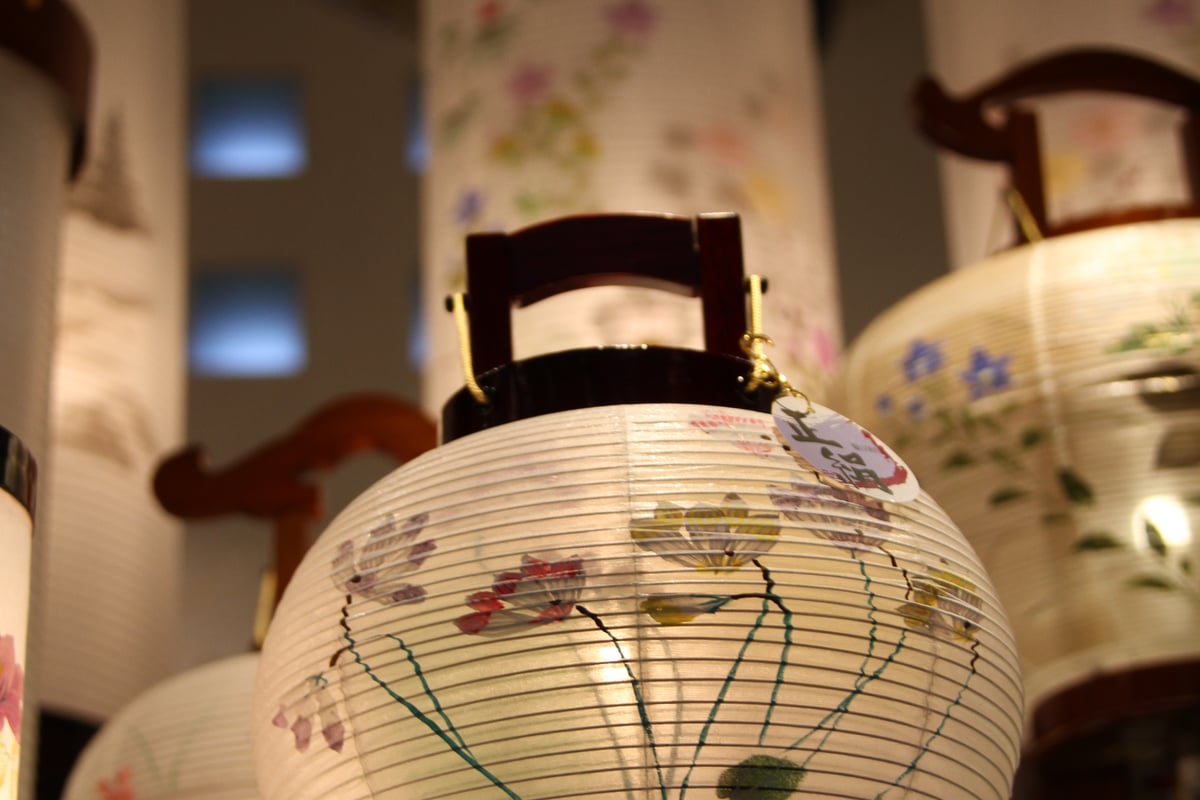
Yame Chochin is a Traditional Craft representing the Bon lanterns made in Yame City, Fukuoka Prefecture (the former town of Fukushima). It is said to have originated when Aramaki Bun'emon first created the lanterns during the Bunka era (around 1813), and later Yoshinaga Taihei devised the 'single-strand spiral method,' in which a single length of bamboo rib is wound into a spiral frame. Using thin washi paper that let the light inside glow softly through, this innovation dramatically improved the lanterns' quality. The paper shades are decorated with delicate paintings of flowers, birds, and seasonal scenery, and the lanterns come in many varieties, including Sumiyoshi Chochin, Ouchi Andon, and Gotenmaru (also written 御天丸). The single-rib spiral structure that is now the mainstream method of lantern-making is said to have originated with Yame Chochin. Designated a national Traditional Craft in 2001, Yame Chochin has the highest production volume in Japan and is also shipped overseas. Demand centers on Bon lanterns used in Buddhist observances, but in recent years young artisans have also been developing products with more contemporary designs.
Origin
Yame Chochin originated in Fukushima-machi, Yame District, Fukuoka Prefecture (present-day Yame City). It is said to have been first created by the local craftsman Aramaki Bun'emon during the Bunka era (around 1813), and was initially sold under the name 'Ba-chochin.' It has also long been called 'Fukushima Chochin,' after the former town of Fukushima. Later, Yoshinaga Taihei devised the frame of the 'single-strand spiral method,' splitting bamboo into thin strips, joining them into a single length, and winding it into a spiral, and by using thin paper that let the light inside glow softly through, he is said to have greatly improved the quality of the lanterns.
History
In the late Edo period, the invention of the single-strand spiral method made mass production possible, and Yame Chochin—together with their colorful paintings of flowers, birds, and seasonal scenery—earned a strong reputation, becoming known nationwide as a center of Bon lantern production. The technique has continued to be passed down by artisans in Yame ever since, and in 2001 the craft was designated a Traditional Craft Designated by the Minister of Economy, Trade and Industry. Yame Chochin still boasts the largest domestic production volume in Japan today, with a wide range of products made in addition to Bon lanterns, including Sumiyoshi Chochin, Ouchi Andon, Gotenmaru (also written 御天丸), Hakata-naga, and gate lanterns, and it is widely shipped overseas as well.
Features
The greatest characteristic of Yame Chochin is its 'single-strand spiral method' frame, made by joining bamboo ribs into a single length and winding it into a spiral. The frame structure now used as the mainstream method for making lanterns is said to have originated with Yame Chochin. Thin washi paper is pasted onto the shade so that the light inside glows softly through, and another great appeal lies in the colorful paintings—landscapes, flowers, and scenes of flowers, birds, and seasonal beauty—applied with a distinctive technique of moving the brush quickly without any preliminary sketch. Yame Chochin are used mainly as Bon lanterns and come in a variety of shapes, including Sumiyoshi Chochin, Ouchi Andon, and Gotenmaru (also written 御天丸).
Materials Used
Production Process
- 1
Frame (winding the ribs)
Bamboo is split into thin strips and joined into a single rib, which is wound in a spiral along a mold. Winding a single rib in this way—the 'single-strand spiral method'—is a technique devised for Yame Chochin, and forms the origin of the frame structure now used as the mainstream in lantern-making.
- 2
Base pasting (paper pasting)
The process of pasting thin washi paper onto the frame. Each panel—the space between ribs—is pasted one at a time, and work moves to the neighboring panel only after the glue has dried. Because the way the paper is pasted becomes visible through the shade once the lantern is lit, the seams are finished with particular care.
- 3
Painting
Landscapes, flowers, and scenes of flowers, birds, and seasonal beauty are painted onto the surface of the washi-covered shade. The technique is characterized by moving the brush quickly without any preliminary sketch, combining spray application and brushwork to finish colorful designs.
| Main Production Areas |
|
|---|
Artisans & Workshops
伊藤権次郎商店
Founded in 1815 (Bunka 12), a lantern maker and retailer in Yame with more than 200 years of history. It has an attached workshop that handles everything from assembling the frame to pasting the paper, carrying on traditional techniques to this day.
Official site →シラキ工芸
A maker of Bon lantern shades founded in 1980 in Shiraki, Tachibana-machi, Yame City. Incorporated in 2004, the company is driven mainly by young artisans with an average age of 28, who work on both passing on traditional techniques and creating lanterns with new designs.
Official site →How to Buy
- ちょうちん堂 ココランショップ
- A direct retail shop opened by シラキ工芸 in June 2022. It proposes and sells lanterns as lighting to be used year-round, not just during summer, including the 'Cocoran' (ココラン) lantern designed to suit small living spaces and modern Buddhist altars.Where to buy →PR
- 伊藤権次郎商店
- A lantern specialty shop with more than 200 years of history in Honmachi, Yame City. It manufactures and sells a variety of lanterns, including Bon lanterns, and customers can choose and purchase items directly in the store.Where to buy →PR
Hands-on Experiences
八女伝統工芸館
福岡県八女市本町2-123-2
A facility that introduces local traditional crafts—including Yame Chochin, Yame Fukushima Butsudan, and Yame hand-made washi paper—all in one place. Admission is free; open 9:00-17:00 (closed Mondays and over the New Year holidays).
View details →伊藤権次郎商店
福岡県八女市本町220
A long-established lantern shop where visitors can actually experience the process from assembling the frame to pasting the paper. Business hours 9:00-17:30 (closed Sundays and public holidays); please inquire for fees and duration.
View details →