Image: Wikimedia Commons
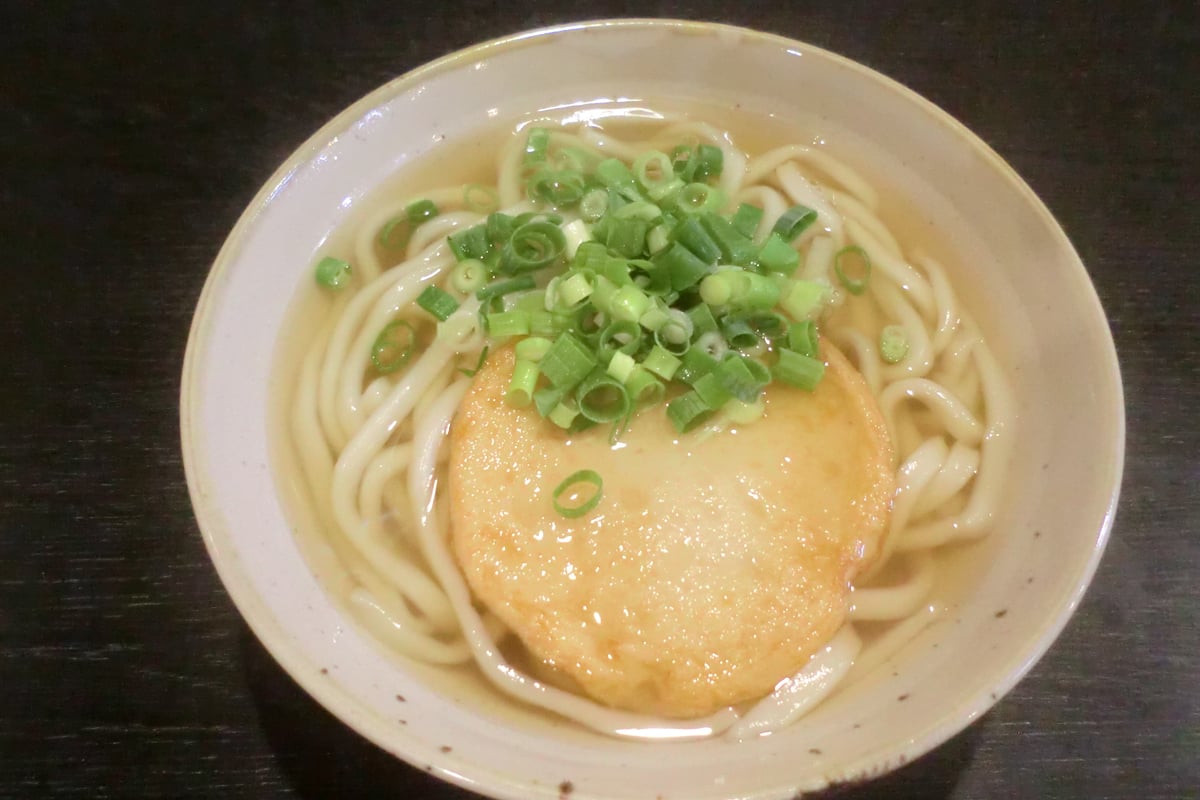
Hakata Udon is a style of udon eaten mainly in the Hakata Ward of Fukuoka City that emphasizes softness and the rich flavor of its broth over the noodle's firmness. It is said that Shoichi Kokushi (Enni), a Zen monk who returned from Song-dynasty China in the Kamakura period, brought both flour-milling techniques and udon to Japan, making Hakata known as one of the birthplaces of udon. Hakata Udon noodles are typically pre-boiled and soft, and pair well with a sweet broth made from flying fish (ago), kelp, and thick bonito shavings. A signature topping is crispy fried burdock root tempura (gobo ten) or fluffy round fish cake tempura (maru ten), and 'gobo ten udon,' topped with these, is beloved as a staple dish of Hakata Udon. From stand-and-eat udon shops at train stations to long-established specialty restaurants, it has taken root as an everyday food for local residents across a wide range of settings.
Origin
Shoichi Kokushi (Enni), founder of Jotenji Temple, is said to have traveled to Song-dynasty China (present-day China) in 1235 and, by the time he returned in 1241, brought back milling techniques. He is believed to have taught the methods for making udon, soba, and manju (steamed buns) during his stay in Hakata, and a stone monument reading 'Birthplace of Udon and Soba' stands within the grounds of Jotenji Temple.
History
Udon spread among the common people through the Edo period and became established as an everyday food in Hakata's temple towns and merchant districts. After the war, many udon shops lined up around Hakata Station and Kawabata Shopping Street, and stand-and-eat style shops also increased. Gobo ten udon came to be known as a signature local dish representing Hakata.
Features
Rather than pursuing firmness, the noodles are typically soft, pre-boiled udon that readily absorbs the broth. The clear, sweet broth made from flying fish, kelp, and thick bonito shavings is a defining feature, and 'gobo ten udon,' topped with freshly fried burdock tempura or round fish cake tempura, is beloved as the signature dish.
Main Ingredients
Famous Shops
かろのうろん
福岡県福岡市博多区上川端町2-1
A long-established shop located near the gate of Jotenji Temple, said to be the birthplace of udon and soba.
因幡うどん 博多デイトス店
福岡県福岡市博多区博多駅中央街1-1 博多デイトスB1
A long-loved local chain. Gobo ten udon is its signature dish.
牧のうどん 加布里本店
福岡県糸島市神在1334-1
A popular chain originating in Itoshima. Emphasizes how well the noodles absorb the broth over firmness. Niku gobo ten udon and other dishes start at around 700 yen.
FAQ
Q. Why are Hakata Udon noodles so soft?
A. Hakata Udon developed to emphasize the texture of noodles soaked in broth and how smoothly they go down, rather than the firmness found in Sanuki udon. Many shops use noodles that are pre-boiled in advance, and this convenience of serving quickly after an order is thought to have suited Hakata's food culture well.