Image: Wikimedia Commons
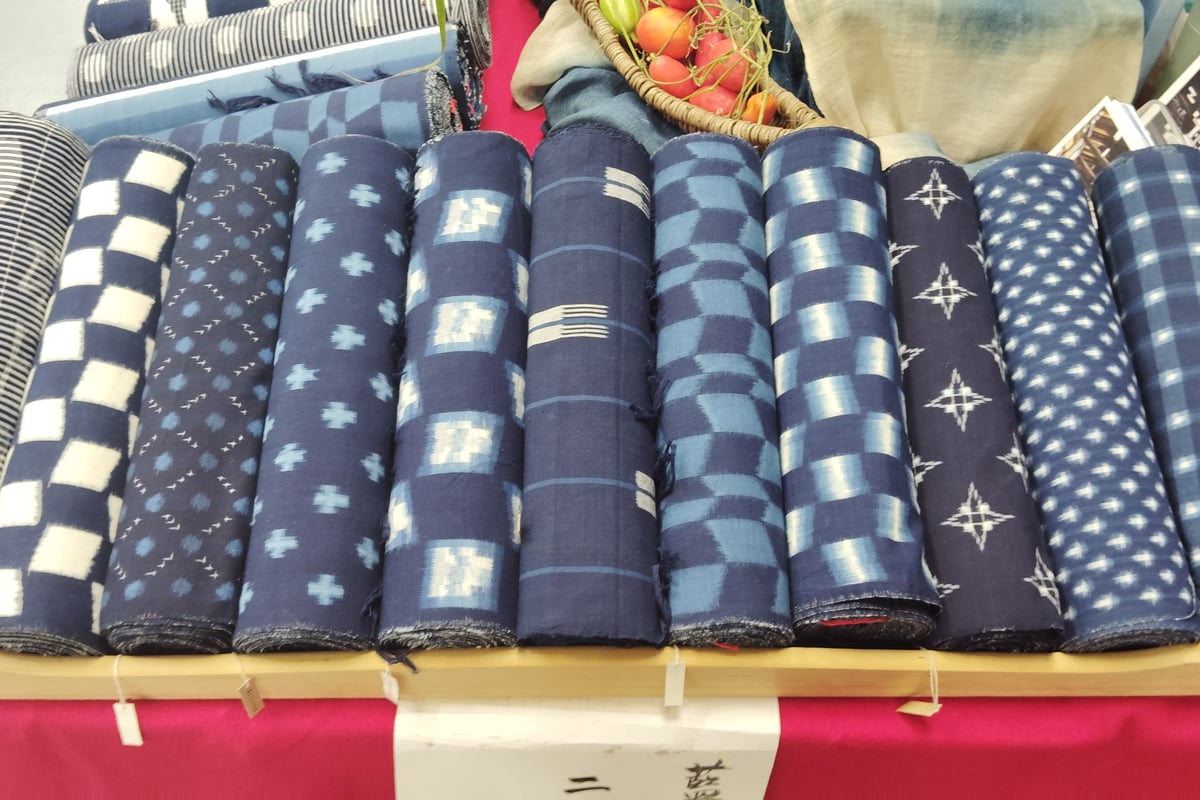
Kurume Kasuri is an indigo-dyed cotton ikat cloth woven in the area of the former Kurume domain, centered on present-day Kurume City in Fukuoka Prefecture, and is one of Japan's three major ikat weaves alongside Iyo Kasuri and Bingo Kasuri. It is said to have been created by a woman named Inoue Den in the late Edo period. At the age of 13, she noticed white speckles on the faded parts of a worn indigo-dyed kimono and devised a technique of binding threads beforehand to dye them selectively, producing an ikat pattern of mottled navy and white threads that came to be called 'Kasuri.' From binding the threads to resist the dye and dyeing them in indigo ('kukuri'), to untying the dyed threads and weaving them while matching the pattern, the cloth still passes through around 30 processes even today, when mechanization has advanced, and takes several months to complete. It is known for its rustic, warm texture with softly blurred outlines. It was designated an Important Intangible Cultural Property in 1957 and a national Traditional Craft in 1976.
Origin
Kurume Kasuri is said to have been devised in the late Edo period by a girl named Inoue Den, who was then 12 or 13 years old. Noticing that a worn, faded indigo-dyed cotton kimono had white speckles where the thread had been tightly bound, Den devised a technique of deliberately creating mottled navy-and-white patterns by tightly binding the parts of the thread she did not want dyed before dyeing it in indigo. Cloth woven with this technique was originally called 'Kasuri.'
History
The technique devised by Inoue Den spread throughout the Kurume area and developed into a specialty product of the former Kurume domain. From the Meiji era onward, pattern expression diversified to include pictorial ikat designs, and Kurume Kasuri came to be counted as one of Japan's three major ikat weaves alongside Iyo Kasuri and Bingo Kasuri. In 1957, the techniques of hand-binding, dyeing with pure natural indigo, and hand-weaving were designated a national Important Intangible Cultural Property, and in 1976 the craft was also designated a national Traditional Craft. The techniques continue to be passed down to this day.
Features
Kurume Kasuri is characterized by rustic, warm ikat patterns with softly blurred outlines, created by binding threads to resist the dye before weaving with indigo-dyed thread. From the binding process ('kukuri') that creates the pattern, through dyeing, to weaving while matching the pattern, the cloth passes through around 30 processes in total and takes several months to complete. The geometric patterns created by the contrast between the deep indigo of natural dye and white are used not only for kimono fabric but also in contemporary clothing and accessories.
Techniques
Kukuri (Ikat Binding)
The process of tightly binding the parts of the thread bundle that should not be dyed, according to the design, using cotton thread to resist the dye. When the binding is later untied, those parts remain white, forming the outlines of the ikat pattern.
Indigo Dyeing
The bound thread bundles are dipped into indigo vats to be dyed. Traditional indigo-dyeing techniques, such as natural lye fermentation vats, produce a deep navy blue.
Materials Used
Production Process
- 1
Design and warping
The ikat pattern design is planned, and threads of the necessary length and quantity are prepared.
- 2
Binding (kukuri)
The thread bundles are bound with cotton thread according to the design, resisting the dye on the parts that should not be colored.
- 3
Indigo dyeing
The bound thread bundles are dipped into indigo vats repeatedly to achieve a deep navy blue.
- 4
Untying the binding
The binding thread on the dyed bundles is carefully untied one strand at a time to reveal the ikat thread.
- 5
Weaving
The thread is woven on a hand loom or power loom while matching the pattern, bringing out the ikat design in the finished cloth.
| Main Production Areas |
|
|---|
Artisans & Workshops
池田絣工房
Founded in 1919, this workshop in Chikugo City continues to produce Kurume Kasuri using indigo dyeing and hand weaving. Its glass-walled workshop can be viewed at any time, and it handles a wide range of products from bolts of cloth to clothing and accessories.
Official site →How to Buy
- Ikeda Kasuri Workshop Official Online Shop
- The official online shop offering bolts of Kurume Kasuri cloth, clothing, and accessories, all indigo-dyed and hand-woven at the workshop's own studio.Where to buy →PR
Hands-on Experiences
池田絣工房 藍染め・くくり体験
福岡県筑後市久富1840
A program where visitors can experience binding, indigo dyeing, and more. Takes about 2 hours, from around ¥7,000 (materials included, reservation required).
View details →